
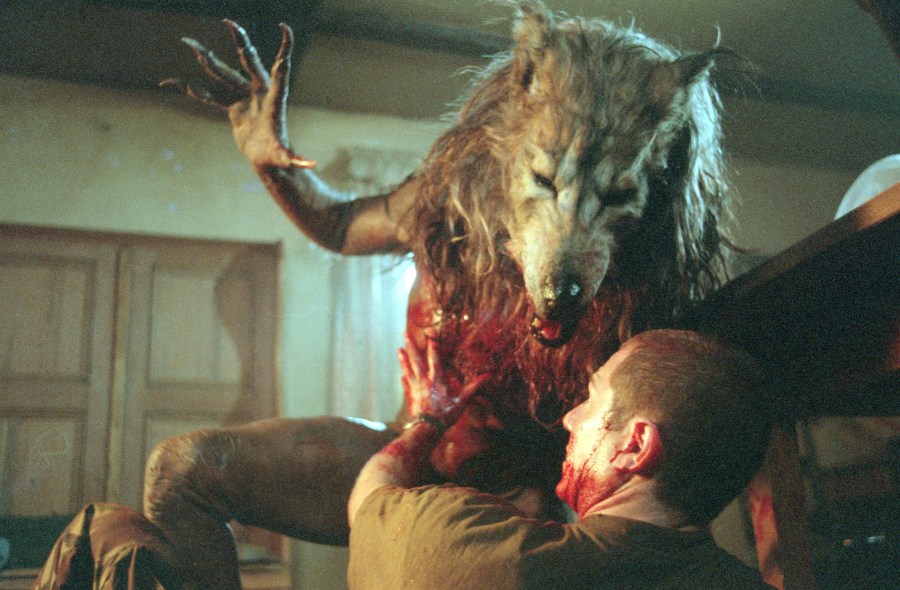
“I always thought werewolves were just a really cool monster that was kind of underrepresented in
movies,” said director Neil Marshall. “There were so many vampire movies out there and not nearly so many werewolf movies. And having done it now, I know the reason for that is because they’re really hard to do, and to do well.”
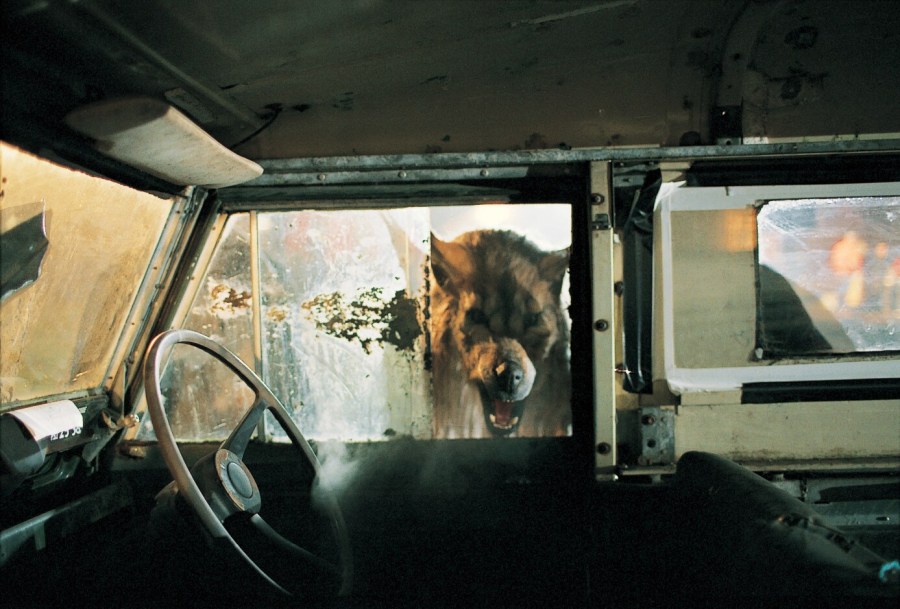
Inspired by Assault On Precinct 13 and similar films, the director turned away from traditional werewolf ideas — such as the story being about the curse itself — and wrote a script about a group of soldiers under siege by a pack of the monsters. Marshall related: “Dog Soldiers isn’t about tortured human souls condemned to turn into wolves every cursed full moon. It’s about nasty, ferocious, wild beasts that must kill and eat people at whatever cost, though using silver is still the main method of eradication. The werewolves aren’t treated in any major fantasy context, really. They are just another enemy, like Nazis or terrorists, that this platoon of rookies must contend with. That’s important to the success of the overall piece, in my mind. Having a solid base in combat realism means that when certain fantastical elements are introduced, they still remain utterly realistic. Believability can’t be shattered so easily with that strong foundation.” Marshall added: “This is just, they’re out there and they’re coming to get you. You’re their victim, nothing more. Or their lunch.”
The idea was also based on reservations the director had over previous werewolf pictures. “I adore An American Werewolf In London,” Marshall told Fangoria. “It’s scary, it’s funny and it features the best transformation ever. Yet the actual werewolf itself is a bit of a dog. Take The Howling too. It’s great and the werewolves are spectacular — except you hardly see them! So I wanted to make a werewolf picture that didn’t fall short in any area, and that’s why I came up with the idea for Dog Soldiers.”
Marshall favoured practical effects over digital ones, which at the time could not properly convey certain aspects of the creatures he wanted to see — such as realistic fur simulation. He said: “apart from the Jurassic Park movies, nothing created digitally looks good in my mind. The industry has never been able to get hair or fur right, and everything from Anaconda to The Mummy looks too much like a video game cartoon. What most people haven’t realized is that animatronics have made a major quantum leap over the past few years, but because everyone has been so caught up in the CG frenzy, it has gone by virtually unnoticed. I wanted my werewolves in the same frame as the actors to convey the physical terror of their presence.”
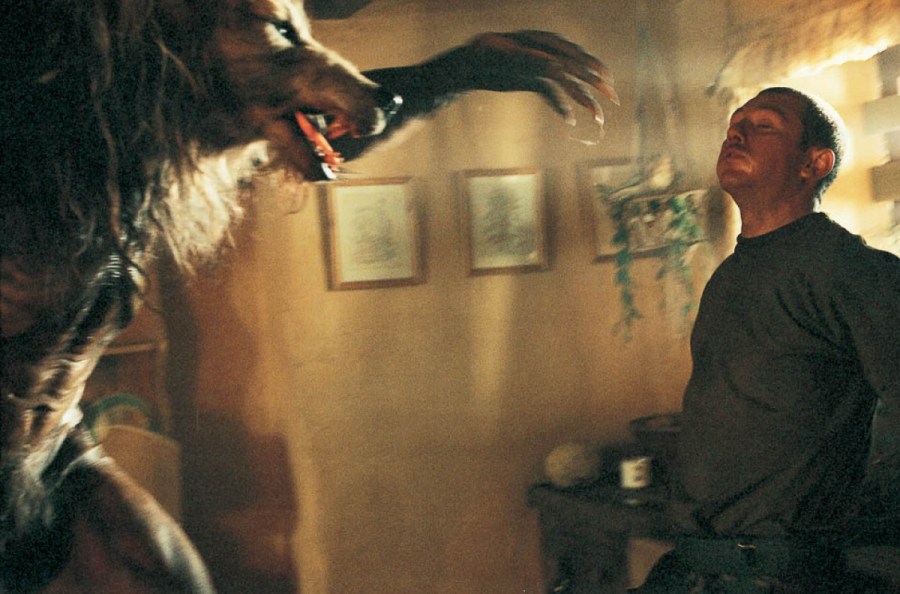
Stop-motion was briefly considered for certain stunts, but ultimately discarded. Producer David Allen noted: “computer animation is wonderful, but it’s so clean and unnatural-looking. Stop-motion werewolves were considered, in the Ray Harryhausen tradition, but that look can sometimes be too grainy and unnatural too. Werewolves are men transformed in every classic horror picture, and that’s the way we all felt they should be portrayed.”
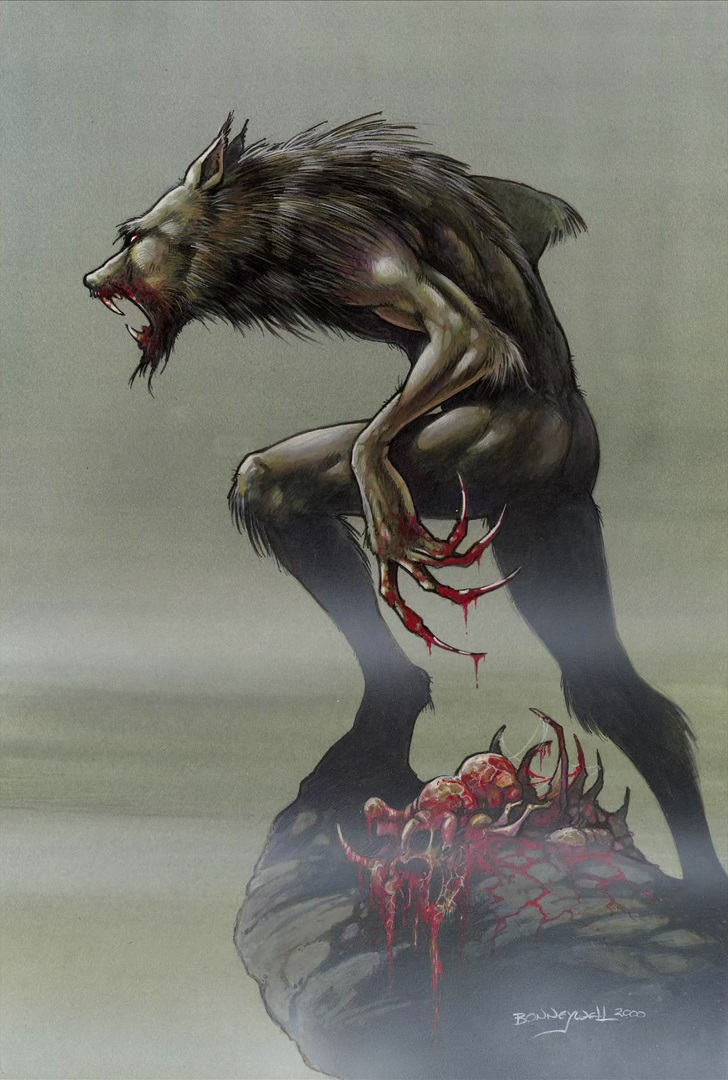
Marshall first collaborated with David Bonneywell — who would go on to become special make-up effects supervisor in the production — and Colin Lang to have a werewolf design that would go along with the script, ending up with a theriomorph appearance for the creatures. Concept art by both Bonneywell and Lang was accompanied by a small-scale maquette. Special make-up director Bob Keen related: “the real credit to the design, I think, goes to a very talented David Bonneywell. And David Boniwell worked with Neil and then would come back and me and him would refine together. But this is his sculpt, it was his design from the beginning. And he, like all of us, wanted to do a werewolf movie, we just wanted to do this thing. […] it was really Dog Soldiers that showed me what a superb creative he is.”
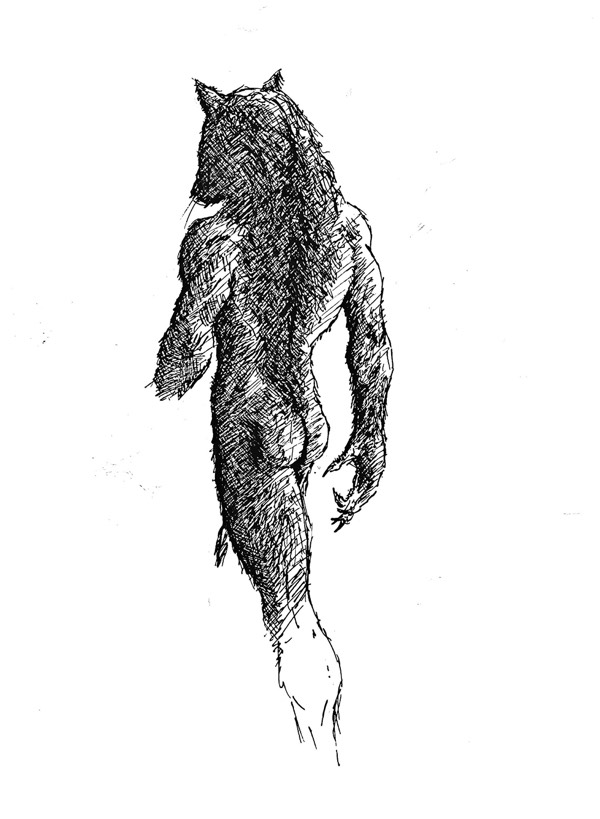
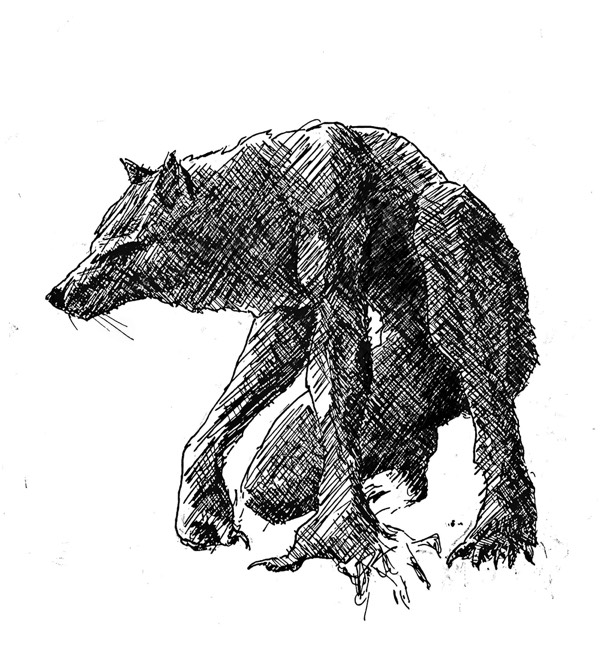
Marshall added: “I wanted [my werewolves] to be hyper-real, a combination of wolf and human. A hybrid, bipedal seven-foot monster. In my mind, there was only ever one man for the job – Bob Keen. And something we agreed on from the start was that we wanted big, kick-arse creatures.”
Bob Keen’s Image Effects was indeed hired to bring the werewolves to life. Keen recalled: “we met up with Neil and he had this wonderful script, this wonderful enemy at the door. And it could have been the Viet Cong, it could have been zombies, it could have been anything. But God bless Neil, he made it werewolves. And he made it big, kick-ass werewolves. I’d done werewolves before, I’d worked on werewolves on Waxwork and Nightbreed and a few other places; but I’d never really got a werewolf movie under my belt. So when we got the job, I was just like, six werewolves. And not normal werewolves, these were like huge creatures that were going to stand seven, eight feet tall. So, I was in heaven — I was absolutely in heaven at the start of the picture.”
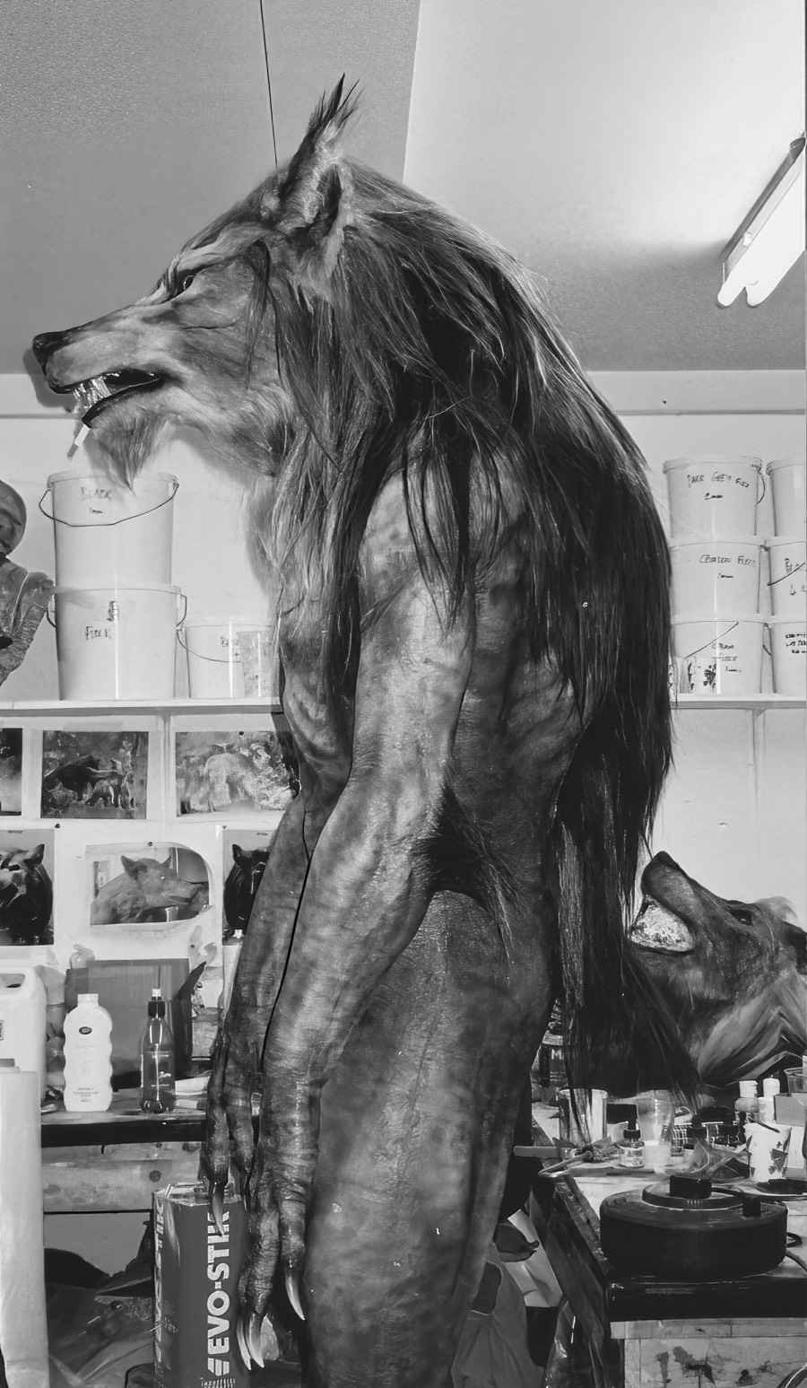
Following Image Effects’ involvement, the werewolf design was further refined during the long pre-production phase. Rather than pure fantasy, it was based on natural reference for an added sense of realism. Keen related: “we were talking with Neil for 18 months before the film started shooting, and that long pre-production period meant we could watch past werewolf movies to see what we liked and didn’t like, and we eventually arrived at a shaggy, dirtied-down design we all thought was cool. The werewolves are based on animal kingdom fact rather than anything too fantasy-oriented to keep them as realistic as possible. It was important for Neil that the werewolves looked like bloodthirsty creatures that could tear you apart. He knew that approach would really get under the audience’s skin.” Variations on the werewolf head proportions and colouring were explored to portray the six different individuals seen across the film.
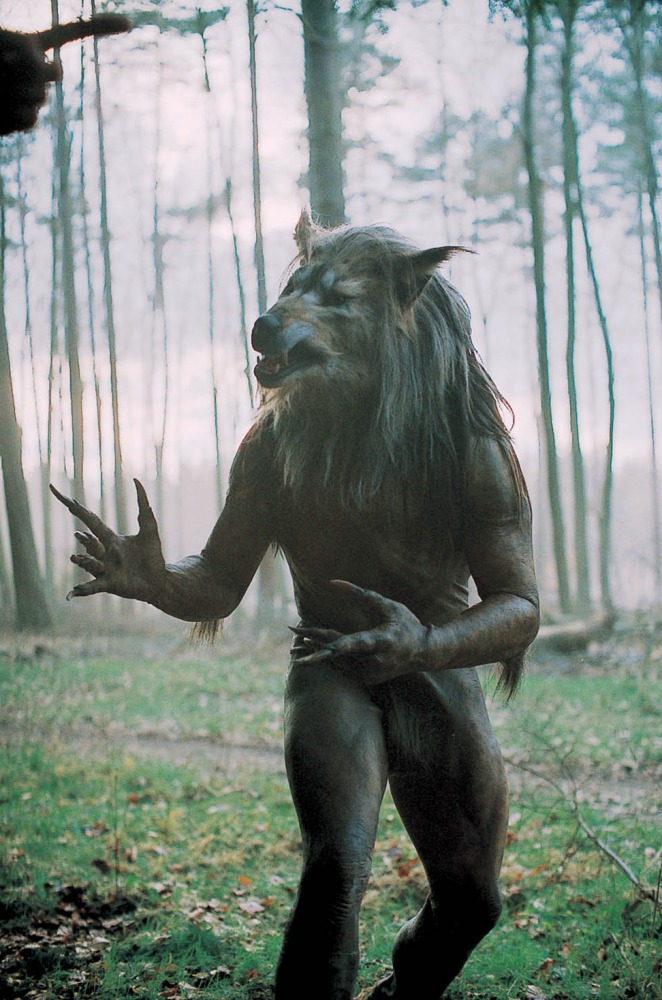
Among the design modifications were the hands, which Bonneywell had configured as overtly elongated and spindly, had not taken into account certain stunts in the final script. Bonneywell explained: “in the final design I presented, the wolves had really long fingers and talons which Neil loved and that’s how we started to build them. But then I got the final script! The werewolves were grabbing things using weapons — including shooting a gun! — punching through walls and doors, etc, and I realised that there was no way they’d do any of that with these humungous fingers and claws. I remember phoning Neil and asking just how in love with the idea he was and asked if we could ditch it for something more practical to which he agreed.”
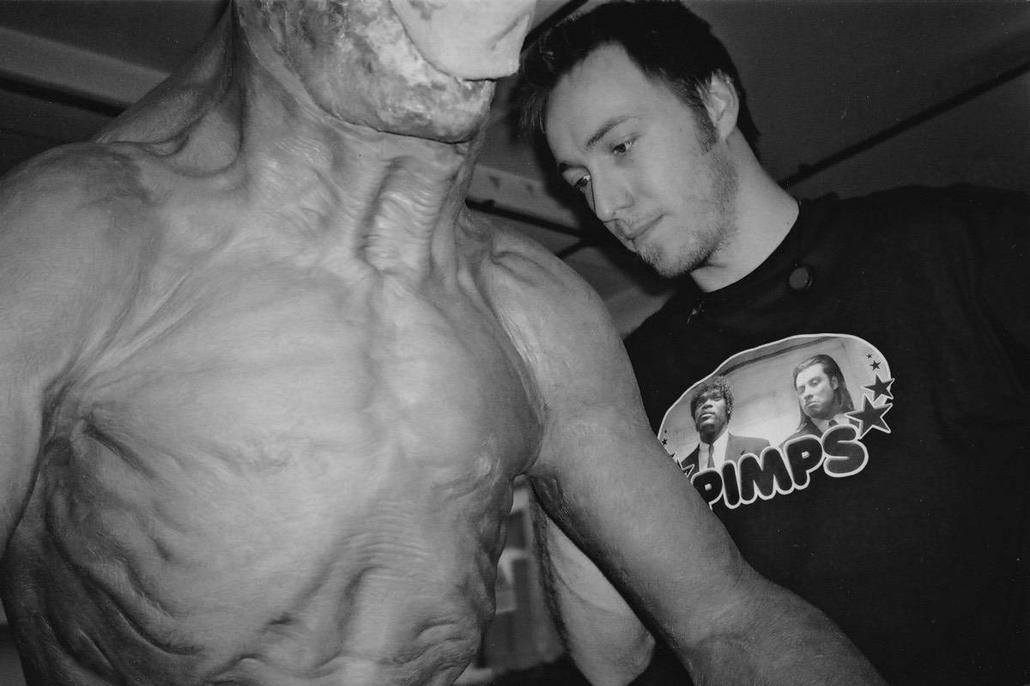
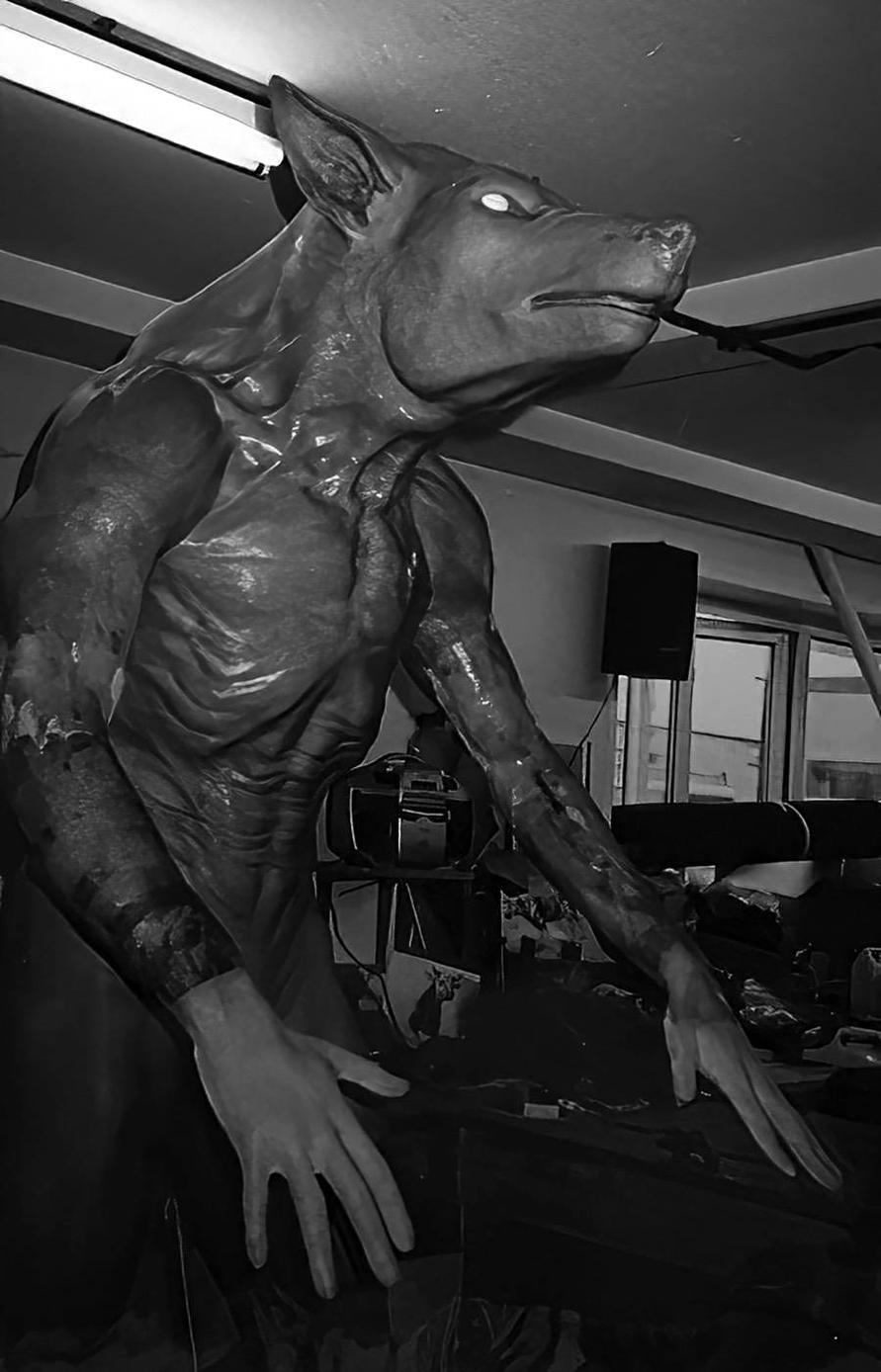
The full-size werewolf sculpture was based on a body cast of main performer Brian Claxton Payne. Sculpting duties went to Mat O’Toole and Justin Pitkethly. “At the start of the job, we were going through all the things that needed to be made, starting with the main sculpt of the wolf,” O’Toole recalled. “Dave, I thought, was the natural fit as he was the supervisor and good at everything, but I remember him pulling me aside and saying ‘I’m gonna give you sculpting job, I’ll be too busy running the shop’. I was super flattered and pleased.” He also added: “it was a lot of fun, we used regular water-based clay for speed, but also for getting those big shapes there’s nothing like regular clay. I remember enjoying sculpting the body more than the head, weirdly.”
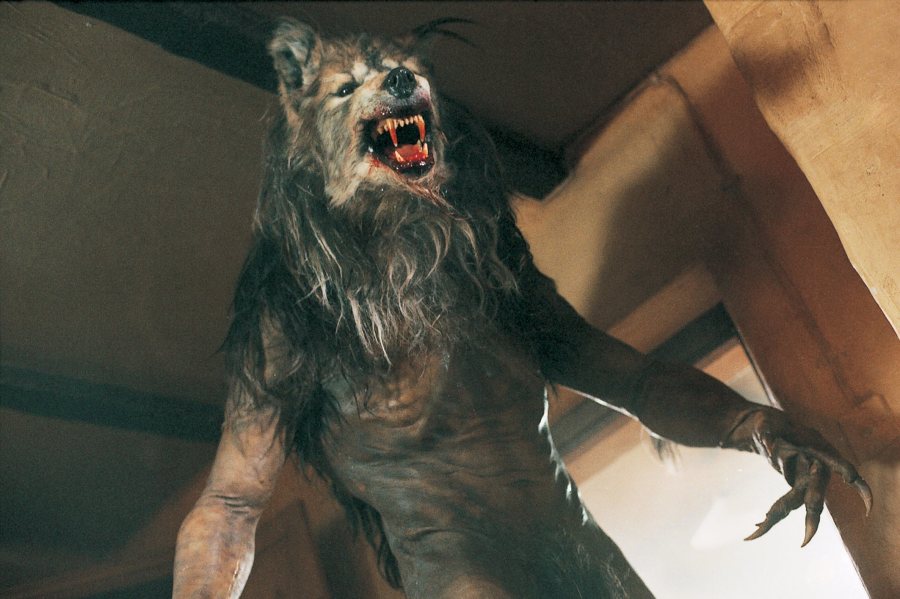
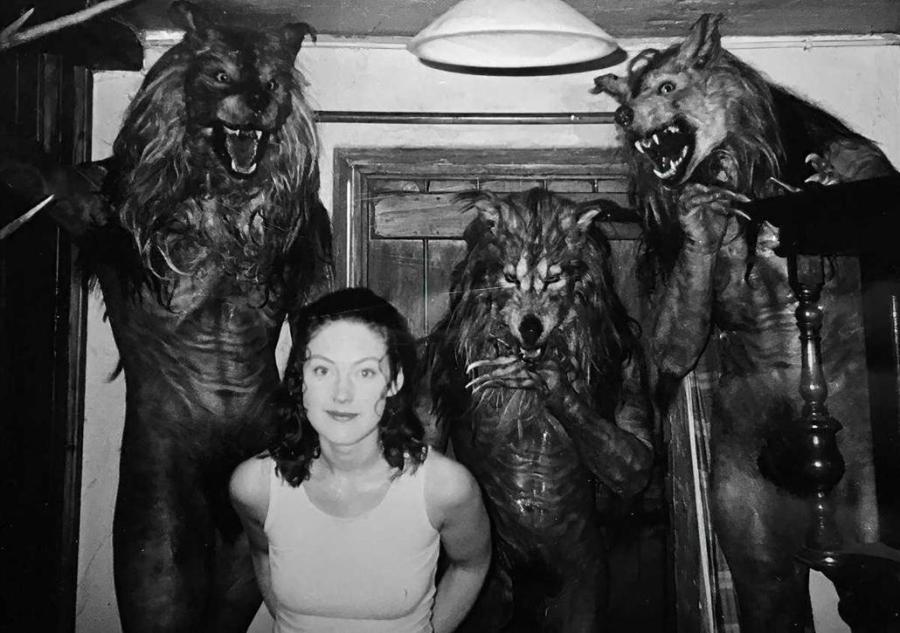
Cast in foam latex, three body suits were built. They featured interchangeable, fully animatronic heads with an aluminum vacuformed core, housing radio-controlled mechanisms for eyes, nose, lips and jaw. The heads could also be fitted with dry ice to simulate steamy breathing. Finger extensions increased their length by about six inches, and leg extensions, designed by Peter Hawkins, brought the werewolves to over seven feet of height.
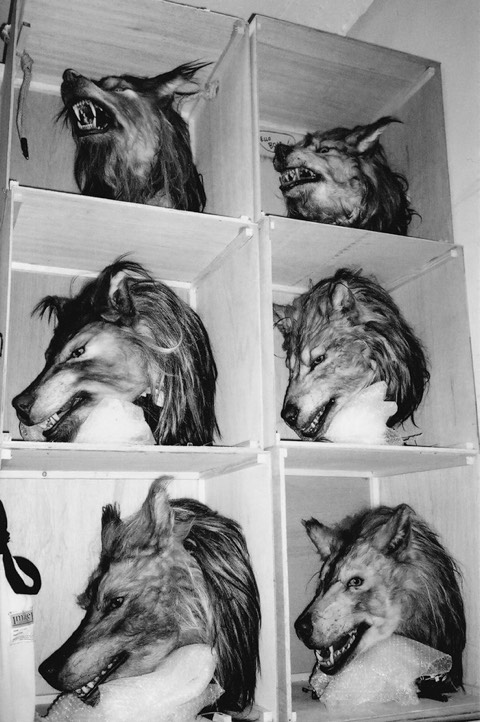
Six different heads portrayed the werewolf individuals, able to be clipped onto any one of the three body suits. Individual variations included different proportions and ratios, as well as different fur patterns. The latter was achieved by a team that included Anthony Parker, who recalled: “I was part of the Image FX workshop crew and my job was the fur on the wolf heads. There were hero animatronic heads for each wolf and stunt heads too. Foam latex skins were cast out of the mould of the sculpt and these had to be painted and then covered in fur and painted realistically to give each wolf their individual look. There was also a lot of hair work. As part of a team along with Tacy Kneale, Bobbi Roberts and Shirley Sweeney, I designed how the fake fur was going to be pieced together on the heads and also how they were going to be painted. The heads were furred using a technique called fur replacement. Fake fur comes on a roll with a material backing. In fur replacement, the material backing is shaved away from the fur and replaced with a glue. It is then transferred to the foam skin. The fur was painted using inks that are used in taxidermy. They were airbrushed using these colours.”
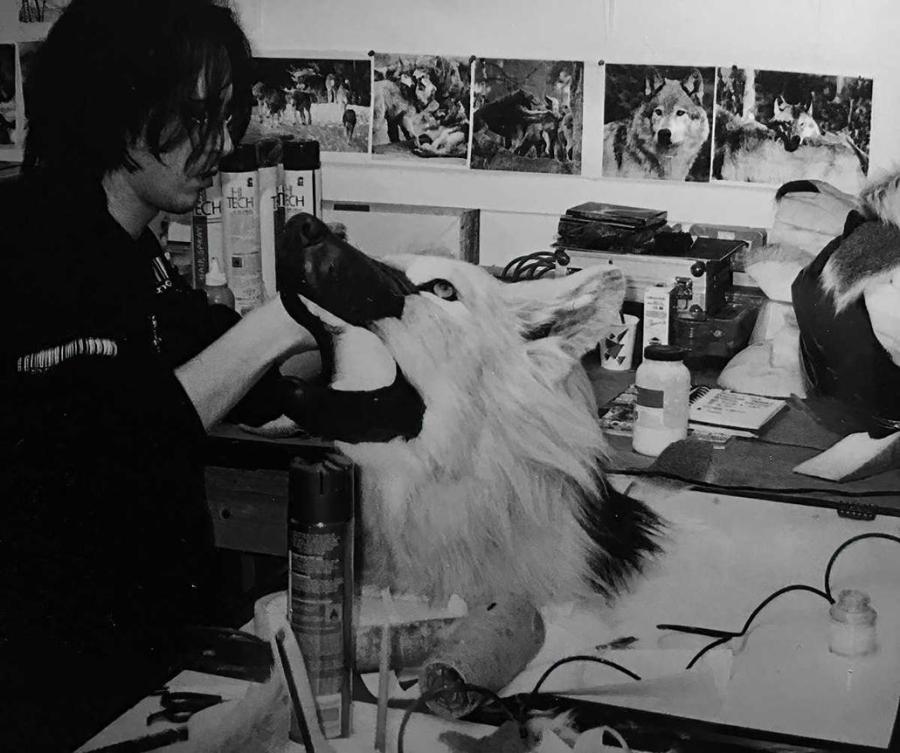
Parker added: “the most fun and challenging aspect was helping to come up with the different colour markings for each wolf. I remember I had a book of wolves that I had marked and labelled the photos of wolves I thought had interesting colours and markings, to use as reference for the different wolves in the film. They all had their own distinct look.”
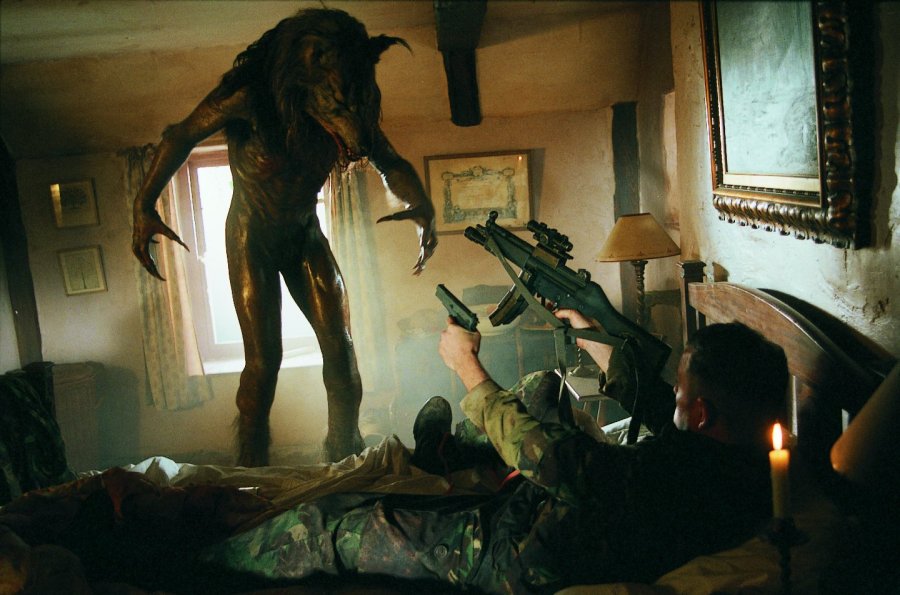
Creature suit fabricator Lisa Crawley was responsible for the internal fabrication of the werewolf suits, ensuring they fit together and fit the performers correctly and comfortably. As the suits were based on Payne’s body cast, adjustments for the other two performers involved cutting, padding, and “surgery”, as Keen put it. Crawley was also the on-set werewolf dresser.
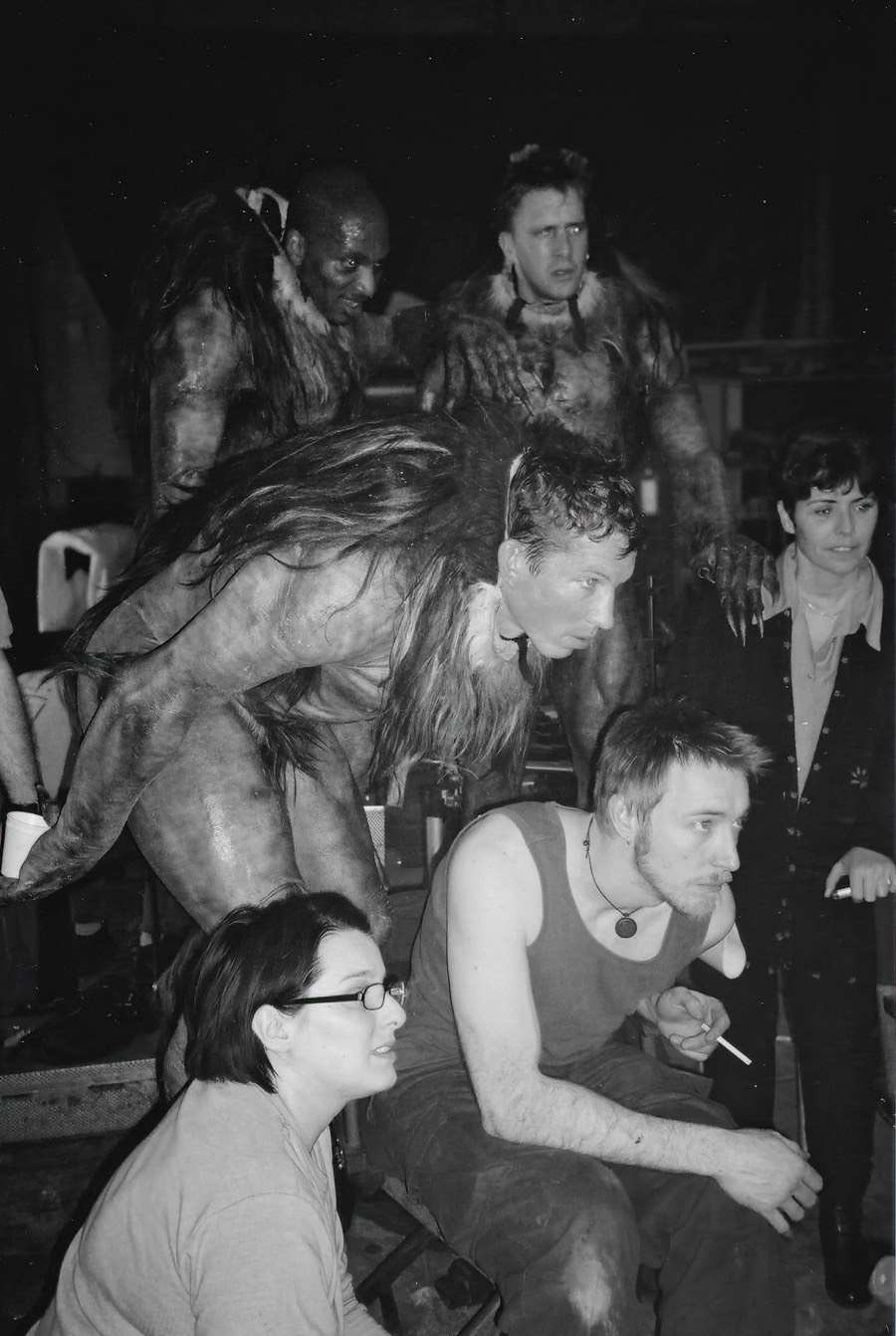
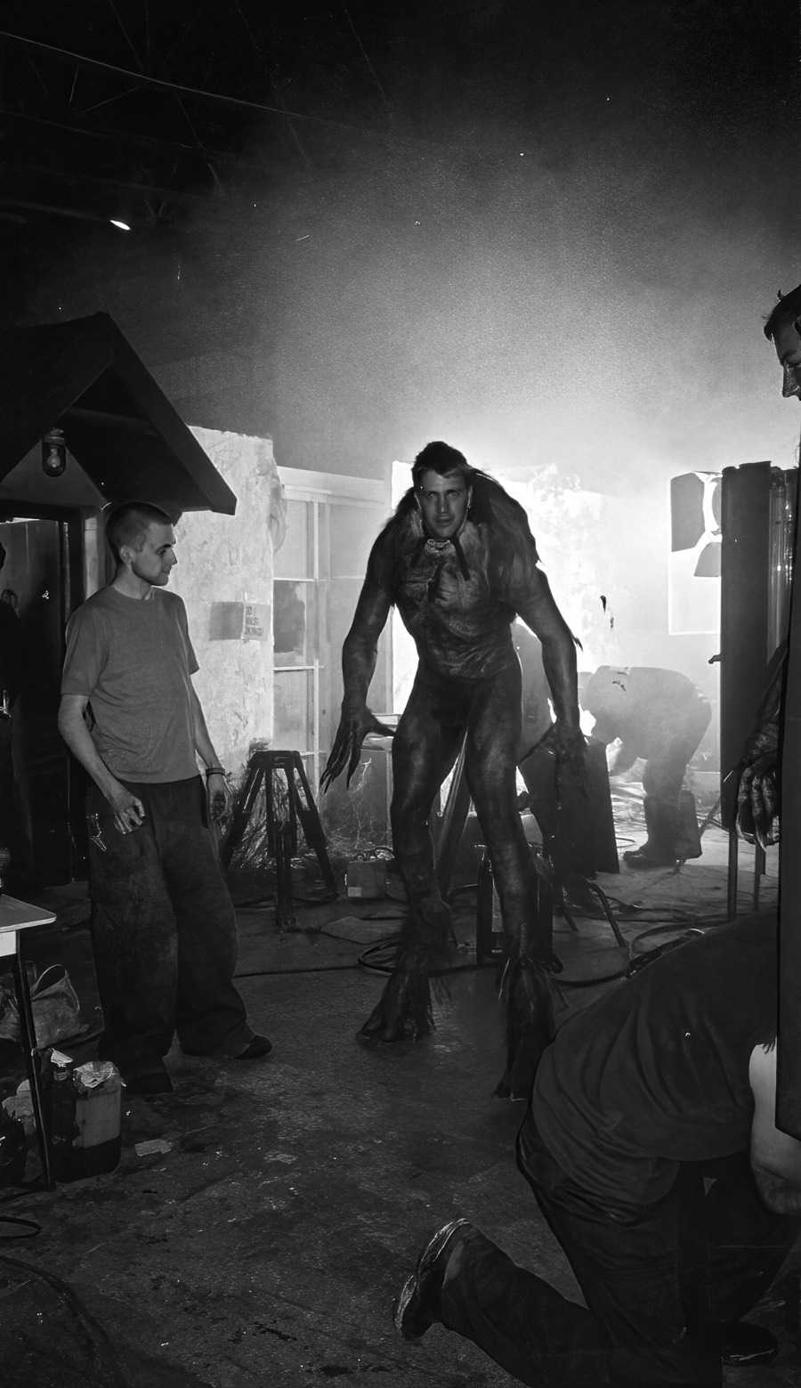
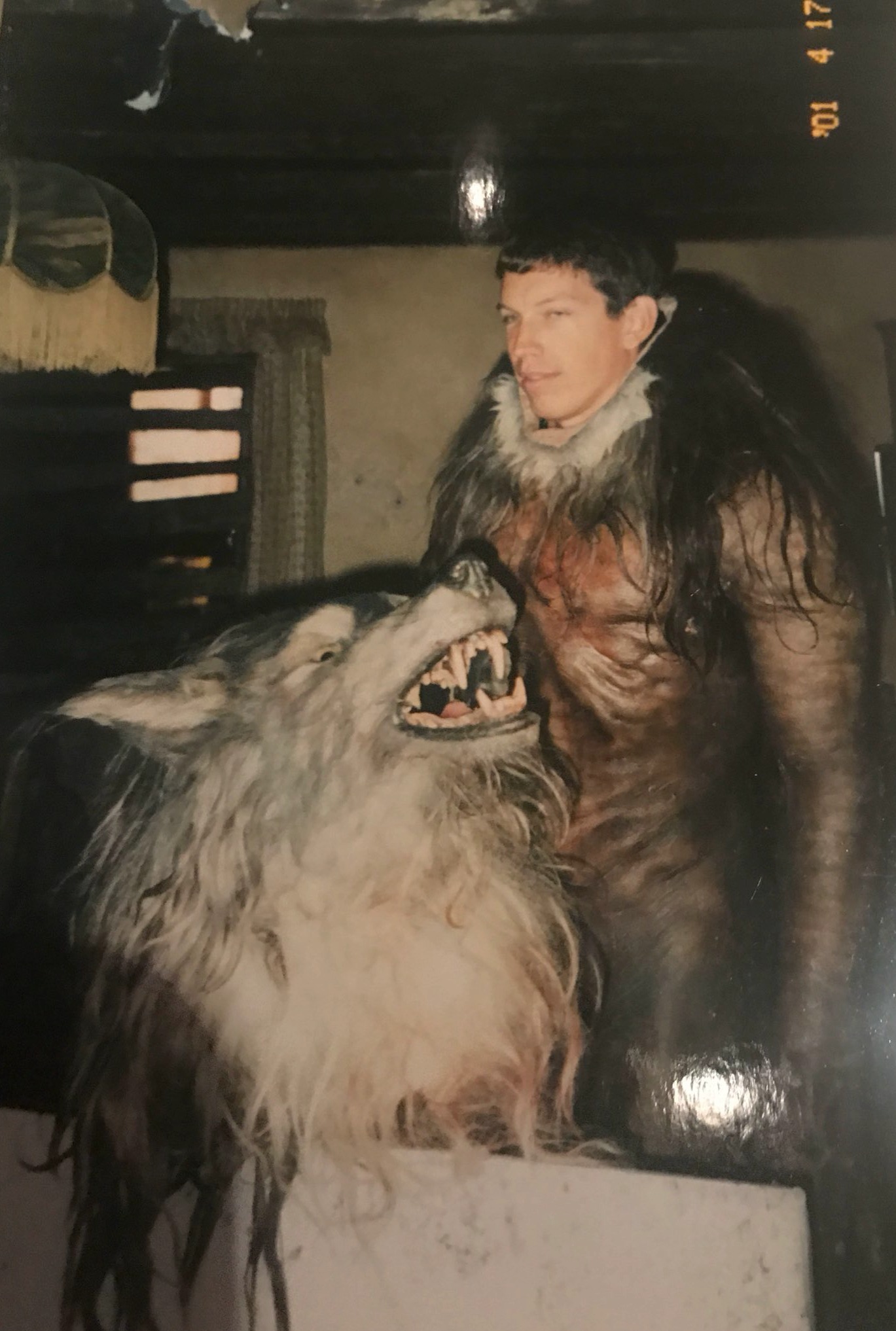
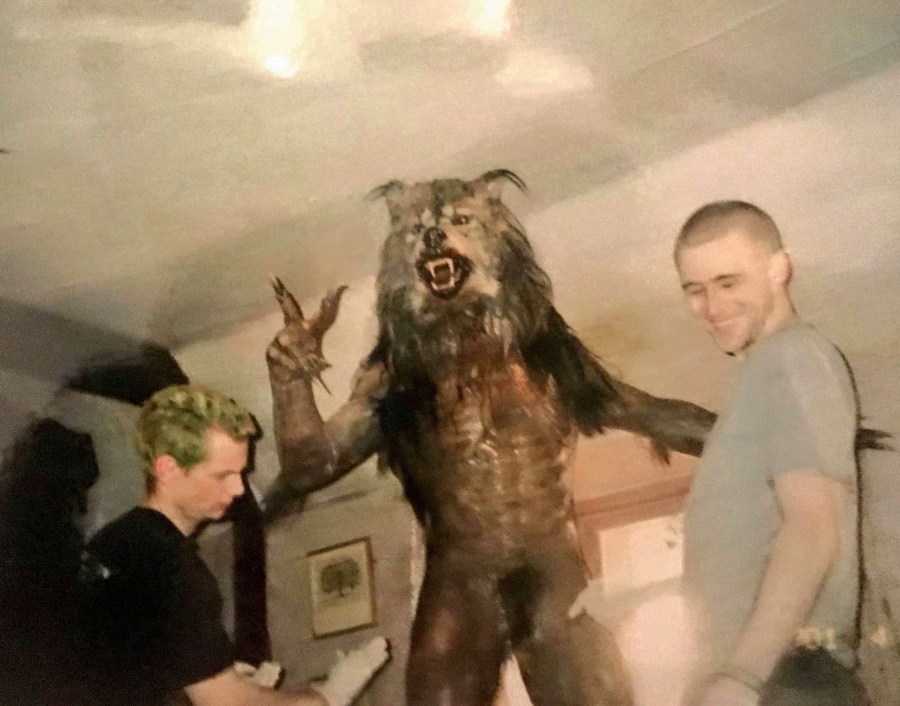
On set, the werewolves were played by two dancers, Brian Claxton Payne (the lead performer) and Bryn Walters, and a stuntman, Ben Wright. Marshall wanted elegance and grace to the movements of the werewolves, hence the choices. He said: “I had this idea that I didn’t want just some kind of muscle men or whatever to play the werewolves, I specifically recruited dancers — I wanted dancers to play the werewolves because I wanted them to have an elegance about them, I wanted them to move with grace which was kind of wolf-like, and for them [to fit the] slender design. […] So, we got these amazing dancers to play the werewolves, some of them were 6’5″ if not taller, and then you put them on foot stilts and they were 7′ by the end of it. They were impressive.”
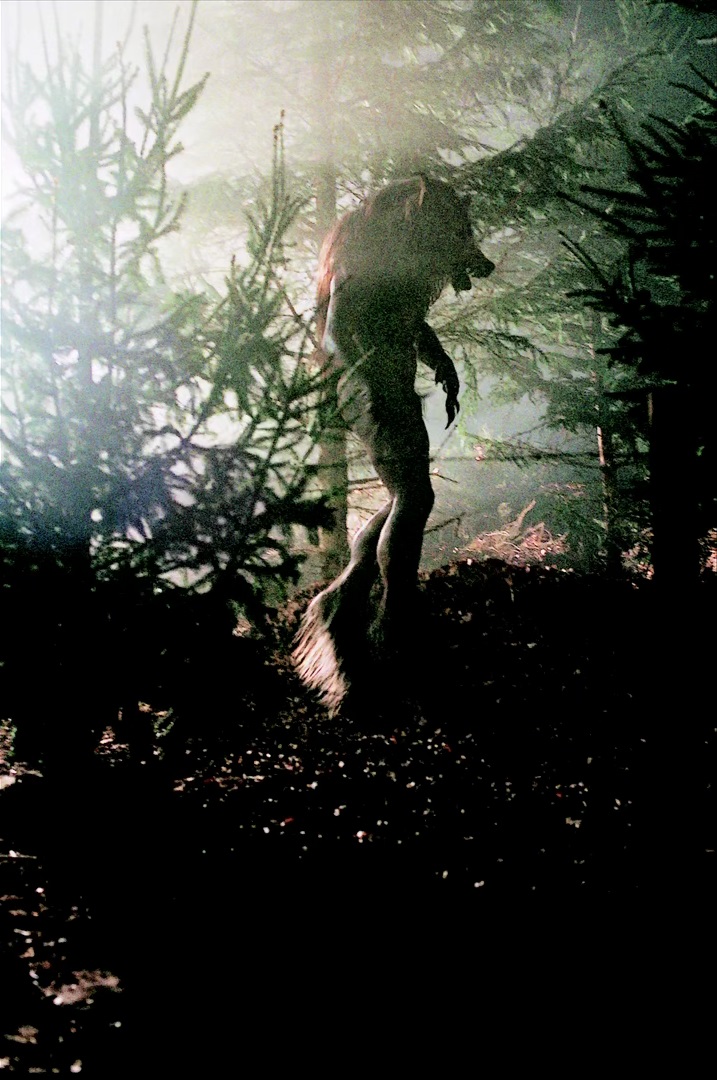
As said, the leg extensions elevated the performers’ height — Marshall wanted them to scrape the farmhouse ceilings for a sense of overpowering menace; even the set ceilings were built specifically to be too low for the werewolves, as said by production designer Simon Bowles: “we also used a solid ceiling on the set, partly to make the wolves more imposing. I asked Bob Keen the exact measurements of the werewolf costume, I wanted the ceiling to be the exact height where the hair on the top of the wolf ears were just brushing against it.”
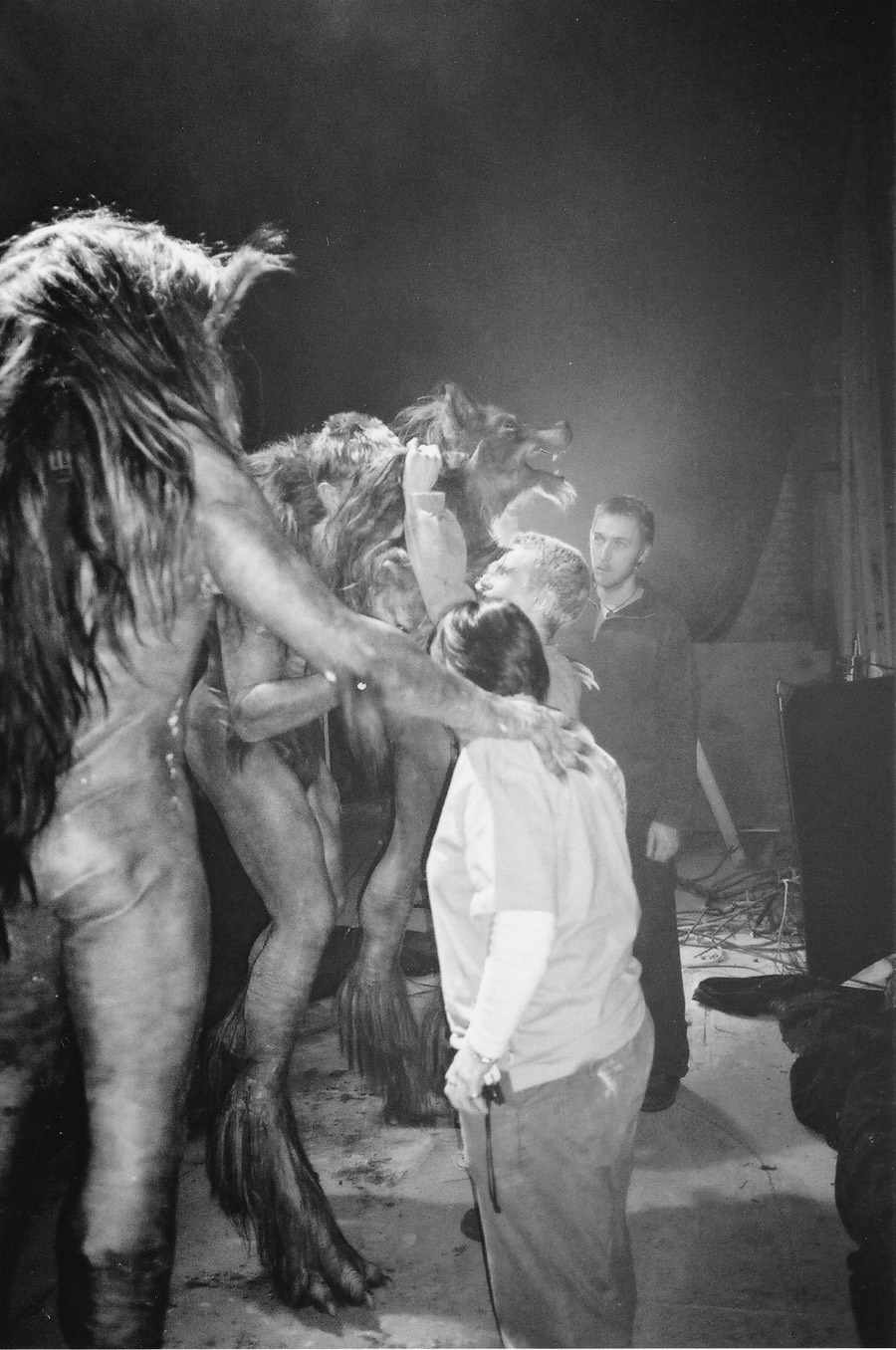
Budget and production schedule dictated that harnesses and wire rigs — as per the standard — could not be employed. Instead, the leg extensions had to be “completely self-contained,” said Keen. Rehearsals went by without the werewolf heads, and when time came to wear them, they obstructed the peripheral vision of the performers — something that was accounted for only partially. The suits were also difficult to stand in for extended periods of time, and running set-ups often found the performers about to topple over. These issues became especially problematic for set-ups with multiple werewolves in the same shot. Bonneywell recalled: “there were scenes where we had all three werewolf performers moving in a very closed environment, and after one or two steps they just lost sight of each other. So, our biggest problem was werewolves colliding with each other and toppling down from these stilts they were on, with very expensive mechanical heads on them!”
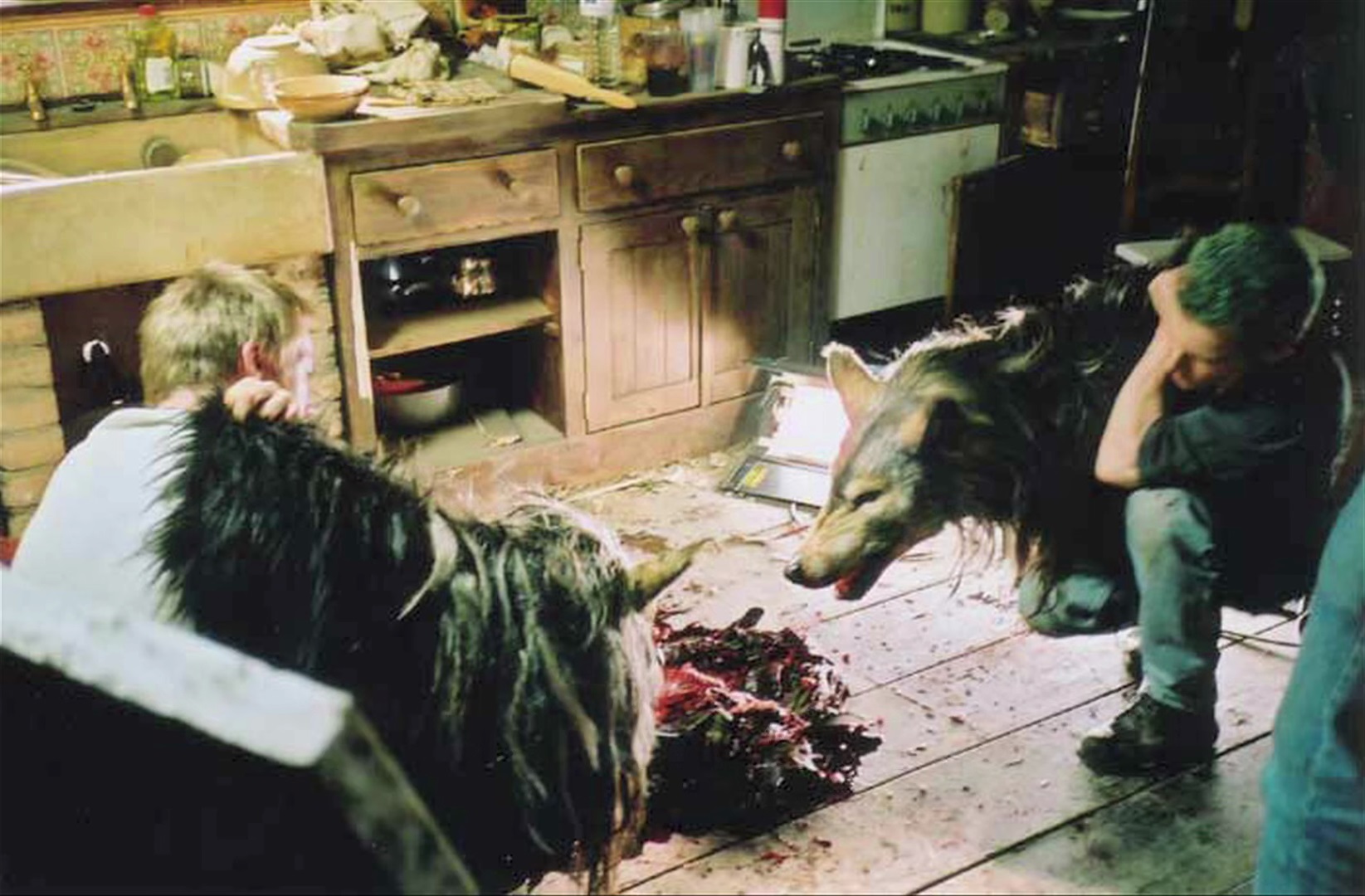
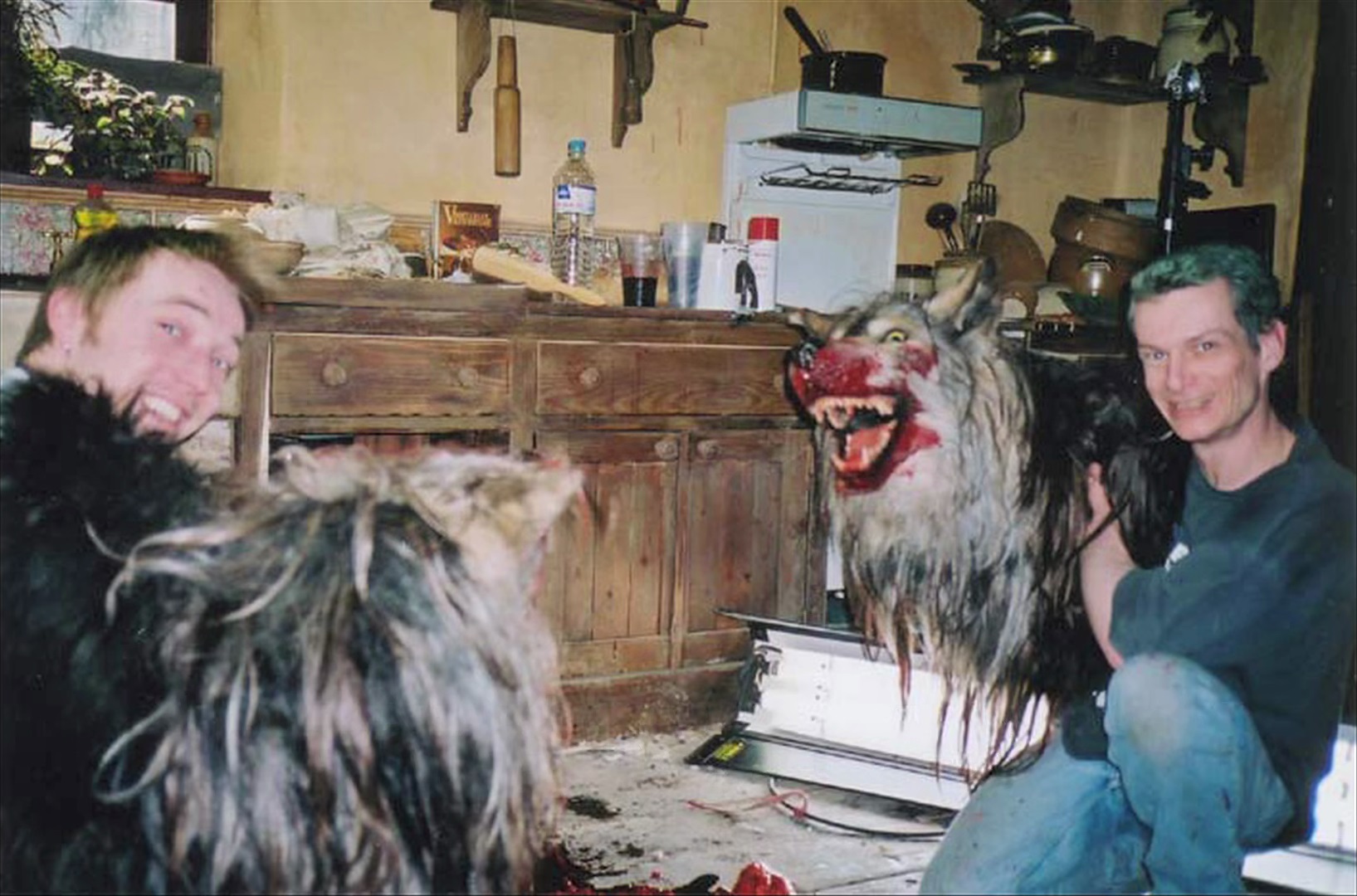
Two hand puppet werewolf heads were also built for close-ups of the beasts feasting on their carnage. Bonneywell puppeteered them alongside O’Toole. “We’d be making wolf chomping noises as we puppeteered,” Bonneywell recalled, “so each take ended in a fit of the giggles.”
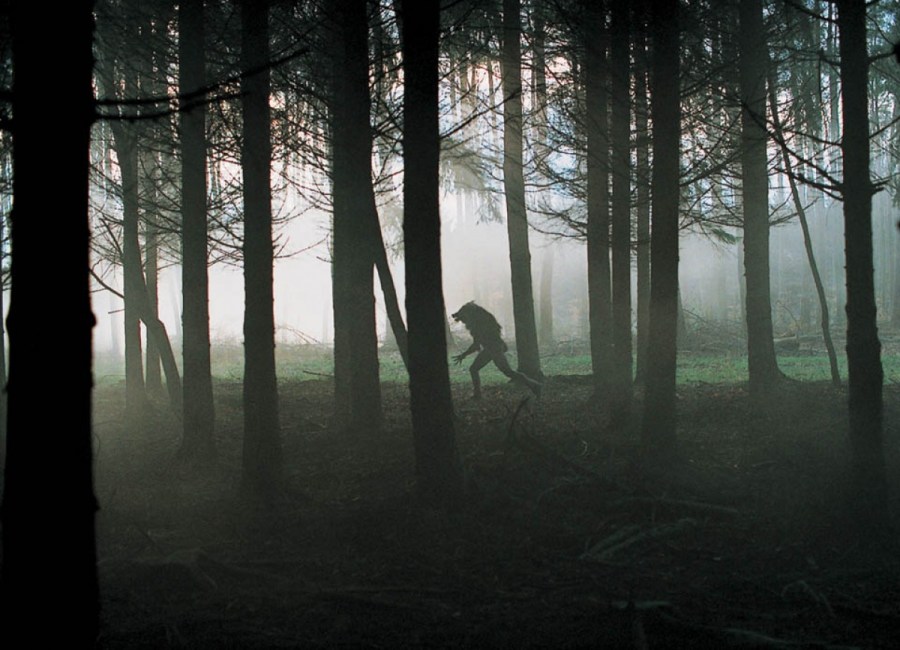
For more pictures of the werewolves, visit the Monster Gallery.

