
Before it became a film about werewolves, Ginger Snaps began with director John Fawcett’s fascination with bodily transformations. He had written a short script “way back about a female biologist who turns into a tree,” he said, “and that sounds really stupid but it was a really interesting concept to me and there were a lot of things that I liked about it.” The same basic pitch, this time of a woman metamorphosing “into some kind of creature”, as said by Fawcett, would be the seed of Ginger Snaps.
Fawcett related: “I knew that I wanted to make a metamorphosis movie and a horror film. I also knew that I wanted to work with girls. That’s basically how it all started.” The director came into contact with writer Karen Walton, who was initially reluctant, but later changed her mind in light of trying to reignite a genre that — she thought — had grown stale.
What kind of creature the woman or girl would metamorphose into came only later, in light of Fawcett realizing the scarce quantity of “quality” werewolf films. “The way forward wasn’t going to be to make a werewolf movie that adhered to the traditions of the werewolf movie,” he said, “and frankly, honestly, it was all kind of shit. There weren’t [many] good werewolf movies, and even when we were talking about doing a transformation movie, I was very reluctant to call it a werewolf movie, because it just seemed cheesy, it just seemed low brow. I didn’t think anyone was gonna wanna watch a werewolf movie. The more I thought about it, though, the more I realized it was a challenge, because there was nothing that was good it was actually really ripe ground to reinvent the genre.”
Unlike what came before them, there would be no supernatural element to the werewolves in Ginger Snaps. Instead, the nature of the “curse” would be biological rather than magical. As such, the film would do away with elements like cyclical transformations under the influence of the full moon. “Ours is not a garden variety werewolf,” Fawcett said. “It’s not the mythological creature born under the full moon. Rather, it’s treated in Ginger Snaps as a biological infection that grows from the inside out, through the blood stream.”
The low budget of the production dictated that digital effects could not be afforded, but even then Fawcett favoured practical effects. Among the people reached out to carry out the transformation and werewolf effects, Paul Jones was happy to accept. “There were a couple of offers that came up around the same time I was offered Ginger Snaps, but Ginger Snaps struck me as a film that would show off what I do for a living extremely well. It has everything in it. Every aspect of what I’ve done over the last five years is in this one film: transformed humans, werewolves, dead animals, prosthetic make-up, sculpting and animatronics. And from a story point of view, it struck me as excellent genre story telling. It’s about this young woman who is going through this horrorific transformation, while going through personal hell at the same time. I thought the combination of story and make-up opportunities was great.” Most of the crew was just done working on The Phantom Menace, and among others, it included Shaune Harrison, Kate Hill, and Anthony Veilleux.
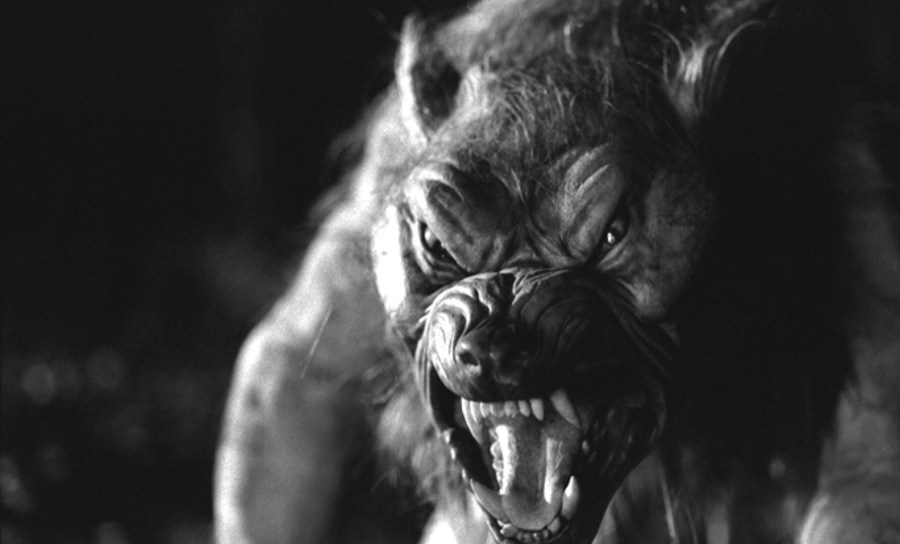
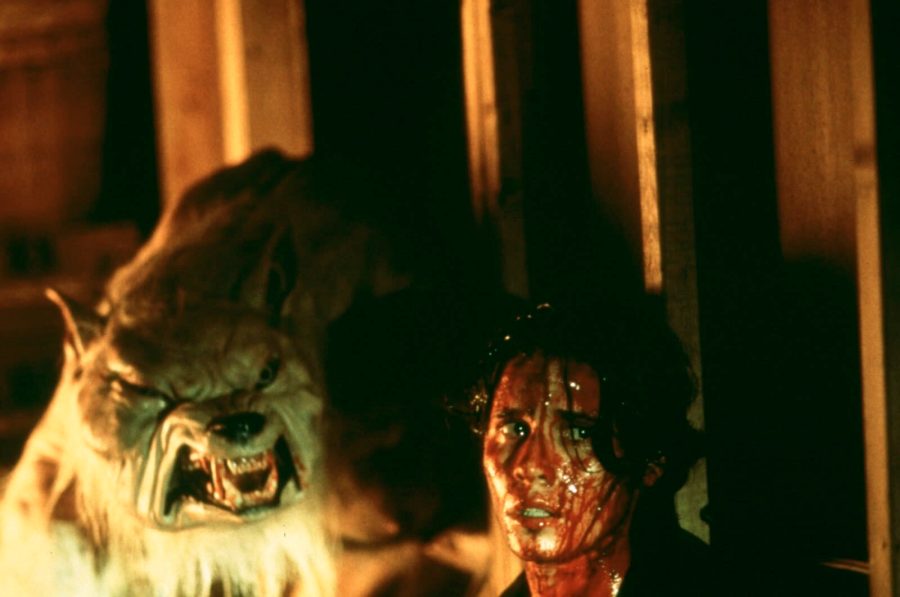
Ginger Snaps ties lycanthropy with sexuality, and that is first seen at the beginning of the film, when Ginger is attacked by a werewolf — the Beast of Bailey Downs; the attack was meant to invoke — at least partly — a sexual assault. Fawcett related: “I suppose it always felt like it had to be at least partly a sexual attack. The infection is, by definition, an invasion. Werewolves are traditionally men, and I knew that the creature that attacked Ginger was male. So I kind of went with that. It was something that I hadn’t necessarily seen before. In horror films, so much has already been done, so you’re always looking for the new angle and viewpoint. Don’t get me wrong — it’s not a werewolf fucking Ginger. It’s literally an attack.”
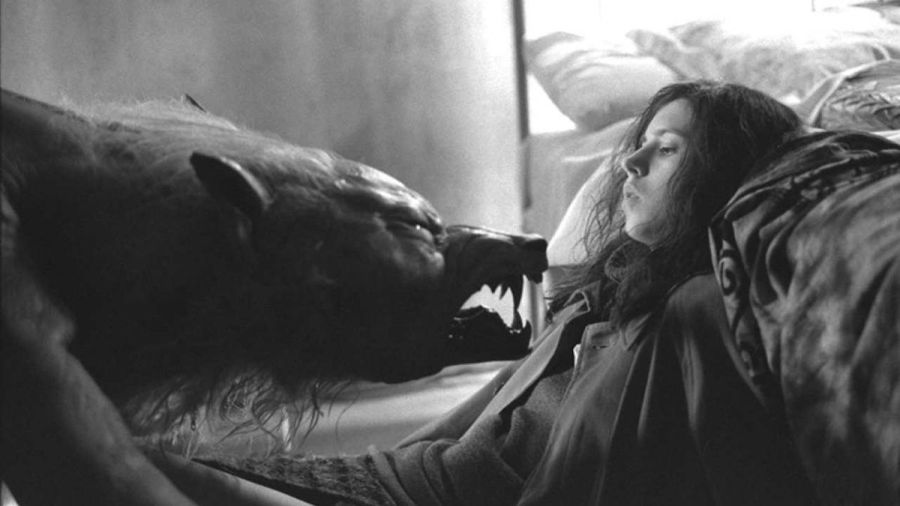
Once Ginger is bitten, a slow transformation starts. Her metamorphosis is a perversion of adolescential growth spurts and changes, as well as growing sexuality. The filmmakers wanted “to make a metaphor for the transformation that occurs during puberty,” Walton said. “As if that wasn’t bad enough, you have to be a werewolf too!”. Regarding the slow nature of the transformation, Fawcett explained that “when I started in on this werewolf film I wanted to make sure that it was different from everything else that I had seen as far as werewolf films go. I was a really big fan of The Fly and I really liked the long transformation over the course of the movie. It’s a biological mutating transformation that is progressive and doesn’t occur by the light of the full moon.”
Compared to the werewolf itself, there was more wiggle room when it came to designing the transformation. Jones said: “John really had an image in his mind for the wolf suit, but when it came to the actual transformation, I don’t think he’d given it as much thought. He wanted it to be a natural progression. The creature itself, though muscular, is very sickly. As far as the transformation went, he wanted it to have a ‘better than Buffy‘ look, which I found very amusing. My idea was to try to keep it as subtle as I could, right to the very end.” Fawcett added: “it’s maybe less make-up-intensive than other werewolf films. There aren’t any stretching fingers or anything like that. All the transformations occur between cuts and scenes, so there are no rib cages jutting or faces contorting.”
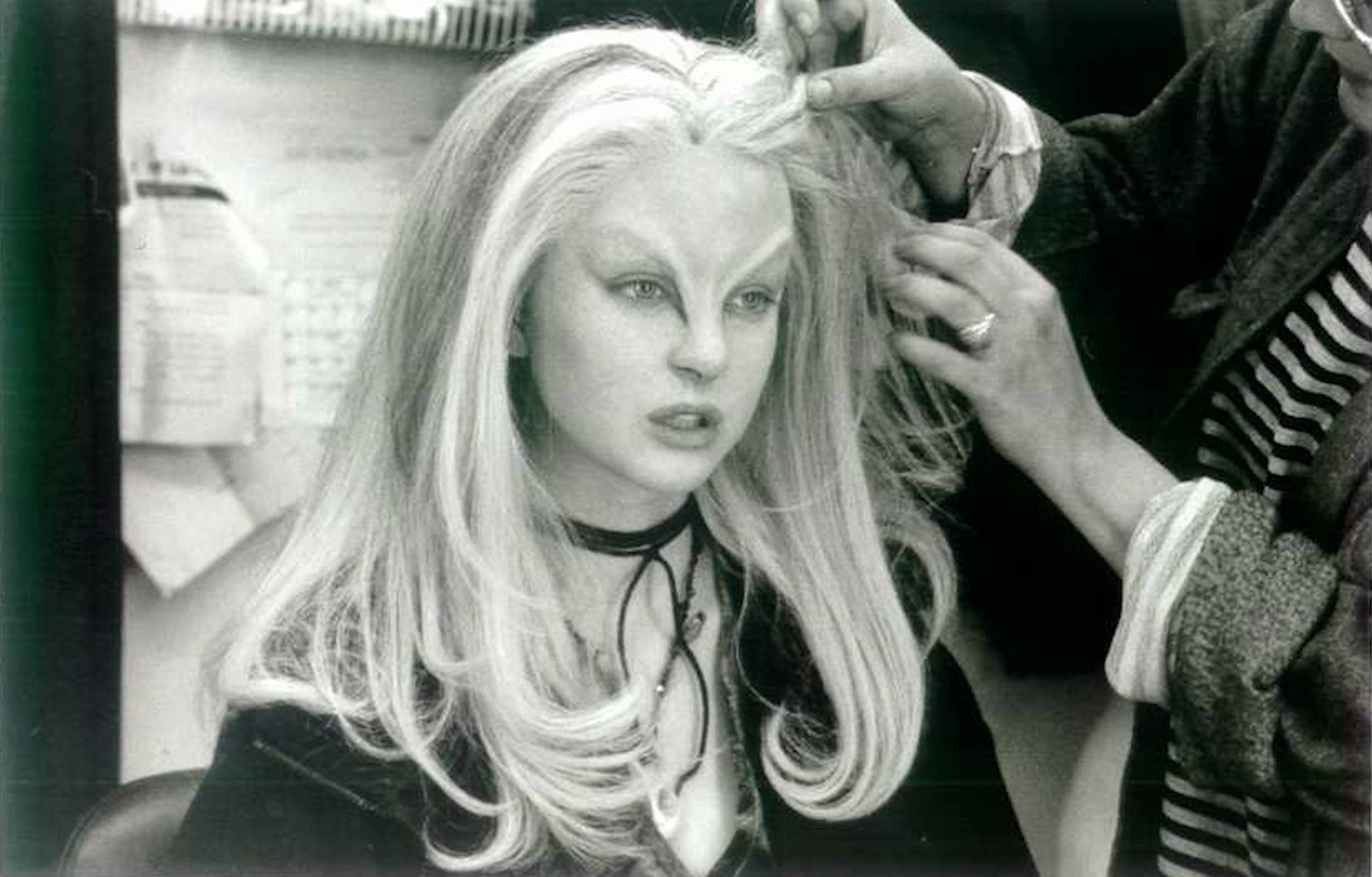
The metamorphosis starts with gradually whitening hair, first achieved with hair dying and then with wigs; stages of dentures were also provided, as well as nails growing into claws. As the film continues, other signs appear: a growing tail (an inert foam latex prosthetic that could be pulled by wires), bulging vertebrae (an effect involving a series of bladders attached to Katharine Isabelle’s back) and a claw growing on Ginger’s ankle. The transition to the second stage begins with a subtle change on Isabelle’s face — “eye pieces to make it look like her eye socket was changing,” according to Jones.
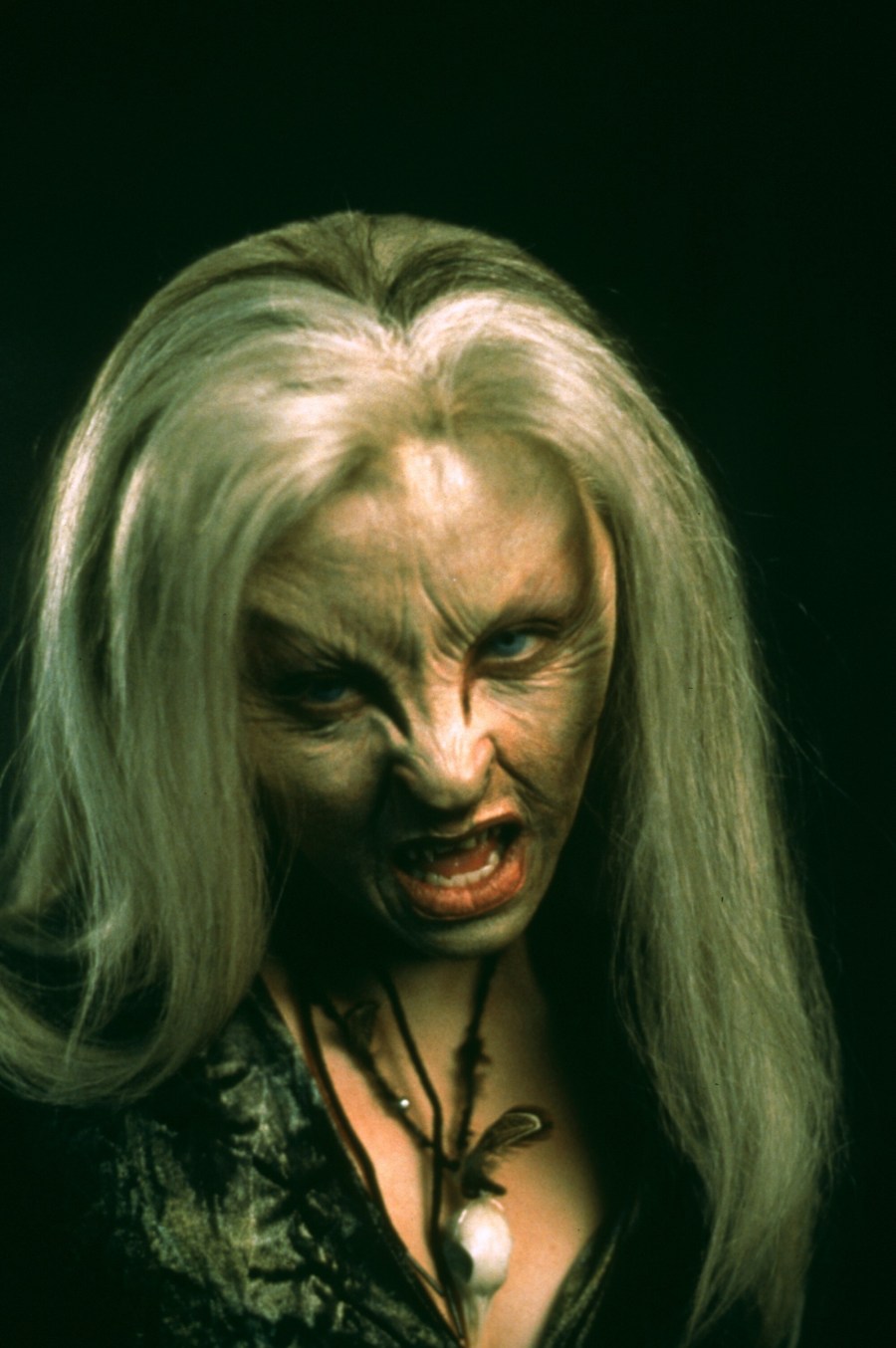
The second stage appears during the Halloween party sequence, with Ginger’s face appearing more wolfish and undergoing subtle changes between cuts. A full torso make-up was also devised, including doglike nipples on the abdomen. “In the stage-two transformation,” Jones explained, “[Fawcett] wanted to ensure that, if she was noticed by other characters, they would think it was just a very nice, subtle make-up rather than her bone structure actually changing.”
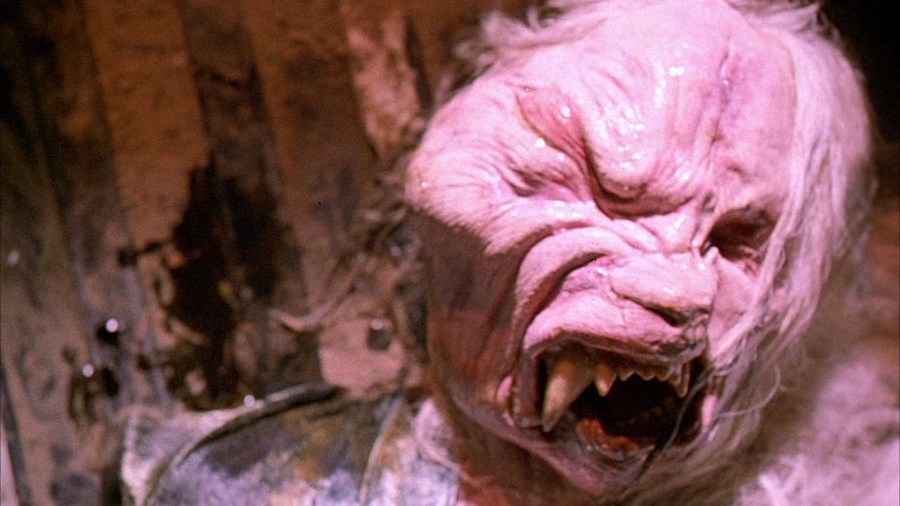
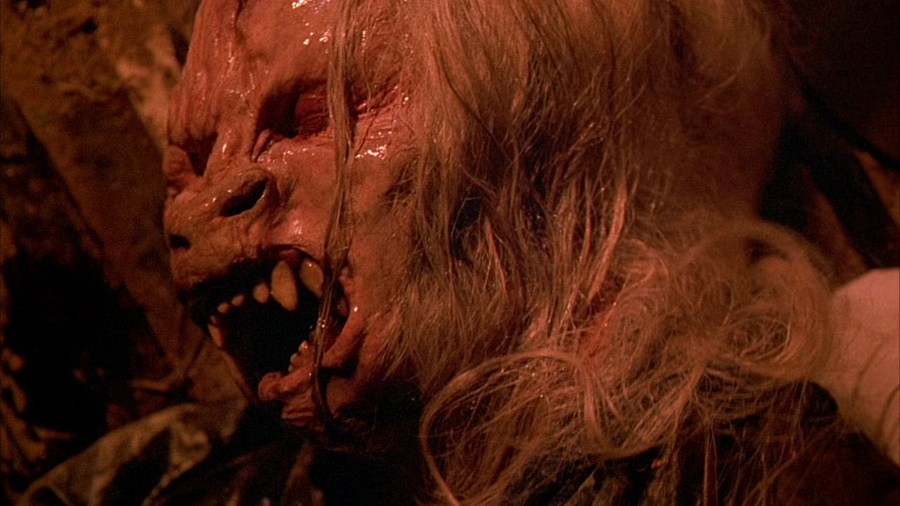
The final moments of transformation occur in the back of the van. Jones related: “the last stage would have to appear suddenly, because Ginger is changing very quickly at that point.” For this sequence, various prosthetics were devised, including bony gloves and bulging shoulder blades, as well as two full masks that could be filmed from different angles to show the progression of the transformation through editing.
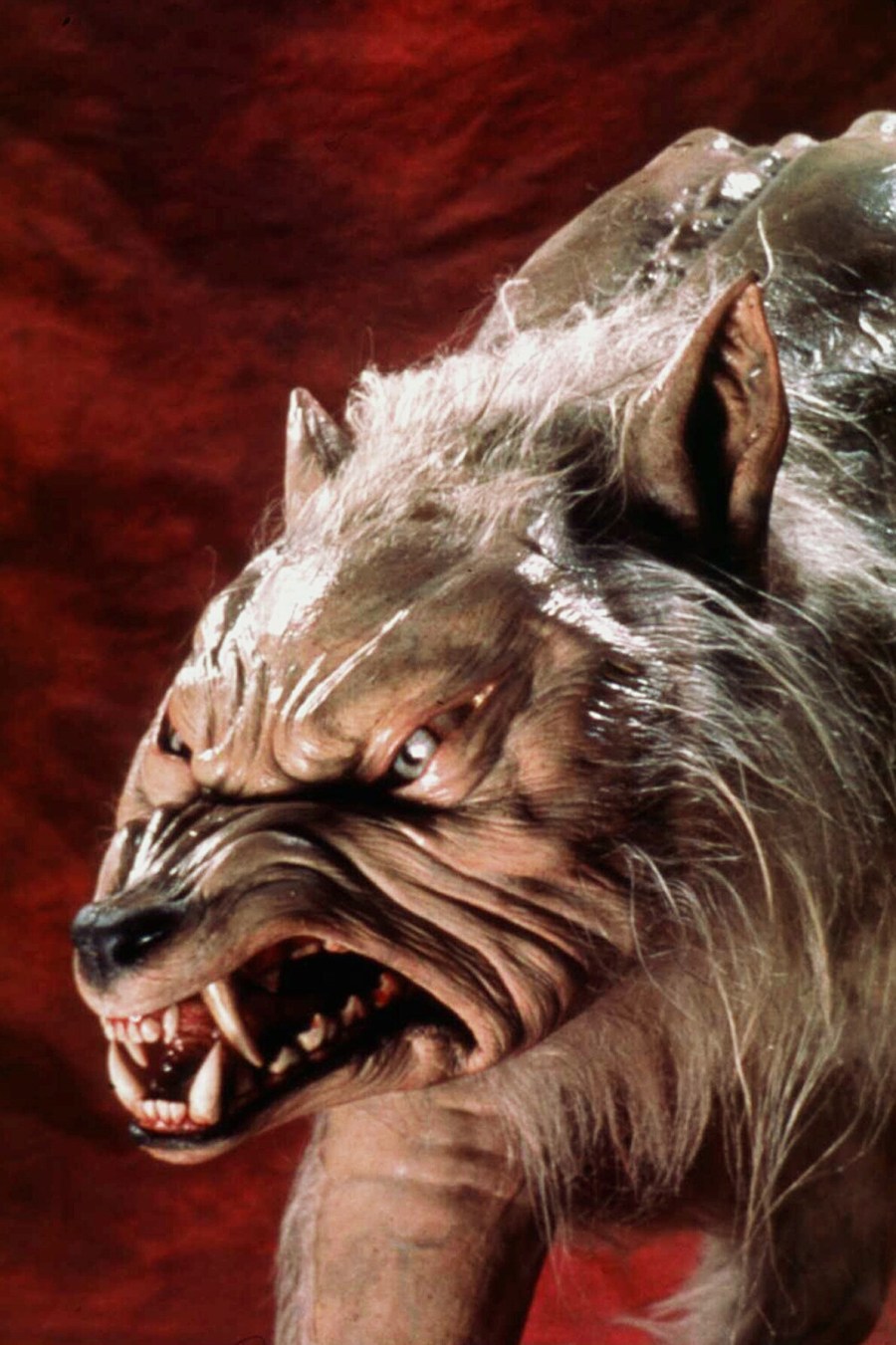
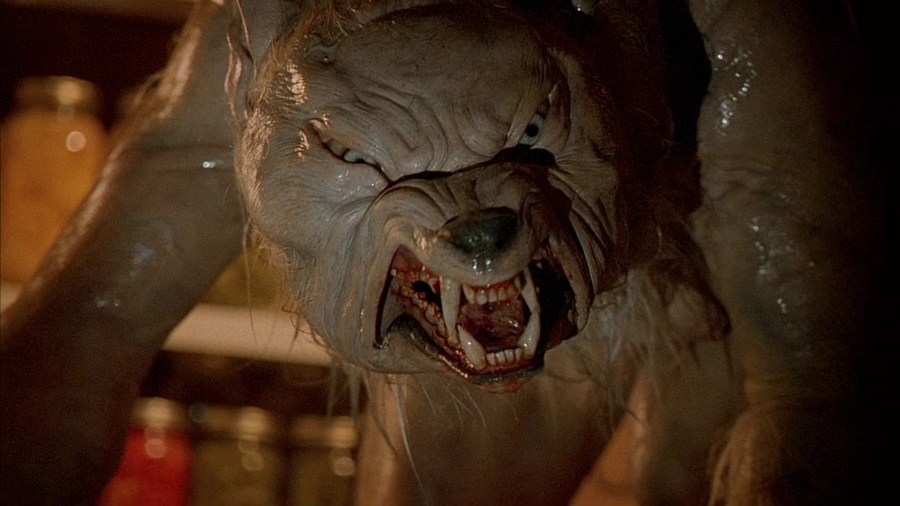
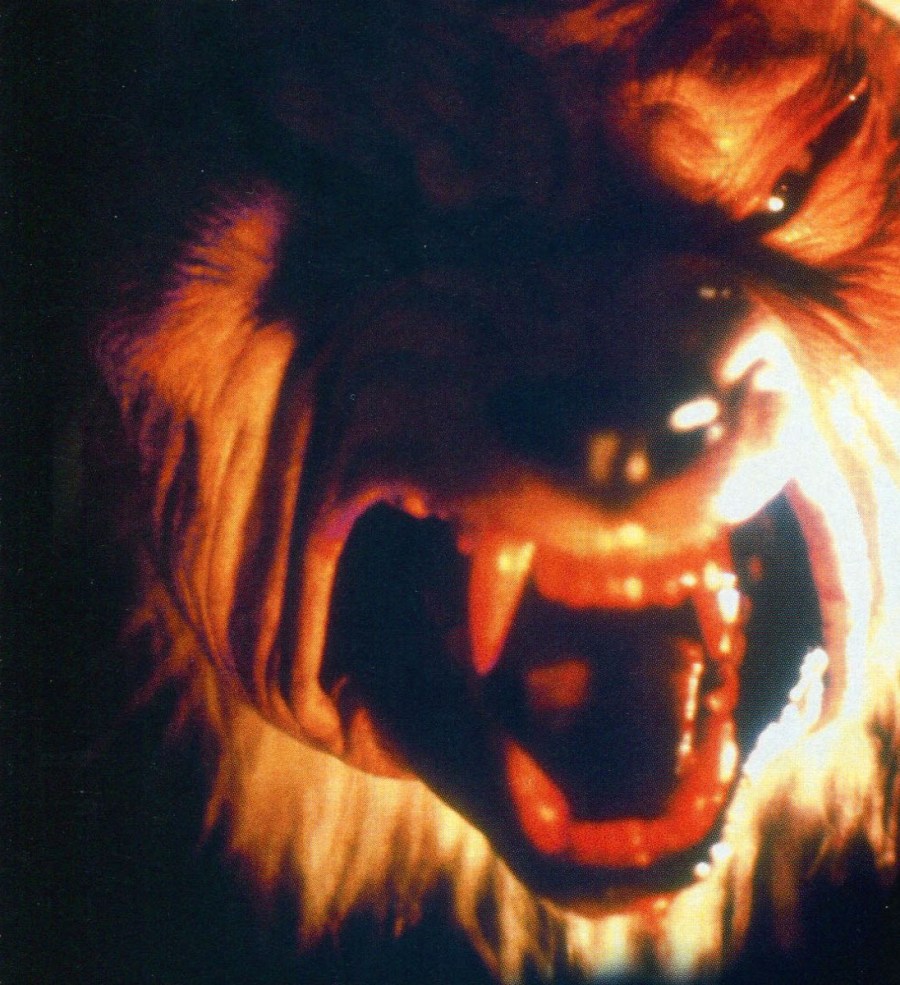
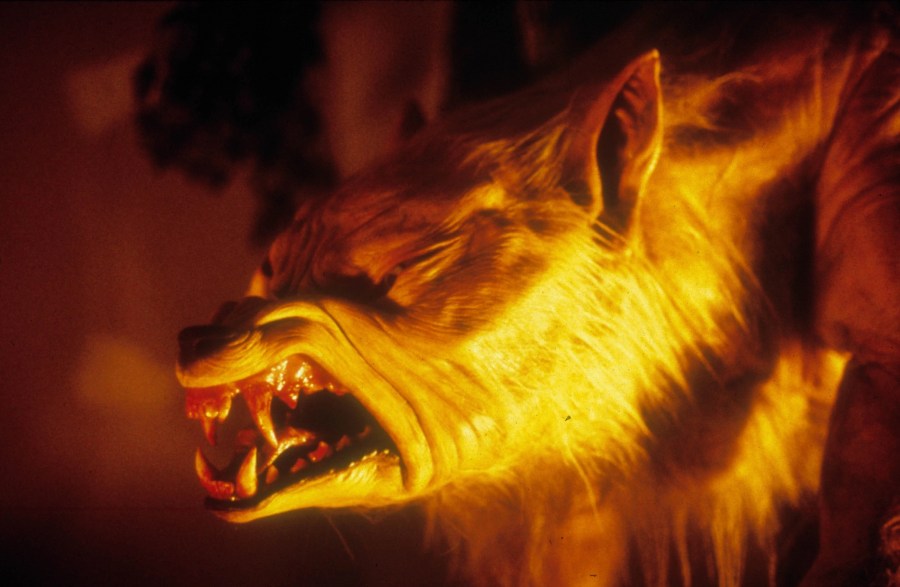
The werewolf was nicknamed Gingerwolf by the production. Vincenzo Natali, who storyboarded the picture, was also responsible for exploring early creature designs alongside the director. “We were out to redefine the werewolf,” Fawcett said, “it couldn’t be anything run out of the mill, it couldn’t be anything that we could recognize before.” He also added: “I wanted it to be more skin and muscle than fur or hair. I really wanted to get away from the guy-in-a-fur-suit trap of other werewolf movies; I was going for a skeletal look. I wanted it to be more hellhound than werewolf, actually.” Fawcett was also adamant that his werewolf was going to be white — an albino.
Natali was entertained by the idea of designing a female werewolf: “I remember whacking out a bunch of different werewolf designs. It was interesting, the idea of designing a female werewolf, because werewolves somehow are generally thought of as male, in terms of their characteristics. So, how do you create something that’s female, and how do you get around the furriness of werewolves, which I think John was concerned could look a bit silly sometimes, and not frightening.”
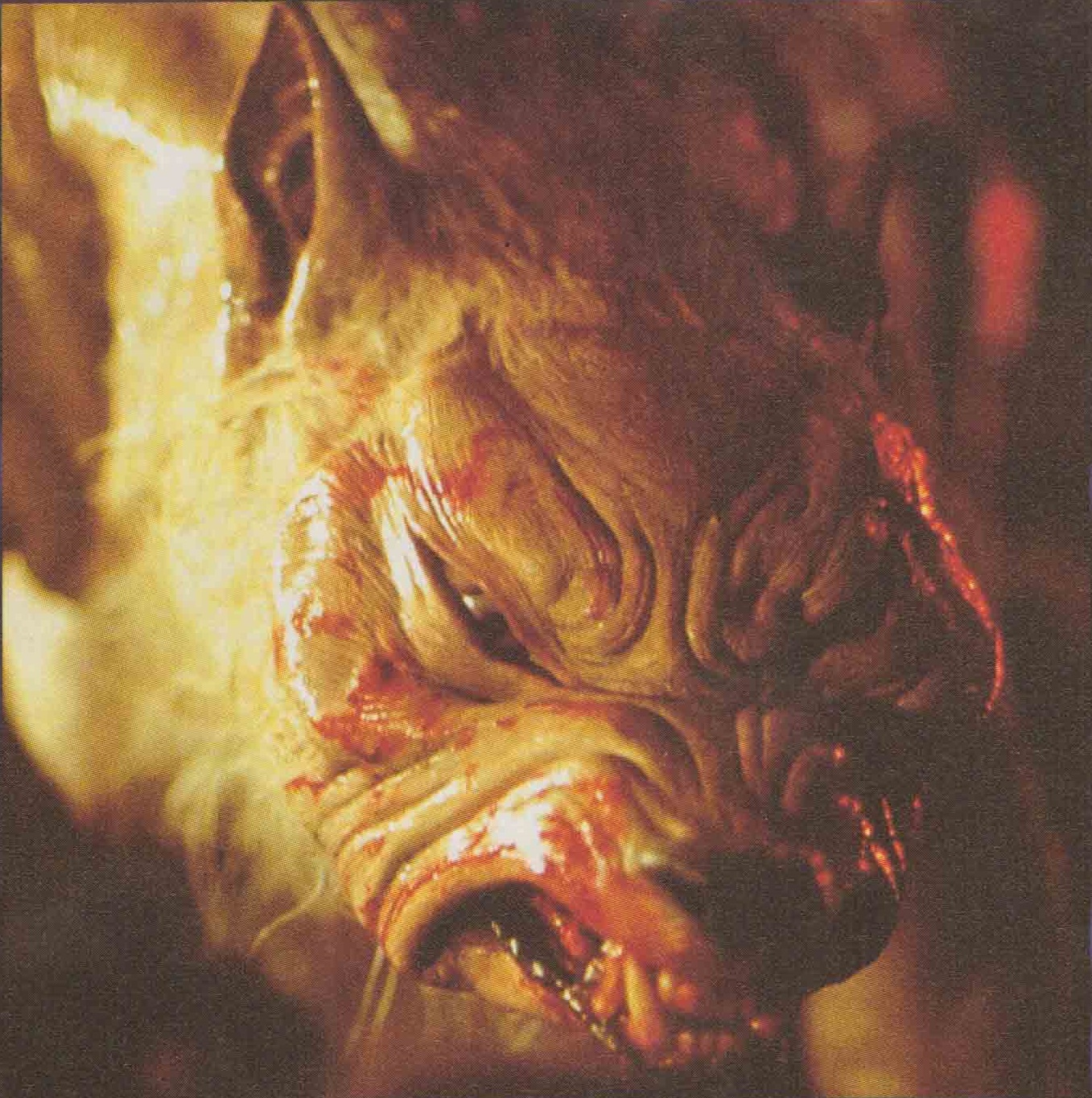
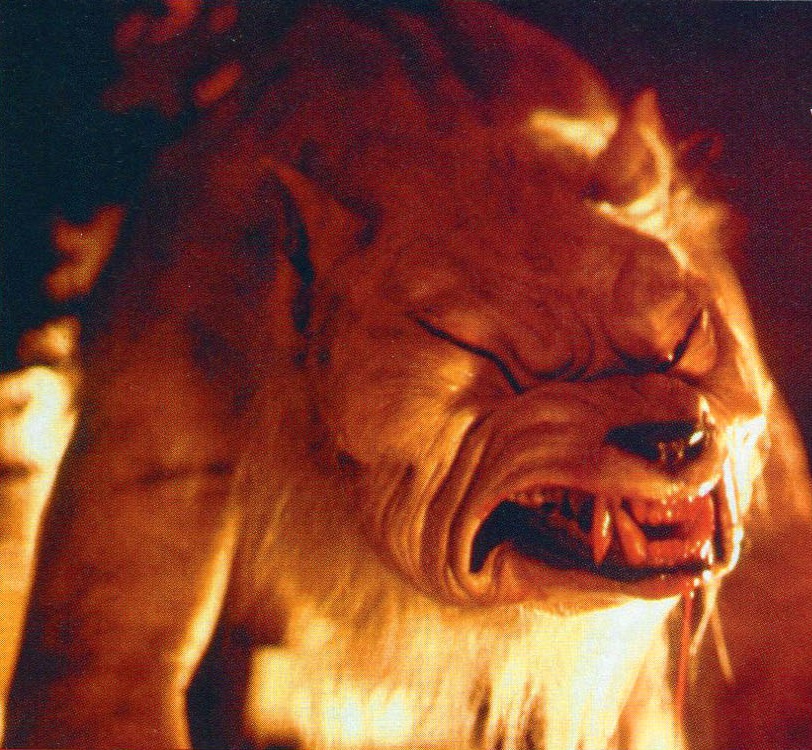
Once Jones was aboard, he joined the design process. He related: “John actually had the image of the werewolf in his mind for a very long time. He knew the colour, the shape, the feeling he wanted for the creature, so when it came to me designing it, he literally gave me a list of things he wanted, and it was my job to make them work practically around a performer. He said he wanted it to be dangeous-looking, but also extremely sexy. He wanted it to be feminine, aesthetically speaking, but not dainty.”
Trying to make the werewolf look feminine was somewhat difficult, but the conundrum was solved by referencing felines. “We found that there is very little difference between a male and female dog,” Jones said, “so when it comes to doing werewolves, they all look very masculine. The one way to get away from that was to look not at a dog’s body, but a cat’s. Not a domestic cat, but a lynx or leopard or cougar – something that has a litheness, but is also extremely deadly when it wants to be. Obviously the head is very lupine, very wolfish, but it still has a lot of feline qualities.”
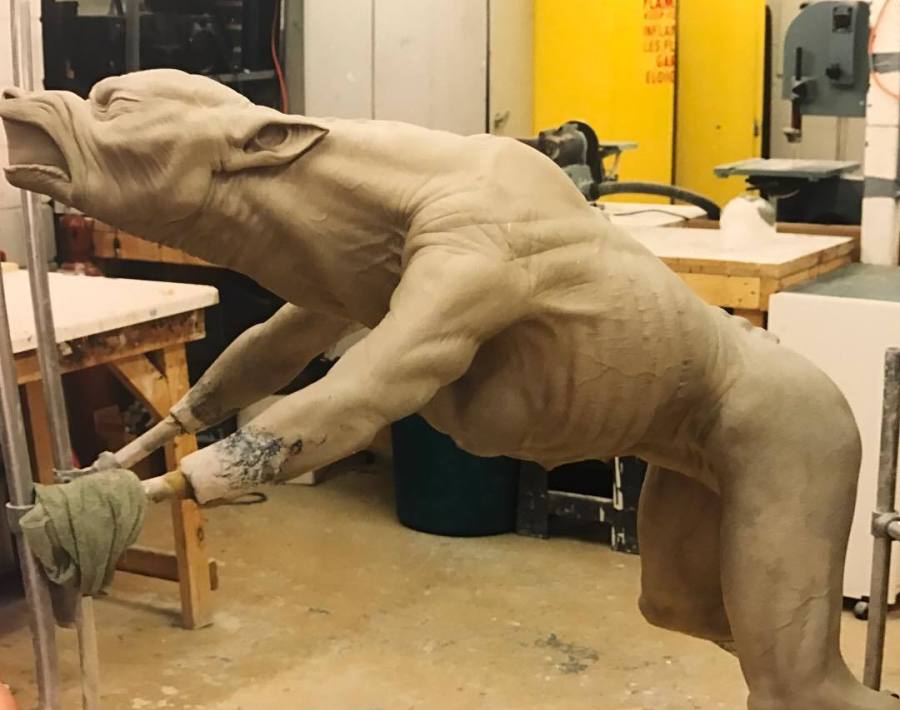
The design process culminated in a small-scale maquette, which was the base for the full-scale sculpture of the werewolf. Both were sculpted by Shaune Harrison, Kate Hill, and Paul Jones himself, and were the starting point for two werewolf suits: one for the Gingerwolf, and one for the Beast of Bailey Downs. For the latter, a stunt gore dummy would also be built for the scene where the creature is run over by the van.
Initially, Jones thought that a puppet would be ideal, but the filmmakers were against the idea. He explained: “[Fawcett] was very specific about what he wanted. He goes, ‘I want a werewolf with no fur!’. I was like wow, that’s new, and it’s tough to do as well, because it was a four-legged werewolf, it was on all fours, and it had a very long, skinny body. So, I immediately thought about doing a puppet, but they nixed that idea right away — it just wasn’t practical the way they were going to shoot it, so I was like ‘well, if you do a guy in a suit, you’re kind of limited'”.
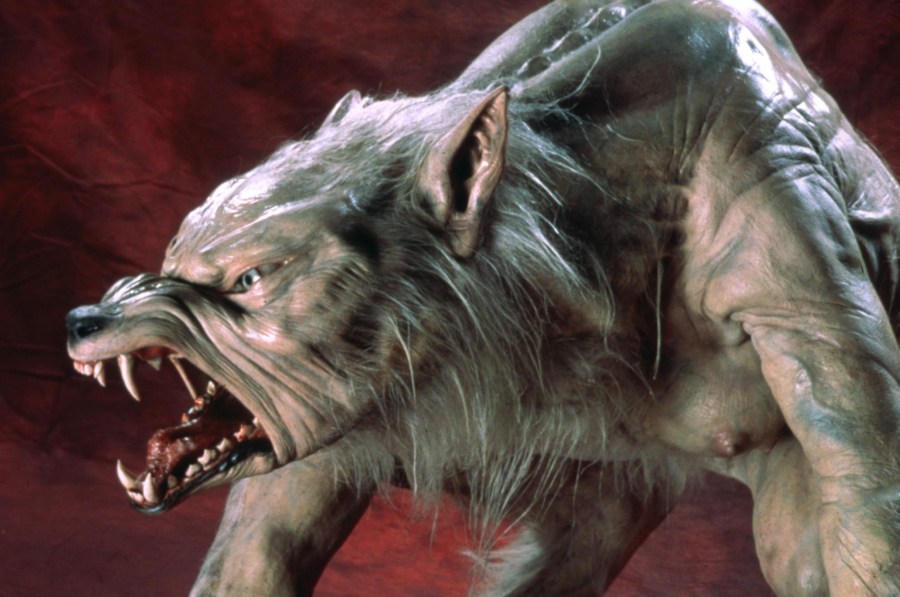
The intended furless quality of the werewolf became a practical dilemma. Jones said: “the biggest problem with the suit, for me, from a technical point of view, was that it had no fur. Whenever you think of werewolves, you think they’re covered in fur, so you can hide zips, snaps, connectors and all that kind of stuff you need to put a suit on, it’s never one piece. So we ended up making the Ginger suit as two pieces: it was an entire full body, with legs and everything attached, and a separate head that would snap on.”
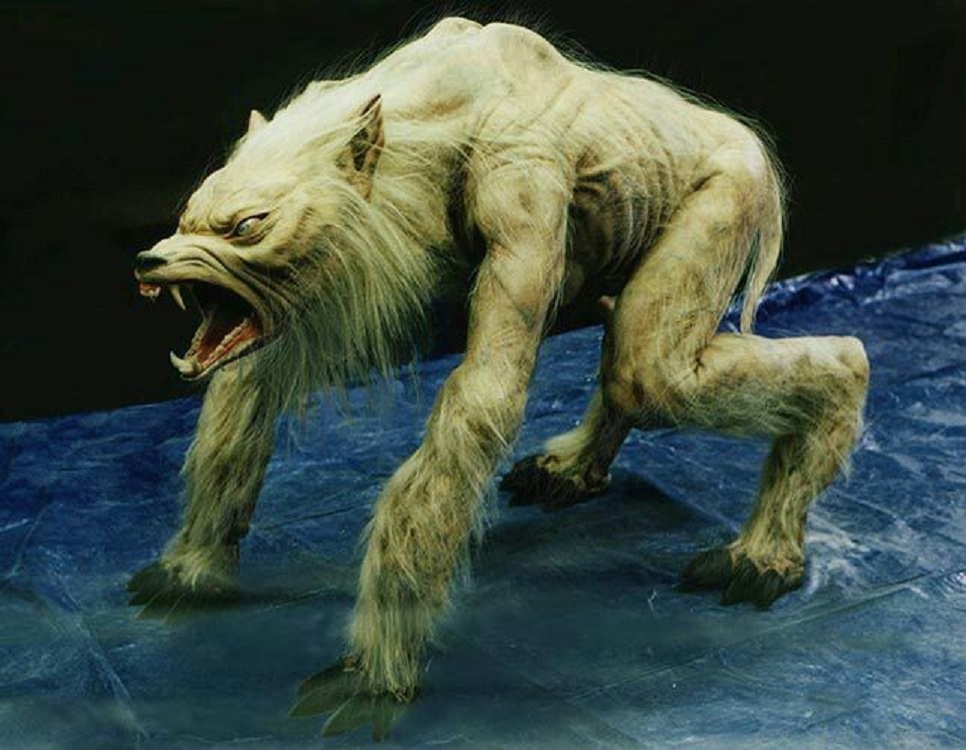
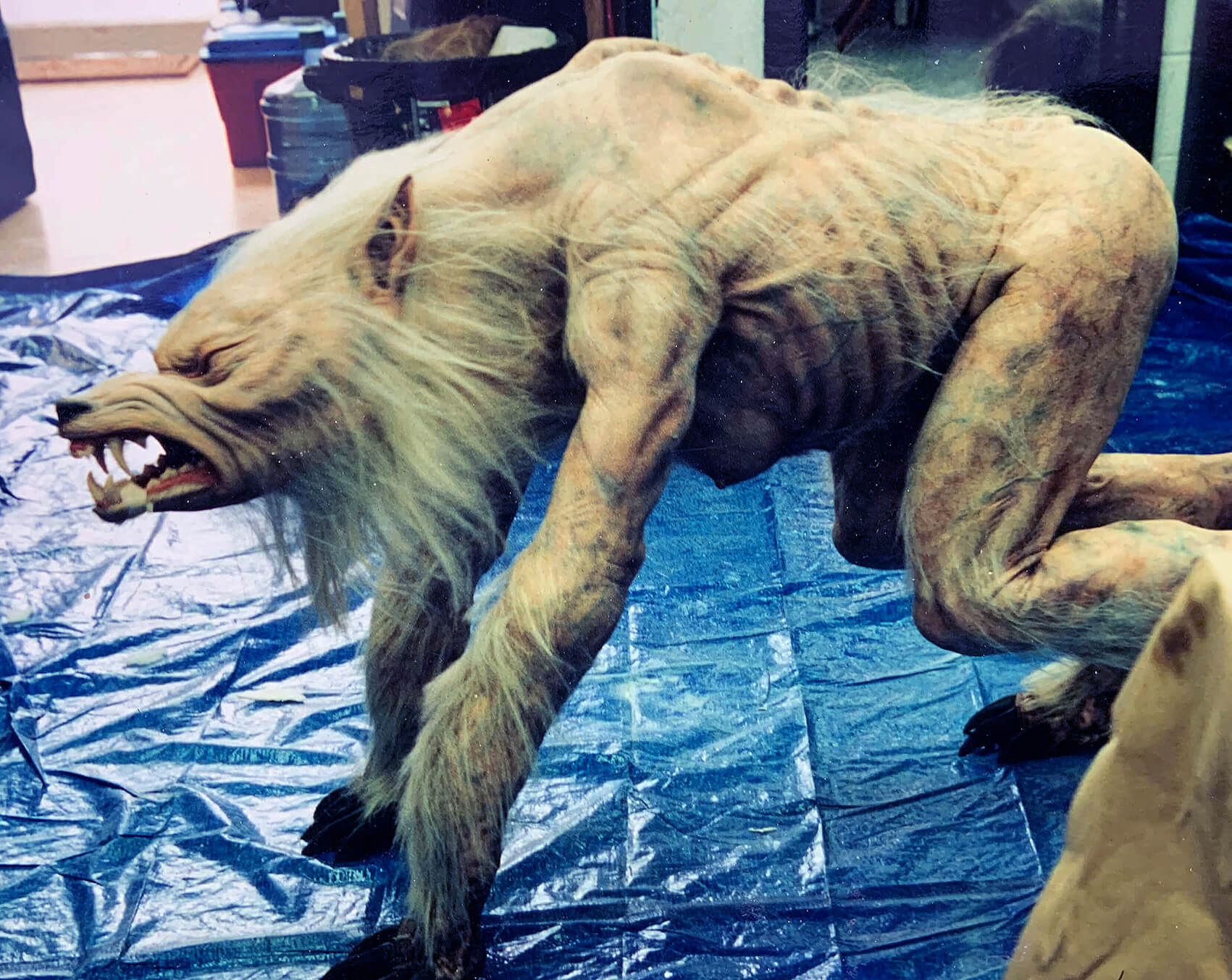
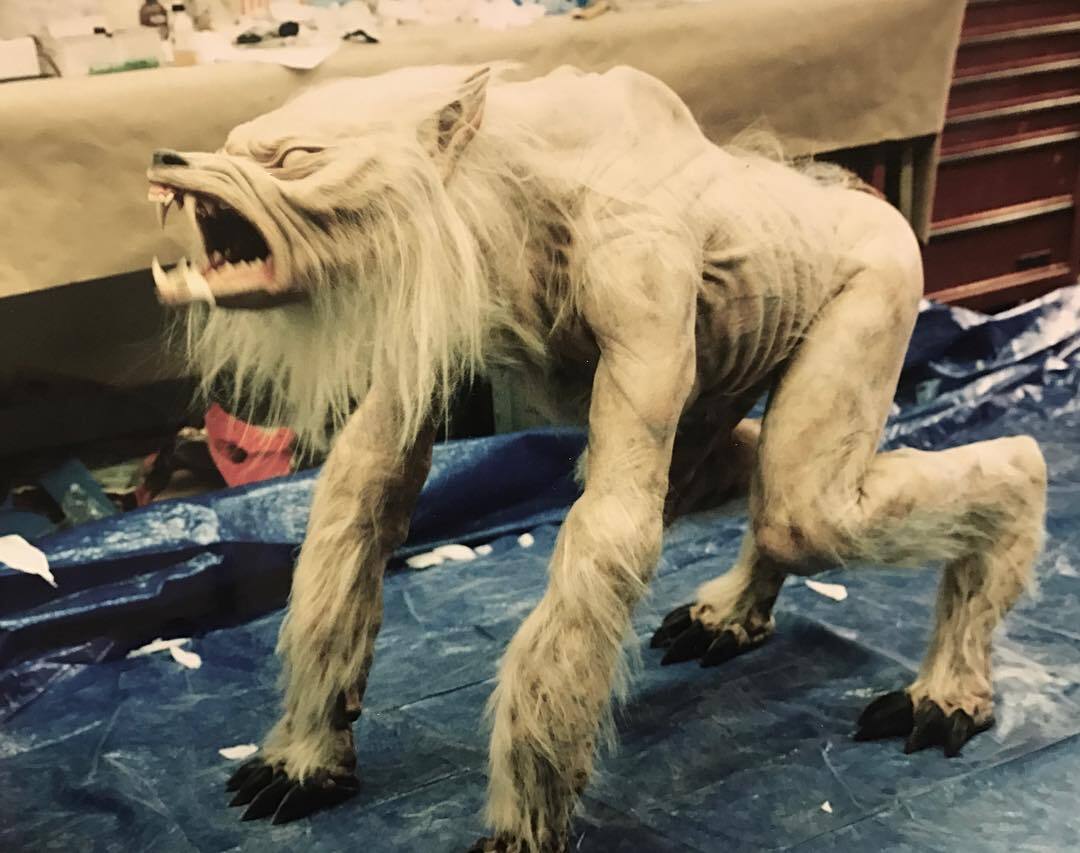
Cast in foam latex and complete with arm and leg extensions, as well as cable-controlled heads, the werewolf suits were painted by Harrison and Hill. Ultimately, fur had to be added for practical reasons — unbeknownst to the director. Jones related: “the only reason the Ginger suit actually has hair is because I glued it on and didn’t tell John; and then when he turned up on set he was like, ‘there’s hair on it! What the hell!’. And I was like ‘John, I need some hair, we have zips on it that I have to hide, and we can’t glue it in because the [performer]’s gonna suffocate, we have to have some kind of holes in the suit'”. The Beast suit, in particular, had a hairier appearance, with darker fur, and it was also altered to appear more masculine — with changes such as the lack of breasts.
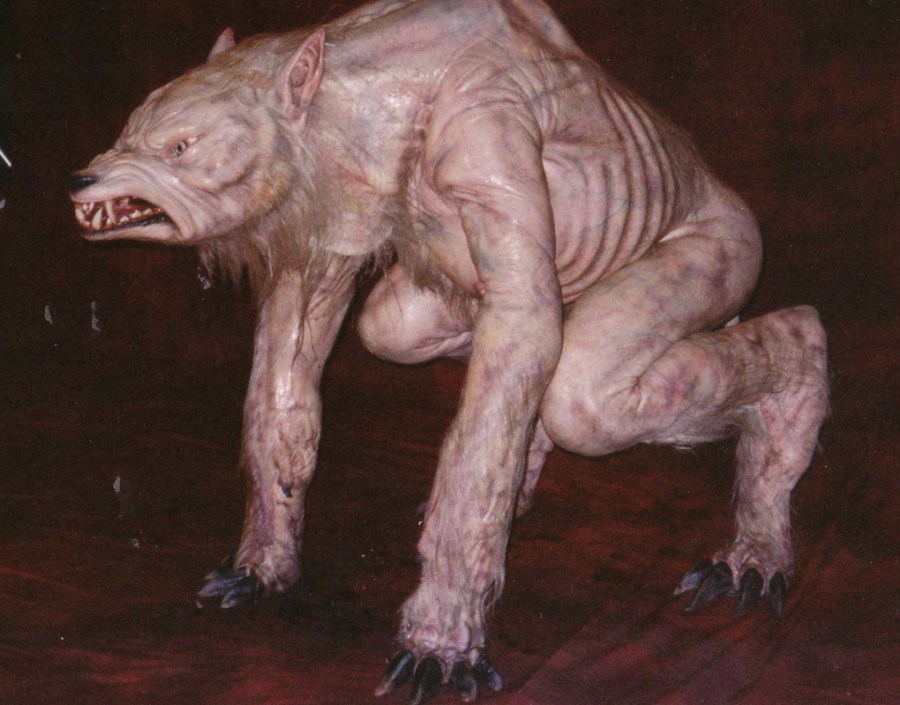
The presence of fur in the silhouette of the werewolf was somewhat attenuated with on-set dressing, which included KY jelly appliances. Jones recalled: “John also wanted it kind of feverish and very sickly looking, so we just covered it in a lot of sweat and a lot of goo, and as soon as you wet down the hair it goes slick against the body anyway.”
On set, the creatures played by stunt performer Nick Nolan. Certain stunts, such as jumping onto a table, required wire rigs. The director was enthralled with the suits, as recalled by Jones: “the funny thing was, John loved the suit. So we got to set, and he shot the shit out of it; and I kept going, ‘John, you’re not going to use half of this stuff!’ ‘No, it looks great, it looks great!’. So he kept shooting and shooting it.” Ultimately, much of the footage was left on the cutting room floor. “You can’t overshoot monster suits,” Fawcett was quoted as saying.
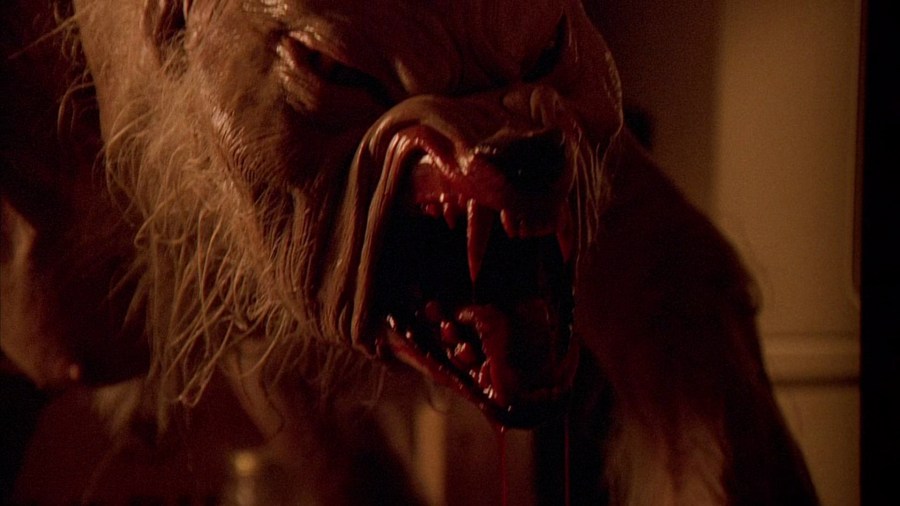
For more pictures of the Gingerwolf, visit the Monster Gallery.

