
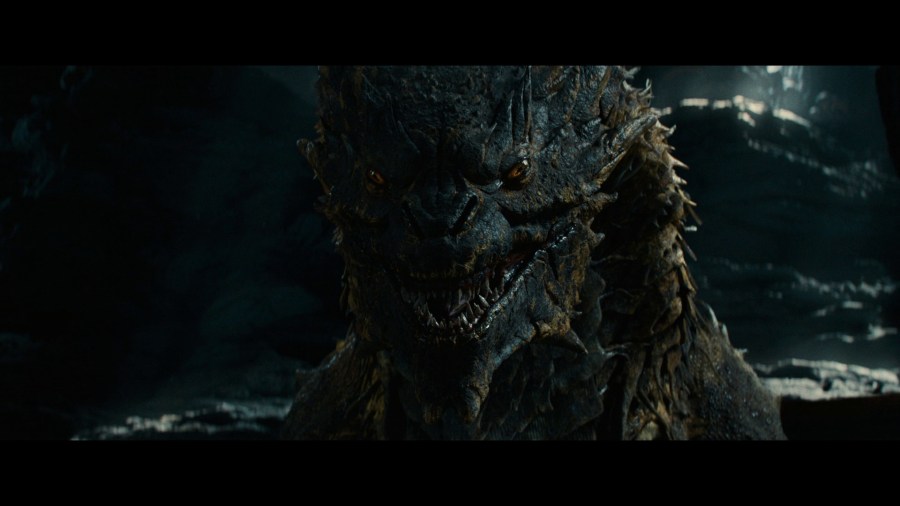
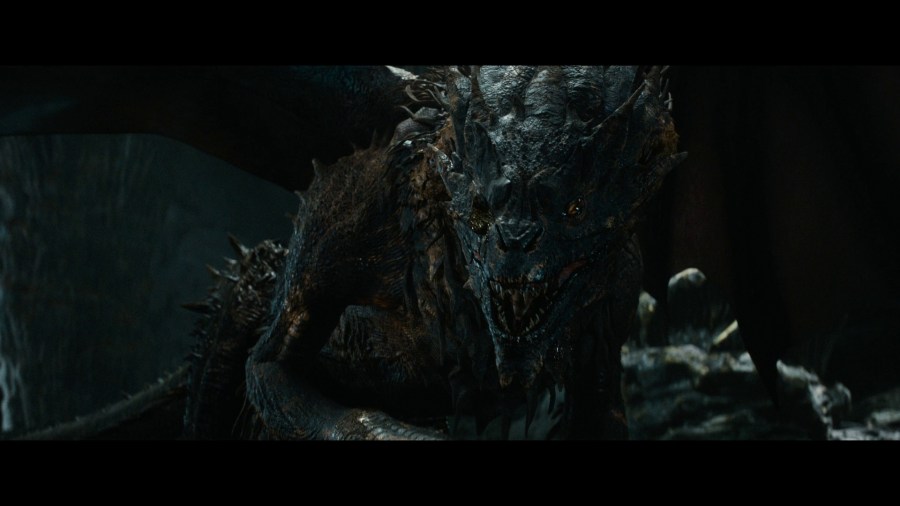
Spanning from the 1998 Godzilla to the Moorwen from Outlander, production designer Patrick Tatopoulos had crafted dragon-like creatures before Damsel, but never an actual flesh-and-blood dragon. He thus strived to deliver an innovative design. “I had to create this amazing, ancient, female dragon from scratch, and I was ecstatic,” he said.
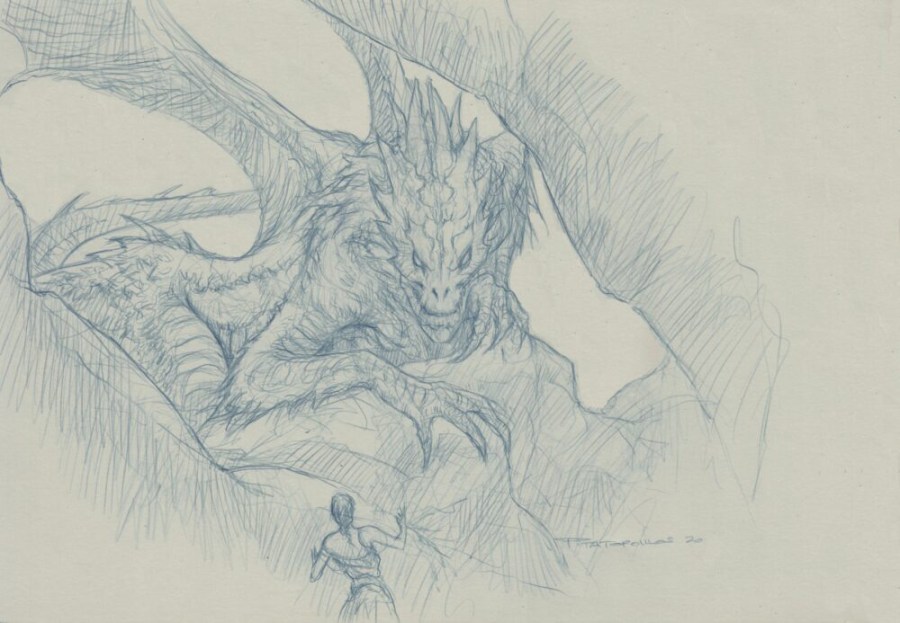
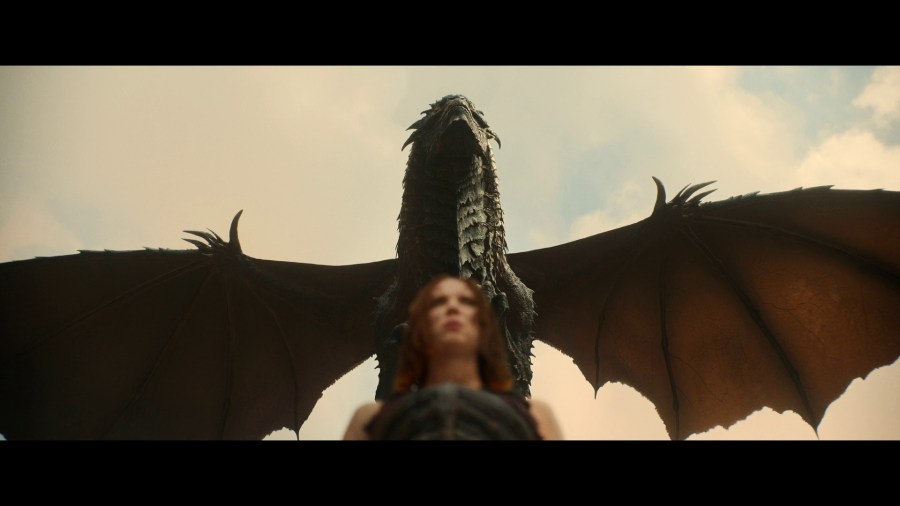
While Tatopoulos art-directed the process, additional variations and ideas were provided by Joshua Cairos and Christian Scheuer, as well as Sam Balzer. While initial concepts were more reptilian, the design eventually steered towards the feline, invoking sphinxes — also considering the dragon was a she. Tatopoulos continues: “my first thought was that I had to create a dragon different from ones we’ve seen before. I went through an intensive design phase with our director. The process went on for a bit until I approached the design of our dragon more as a cat than a lizard, a feline rather than a reptile. I believed the anatomy of a cat would allow us to create more femininity in the dragon. Reptiles move in a rather mechanical way that sometimes feels lumbering and not very elegant. The dragon had to be scary, but also sensual and mysterious. The idea of a cat-like dragon led me to design a creature that is closer to a Manticore or a Sphinx than a traditional dragon. Aside from her skin being scaly, the whole creature is more like a panther than a dragon.”
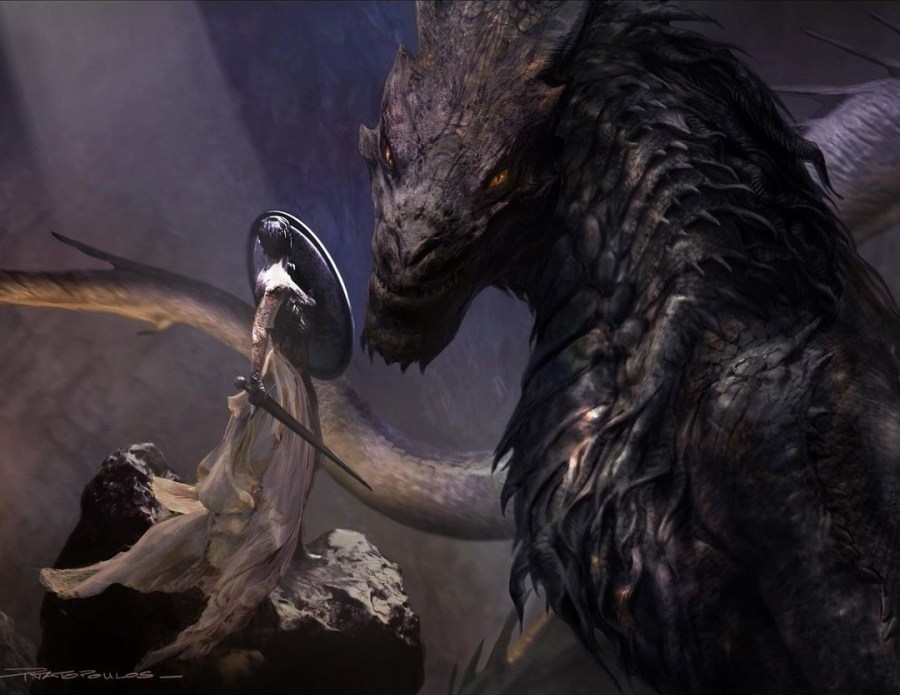
Tatopoulos worked during pre-production and was then brought back for post-production: “I was lucky to be invited almost all the way to the end of post-production to assist the team in keeping this ‘cat concept’ in mind. The post-production was such an amazing time, as I was able to see the dragon slowly come to life in CGI. My collaboration with Nigel [Denton-Howes] was the friendliest and most rewarding as we both kept forging forward in the same creative direction. It was some of the best teamwork I ever experienced.”
There was also the marked intention to distance the dragon design from the Game Of Thrones iterations and similar approaches, in both appearance and behaviour. “The dragon in Damsel definitely strays away from simply being a beast,” said Denton-Howes. “With a compelling character arc on her own, the dragon is a key character in the film, not just a creature there as a prop or simple minded bad guy. Physically, the dragon is quite different from others we have seen in the past. Her anatomy is much closer to a large cat rather than being based on something similar to a lizard. This gave us the freedom to have her move through the environment in many different ways. She’s just as comfortable running and leaping as she is flying.”
Animation supervisor Brett Margules added: “She had this very sphinx-like design to her. There was almost an Egyptian-like aesthetic when you looked at her from different angles. So she wasn’t that generic long, elongated neck, walking around on her wings. There was also something in that design which was her demeanor, her attitude. She was supposed to be very methodical, and very cunning.”
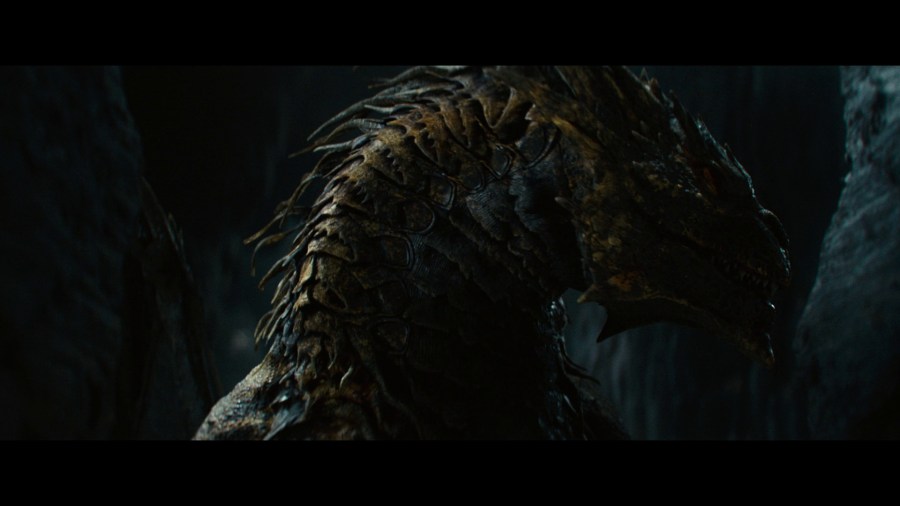
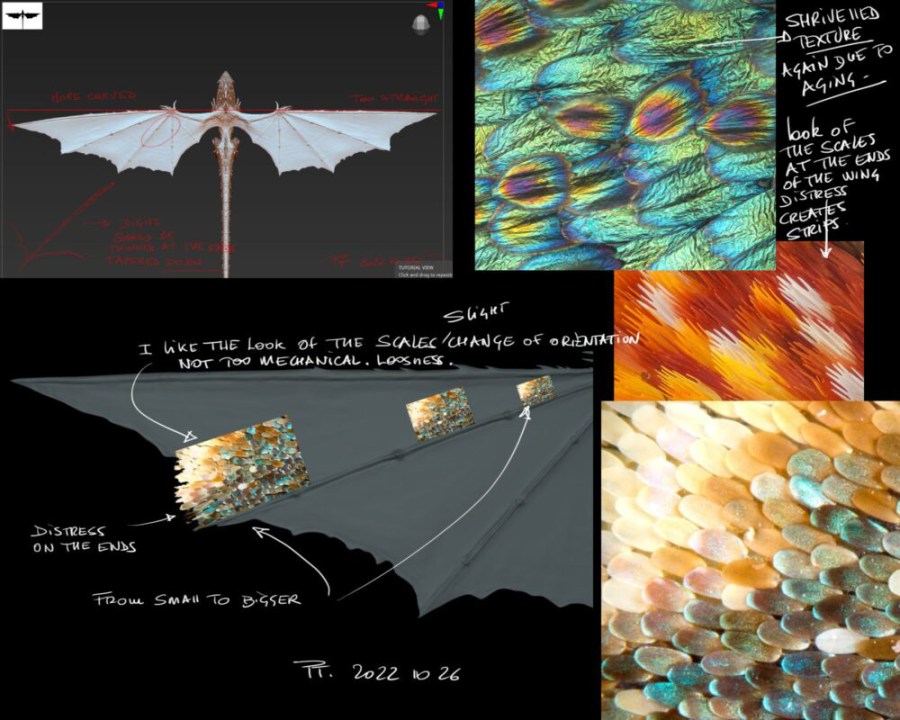
In post-production, the dragon design was further refined; this included the orange line that runs down its flanks, which made it more visible during the action in the dark cave environments. “We followed the line to the spine and tail,” said Denton-Howes. “That allows her to stand out in the caves; but the whole textural approach is that she is part of this environment and is supposed to blend in.” Another challenge was represented by the wings. Creative director Emmanuel Pichereau said: “addressing the wings presented another hurdle; to avoid a flat appearance, we introduced flexible scales to enhance depth and light interaction. Every element, from the eyes to the wings, demanded meticulous attention to detail and commitment to realism, showcasing the intricate process of bringing a fantasy creature to life while maintaining a sense of authenticity.”
Working with visual effects supervisors Nigel Denton-Howes and Nicholas Brook, the team at One Of Us — the main visual effects vendor on Damsel — brought the dragon to life on the screen, with a finished total of 166 shots. Denton-Howes was brought in after principal photography “to help push the dragon forward both from a look and performance perspective.”
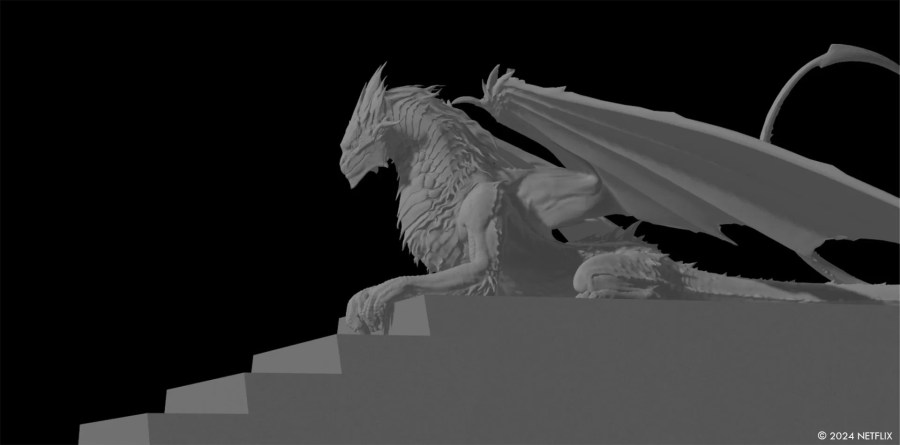
Based on the concept art, Damien Guimoneau fashioned an early version of the digital dragon, which was first used by Margules to perform a series of key poses. Initially, those replicated Tatopoulos’ concept art; this allowed the generation of a three-dimensional turntable. Next came the so-called “story poses”, which helped calibration of on-set shooting — such as establishing scale and height. Margules detailed: “we had different attitudes and demeanors: one was where she was very proud and regal, and then where she was stalking, and one where she was hunting. We had another variation where she was very low to the ground, which we used when Elodie has the sword at the dragon’s eye. If you went through the final film, each one of those poses more or less made it into the film in some fashion.”
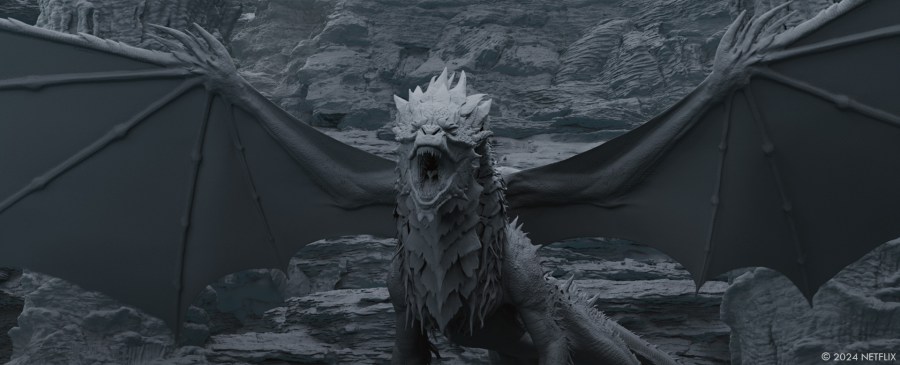
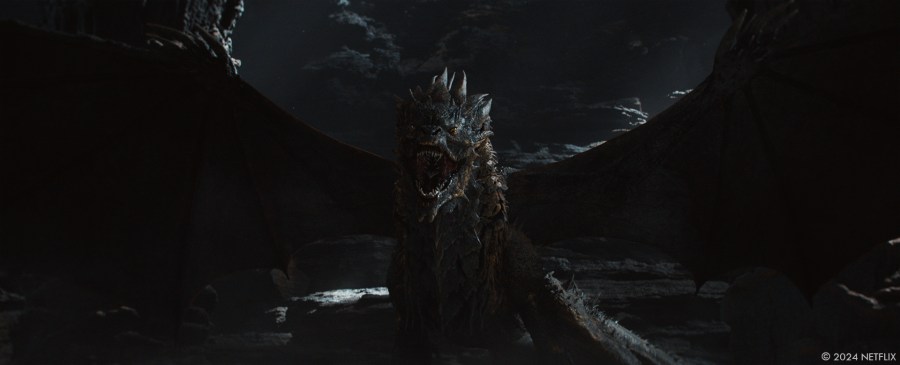
One Of Us had to establish a new pipeline to approach the creation of the dragon for the screen. Pichereau related: “our strategy involved having some of our key CG artists working closely with the Pipeline team to create those tools that would allow us to be more fluid and have automation lessen some of the burden. Internally, we separated sequences within two different units, which allowed us to spread the workload but also improved our cross-departmental collaboration so we had a better flow of communication.This approach ensured that every department contributed to the film’s success as part of a cohesive team effort.”
The animation process was led by head of animation Catherine Mullan and animation supervisor Brett Margules. The main challenge in rigging the dragon model was represented by the dragon speaking, as well as its wings. Pichereau explained: “we created a custom variable attribute within the rig where an animator could set the dragon’s wings to ‘flight-mode.’ This restructuring of the rig’s wing armature behaviour simplified the animation process, ensuring more intuitive control over the wing’s movements.”
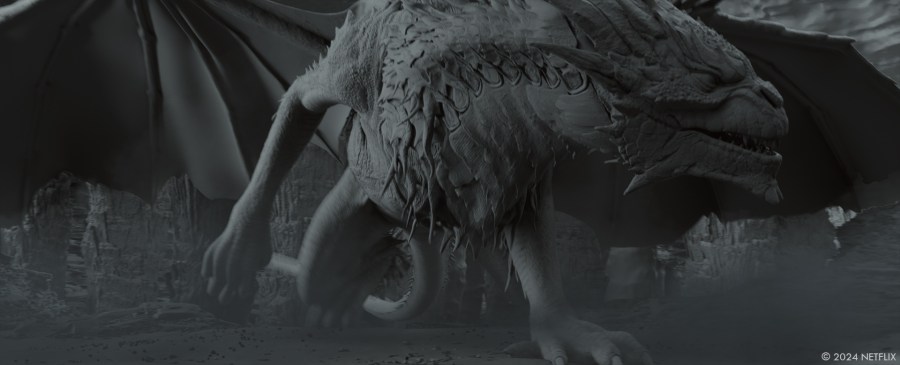
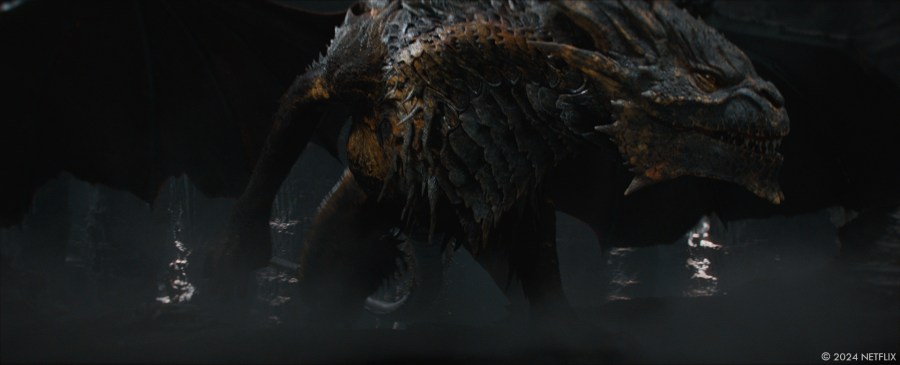
The next step was the development of walk and flight cycles, “which were really great to see,” said Mullan, “what she does with her wings, how she holds her wings while she’s in motion and on the ground. She’s got four legs, but you also then have these huge wings that need to go somewhere and do something. There were a lot of things to figure out in that respect.” She also added: “also, in terms of informing the shoot, if she is in this stalking pose, she’s so huge, but what distance is she actually walking? She’s so big that a step for her makes her travel a fair way, so we had to work out how slow would she have to be performing in order to not bring her all the way across the cave system and in front of Elodie too quickly.”
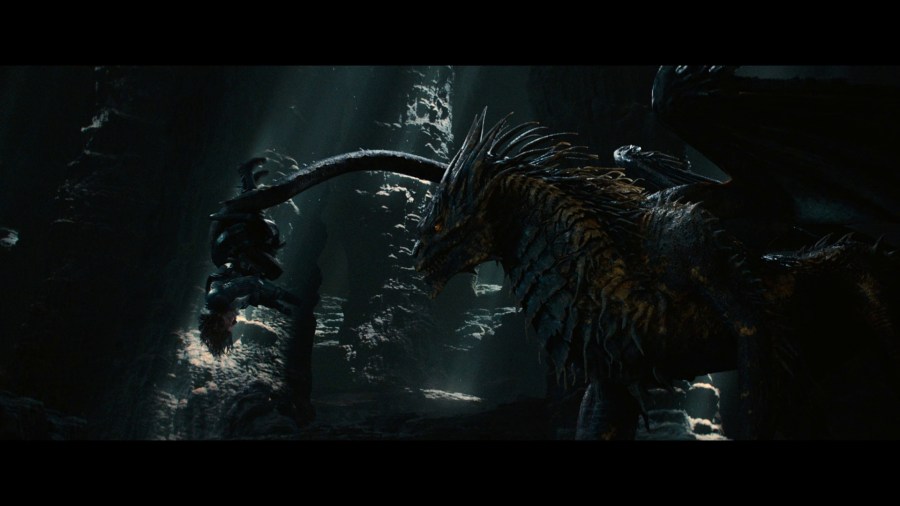
Real world reference for the dragon animation came mostly from large felines and birds, but also from reptiles, and bats for the fluttering wing motion. Similarly to Tatopoulos’ Moorwen, the dragon’s slender tail would be prehensile, and could be used as a weapon. Said Mullan: “there were many discussions around it being like a weapon and how she uses it for distraction. We were thinking about how a lot of it would feed into the story as well. How she used the tail and her body dictated the story, the shots, all of it.” Margules added: “This tail almost became its own character to a very, very, very already complex character. She could either be calmly waving it like a cat, or there were moments where she’s grimacing, and you’d see it flip about. Beyond everything else on the motion, it actually became part of her performance to give an indication to her annoyance or calmness.”
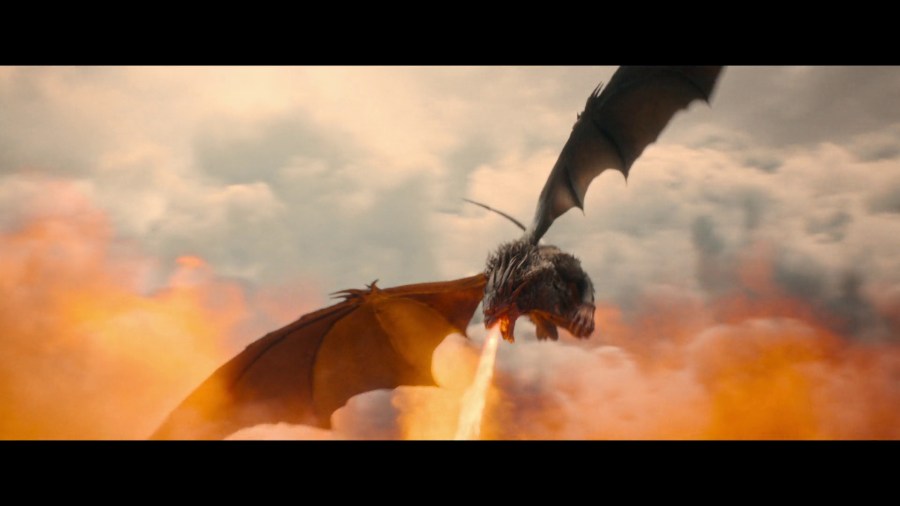
The dragon was to be a crafty flier, mostly in control of any given situation. Margules related: “they wanted her to be a master of flight. Generally, dragons are big and clumsy, and the bigger they get, the clumsier they are. They crash into things. But our dragon was never allowed to look flippy or wobbly. She was always in perfect control of her own actions. They were very adamant about her ability to navigate flawlessly through her environment, but to also interact with it. She was to latch onto the pillars, and search for things. And then she could fly, and dive off, and give chase, and then negotiate between very tight pillars. It was all just supposed to be very slick and flawless, not clumsy and flapping about.”
Denton-Howes added: “the anatomy of a cat mixed with the wings was challenging to balance when the dragon was flying. We did a lot of work to make her streamlined in the air, experimenting with how her legs pulled up towards the body and making sure she formed a dynamic line of action from the tip of her nose to the end of her tail as she moved.”
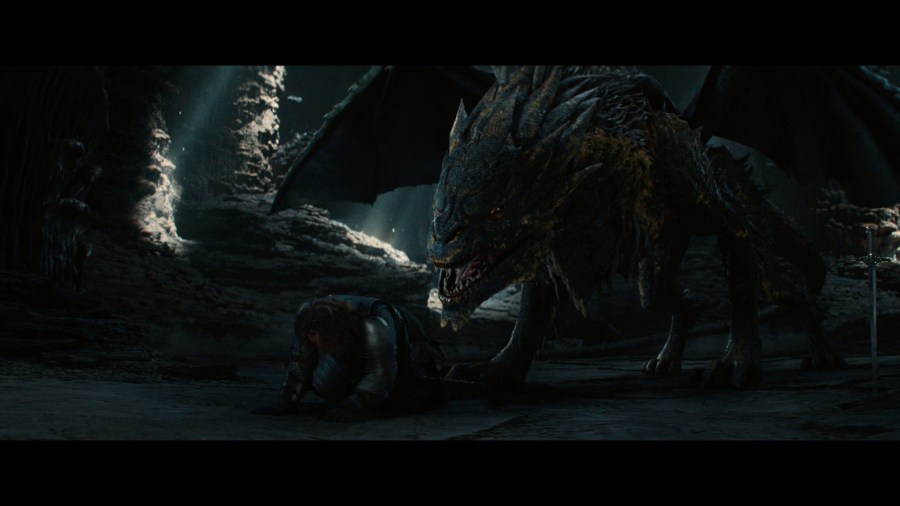
Part of the performance was making the dragon speak believably. “The filmmakers really did not want a ‘rubbery lips’-type of human lip sync,” said Denton-Howes, “so we really had to think hard on how the dragon anatomy could work.” While lip synchronization was indeed employed, a major part of the speaking impression was achieved with neck and plate motion. The neck plates would thus act as bellows to force air over the dragon’s larynx in order to produce sounds. Denton-Howes explained: “there are certain sounds that are awkward for a mouth that big and a muzzle that long to make. There is some lip sync, and we’re using the jaw a lot, but a lot of the motion and mechanics were actually done with the neck. When she inhales, the neck plates open, and it compresses like bellows when she exhales.” Development of the speech animation patterns was done in collaboration with the sound effects team. “We did a bunch of loops back and forth of animation and sound tests until we got a final dialogue sound that was going to work.”
The neck plates were also animated to vibrate at different frequencies to emphasize the dragon’s emotivity. “We added a shiver to the neck plates to correspond to her emotional state,” Denton-Howes continues. “When she is confident, there is very little flutter in them and when she gets angry, they vibrate like crazy. That informed the sound design.”
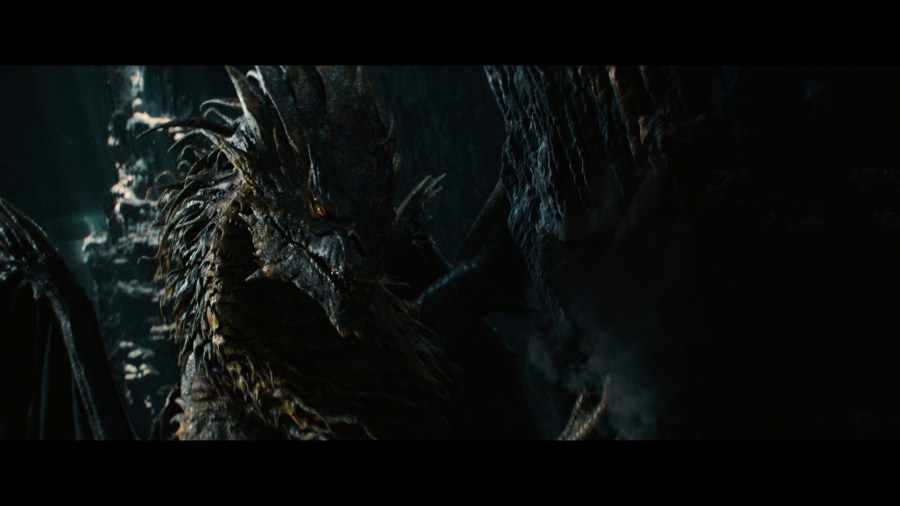
The filmmakers also wanted the dragon to feel connected to the environment. “To further this we introduced several moments where she used the environment to change direction or speed by pushing off pillars or kicking off rocks,” said Denton-Howes. “This helps avoid the feeling that the creature is separate from the space she occupies. The lighting also helps with this which is why we added in the very overexposed shafts of light that she could fly through.”
Live-action plates were provided with bluescreen stand-ins, including a mockup of the dragon’s head and paw, to interact with the actors. Final animation of the dragon was performed in Maya, with certain secondary elements — such as muscle jiggle and plate movement — added via Houdini. Challenges arose in rendering details such as the orange patterns and spikes, which required careful consideration of light interaction and shader variation. “Initially, we were doing things within animation where, if she crashes, we were adding a jiggle to the puppet,” recalled Margules. “But this was actually significantly pulled back once the muscle system became more robust and more developed, because that was actually having negative effects for their simulation. We were forcing the puppet to do something that the muscle system would easily accommodate of its own volition. In the end, anything on an anatomical level, such as the tail or anything that had a skeletal system in it, that very much came from animation performance, but all those beautiful subtleties of muscles jiggles and secondary motion were done in CFX [a workflow within Houdini].”
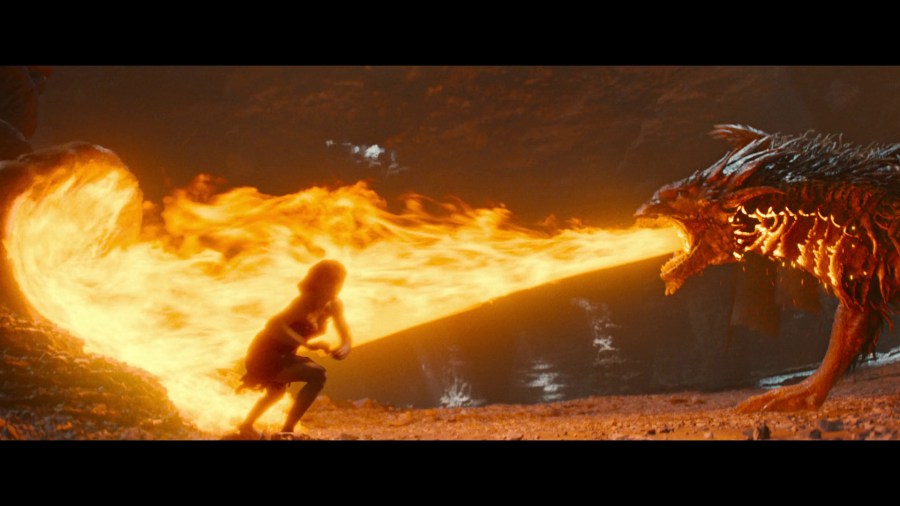
The dragonfire was another challenging element, designed by the filmmakers as a mixture of gaseous and liquid flames, “almost like napalm or lava,” said Denton-Howes. “A lot of reference was gathered from real world footage and combined together to come up with the final look.” This peculiar look was also dictated by story-related reasons. “Explosive fire breathing simply moves too fast so we needed an excuse to slow the fire down a bit,” Denton-Howes continues, “so it was believable that Elodie could escape it at a few points in the film. For research we looked at oil well fires, napalm, gas flame explosions and many other reference sources.”
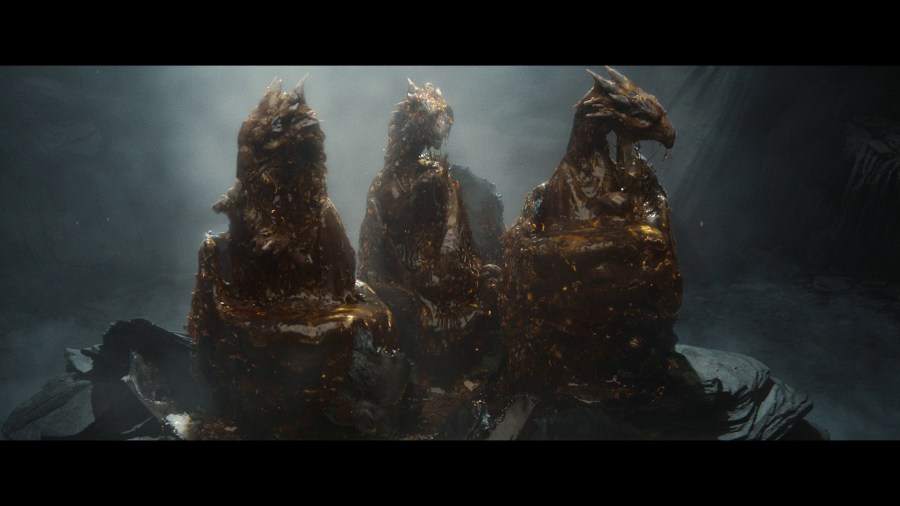
Briefly seen in the film is also the dragon’s progeny. The baby dragons were realized as practical on-set elements, enhanced with visual effects, and as completely digital models. Based on Tatopoulos’ designs, as well as scans of the practical props, Marina Llorente fashioned the digital models.
Overall, the team at One Of Us was satisfied with the experience and results on Damsel. Margules concluded, “in this new technological climate, where you’re seeing a lot of motion capture or facial capture systems and things like that, I personally take a great deal of pride in noting that everything was handcrafted. Everything was hand-animated on Damsel.”
For more pictures of the dragon, visit the Monster Gallery.


Nice choice! It’s really interesting to compare this film to Reign of Fire or Dragonheart to see how development of the dragons has both changed and remained the same. Game of Thrones certainly raised the bar on them going forward, too.
It was certainly nice to see a four-legged dragon again after so many bat-walking iterations. Not that I dislike that approach but it’s virtually omnipresent in films and TV these times
It pains me to this day that a dragon this good looking and with such a phenomenal voice actress (the voice of Shohreh Aghdashloo was definitely the right choice) was wasted on such a garbage script.
I really hope we get more six limbed dragons in good movies in the future.
Beautiful design. It is comical how you see the same Jay Leno chin on her as Tatopoulos added to the “godzilla” in 1998.
Comical?