

Director Tobe Hooper first approached Rick Baker and Rob Bottin for the creature effects of his Invaders From Mars remake. Although both of them could not sign on due to scheduling conflicts, they suggested he contact Stan Winston; when he came on board, concept art William Stout had already drawn some conceptual iterations — which would eventually go unused, although some elements would be instrumental to the final creature designs. Winston began crafting the look of the creatures from scratch over a two-week period.
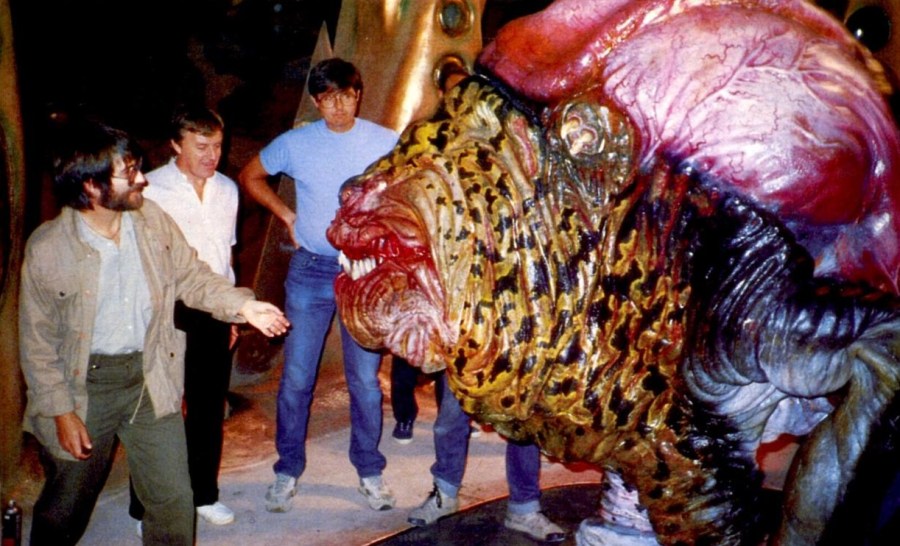
In the script Winston was handed, the Martian drones were described as mechanical bodies with an organic brain floating within a tank-like head. Unimpressed with this vision — dubbing it “ludicrous” in one instance — Winston decided to steer into another direction. He related: “the Drones we also changed considerably. Their initial representation in the script were as mechanical androids; tall, walking humanoids with big box heads with windows in them, in which floating brains could be seen. Not that something interesting could not have come from this concept, but I had just finished a couple of movies involving android-type creatures [The Terminator and The Vindicator] and I wanted to design something on a more organic level rather than going back to a more mechanical look.” The idea was welcomed by the director. “Hooper was very receptive to the idea and I believe that it was a design he was basically looking for also,” Winston said. “He was in no way tied to the description that was originally in the screenplay, so I was given a rather free hand in the development of the Drones.”
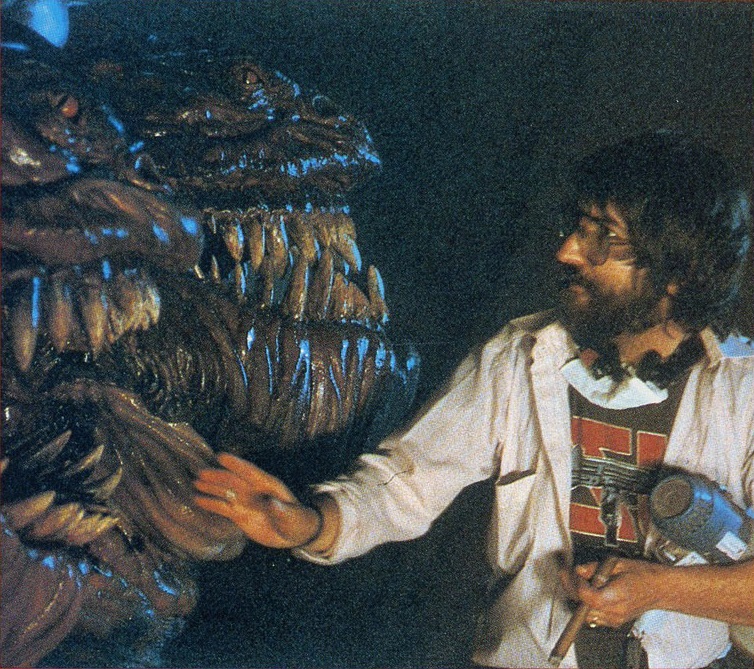
The artist recounted that “the basic thrust in the Drone development, along with their being organic and interesting to look at, was that they had to have production practicality. They had to be moveable in such a way that they didn’t appear to be men in suits, as well as being interesting and unique characters.” Production costs were also a factor: “because of the budget of this film, the drone had to be a guy in a suit; but I did everything I could so that it wouldn’t look like a guy in a suit.”
For the practical design of the Drones, Winston was inspired by Stout’s drawings. “One of Stout’s sketches had knees going in the opposite direction,” he said, “which gave me the idea of a man in a suit backwards, and I said, ‘now that‘s a terrific idea: let’s go with a man standing backwards in a suit.'” The artist was also influenced by the concurrent production of Aliens, wherein the full-size Alien Queen’s arms were worn by two performers inside its torso — something established during early pre-production, just when Invaders came aboard for the Studio.
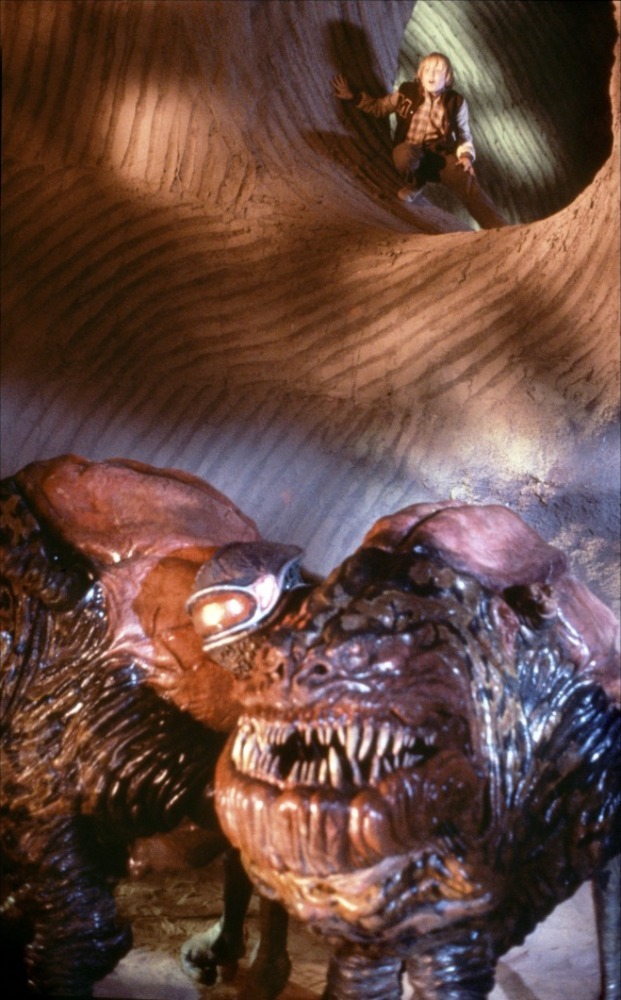
Winston first discussed employing two contortion artists to be photographed, using their combined silhouettes as a starting point. He recalled: “I told Tobe that it would be really terrific to get a couple of people like that and photograph or draw them in strange positions and design a character around it.” Realizing the technical difficulties involved, Winston conceived another, similar idea — a backwards-walking performer carrying a little person on their back. He said: “my idea was for the little person to sit in a specially-designed backpack placed on top of and facing away from the bodybuilder, with the contention that this would be a six-limbed creature, using the arms of the little person and the arms of the bodybuilder as four appendages, with the legs of the bodybuilder for mobility, and finally, using the legs of the little person to mechanically operate the creature’s mouth. We’d have the bodybuilder moving backwards so that the bend of the knee was unlike a human bend. The direction of the legs was reversed, and this gave the basic configuration of the monster a look that would be other than human.”
Winston assembled a prototype with small-scale armatures, then photographed the contraption. From the resulting silhouette, Winston fashioned preliminary Drone designs, which Hooper was enthused with. Once this base concept was approved, Winston began looking for performers. “I didn’t do any more designing until I knew exactly what I was doing,” he said. “I cast very strong bodybuilders according to how well they could walk backwards. I also came up with the idea of the big person holding ski poles down as their third and fourth appendages, so that all four feet hit the ground. I put the little people in the backpack stand, put the bodybuilder in his most dynamic, most comfortable position, saw how he would walk backwards and then photographed that.”

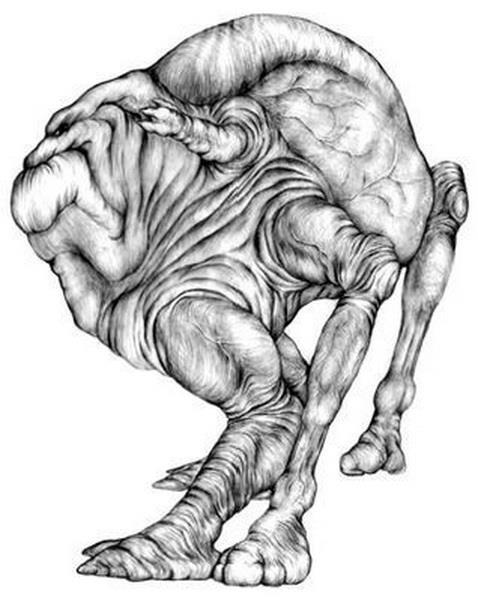
From the photographs of what would be inside the suits, Winston extrapolated the final design sketches for the Drones. He called this a “form follows function” approach. “I wasn’t designing something that wouldn’t work technically,” he said. “So, in fact, the Drones are a concept that is drawn and designed from the inside out — and it worked beautifully. It’s a terrific design: fun, silly, big and lumbering. It has all of the practicalities of a man in a suit, because it’s literally a guy walking a guy walking around — but it doesn’t look that way.”
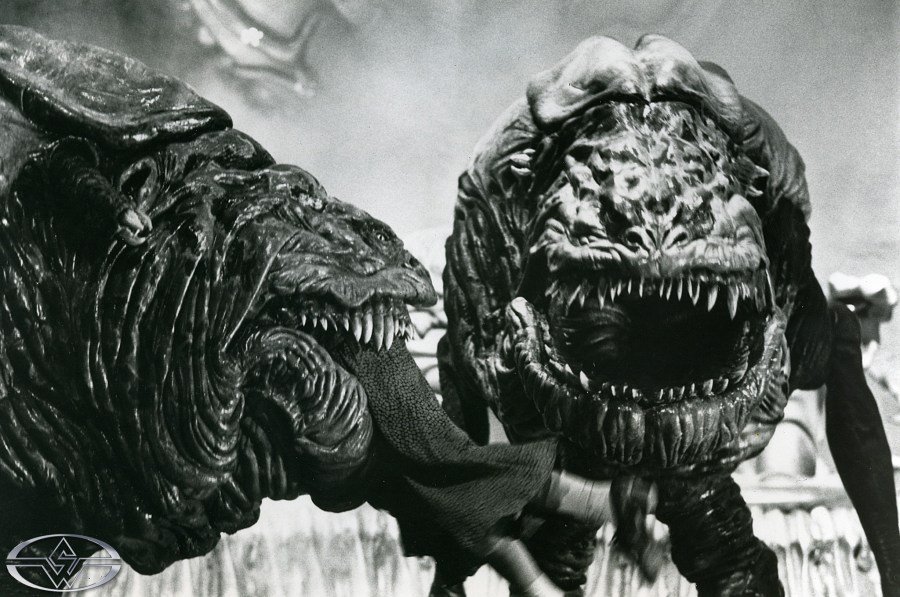
In another interview, the artist added: “it was a very practical way to enter the design and a very simple procedure. When the audience finally sees these enormous creatures lumbering around it will look like nothing they’ve ever seen before in motion picture history. When they see them they’ll think that they must be stop-motion animation figures [sic] because they don’t look like people in suits. The creatures were able to do things beyond what we thought they would be able to do.”
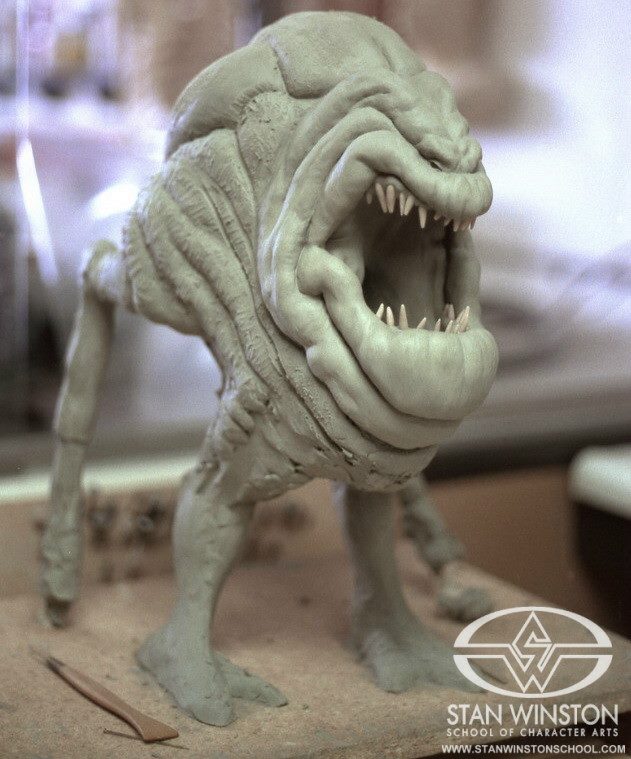
Winston’s designs were translated into small-scale maquettes by Shane Mahan and Alec Gillis. Several copies of the maquettes were made, and crewmembers were invited to take them home and design paint schemes. Ultimately, the colours devised by Willie Whitten and Steve Wang. Based on the maquette design, a full-size sculpture was fashioned by John Rosengrant and Shane Mahan. The sheer size of the Drone’s body negated the possibility to cast it in foam latex, as the process would have needed large baking ovens that were unavailable to the production.
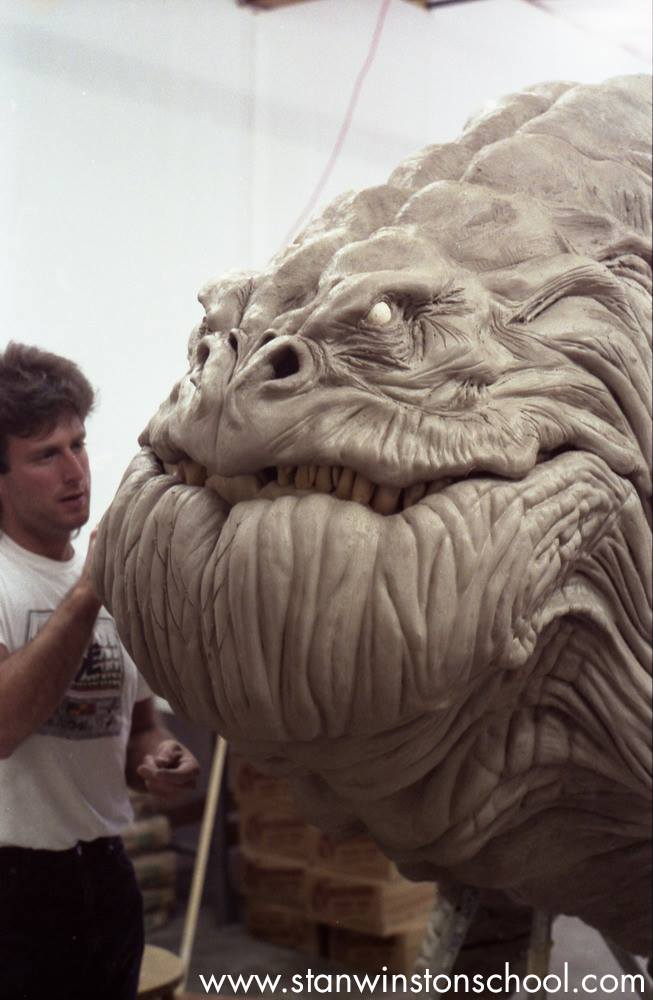
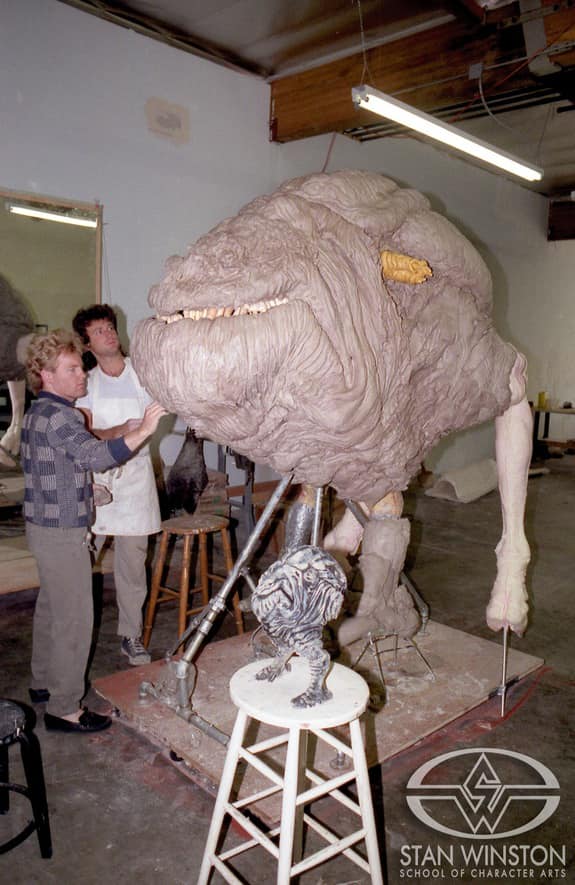
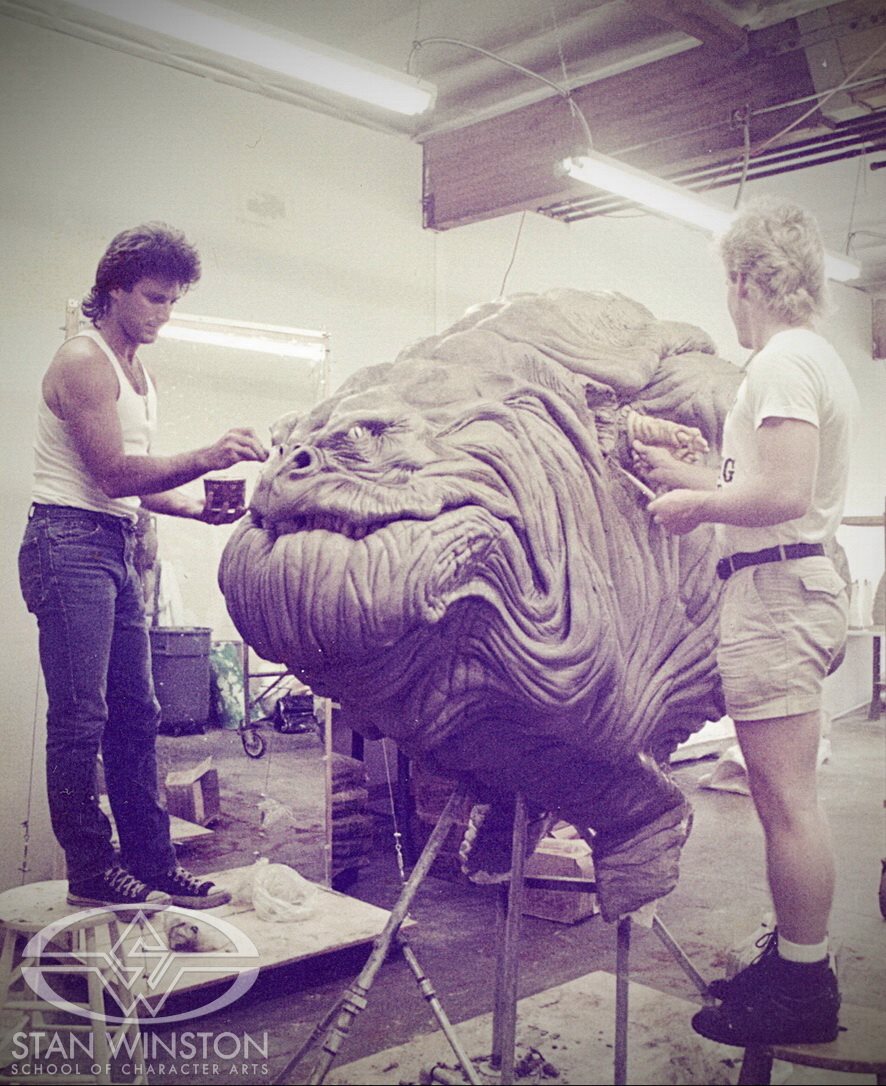
Instead, the Winston Studio team employed a novel method of polyfoam injection into fiberglass moulds. “Rick Lazzarini came up with what he called the ‘octo-injector’, which was a big five-gallon bucket that had multiple hoses coming out of it,” recounted Gillis. “Six of us would sit around with one-gallon buckets and mix up the polyfoam, then dump it into this thing, cap the lid, and shoot compressed air into it, which allowed us to inject polyfoam into the multiple points all around the mold. We got our skins out and they were good enough to be patched together. It was a very big and bold thing to do, though. Stan was never one to take the safest route. He would always say, ‘There’s got to be a way.’ And then we’d brainstorm. Every idea was heard. Every idea was discussed. It was invigorating.”
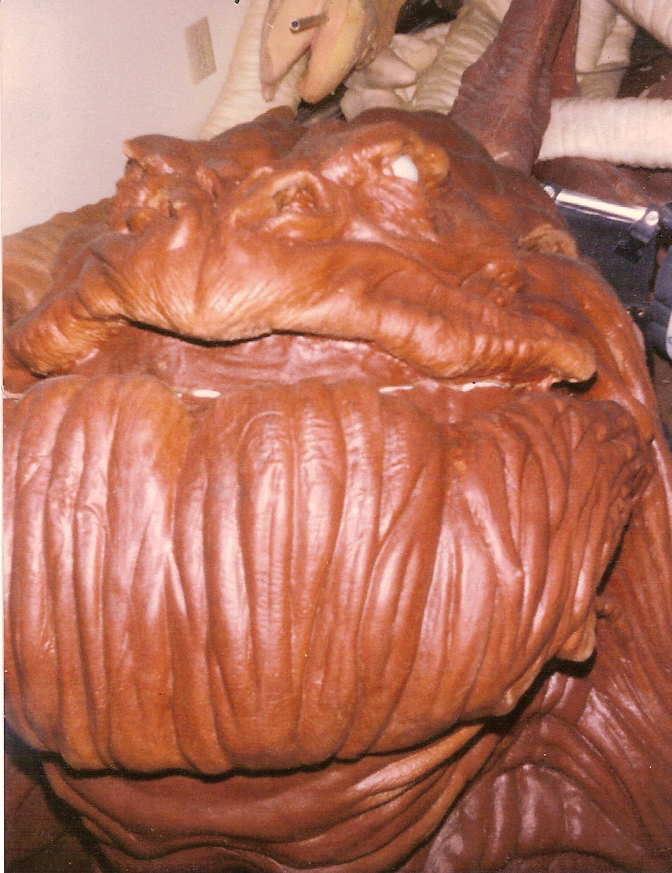
There was a certain degree of danger associated with the process, as recalled by Howard Berger, part of the crew: “we were in a small room, running giant pieces, with little ventilation; and on our lunch breaks, we’d lie right on top of these big bodies we were making, because they were soft and cushy — but they were also secreting cyanide gas. So we’d be lying there, going, ‘I don’t feel so good…’ It was from making all of this stuff out of urethanes. And we knew it was toxic stuff. We’d say, ‘hey, look, gas is coming out of the polyfoam!’ So we knew, and we did take some precautions — but we were young and stupid.”
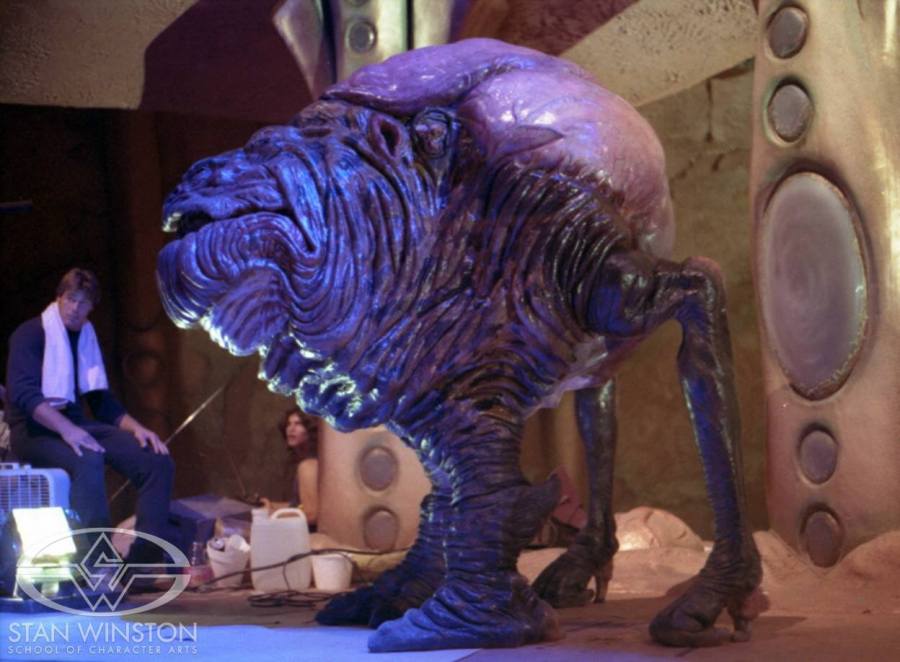
A total of two functional Drone suits was built, each with radio-controlled eyes and expressions, as well as teeth cast in resin or rubber depending on the shot requirements. The gangly arms of the creatures employed ski poles that could be maneuvered manually. The main performer duo consisted of Doug Simpson and Debbie Carrington. “For the Drones we also used state-of-the-art techniques for their final articulation including radio-controlled eye movement,” said Winston. “There was a series of fans within the suits to keep the operators cool and for the bodybuilders there as a small video monitor in front of the face connected to a camera in the Drone’s nostril. In this way, you could see while walking backwards. It must be noted that the life and character of these Drones, beyond their initial visual design, comes from the actors within. The bodybuilders and the little people were the Drones. It was a very, very difficult job physically, and artistically demanding, to get life and fun and character into these cumbersome suits. They deserve an enormous amount of credit for the work they put into bringing these creations to life.”
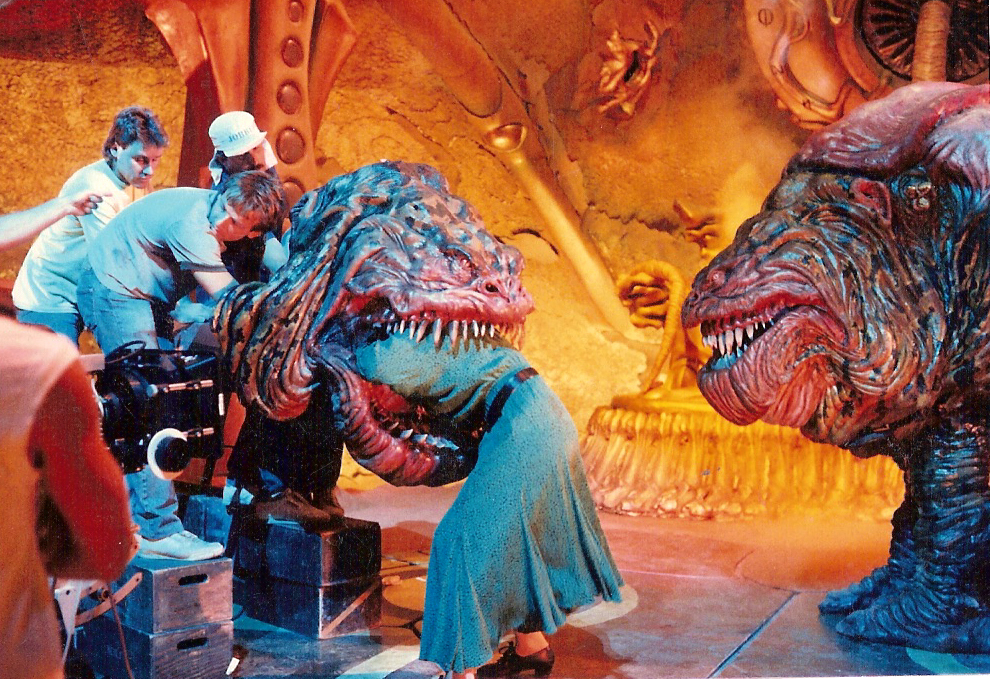
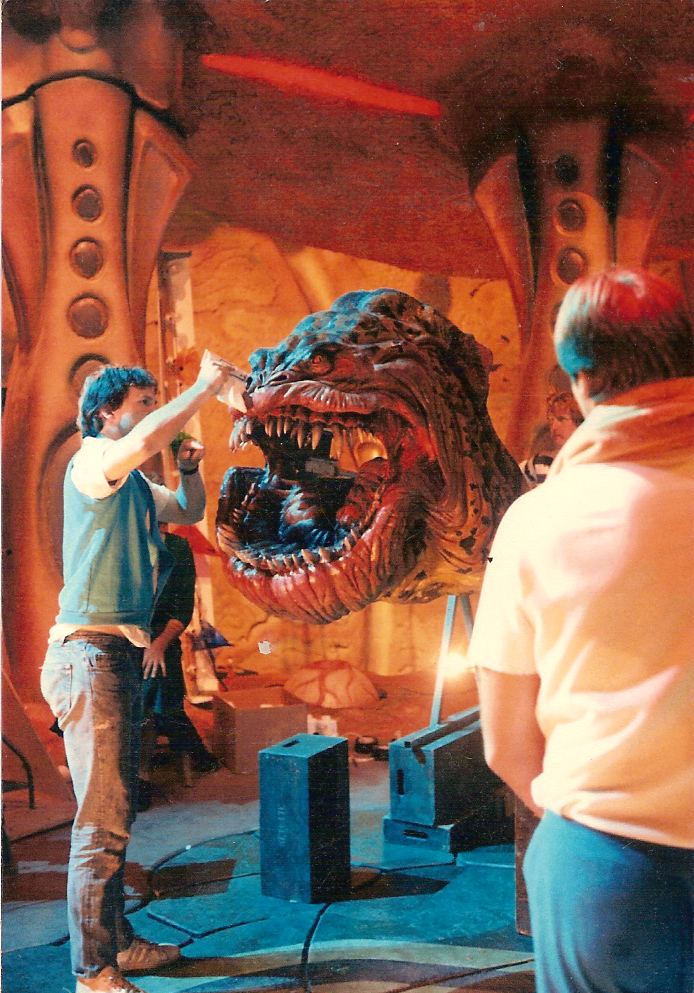
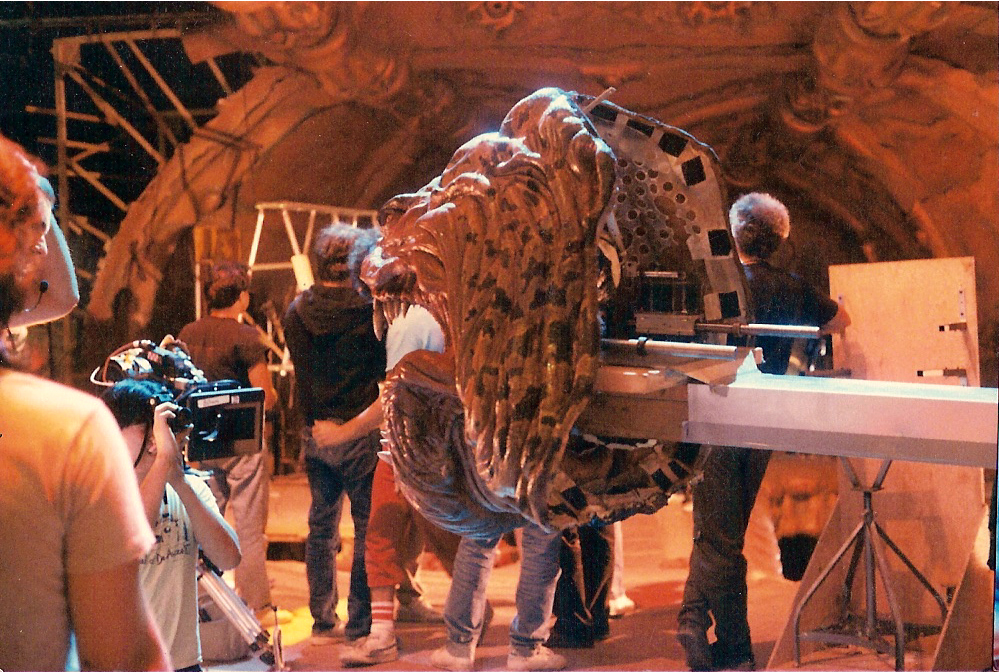
Other than the suits, a Drone stand-in was built, as well as an insert Drone head for the sequence where Mrs. McKeltch is devoured. The latter was a hollowed-out creation, mounted on a rig and maneuvered through handles that controlled gross motion and jaw movement. It was intercut with one of the suits, and depending on the shot, a stunt double or a dummy were employed to portray the victim.
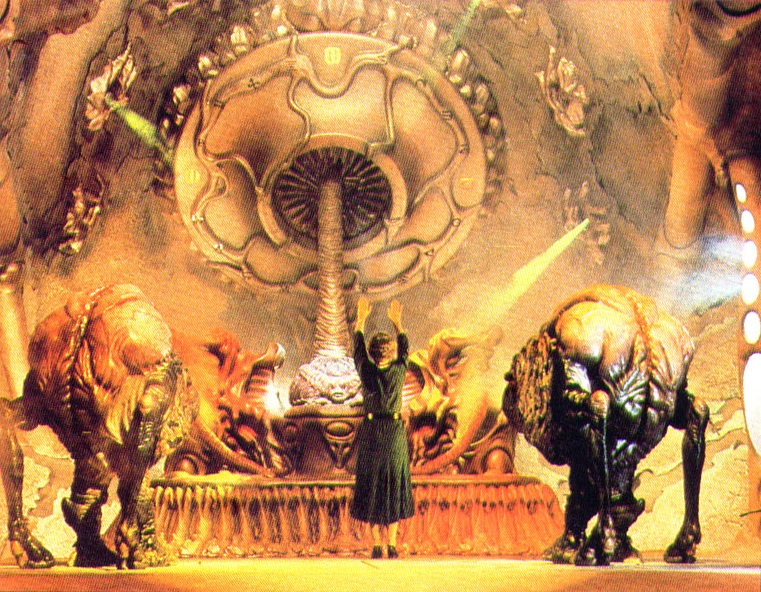
The first sequence shot with the Drones was the throne room reveal. “In order to add confusion to their appearance, Tobe decided that the two drones should be face-to-face, snuggled close so that at first appearance they looked like one, big, eight-legged blob that was ‘bouncing’ lightly,” said Shannon Shea, part of the crew. “On cue, they would back away from each other and turn to face the altar. Raising their ski-pole arms in salute, they would beckon for their leader who would then emerge from the portal, etc. Easy, right? Well, it was very manageable when done in stages.”
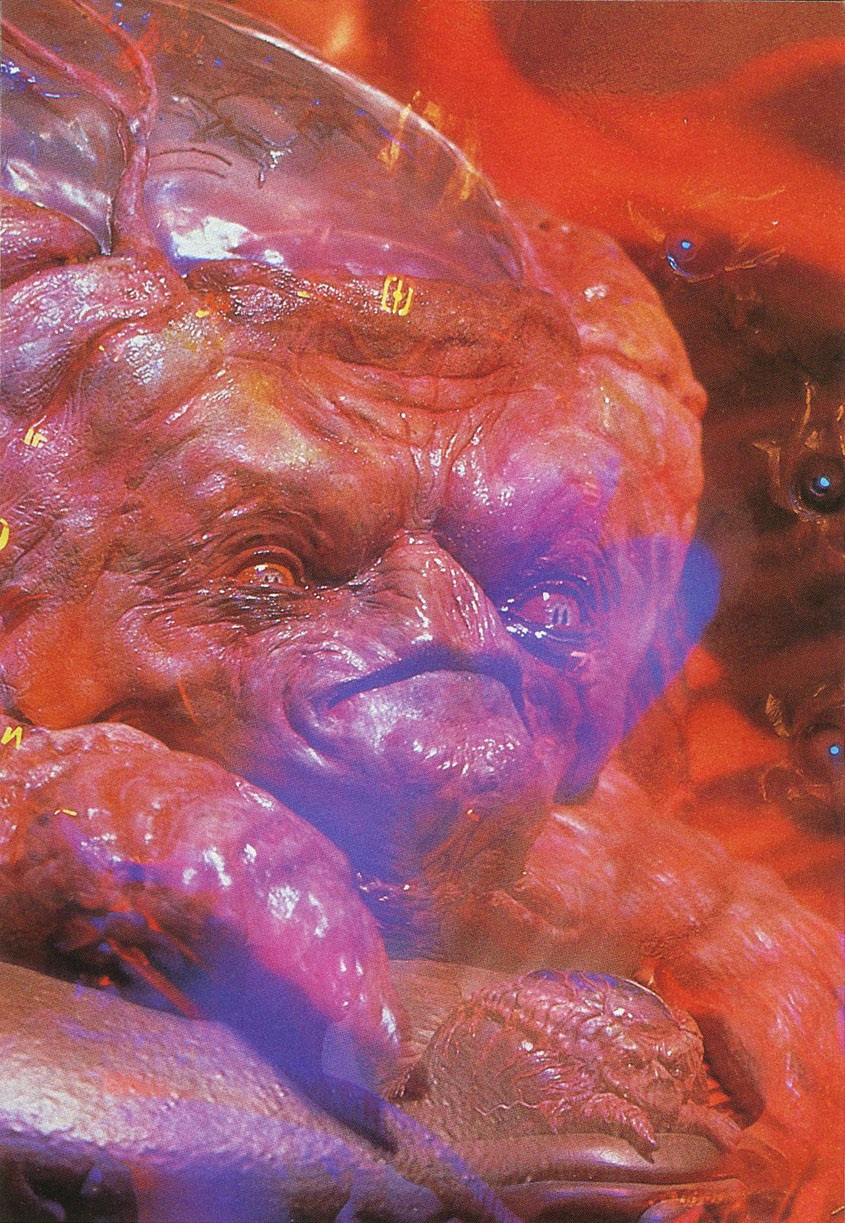
The Supreme Intelligence was also designed by Winston. As with the Drones, it differs significantly from the original design, save for the suggestion of a large brain in its overall shapes and the visual motif of tentacles. Winston explained: “Hooper wanted a long, snake-like body with tentacles coming out of it. The original creature was sealed within a transparent globe, but Tobe wanted our Martian to be free and not confined to a container. In designing the creature, what I wanted most to convey was that it was, in fact, a Supreme Intelligence and not just a monster with a monster’s face on a long, tentacled body.”
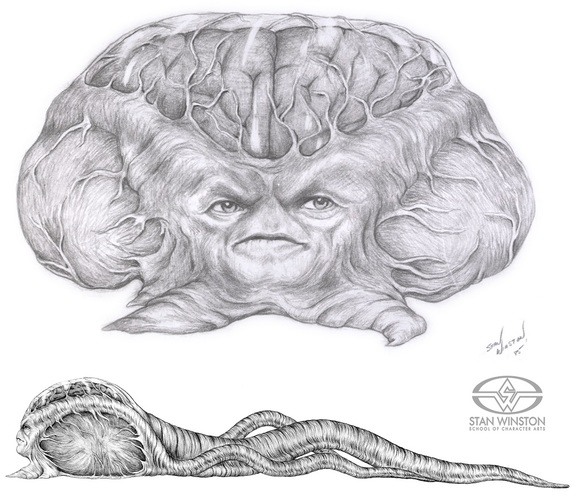
After extensive research, Winston concluded that the audience would most easily relate to the look of intelligent eyes. Emphasis was thus put on those, which were also endowed with a double pupil. “What I tried to get out of the Supreme Intelligence was just that — the look of intelligence,” said Winston. “So, I researched this, and spent a great deal of energy trying to find the proper face — the eyes more than anything — I located the most intelligent-looking yes.”
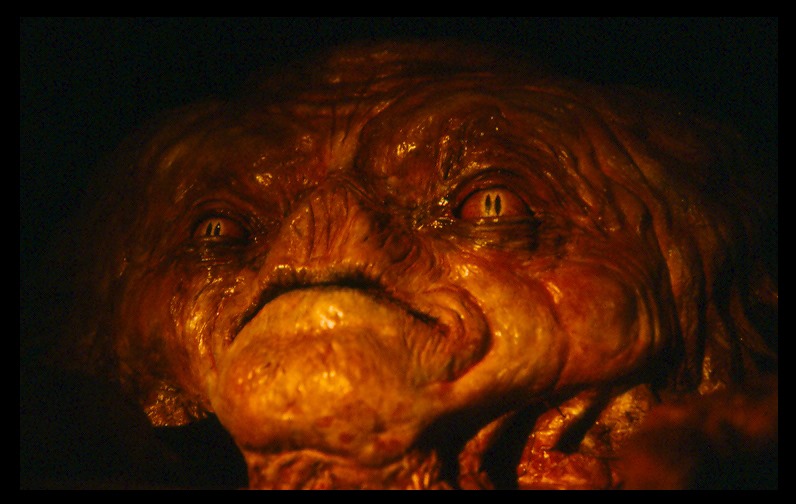
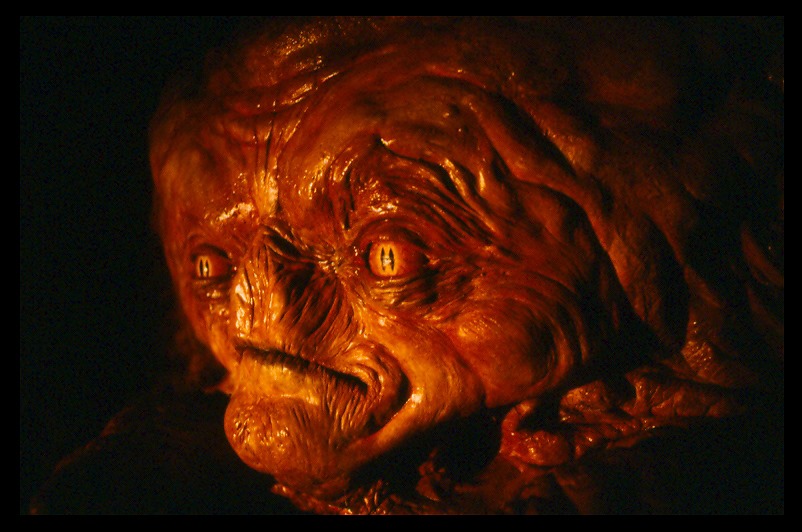
An expressive, “intelligent-looking” mouth completed the appearance of the Supreme Intelligence’s face, meant not to evoke a man in a mask. Winston added: “I designed the Supreme Intelligence to be oversized. Its head was very large and the relationship of the mouth and eyes was closer than it would be for a human because there is no nose in-between them. There was no way with make-up to create that kind of face on a human being, yet it had a very organic, very alien look to it.” In another interview, Winston added: “So that it didn’t just look like a man’s made-up face, and a big head, I designed it in such a way that the proportions and the locations of these eyes — in relationship to its mouth and the size of the head — could never imply a man in make-up or a man in a suit.” In fact, “one of the main obligations for me in a project like this is to try to give the audience something they can relate to and, wherever possible, go beyond the man-in-a-suit or man-in-make-up concept so that it’s something more interesting to look at, especially in a situation where it’s supposed to be alien.”
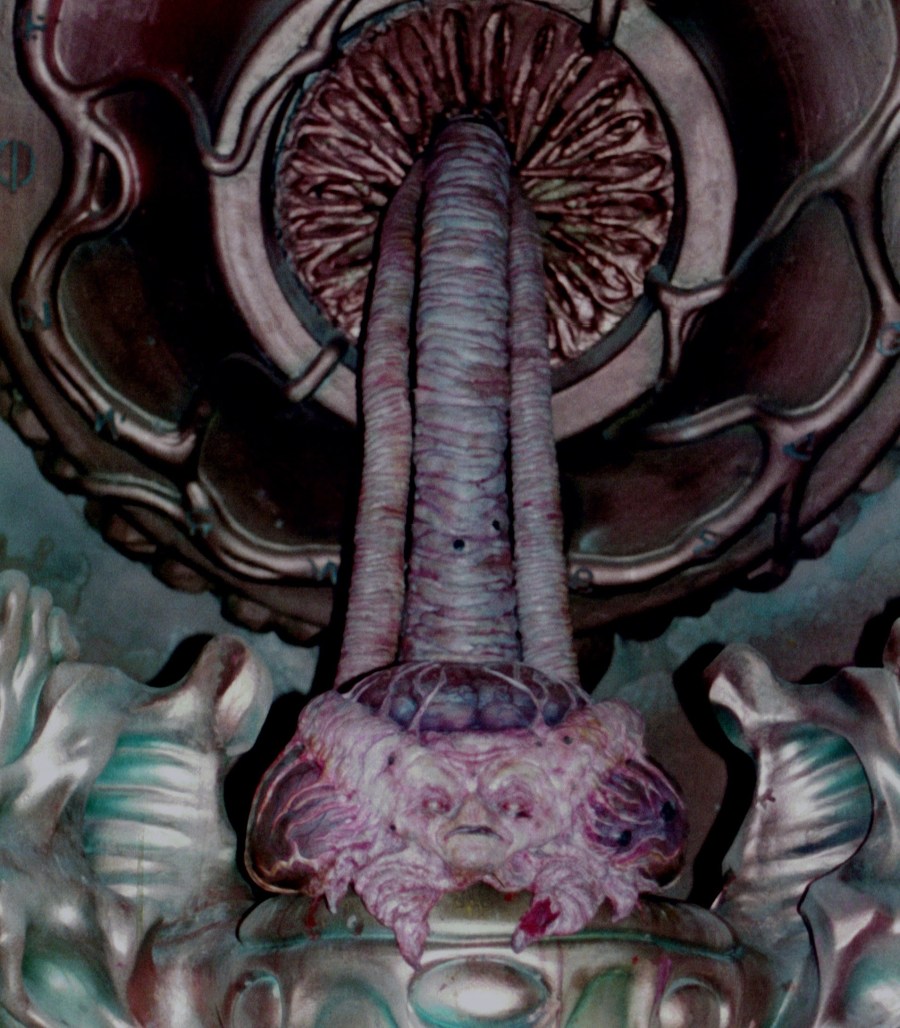
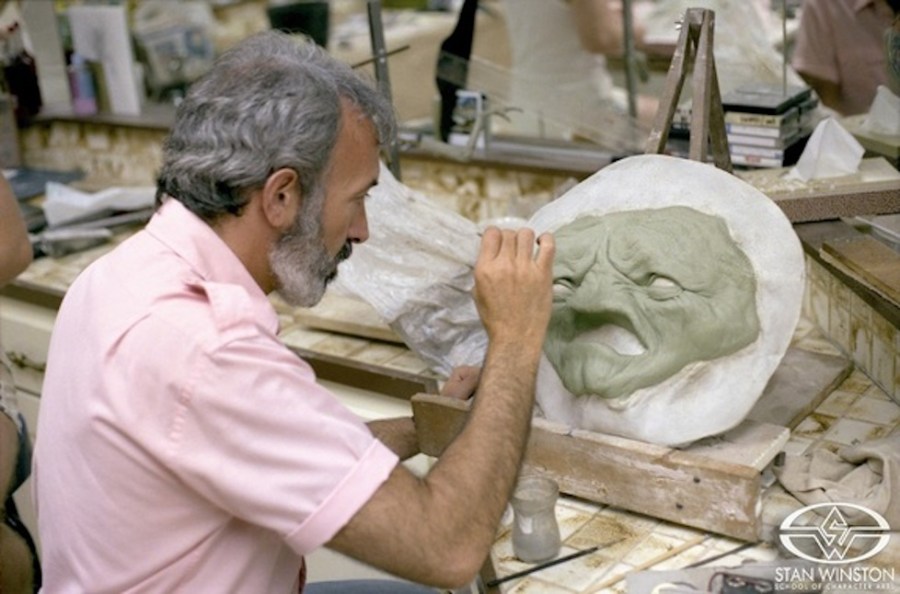
The Supreme Intelligence’s body and tentacles were sculpted by Gillis and Woodruff. There were two sculpted faces, which could be switched out depending on the shot. A “resting” face was sculpted by Tom Woodruff Jr., and another of “pain and agony” was crafted by Winston himself. “Stan sculpted a face of it that was a screaming face,” said Gillis, “for the scene where it was gonna be getting shot at, and so he would always have a mirror there, looking at himself while he sculpted. So it kind of looked like Stan to us. That was the joke, everything Stan sculpted looked like him.”
The mechanics of the creature were devised by David Nelson and Rick Lazzarini. The tentacles were initially meant to be cable-controlled, but ultimately had to be wire-operated. Shannon Shea related: “unfortunately for Dave and his crew, the tentacle was an inverted triangle with the narrowest part at the base and the widest part at the tip. No matter how Dave tried to engineer the body, it just couldn’t overcome the leverage problem and it was decided that it would have to be ‘flown’ via external wires on the head.”
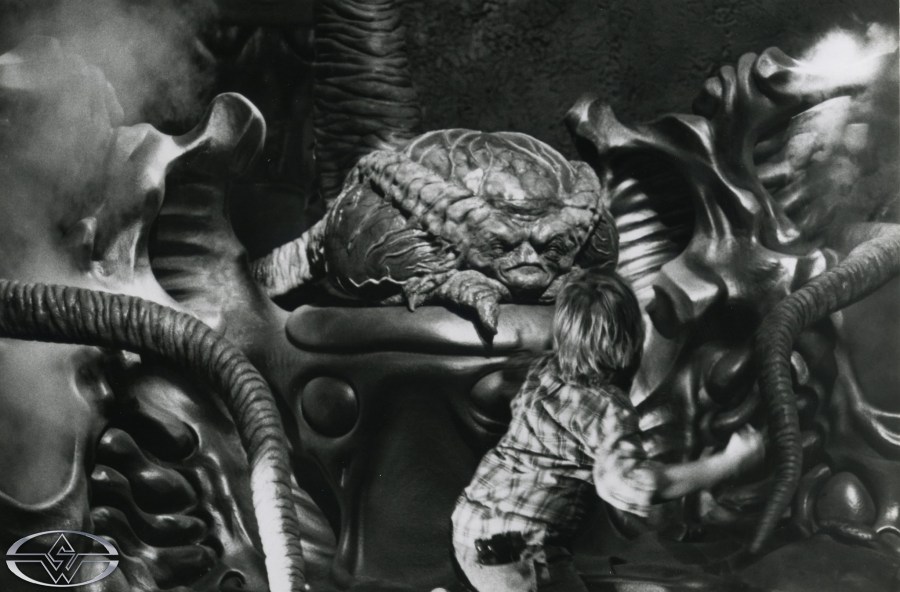
The head itself featured radio-controlled eyes, brows and cheeks, mouth puppeteered manually from underneath. According to Shea, Nelson “had an innate knack for understanding the subtleties of nature and facial expression, and it was the first time I had seen an eye mechanism with a ‘slaved lower lid’. What that mean was that even though the puppeteer could close the eyelids or blink them, the lower lids would move along automatically with the movement of the eye, like a real eye does.”

The sides of the Intelligence’s brain-like body could pulsate and throb through an elaborate compressed air unit — layers of bladders devised by Richard Landon and David Nelson. “There were bladders,” said Winston, “a series of air-jet systems that moved the lobes on the sides of the Supreme Intelligence, which looked like organs. The veins pulsated in the organs themselves.” Additional veins were hand-fabricated by Shannon Shea. For most set-ups, Gino Crognale and two other puppeteers operated the Supreme Intelligence from within.
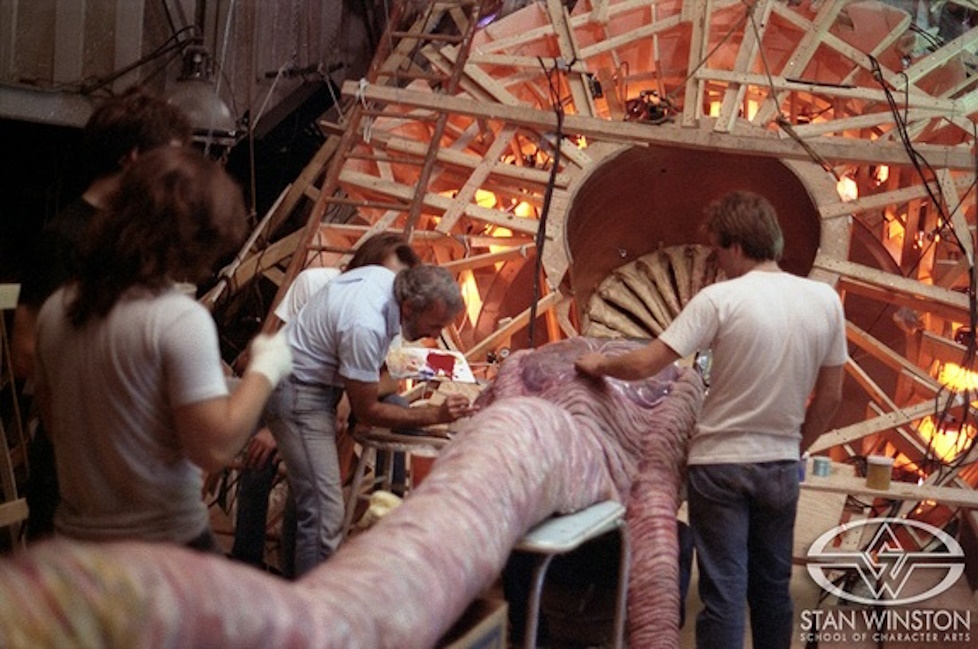
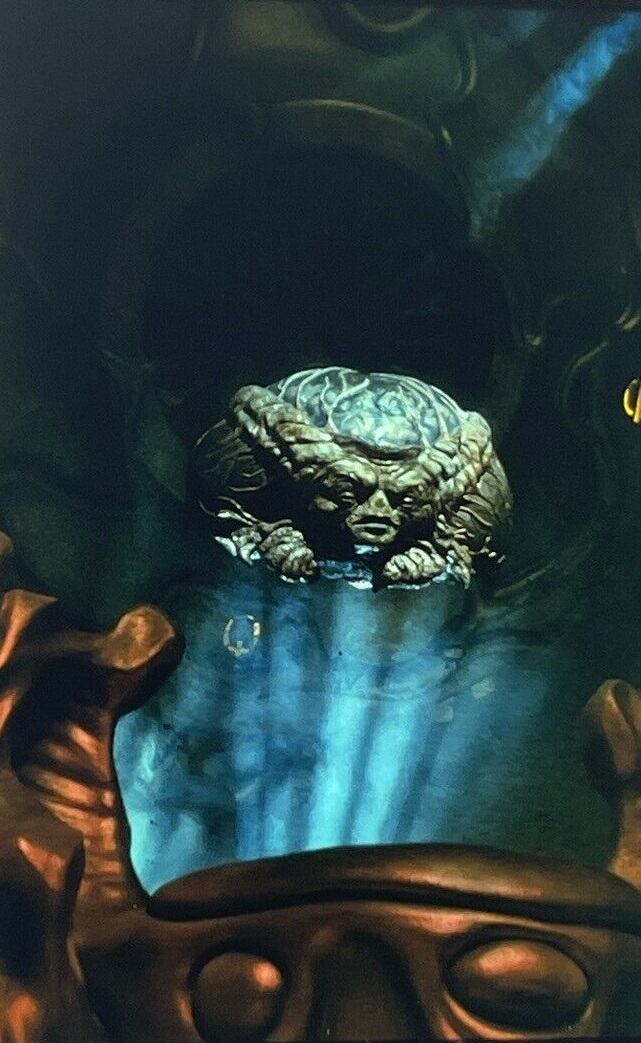
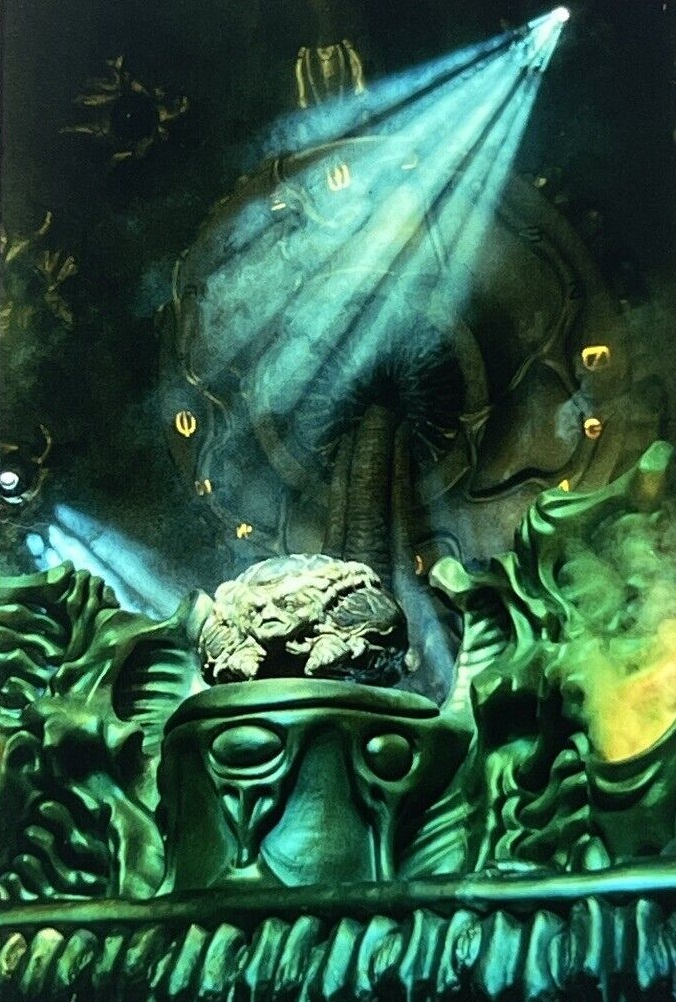
Shea explained the set-up for the Intelligence’s first appearance: “the Supreme Intelligence makes its appearance by flying out of a portal above an altar-type structure and that altar-type structure was on the second story of the set. Using a scissor-lift, the puppet and controls were raised into the air, while crew members, including chief mechanic Dave Nelson, moved the puppet onto the platform.” He also added: “he had two long tentacles strapped to the sides of his body for when he was “flying”; these were detached and draped behind the altar. Two mechanical tentacles were then dressed over the sides of the altar and their controllers concealed. Three puppeteers then moved beneath the body of the Supreme Intelligence via the hollow altar and opened up the skin. This gave two puppeteers access to directly puppeteer the mouth and the two little arms in front of the creature that Dave Nelson lovingly referred to as the ‘croissants’. The last puppeteer hooked plastic tubing to an array of valves controlled by a custom keyboard to operate the air bladders in the creature’s body. What this meant for the crew was that we were doing double duty for a lot of the scene. When we weren’t assisting and dressing the Drone performers, we were busy doing maintenance on the Supreme Intelligence puppet.”
The scene where the Intelligence is shot down required a different set-up. Shea continues: “Gino Crognale was now duct taped to a slant board in a Superman-Flying pose inside of the Supreme Intelligence. On action, Dave Nelson and Everett Burrell would push down on the slant board from behind, causing the creature to rise and shift in pain as the squibbs detonated. Inside, Gino would be puppeteering the ‘croissants’.”
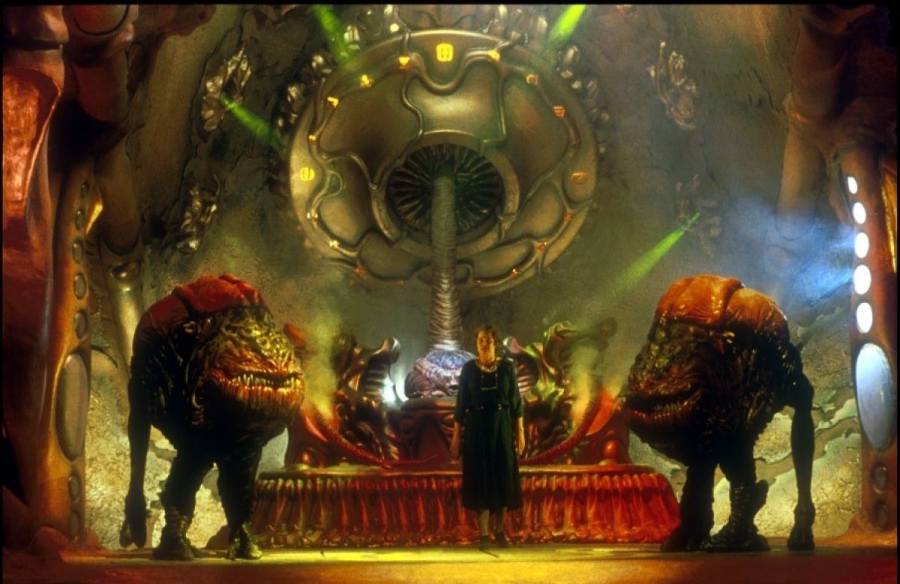
For more pictures of the Martians, visit the Monster Gallery.

