The notion of Gremlin dates back to the beginning of the 20th century, when myths among airmen began circulating that such creatures — often likened to small men, or imps, or sprites — were responsible for aircraft sabotage. The urban legend was then popularized around the time of World War II, with flight crews often blaming Gremlins for purportedly inexplicable accidents. Since said accidents happened on all sides of the conflict, it was believed that these Gremlins were simple tricksters, acting upon their own desire for mischief.
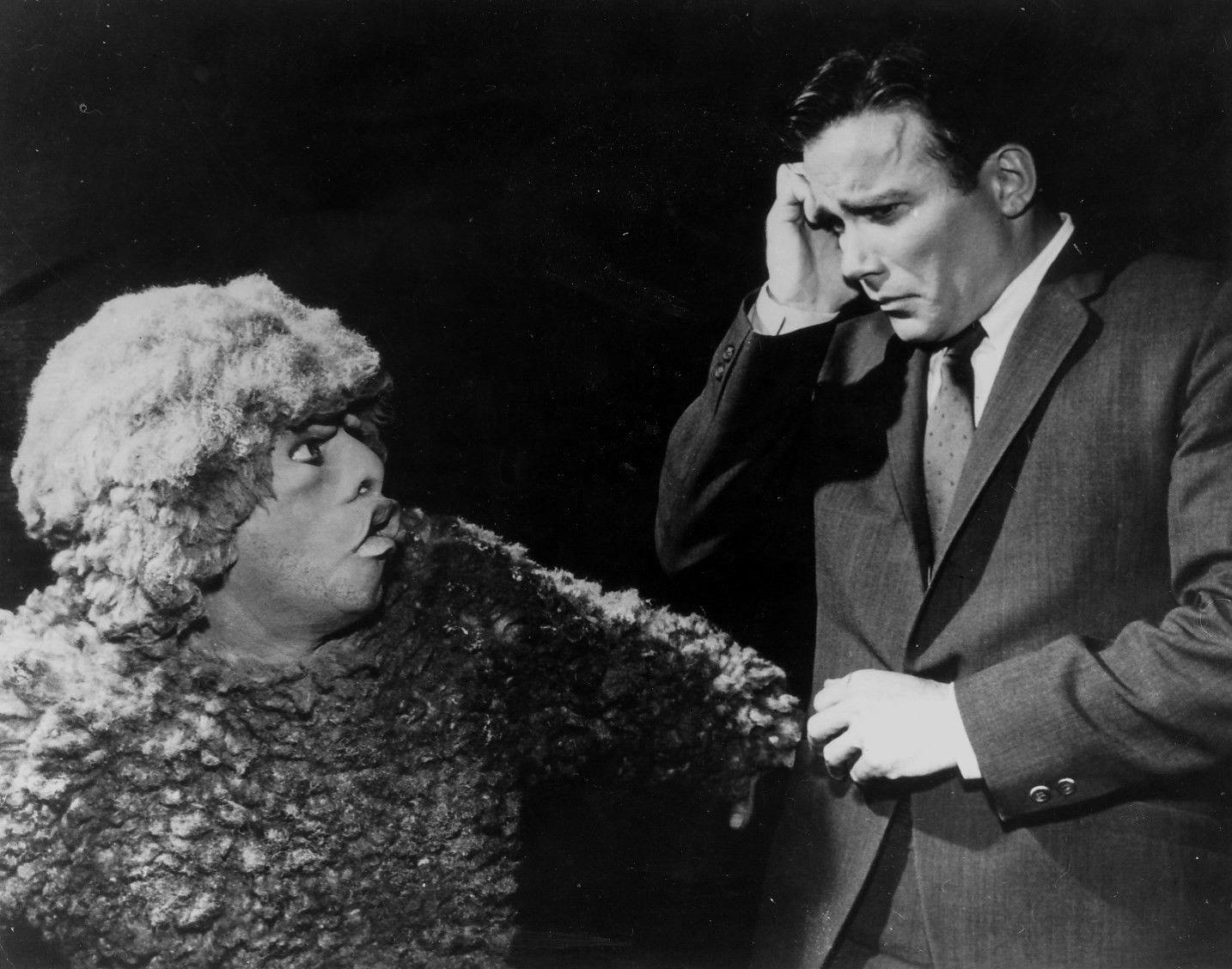
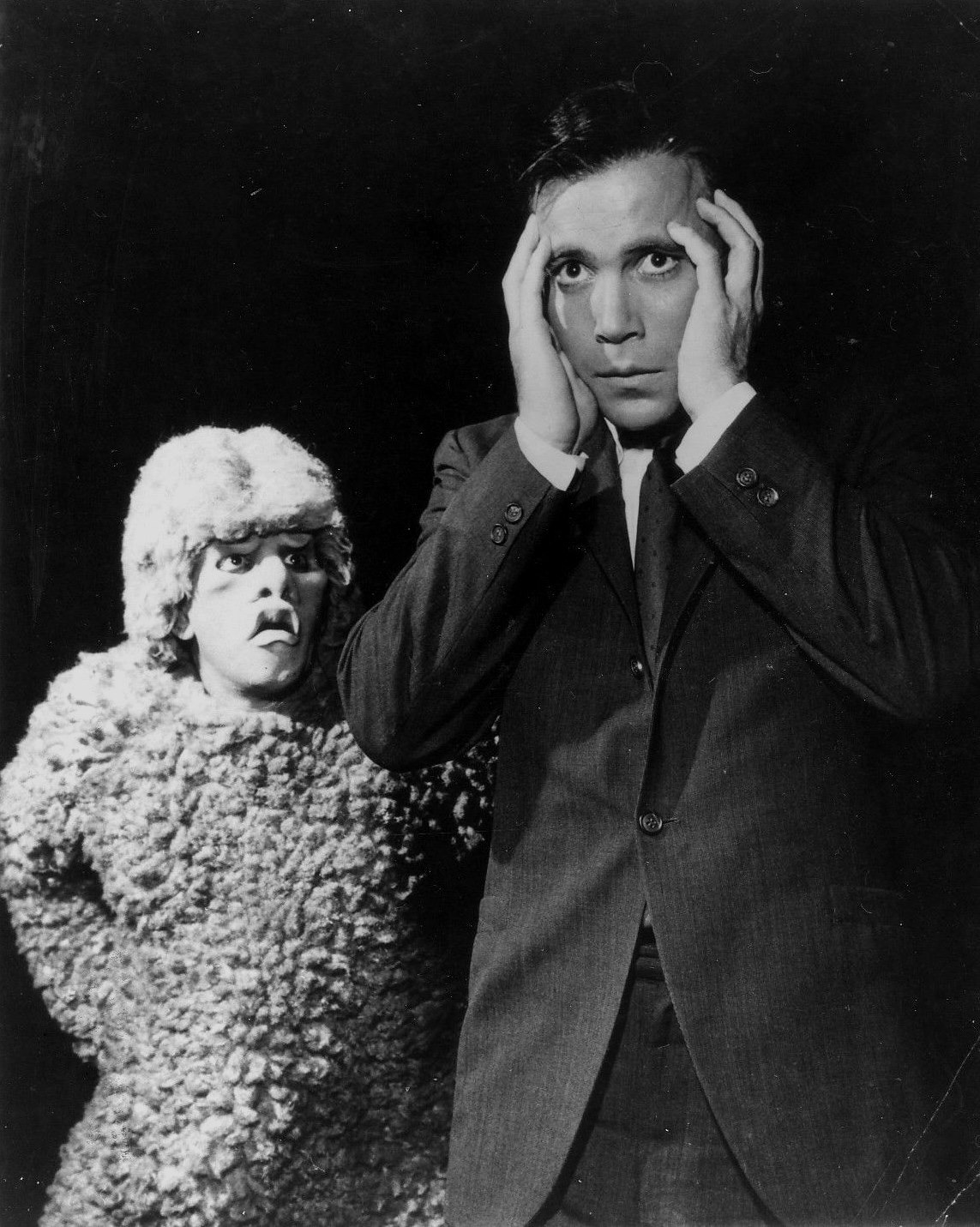
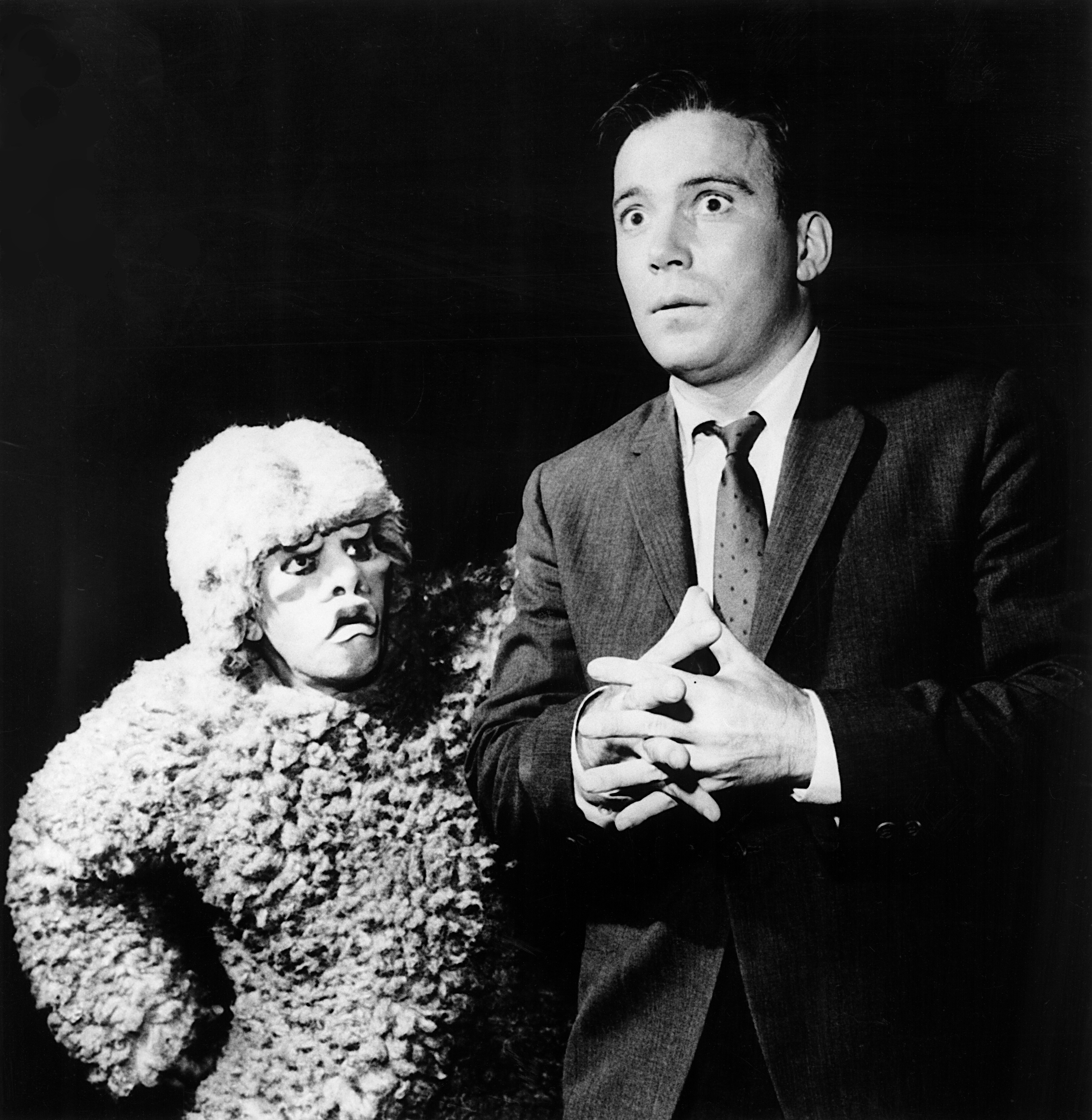
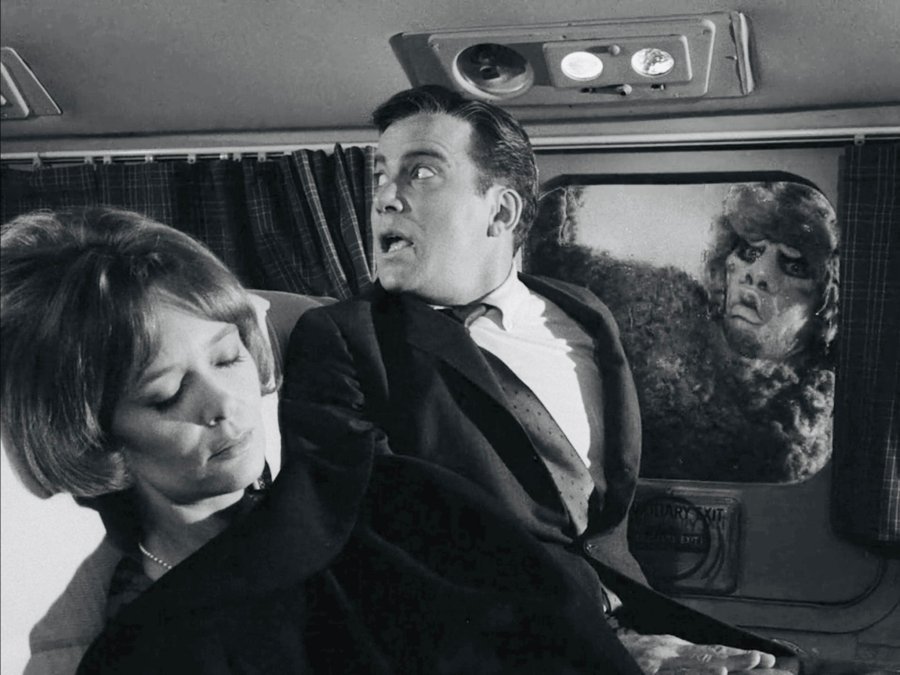
William Shatner with Nick Cravat as the Gremlin in promotional stills for Nightmare At 20.000 Feet.
Writer Richard Matheson was on a plane when he looked out of a window, imagining the appearance of a man above the clouds, skiing across them as if they were snowbanks. Reminded of the Gremlins, the author wondered what he could or would do if said man were to land on the plane wing and start damaging its engines. It was out of this spark of imagination that Matheson wrote the short story Nightmare At 20.000 Feet, first published in the 1962 horror anthology Alone By Night. In it, the Gremlin on the plane wing is depicted as a hairy humanoid with short clawed arms. When it presses its monstrous visage against the window, it is described as follows:
“Its skin was grimy, of a wide-pored coarseness; its nose a squat, discolored lump; its lips misshapen, cracked, forced apart by teeth of a grotesque size and crookedness; its eyes recessed and small – unblinking. All framed by shaggy, tangled hair which sprouted, too, in furry tufts from the man’s ears and nose, birdlike, down across his cheeks.”
It was based on this description that make-up artist William Tuttle designed the appearance of the Gremlin for the Twilight Zone series adaptation of Nightmare At 20.000 Feet. The make-up was applied by Grant Keate on acrobat actor Nick Cravat — chosen after his past experience as a circus performer — who otherwise wore a hairy suit and was hung by wirework. The creature effects were plagued by issues of time and budget: only the Gremlin’s face could be properly sculpted and built as a make-up application on Cravat, with the body being a stock hairy costume from the MGM costume department. Special soles on the suit’s feet allowed Cravat to maintain balance on the slippery surface of the plane wing set, and wirework allowed him to be suspended and not fall off.
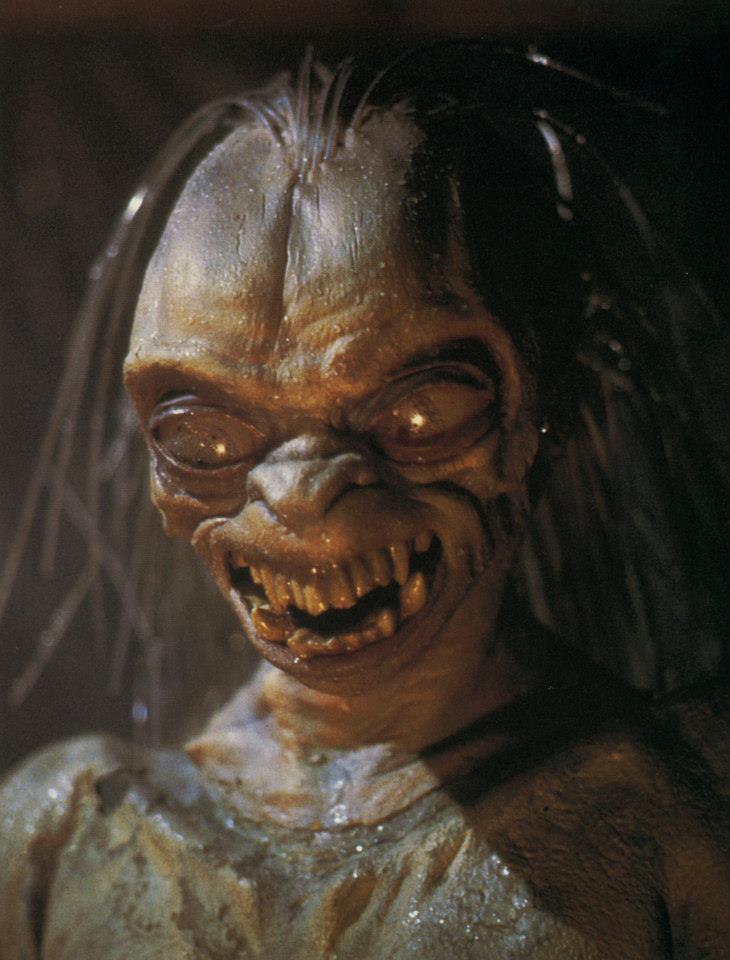
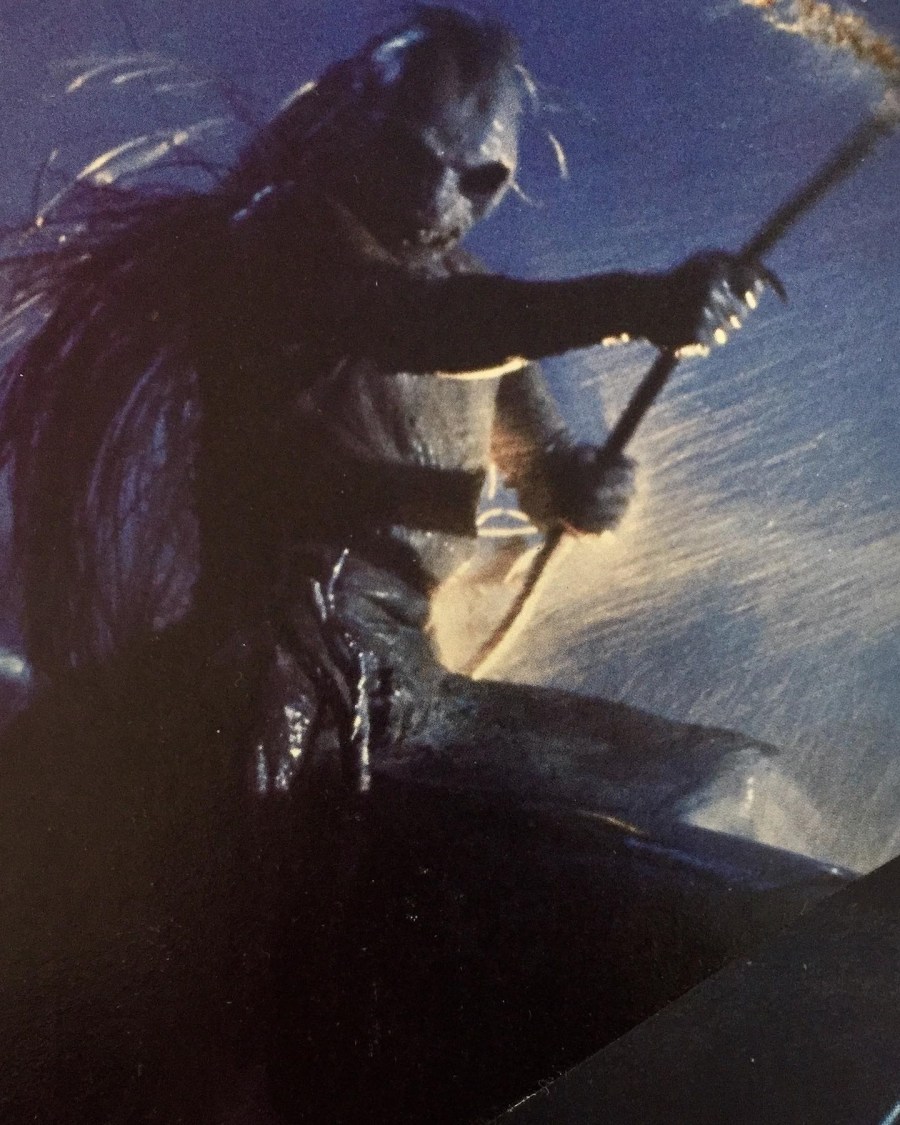
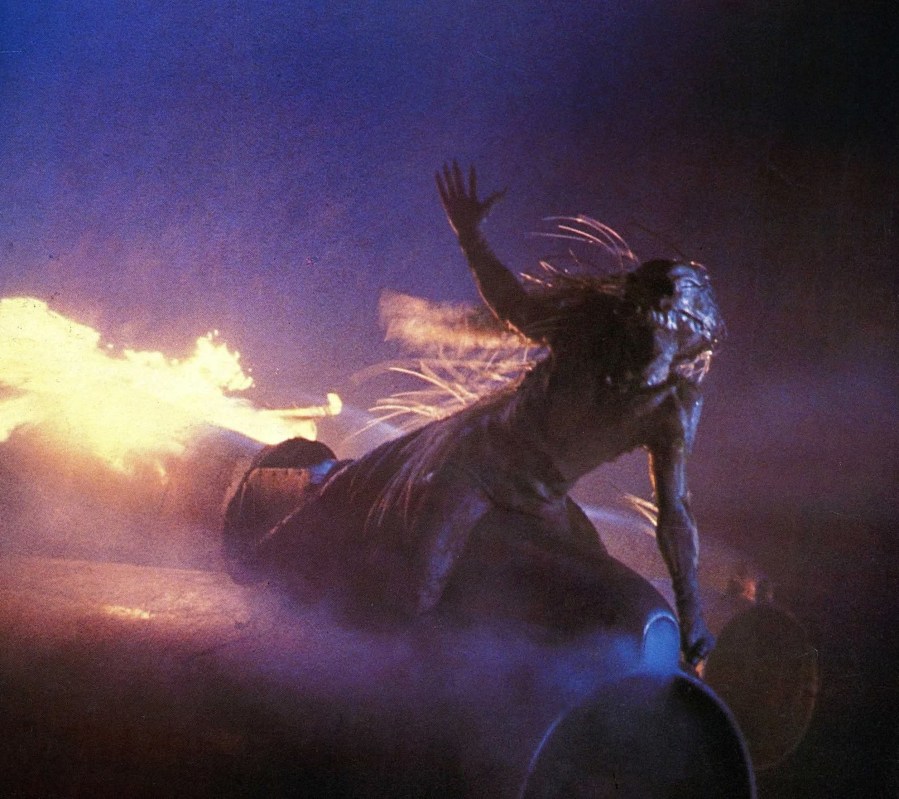
With a higher budget and two decades worth of technological advances, a whole different course could be taken for the remake of Nightmare At 20.000 Feet, the final segment of Twilight Zone: The Movie. Everything in the new version would be magnified, as told by director George Miller: “everything is heightened — every sound is louder and more significant.” This would include the Gremlin, who would undergo a major design overhaul based on Miller’s directions.
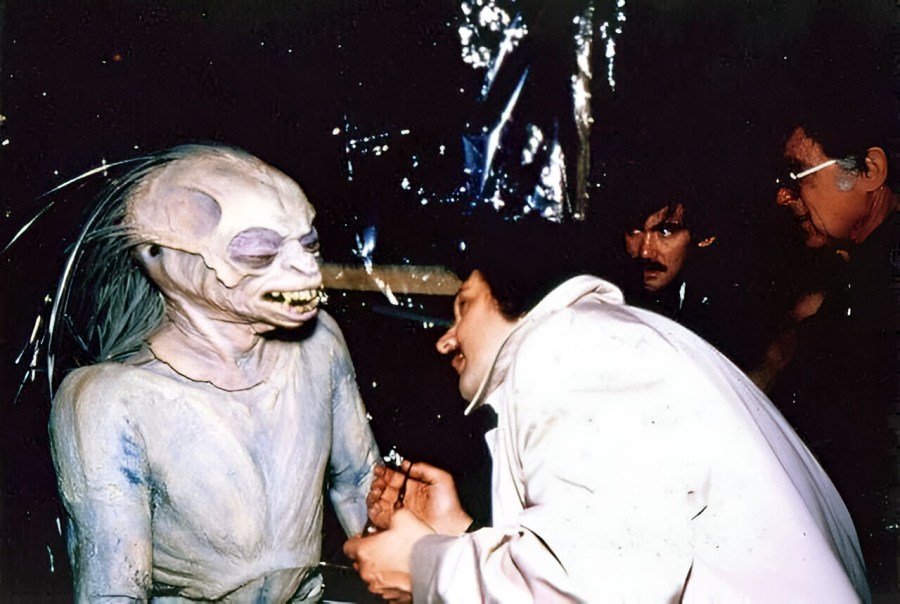
Early designs were penned by Ed Verreaux before Craig Reardon and his team were hired to build the Gremlin. “I was in Nashville bashing up Richard Thomas’ face for a TV movie about Hank Williams Jr., when I had a call forwarded to me from Dennis Jones, the Twilight Zone production manager, saying he wanted me to come talk about the George Miller Nightmare At 20,000 Feet episode,” recalled Reardon. “I couldn’t have been more delighted, because that was always one of my favorites from the original series, and I knew that this meant they wanted me to work on the Gremlin.”
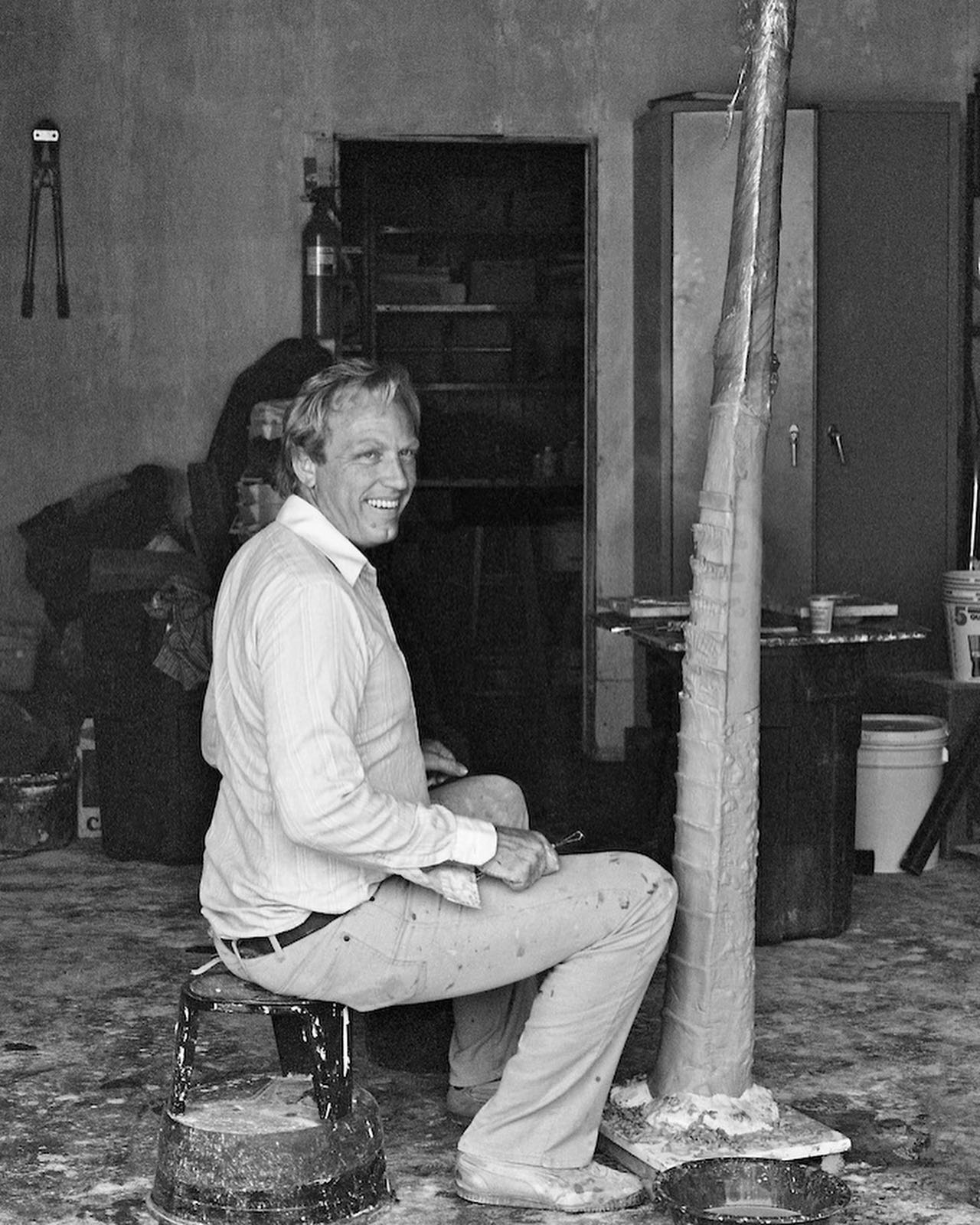
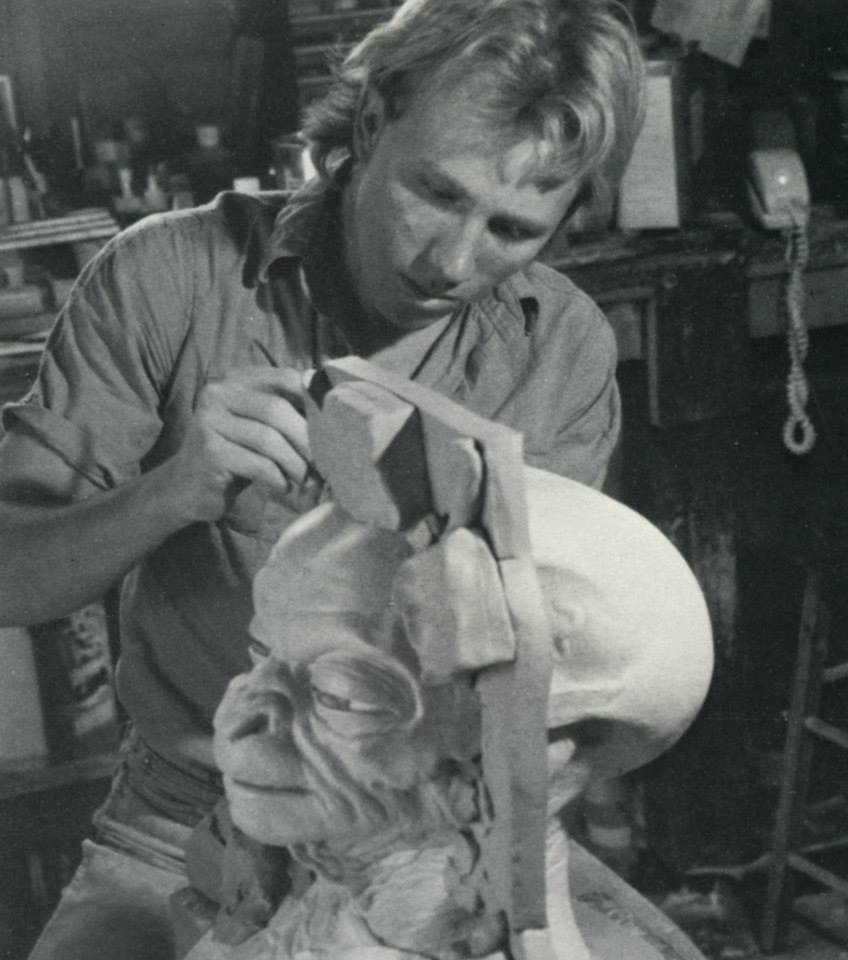
Craig Reardon at work on the Gremlin.
According to Reardon, “a few firm notions” had been established by Miller and Verreaux before he came onboard: “I met with George Miller and Ed Verreaux, who was doing the storyboards and conceptual art. George and Ed and Jim Bissell — the production designer — had already discussed quite thoroughly what they wanted the Gremlin to look like.” During this initial stage, Reardon felt somewhat like a bystander: “Ed is a very good artist, and a very fast one,” he continues. “I believe he worked with other directors on The Twilight Zone, but I believe that his input was the greatest on the Nightmare at 20.000 Feet episode. He and Jim Bissel, the art director for the episode, had all kinds of great ideas at our initial meeting with Miller. Off the cuff, I really couldn’t think of any way to improve on their plans, so I found myself mostly sitting back and listening.”
The general direction was based on a “form follows function” approach. “Ed, in particular, was spouting off ideas like popcorn,” Reardon said. “‘Now, if this thing is able to fly, it would have to have this kind of structure so that it could cut through the wind.” As the Gremlin would be floating in the sky, it would only make sense for its structure to be as featherweight as possible, “a light-boned creature with different, more bird-like musculature”.
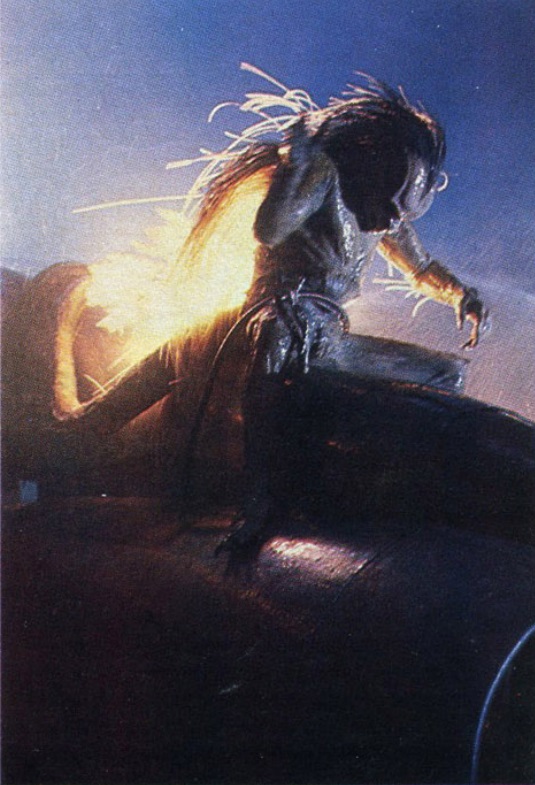
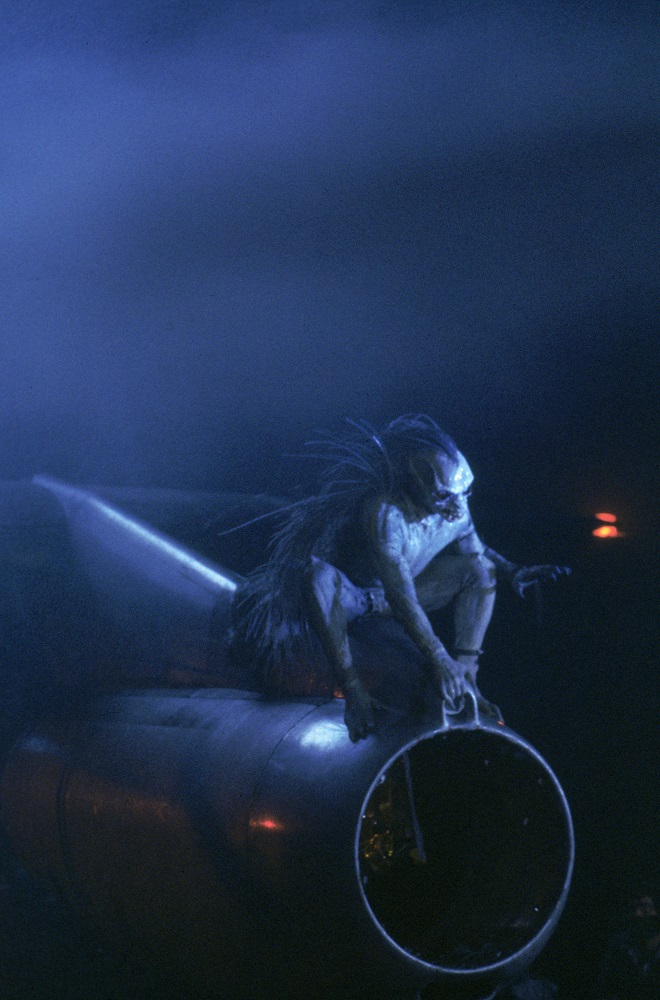
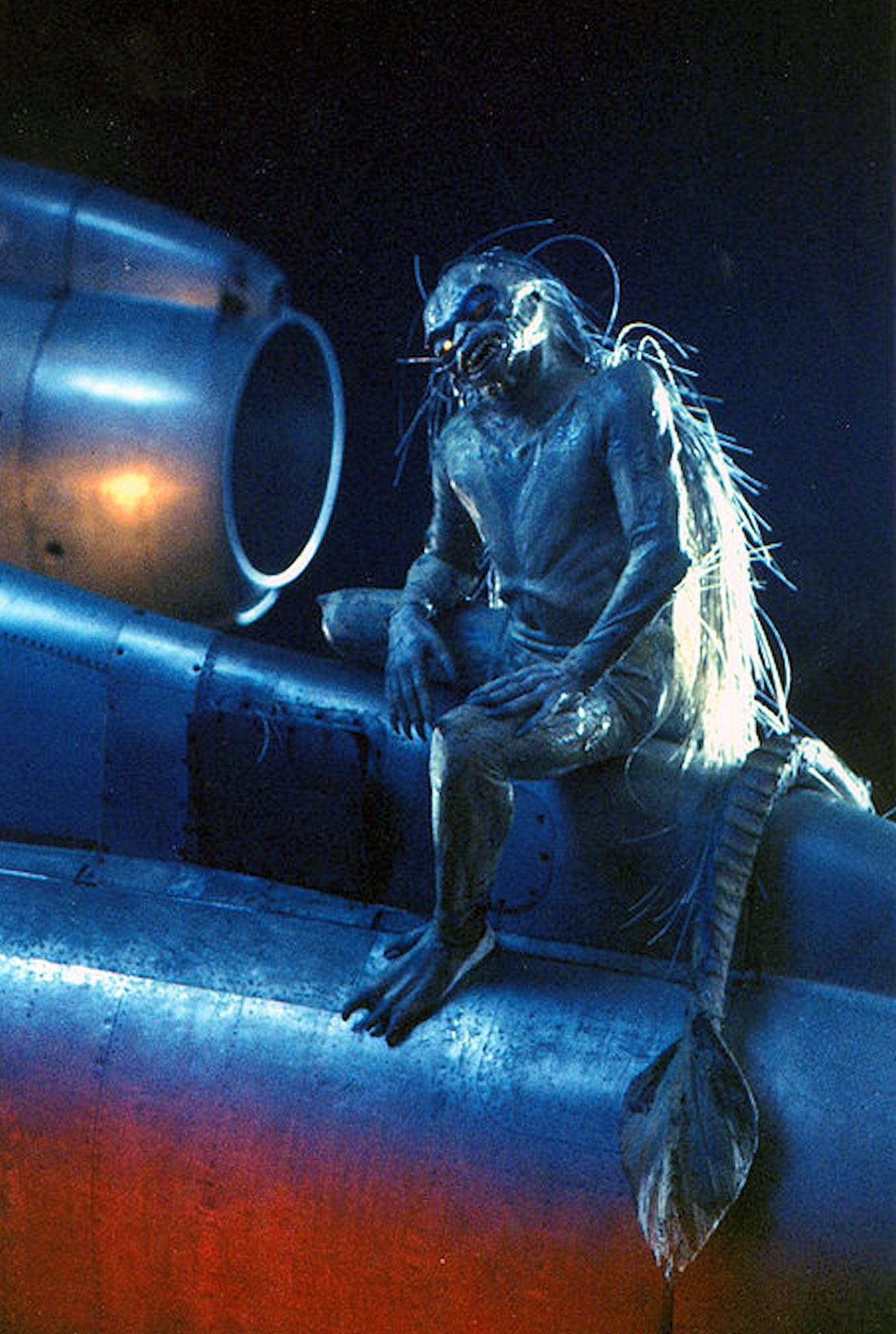
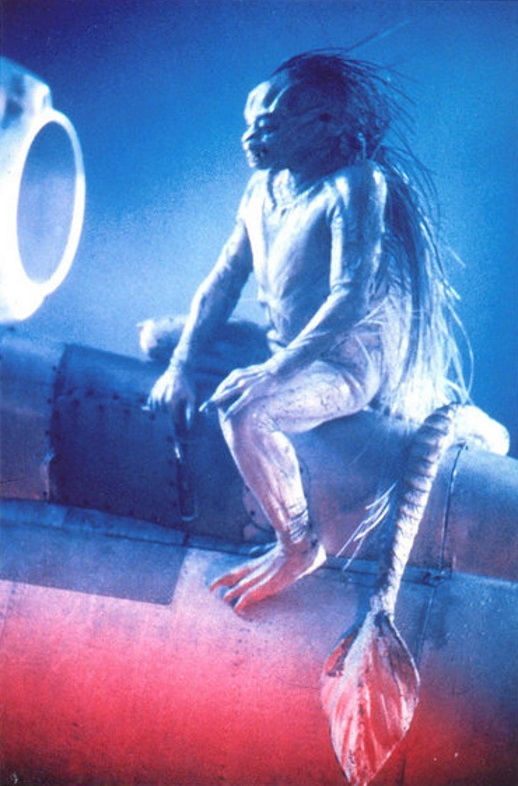
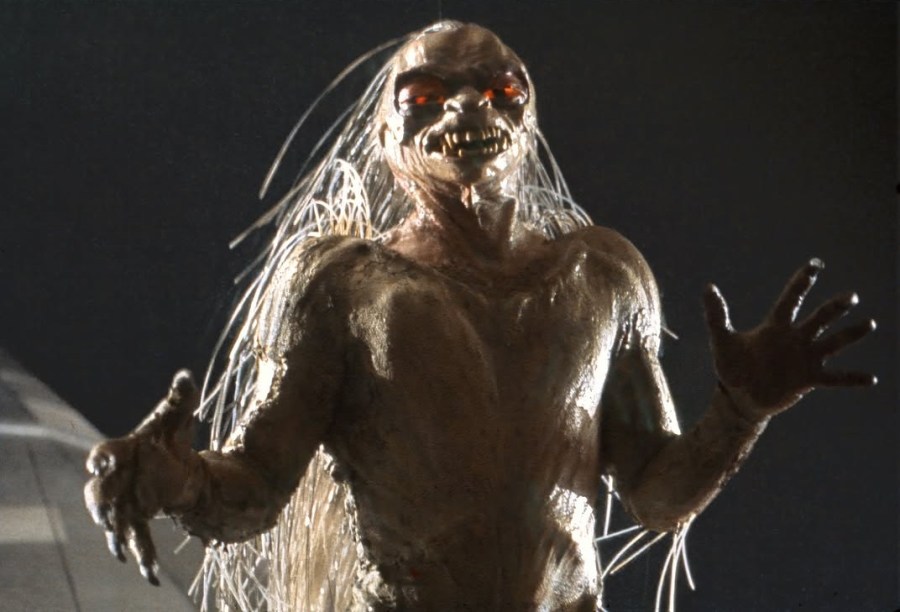
Breaking the humanoid silhouette of the Gremlin would be a mane of large quills lining down the back of the head — like “an Indian headdress”, as Reardon put it — neck and back, ending on its long tail. “Ed came up with the idea of a quill structure at the top, that would erect into a wing-like shape”, Reardon explained, “which turned out to be a technical nightmare when they decided that they wanted it, though I admire the idea no less for that.” Another element of the design were suction cups that it could employ to remain attached to a plane. “Ed also suggested suction cups on his feet and hands,” said Reardon, “to make the impossible idea of this thing clinging to the wing of an airliner in flight more plausible.”
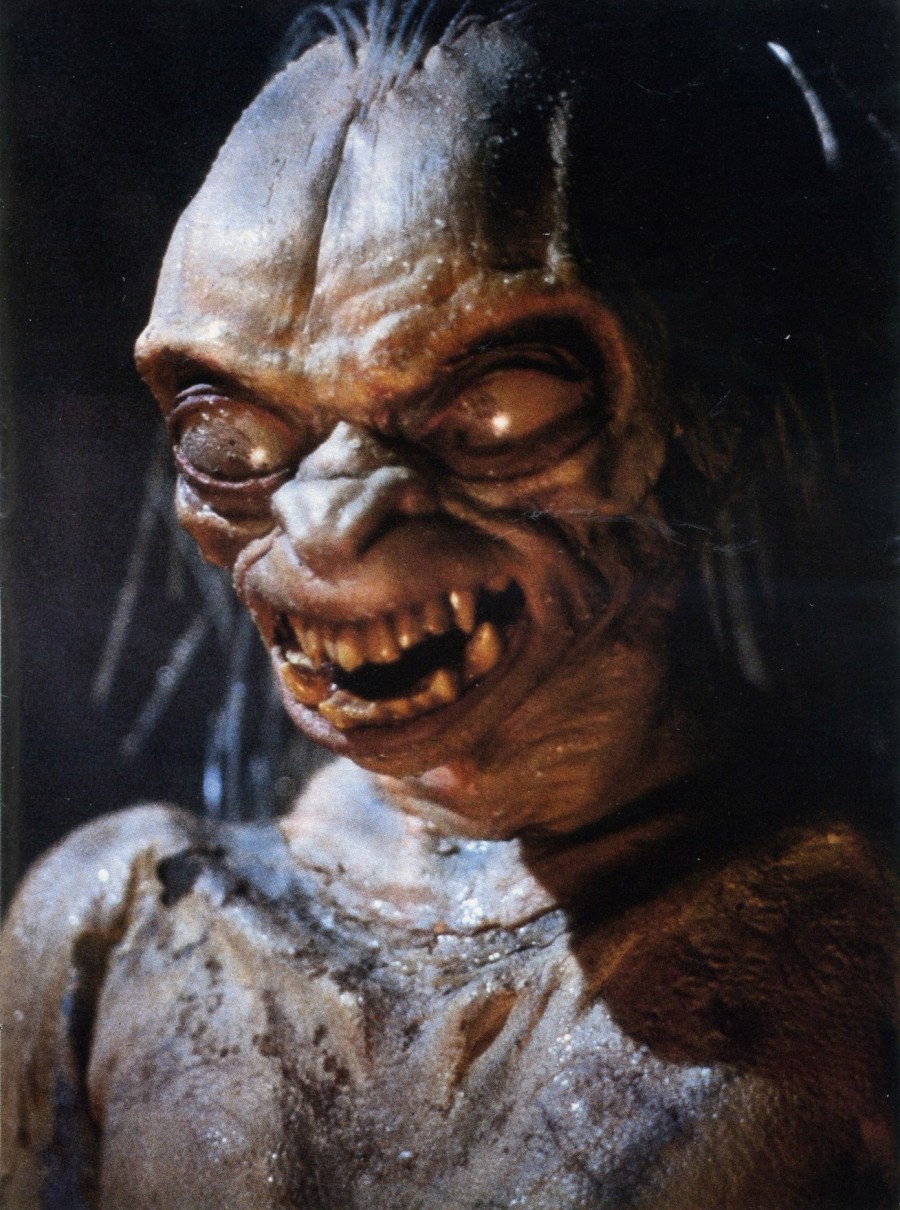
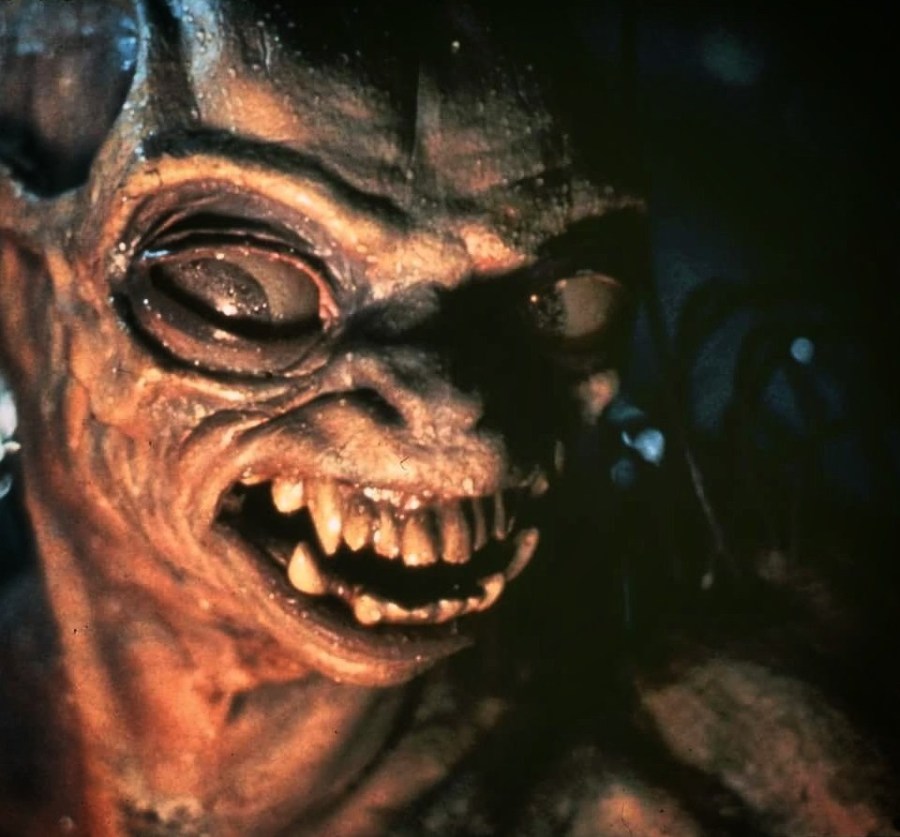
As for the Gremlin’s face, it would do away entirely with the original description, and would instead be based on a peculiar species of primate — the red-faced monkey. “George had a copy of David Attenborough’s book based on the Life on Earth TV series,” recalled Reardon, “and he had a favourite picture in there of a red-faced monkey — a nasty little beast with a very stern, mean-looking face — and George wanted the Gremlin’s features to follow that slightly primate look. Since everyone had pretty well determined what they wanted this thing to look like, it was really just a matter of my taking the sketches in hand and going home and beginning to figure out how to do it.”
Reardon hired former Poltergeist collaborator Michael McCracken to develop an approach to the creature effects, which would have to be delivered in just three weeks. The decision was made “to do an entire body suit, sculpted from head to foot — not something put together in pieces,” Reardon recalled. “That way, we could really control the look of the thing. I further decided to make the entire costume out of foam rubber. I had been involved with movies where that had been done — most notably Altered States, where Dick Smith was in charge — so I knew it was possible. There are pitfalls to foam rubber, however. For one thing, it shrinks. But there are disadvantages and advantages to every material. The good thing about sponge rubber is that it takes an excellent impression. It completely reproduces everything you put into your original sculptures, and it is also extremely flexible. Some of the plastic foams and other things that don’t shrink as much don’t have the advantage of being as flexible and able to move as sponge rubber. So, even with its inherent disadvantages, I decided to use it.”
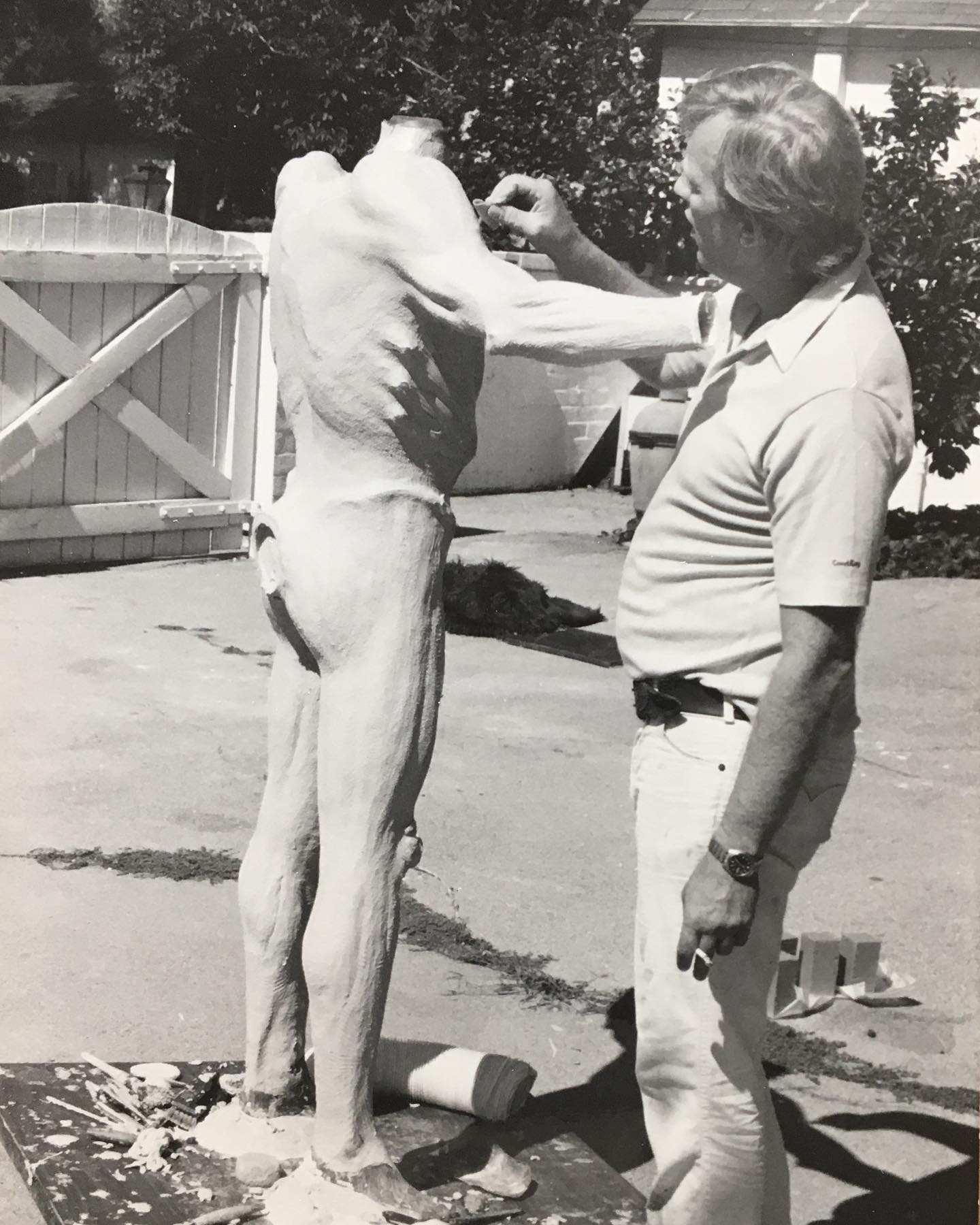
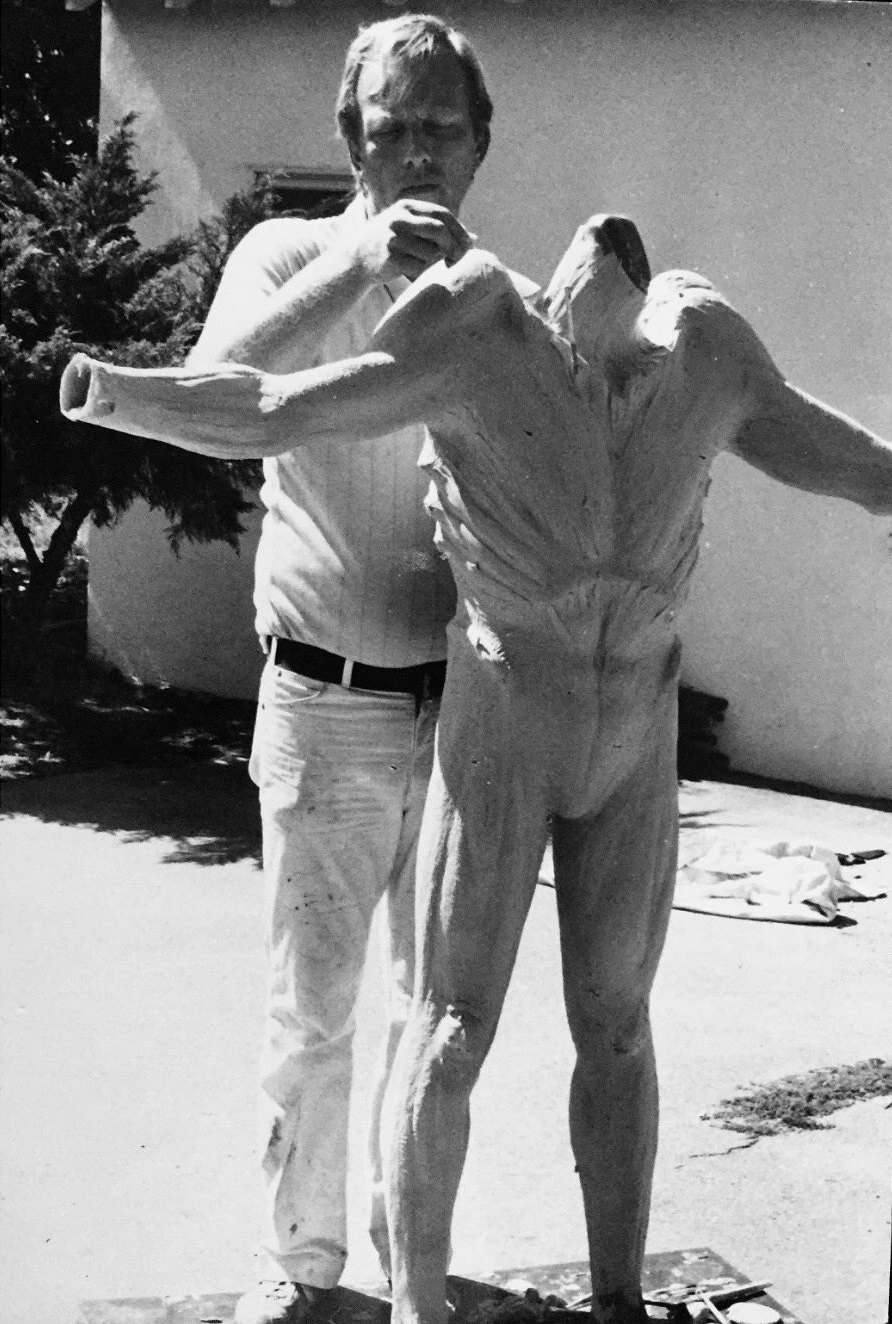
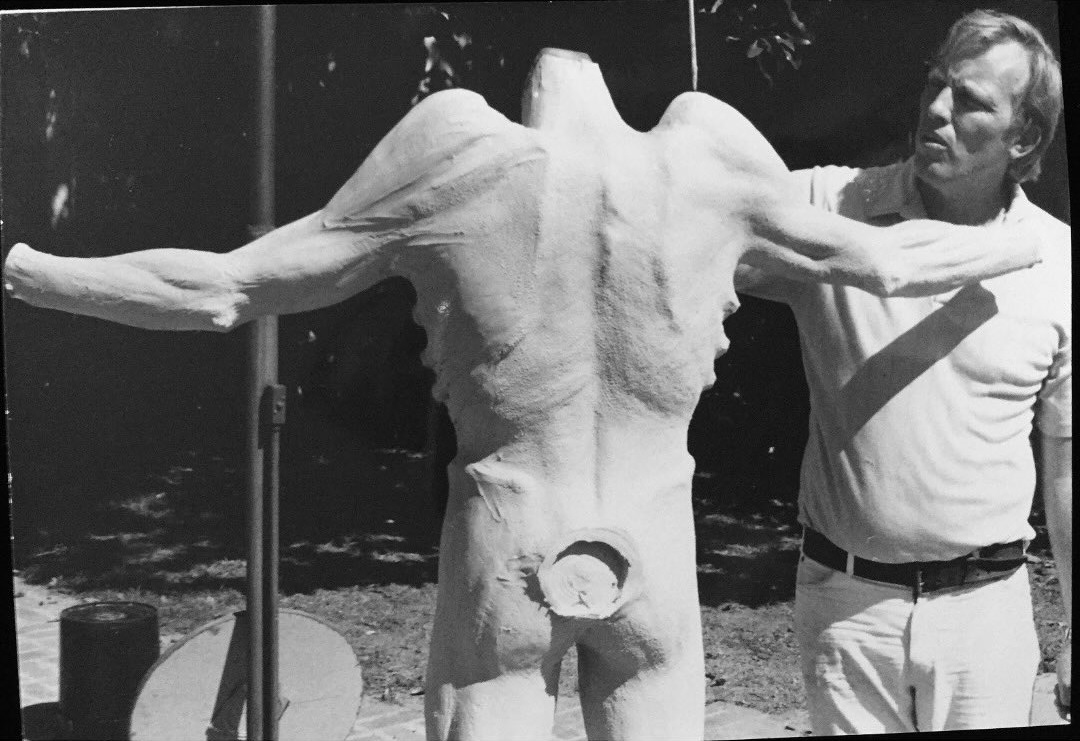
Michael McCracken sculpts the Gremlin’s body and tail.
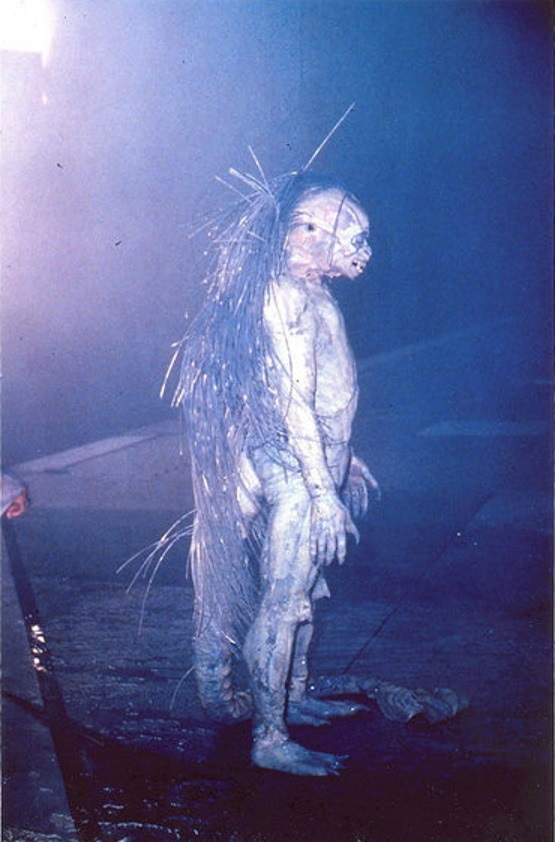
The Gremlin was sculpted over a plastic mannequin, slightly larger than the chosen performer — actor and dancer Larry Cedar — to account for foam rubber shrinkage. Reardon focused on the head, hands and feet, whereas McCracken handled the body and tail. “Mike McCracken did a beautiful job on the body, giving it a very subtle, sort of lizard-pebble texture,” Reardon said. “Largely as a result of the torture that the suit took from the wind and rain during filming, a good deal of what was put into the suit simply doesn’t read.”
There were changes applied to the design during the sculpting stage. Reardon explained: “I ended up having to alter the original suction cup concept. When I first rendered typical suction cup shapes on the hands, the effect looked pretty corny — like something on a bathmat. So what I made instead were big fleshy-looking pads on the fingers and on the palm of the hand, similar to the foot of a crustacean. Everyone liked that approach. Unfortunately, there was never really an opportunity to see that in the finished film.”
A new structure was added to the tail — another suction cup, one of conspicuous size, on the ventral side of a lozenge-like tip of the creature’s tail. Reardon continues: “we came to the creature’s tail which Mike McCracken sculpted and cast in foam rubber — a nice seven-foot-long tail with a spade-shaped flattened end on it. I think that was rationalized on the basis that it would be used something like a rudder for steering through the skies, and then as another suction device to anchor the creature to the wing upon alighting.”
While Reardon was sculpting the Gremlin’s head, Miller became an active participant in the process. “On one particular afternoon, George must have spent three or four hours just sitting in a director’s chair behind me, calmly smoking his pipe and making remarks,” Reardon recalled. “He’d reach over and say, ‘do you mind awfully if I change this a little bit?’ And he’d resculpt a little piece. Almost every time he did, he made an improvement. George had good ideas. He’s really the most remarkable director I’ve ever worked with, in the sense of his enthusiasm and his desire to be involved.”
McCracken’s son — Michael Shawn — was responsible for moulding and running the foam under Reardon’s direction. Rather than following the tradition of the time and breaking the body mould up into separate pieces for limbs and torso, a single mould encompassing the entire body — save for hands, tail and feet — was made. “When we ran foam we used ten sunbeam mixmasters on the floor at the same time,” said McCracken Jr.. “We had to synchronize them to function precisely the same each time. We would run a batch, inject it and run another until the molds were filled. There was no temperature control in the room so it made things a bit more challenging but we succeeded!”
Michael Shawn McCracken moulds the Gremlin’s head.
Casting and moulding the head of the Gremlin became a major challenge. “The way the thing was designed, the frontal bones not only cut into the head, but also sported cheekbone ridges that came out from there and up,” Reardon said. “As a result, the mould had about four directions in which it could become locked onto the sculpture. I had another unique problem in that I had to make the creature’s facial skin only about an eighth of an inch to maybe three-sixteenths of an inch thick. This was to make it mobile enough so it could be pulled into various expressions. But in riding over some of the extremely baroque and pronounced bone forms that were part of the creature’s look, the skin was not thick enough to relieve undercuts created in the mould. The final head mould wound up being in eight pieces. The basic form was done in four pieces, and then there were four little clip-on pieces inside to go into the vastly undercut areas, which could then be slipped out after the larger four-piece mold had been removed from the foam latex casting. That meant a lot of seams to deal with, but it was the only way I could figure out how to get that incredibly weird-shaped head out of the mould and then draw out a very thin skin.”
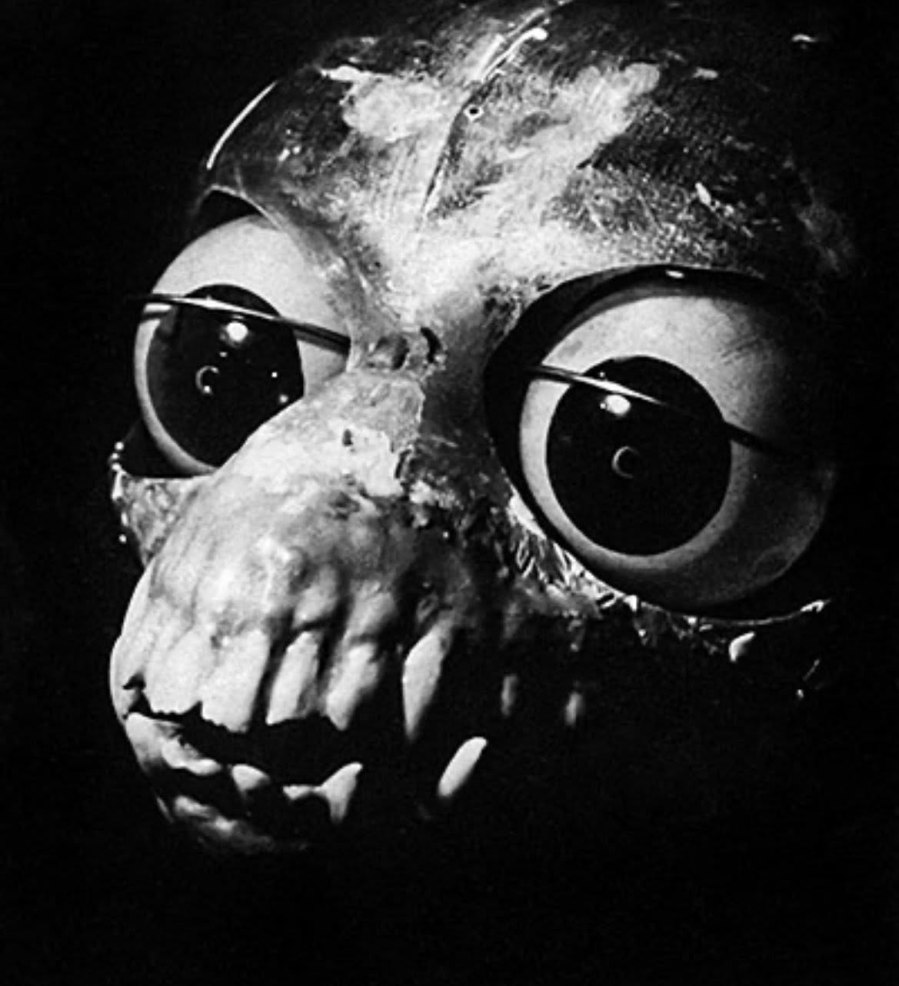
The underskull, with actuating cables and gimbal-mounted rigs for eye movement.
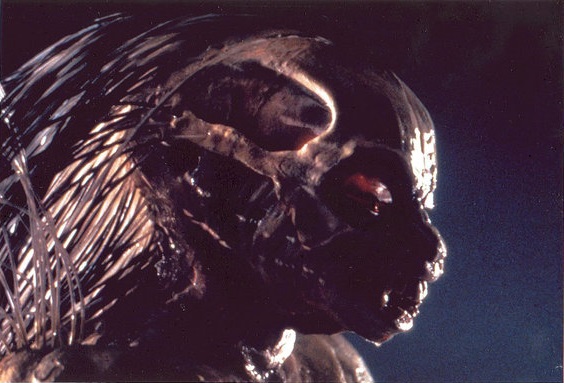
The mechanisms driving the facial expressions and movements of the Gremlin were altogether another important issue; this was largely due to Miller wanting very large eyes, as well as an ape-like lip-pulling that would expose the gums. “He was always miming what he wanted to me,” said Reardon, “opening his eyes as wide as he could get them and saying, ‘this is what I want to see.’ George also wanted the Gremlin to be able to pull its lips back from its teeth, so you could see quite a bit of gum-line. He made a big point about that. In addition, he wanted it to be able to grin quite broadly, as well as blink and roll its eyes. So I saw to it that our Gremlin could do all that. […] Putting that all together consumed a fair amount of time.”
The facial expressions were accomplished in a push-and-pull manner, “which is a lot more reliable and quicker than some of the more complicated methods,” said Reardon. “The push-pull mechanisms were basically radio-control model airplane cables, which come in two or three diameters. I used some very thin ones to do the pulling, and some slightly thicker ones for the push-pull work, such as moving the eyes.”
The eyes themselves were placed on a gimbal rig, allowing them to look up and down and around. “I agonized over that for a long time until the idea came to me when I was getting up one morning,” Reardon related. “So I did a quick little sketch on a Kleenex box, which I took out to the shop — and it worked!” Reardon also installed small red grain-of-wheat bulbs into the inner temples of the creature’s head, near the occipital ridges. In the darkness, they endowed the eyes with a slight glowing quality.
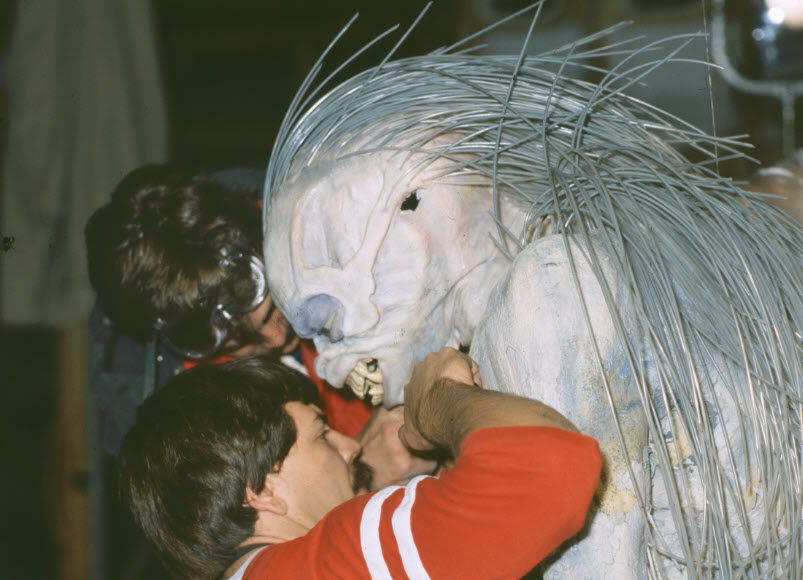
The large mane of curved quills that lines the back of the Gremlin’s head, neck, dorsum and tail proved challenging in terms of construction. “The idea was that they had to look like great sheaves of wheat blowing and rattling together like porcupine quills,” Reardon said. “I came up with a lot of possible solutions — including using shafts of feathers — before I finally hit upon the idea of using eighth-inch nylon airhose, which was available from a local supplier. I ordered rolls and rolls of that stuff, and cut it into three-foot lengths, which then had to be hung out in the heat booth to loosen up some of the tight curl acquired from being in a roll.”
Reardon’s own mother contributed to the ordeal. “An amusing footnote to the whole quill business is that I actually drafted my mother in to apply them,” Reardon said, “a hard job, which she not only figured out how to do, but also arduously completed herself. She’d start by taking an ice pick and sticking it into the costume. Then she’d put a couple drops of cyanoacrylate — otherwise known as Super Jet adhesive — on the end of one of the pieces of tubing. Then she’d jam it into the hole that the icepick had made, pull the pick out, and — presto — the quill would stay there. I’d had nightmares trying to figure out how to keep these things stuck to the costume, because the foam in some places was only a quarter-inch thick — but those quills held on famously. We only lost maybe a third of them through moulting.”
Ultimately, the mane proved useful for the suit structure: it broke the humanoid silhouette of the creature and also helped conceal zippers and actuating cables. “It certainly looked marvelous when the wind started to blow,” Reardon commented, “and from a practical point of view, they proved to be quite useful. For one thing, they helped us conceal the zipper down the back, which is the usual bane of any monster costume. Also, we were able to take our actuating cables out the back of the head and lead them down through the forest of quills, which was good camouflage.”
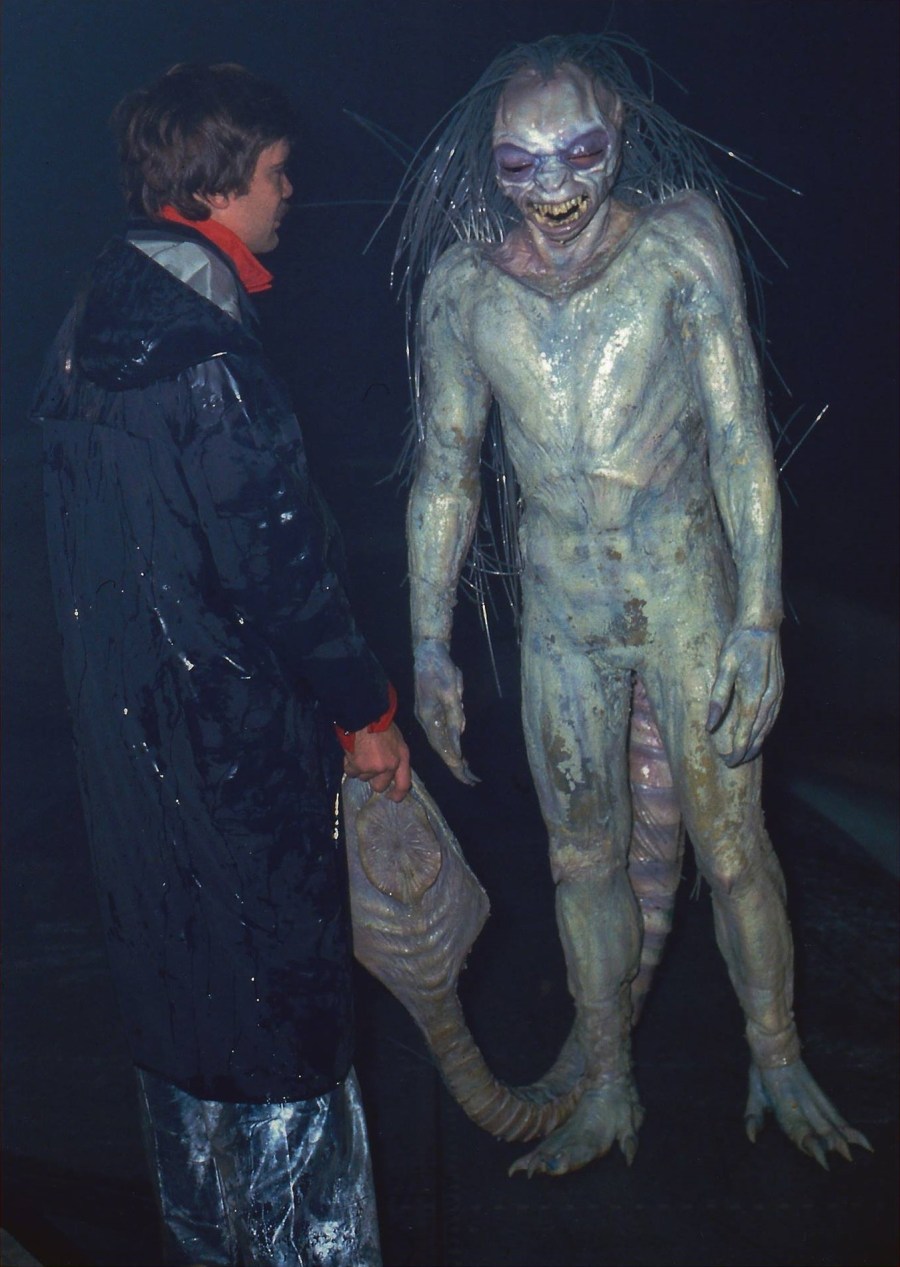
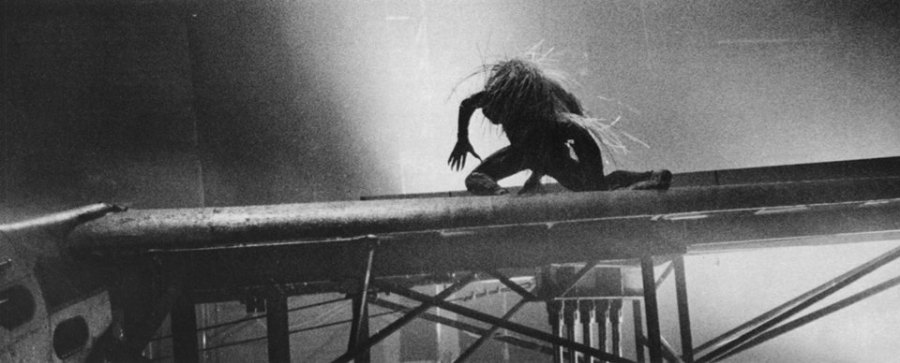
In concept art, the Gremlin was initially painted with sand tones, evoking a lizard-like quality. Upon a close examination, Miller ultimately decided instead for the colours to lean towards light beiges. The final patterning also sported blue and pink undertones, with superficial detailing including networks of veins. “I managed to get the whole costume spray-painted just a day or so before it was needed on the set,” said Reardon, “which was unfortunate, because the kind of paint you use for foam rubber — which is basically just rubber cement with universal colorant — is much better and more durable if you give it time to mature and cure; but with only four-and-a-half weeks from start to finish, we didn’t have that luxury. I had to go virtually right to the set with the costume.”
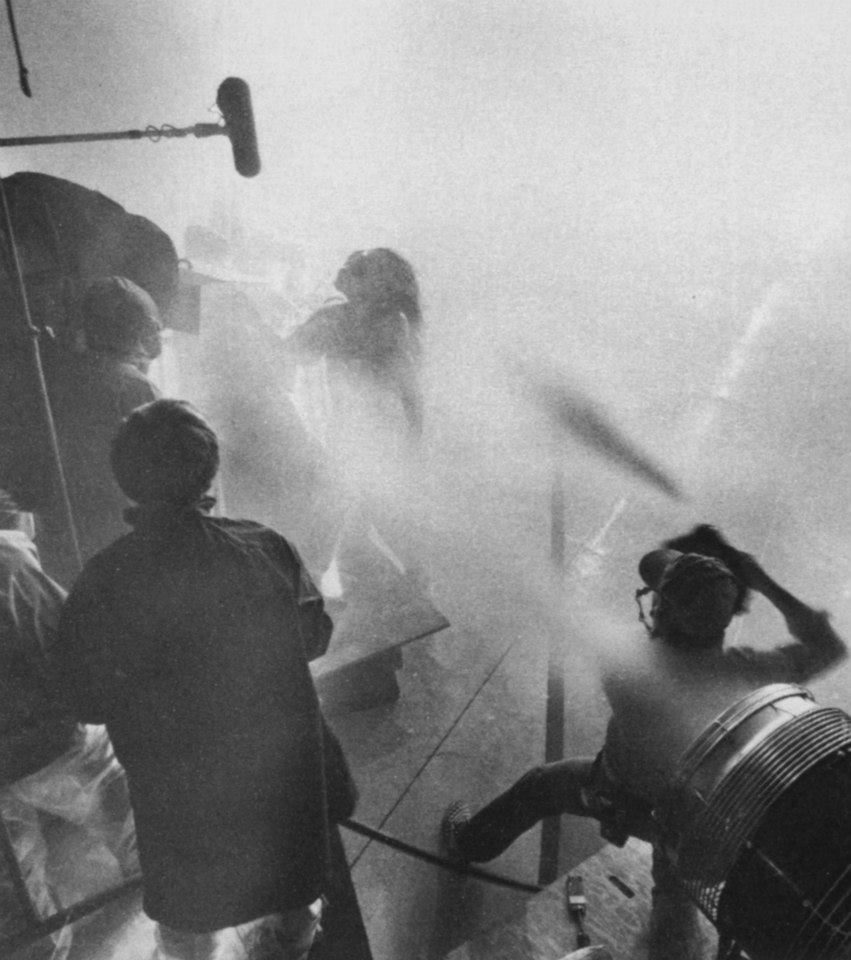
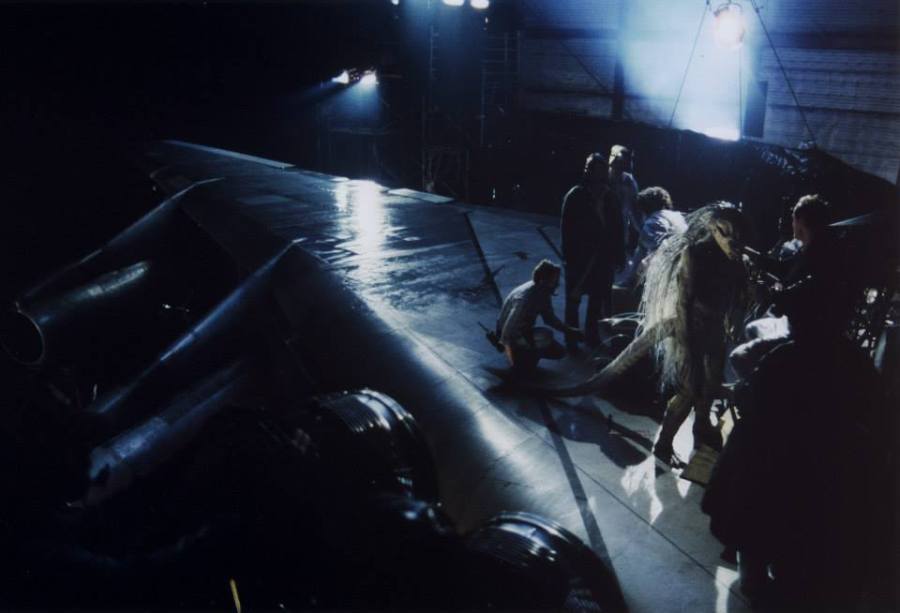
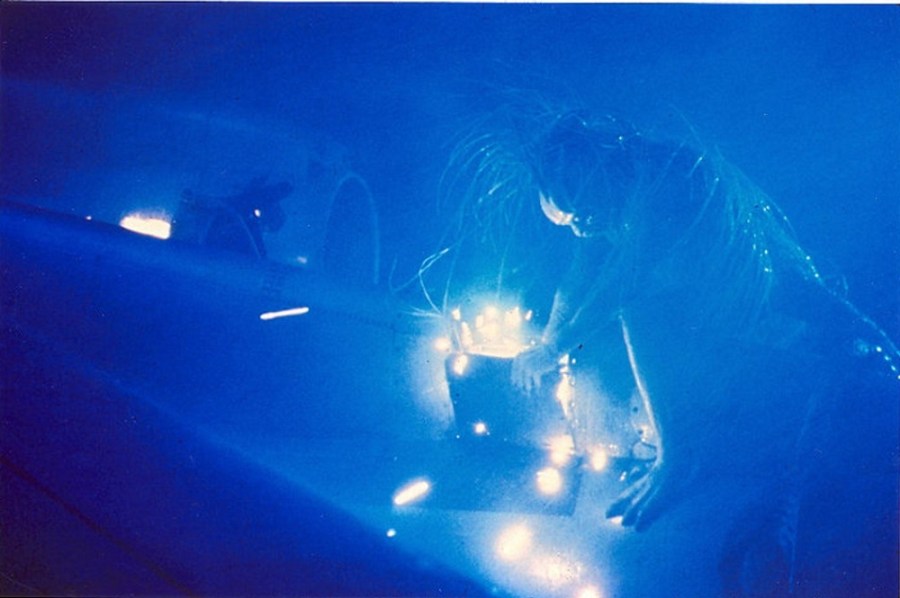
On set, the Gremlin suit was worn by dancer and actor Larry Cedar, who was new to such a role. “I was restricted to body movements,” he said, “but I think I did enough to get John Lithgow upset.” Cedar was tethered to wires for more agile movements and a sense of fleetness and grace. Cinematographer Allen Daviau shot most of the creature shots by undercranking the camera to emphasize the otherwordliness of the Gremlin’s movements. In order to ease the performance, distant shots of the Gremlin were filmed without its actual eyes. Most of the close-ups — of course requiring the eyes — were filmed first. Reardon explained: “at first, Larry Cedar was able to see out of the mask through the creature’s transparent eyes — rather inadequately, I must admit — but as soon as he began to breathe, his breath would condense on the backs of the plastic eyeballs, and pretty soon he was blind. So, for long shots, we installed a special pin that would allow the eye apparatus to lift right out of the mask. From a distance, it was impossible to tell that the eyes weren’t there, and Larry could then look out through the open holes. For closer shots, of course, the eyes were put back in.”
The harsh rain during shooting — which had not been decided upon as the creature was being built — affected the conditions of the suit and, as a direct consequence, the performance. “From our initial discussions, we had not figured on having a lot of direct water on the costume,” recalled Reardon. “Instead, the idea was to have the creature surrounded by an envelope of dry atmosphere, with the rain being blown to the camera side of him or beyond him. But once George saw a test, and he saw the thing dripping wet, he said, ‘well, we’ve got to do it.’ From that point on, it was firehoses and Ritter fans just soaking this suit every time you saw it. And, of course, the costume immediately took on water, just like a bath sponge. In fact, it was absolutely saturated with cold water the entire time Larry Cedar had to work in it.” Reardon added: “it took a horrendous beating from the elements, particularly the water, and every evening I’d be taking something home that, if someone asked me ‘did you do that’, I’d have said ‘who? Me? Absolutely not!’
Other than absorbing water, the suit also progressively lost its original colour scheme. “Once the Gremlin began taking a bath in that incessant rain, the paint began to go south on me,” said Reardon. “Certain colours began to leach through. Blues that had been used for some of the shadowing would suddenly come up through the paint film almost like dye. It was awful — absolutely ghastly what was happening to that suit. But George kept his calm completely, and said not to be concerned about it. Fortunately, the scenes where the Gremlin finally grapples with John were scheduled first, so the costume would look its best, and by the time the suit was starting to look really leprous, George had finished all but one of the close-ups.”
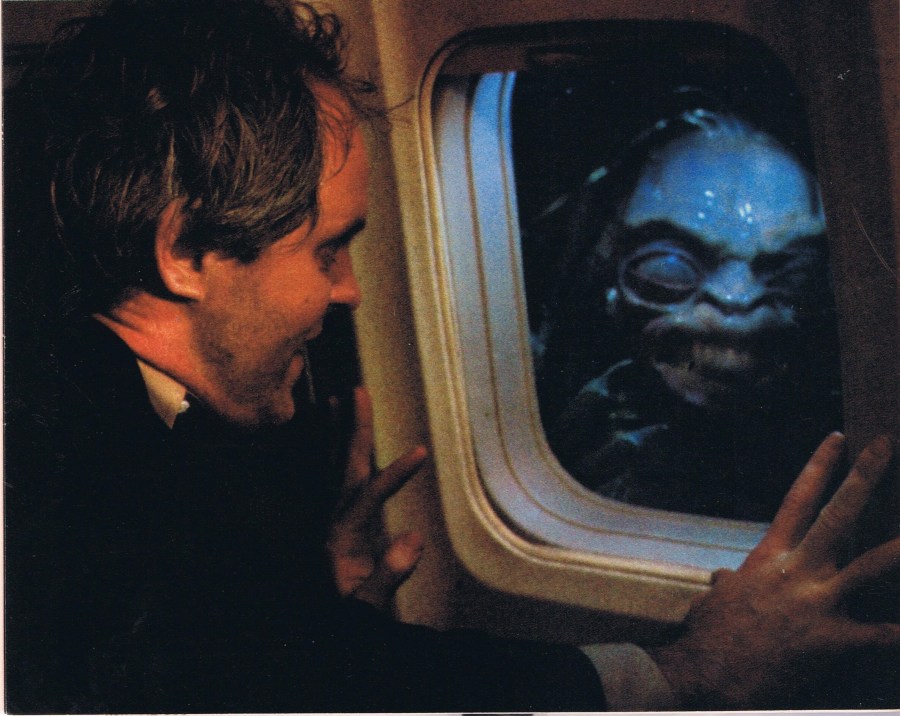
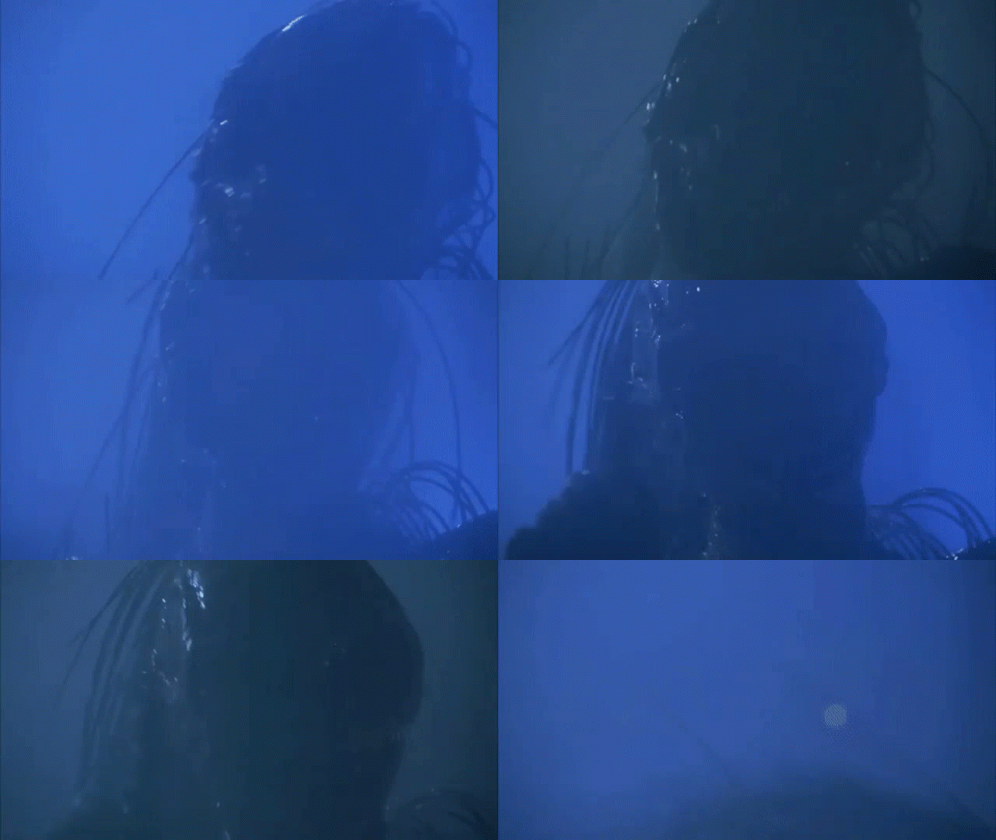
The last close-up, however, was critical — the key reveal of the Gremlin staring in through the window as Valentine pulls up the curtain. “That was supposed to be our very first shot,” said Reardon, “but I couldn’t get the suit ready in time. As it turned out, it became the last shot we did with the costume. I was very lucky that the gremlin was still in good enough shape to tolerate a closeup like that. Fortunately, George was a great KY lubricant fan, and he smeared great globby handfuls of it on the mask for any of the close-ups — which relieved any minor chafing that may have been on the mask.” During the close-ups, Reardon himself activated the cable mechanisms, assisted by Bruce Kasson, one of the prop men.
The Gremlin suit with the eye glow function, ultimately not seen in the film.
The facial expressions and eye glow were ultimately obscured by storm effects employed during principal photography. “With fast cutting and all the atmosphere blowing by, you really don’t see much of the thing’s small repetoire of expressions,” Reardon commented. “You do see a little bit of the smile blooming at the end, but the blinks and eye rolls are pretty much lost.”
“I was feeling just totally shattered at the way the suit got to look,” Reardon continues, “but George was totally unflappable. He’d look at it and say, ‘that’s quite all right, Craig — it’ll never show’. The destruction wrought on the costume by the wind and rain was disguised by the wind and rain, and George was able to anticipate that. He is, I think, one of those rare directors who understands, almost by instinct, how things are going to work in the final construction, after the edit, the sound and everything else.”
Reardon commented on Cedar’s performance: “the young dancer and actor who played the creature, Larry Cedar, was very patient and very enthusiastic throughout his ordeal. George came up with the very interesting idea of always keeping Larry partially suspended by a wire, diminishing the influence of gravity so that he was able to perform with a unnatural agility. It wasn’t until I saw the finished film that I realized what an inspired idea that had been.” He also added: “he proved to be a real trooper, and I don’t think he would have been quite so patient if he hadn’t realized himself what good movie this was going to be.”
The final confrontation with the creature on the plane wing involves a scene where the Gremlin bites off the barrel of a gun, which was a prescored gun prop; the shot was arduous and required several takes. Reardon recalled: “the jaws were hinged, but we couldn’t get a whole lot of leverage with them, so the gun had to be already segmented. Even so, it was tricky getting that bite on film — mainly because Larry, in his costume, wasn’t able to see it very well. And John couldn’t very well help by sticking it in his mouth, because he was supposed to be recoiling. It took us quite a while to get it right.”
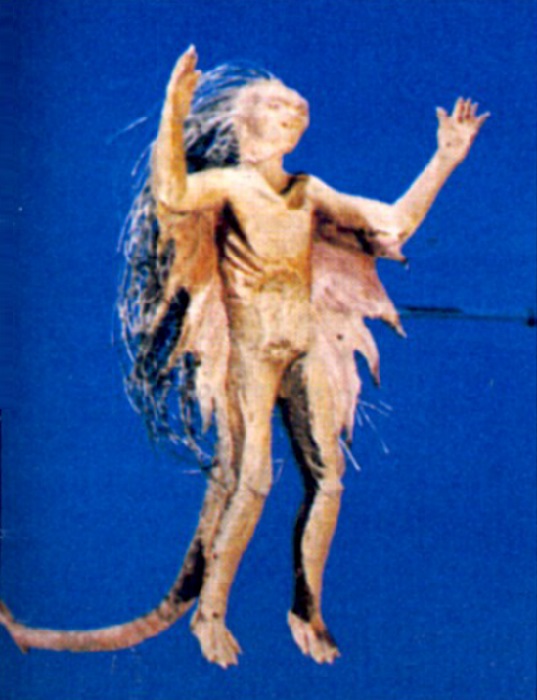
Having somewhat humorously scolded John Valentine with its finger waggling, the Gremlin floats away. The final shot of it spiralling towards the cloudy sky was a late addition to production, and the task to create it was assigned to stop-motion artists David Allen and Jim Danforth. “It’s a scene that follows the last shot you see of the man in the suit,” related Allen. “The thing runs down the full-sized wing and then jumps. The full-sized creature is carried off by the flying harness, and then we cut back to actor John Lithgow watching the Gremlin, his body protruding through a window of the airplane. Then you see this shot that I did, which involved a small puppet of the full-sized suit.”
Building the stop-motion puppet for the shot was a collaborative effort between Allen and his associate Dennis Gordon. “The puppet was about six inches tall,” Allen explained, “constructed of the standard foam rubber material over an armature built for me back in the early Seventies by Jon Berg. We worked from a number of photos of the full-size suit, with Dennis basically blocking the puppet in and I finishing it. Actually, it was a pretty good match. It even had about three hundred little silver-painted wires that Dennis pushed into it for quills, as well as small flying squirrel-type wings under each arm.”
The stop-motion puppet.
The puppet was mounted on a blue rod attached to a rotator; Allen animated the Gremlin against bluescreen, with its spiralling trajectory traced by a projected crosshair on a card behind the camera. Since the creature had to accelerate rapidly through the shot, motion blur was incorporated manually through a coordinated combination of puppet movements on the rotator, pans, tilts and dolly movements. The complex shot required three full takes to perfect, each requiring an arduous eight hours of animation.
Matheson was not fond of the overall film segment, but was rather impressed by the Gremlin, especially in comparison with the original — which he had never liked, dubbing it “somewhat ludicrous”. Of Miller’s creature, Matheson said: “I wish they could have had the Gremlin from the movie in the television segment.”
For more pictures of the Gremlin, visit the Monster Gallery.
I’m very glad the suction cups didn’t make it on screen. The more effort expended to ground the creature in biology, I think, the less effective it would be. Its total defiance of normal physics is the most unsettling element of the story.



I’m very glad the suction cups didn’t make it on screen. The more effort expended to ground the creature in biology, I think, the less effective it would be. Its total defiance of normal physics is the most unsettling element of the story.