

Although Critters was released two years after Joe Dante’s Gremlins, director Stephen Herek maintains that the script for the film was originally written by Dominic Muir far before Dante’s film entered production. Muir’s original handwritten script dates back to 1981, when the young Muir wanted to get to work in Hollywood — and figured he would need a script in hand upon arrival. Based on his extensive knowledge of science-fiction and horror, he decided to focus on a creature feature, one that would star small monsters, or critters, as opposed to the man-sized or even giant creatures that dominated the genre.

“I felt it had to be something that could be filmed on a relatively low-budget,” said Muir in an interview, “smartly deducing that my first contacts in Hollywood — despite the grandiosity of my dreams — would not be with the big studios with the extravagant budgets. I don’t recall, but I think I came up with the title before the monster: Critters. It was a word that we have all used at some point or another, an all-encompassing word used to describe any creepy-crawly and sometimes even large varmints, but generally it called to mind a smaller creature and smaller monsters are generally scarier than larger ones. They can slither, crawl, creep, and sneak into tiny nooks and crannies; they might move fast and come at you from all angles, whereas a bigger monster, even one man-sized, is more restricted in terms of their movements, speed, and possible hiding places.”
Gremlins did, however, serve as a catalyst to greenlight Critters: Herek unsuccessfully attempted to sell the project to various studios, but it was only after the release (and success) of Gremlins that New Line Cinema was willing to produce Critters, which then had to undergo extensive rewrites in order to decrease the similarities between the two stories. Herek explained: “the Critters script was around a long time before either of those movies [Gremlins and The Terminator] were made, but we had to rewrite because much of the script was similar to what was in those movies. We knew people would say that we ripped them off, so we changed some things around.”
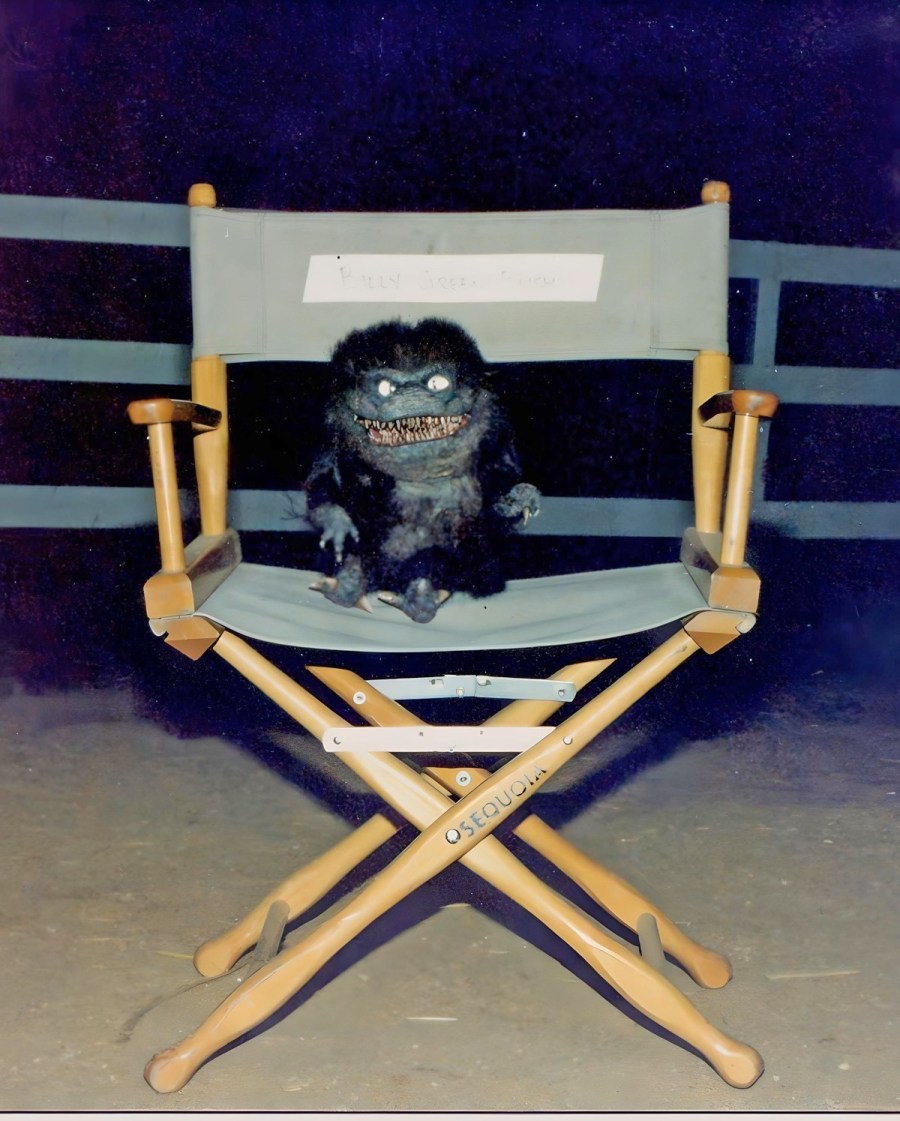
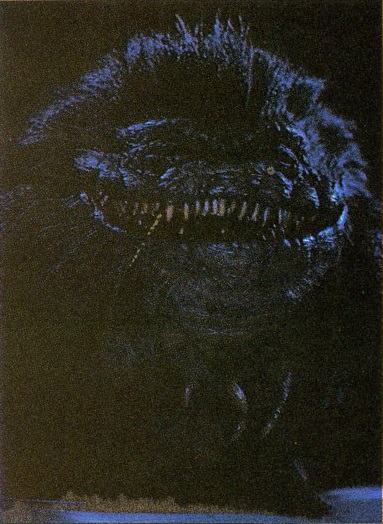
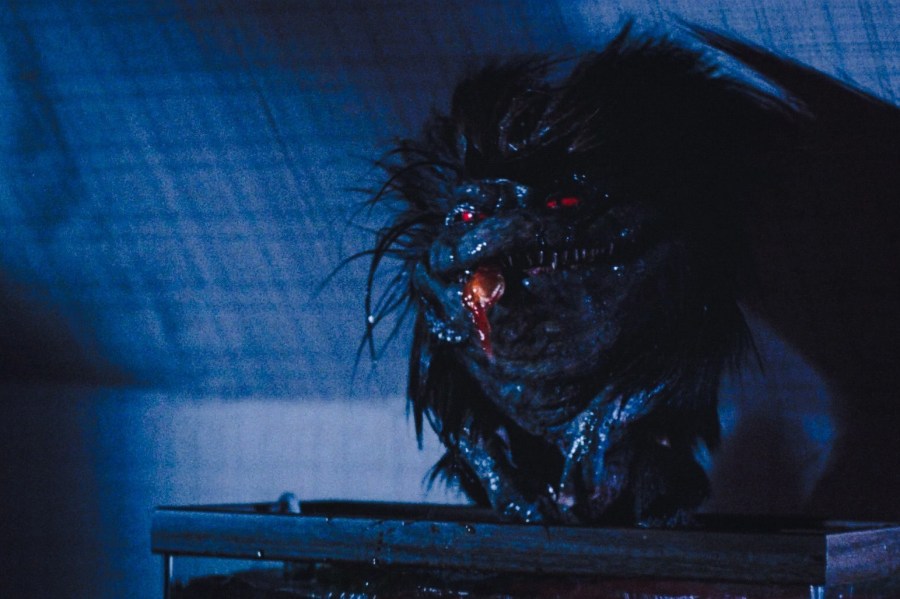
Muir’s pitch for the Critters — dubbed the Krites — was simple and striking. “I thought for a long time what they would look like,” he said, “and eventually came up with four-legged, furry, and with a mouth full of multiple rows of teeth and always hungry. I knew I wanted the Critters to come from outer space because I was also a 19-year-old science fiction fan and the melding of sci-fi and horror seemed like a good idea at the time […]. Having the Critters to be convicts from space – not the first visual we think of when we conjure up the image of the convict – was my tribute to The Zanti Misfits, one of the great episodes of The Outer Limits.” In a May 1985 draft, the Krites have “four stubby legs” and are described as “covered with bristly black fur, two small luminous red eyes, a large mouth filled with shiny ivory incisors.”
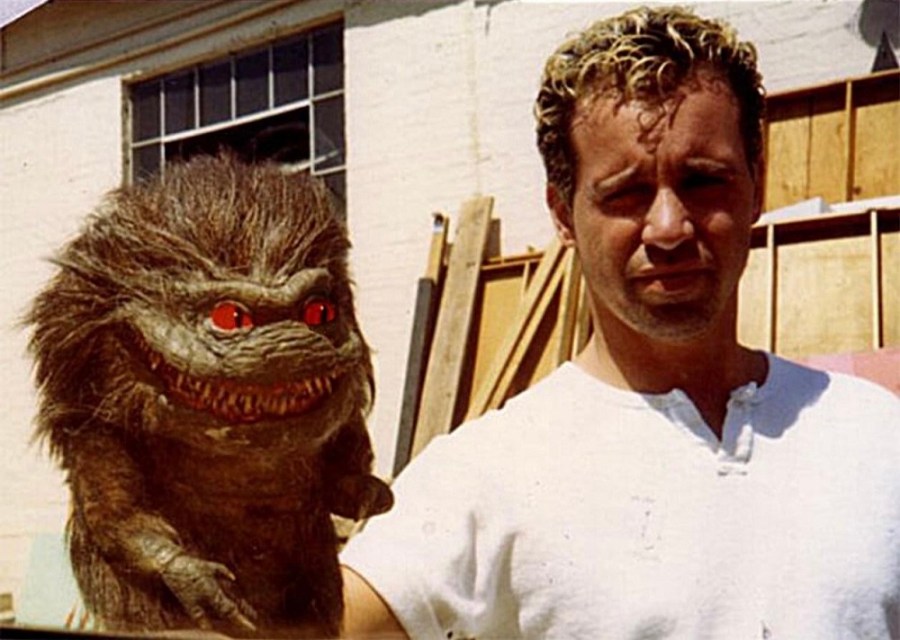
Muir did initial sketches of the monsters, aided by storyboard artist Len Morganti, who contributed early design ideas. To bring the voracious aliens to life, Kevin Yagher was first approached, but proved unavailable due to commitment to A Nightmare on Elm Street 2: Freddy’s Revenge. He instead recommended the Chiodo brothers — Charlie, Stephen, and Ed — who also were previous collaborators of special props supervisor Anthony Doublin.
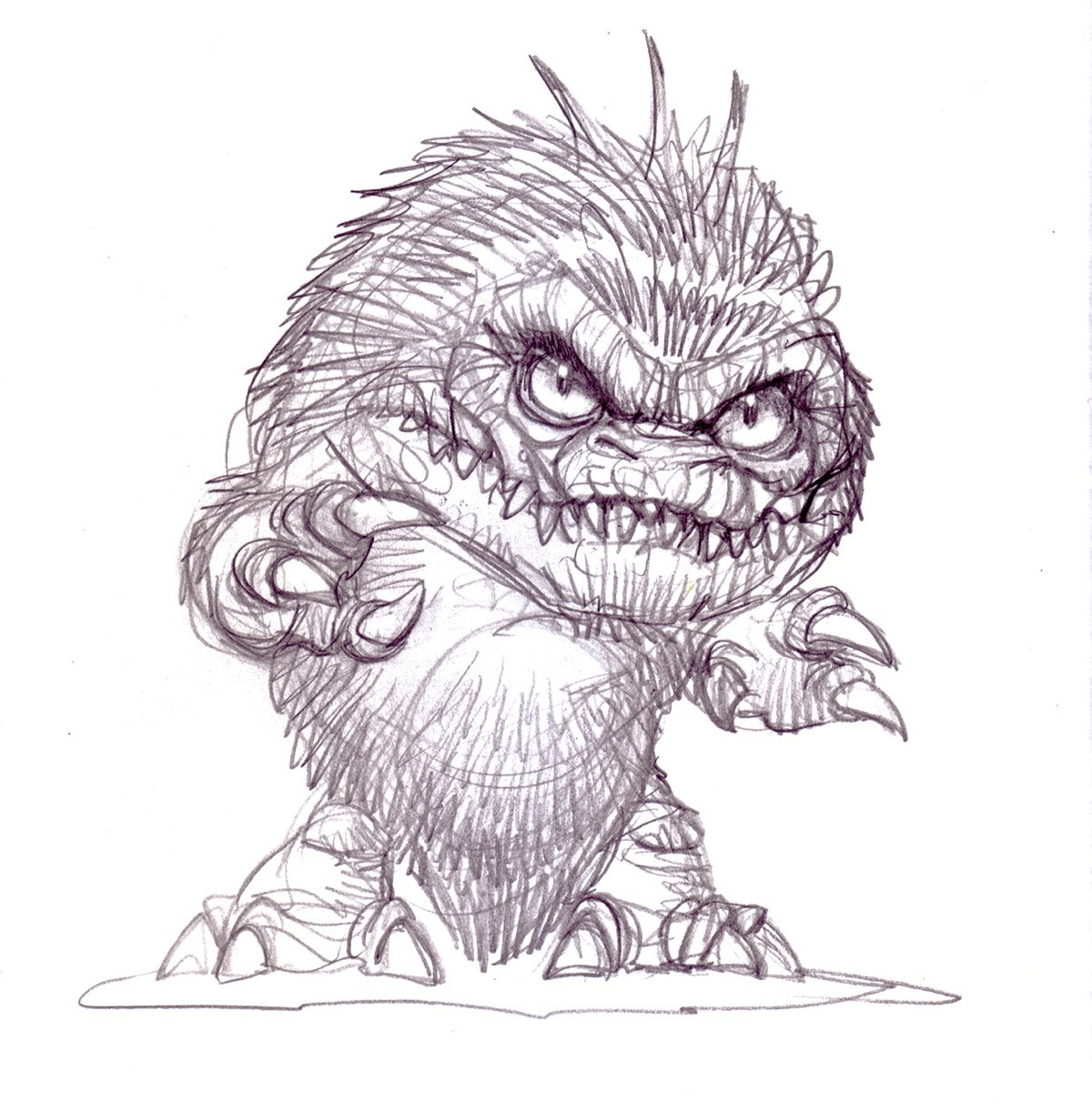
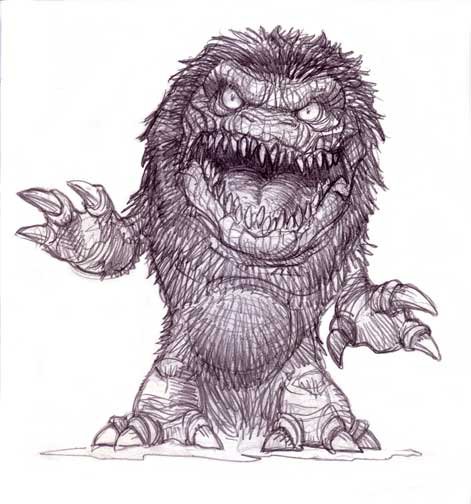
At the following producers’ meeting, Charlie brought concept sketches of the Krites. “I think Charlie sketching right there in the meeting, showing what he had done, I think impressed them,” said Stephen. “And the dialogue, that’s what it is. I mean, you talk and you start brainstorming there with them and they get a sense of the collaboration immediately if you’re in line with what they’re thinking by the words you use and the things you suggest. And I think that’s where we kind of hit it off.”
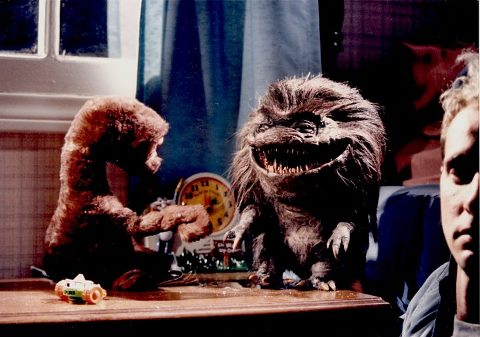
As the producers were against something that could be read as a man in a suit, the Chiodo brothers found inspiration in comic book and cartoon characters with exaggerated proportions. “For the design, they didn’t want to make it look like there was a human in a costume,” Stephen continues. “So all the appendages were reduced. So it couldn’t be a person there, a big wide gaping mouth that opened up out of a pile of fur. And as we were brainstorming about it, we would think, ‘okay, what is something similar out there?’ And I think it was Charlie who came up with the Tasmanian Devil, the Warner Bros. cartoon character, which is just a very tapered down, upside down triangle, or a cone with a giant mouth. And I think that was like one of the first takeoffs that he started doing. But he had a four-legged one like a dog. He had a lot of variations.”
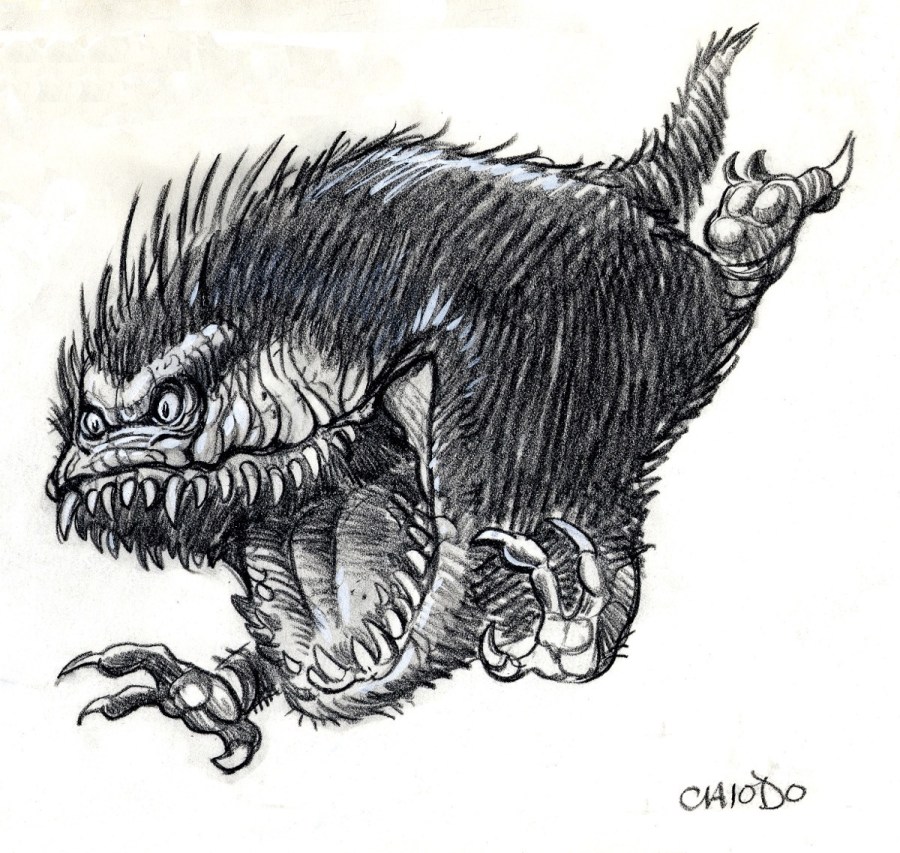
Upon reviewing the designs, the Chiodo brothers realized the Krites could potentially move about by curling up and rolling. “The way they were described in that first draft of the script remained true until we shot the film,” said Muir, “and the Chiodo brothers realized them exactly as I had first pictured them in my mind during that hot summer of ‘81 up in my old bedroom. The additional — and definitive — detail of their ability to curl into a ball and roll from place to place was a Chiodo invention. That for no other reason proves they were the perfect guys to bring these beasties to life.”

The entirety of the Critter effects was designed and constructed for only $100.000 — a fraction of the film’s total 2 million budget. The special effects crew only had a tight window of ten weeks to devise them all — the ultimate number of puppets reaching 24. Once Charlie’s designs were approved, they were turned over to Stephen, who sculpted the Krites with the aid of Mike Jones. “We had to lock the design down as quickly as possible, so the first Critter was sculpted and cast the first week,” said Charlie.
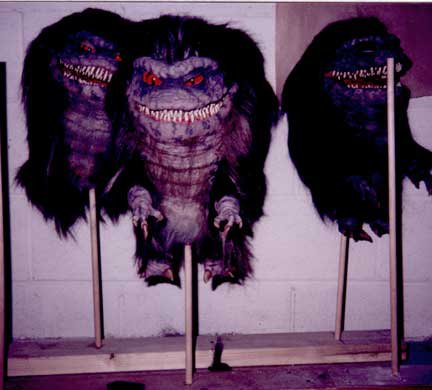
The tight production schedule also meant that a conventional foam latex skin for the creatures — the industry standard at the time — would be too time-consuming, since it necessitated at least a day to be fully prepared. The brothers thus devised a less expensive and quicker solution — a thin latex skin laid over a two-part urethane foam, which only needed a few minutes to set and was also more resilient. “It’s not quite as flexible as regular foam,” said Charlie, “but it lasts forever.” With this expedient, the special effects crew was able to pull up to six Critter bodies per day.
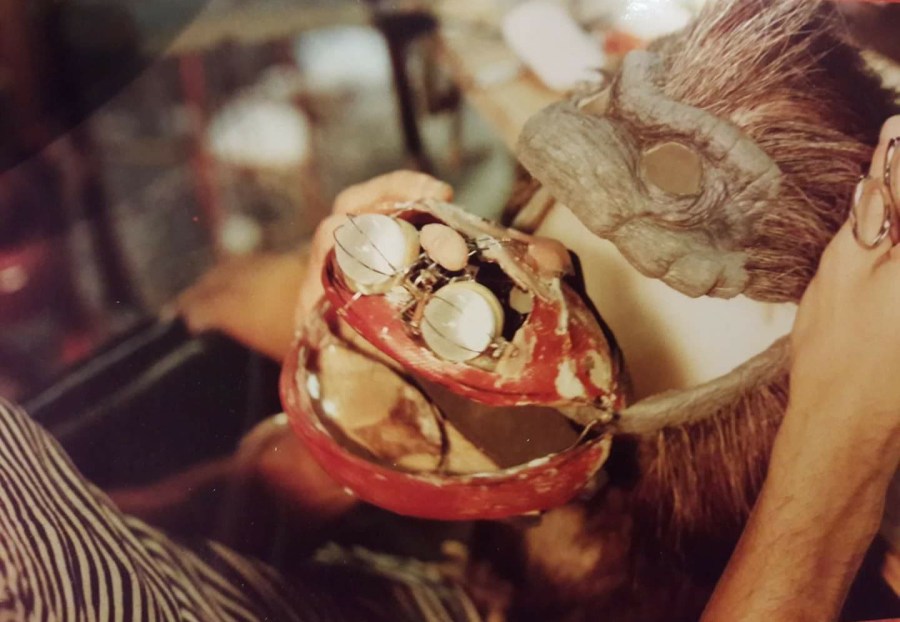
The skins were painted with rubber cement paint, and covered with real moose hair provided by a taxidermist. Deborah Galvez and Ans Ellis punched every hair individually onto the puppets’ skins. Charlie explained: “none of the synthetic stuff looked good to me; it was expensive, and the hide is thick and tougher to work with, but it looks like a real animal.” Stephen added: “they [the producers and the director] wanted the Critters to have more of a quill-like quality to their pelts; and so we found antelope fur, we found all these things, and moose pelt had this quill-like quality that was really great. We knew nothing about taxidermy at the time. We should have stripped off all of the hide, or at least laminated it with oils to make it more flexible. We were pretty unaware of all of those techniques. So we just put it on. It was flexible in the beginning, but as it got used over time, it got stiffer and stiffer.”
Charlie further commented on the fur: “the thickness of the pelt reduced flexibility. It tended to dry out
a lot and over the course of the film, it would fall out. But we’d just replace it as we went along. The look is really good. There’s a resiliency, a living quality to it. You set the different varieties and blends of colour of real fur you just can’t get with fake fur.”
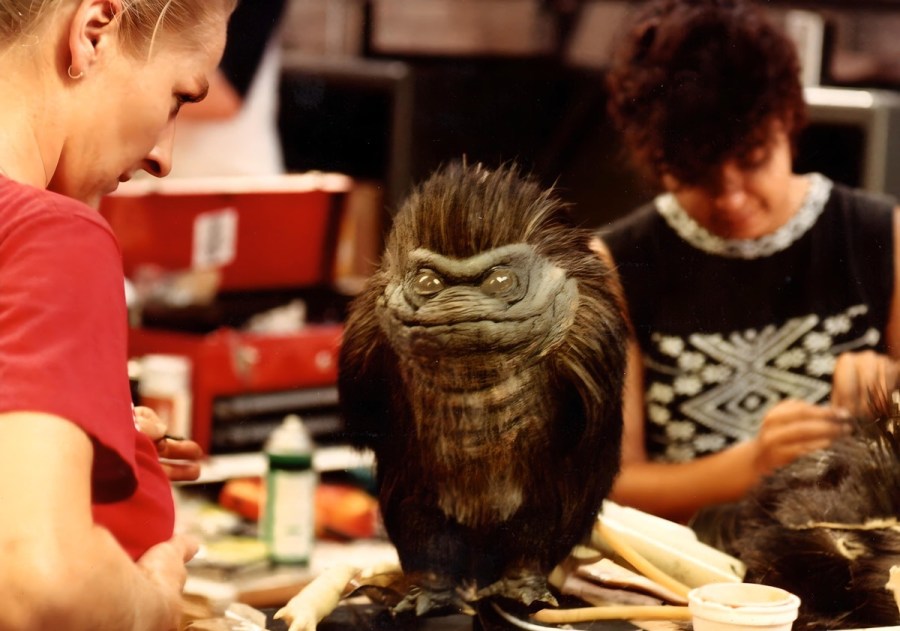
Edward Chiodo collaborated with lead mechanic Dwight Roberts — also assisted by Jene Omens — in conceiving and building the mechanics of the creatures. The main puppets were full-sized 13″ models, with radio-controlled eyes and blinking eyelids, cable-controlled faces, arms and hands, as well as bladders in the throat and chest to simulate breathing.
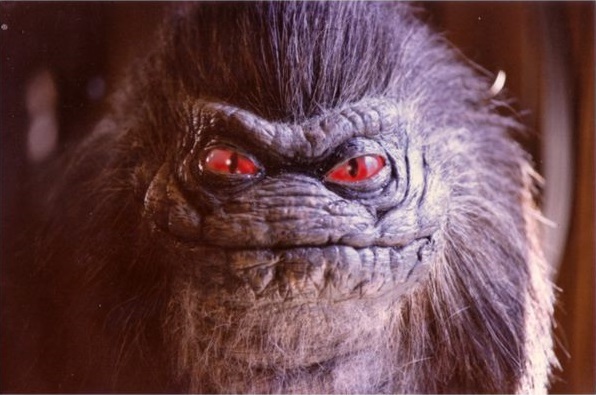
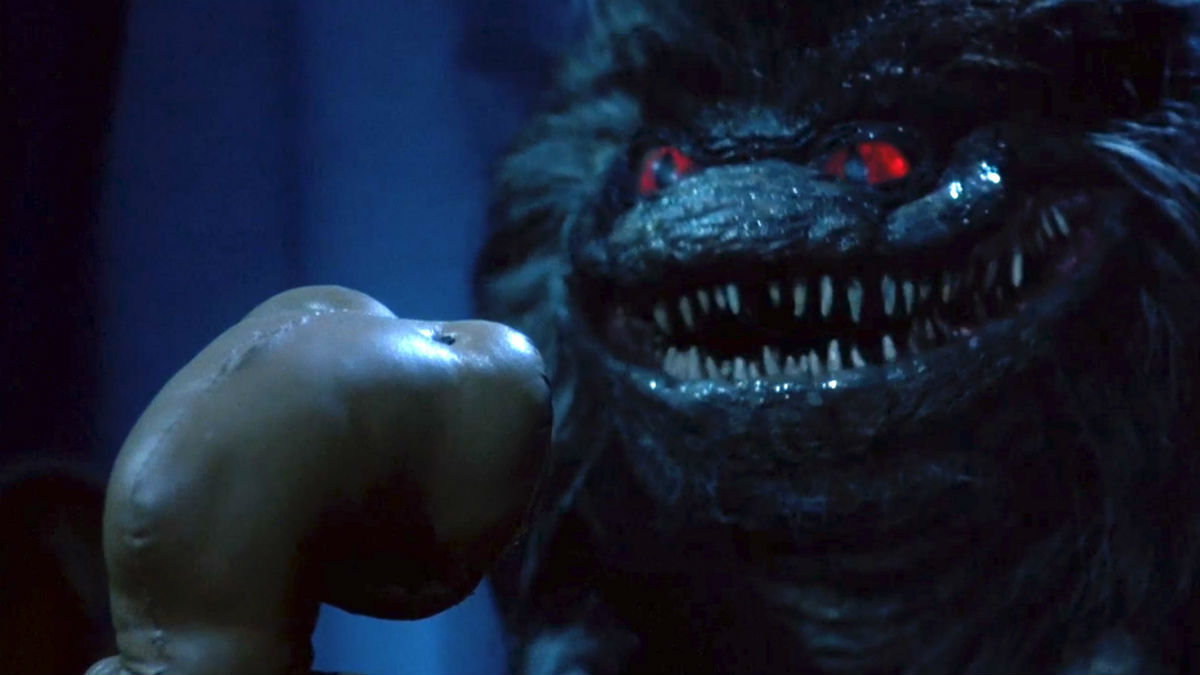
For the Critters’ eyes, clear plexiglass spheres were coated with reflective scotchlite material in the back. On set, a beam-splitter matte box — designed by director of photography Tim Suhrstedt — was attached on top of the camera, projecting a red light into the eyes. The light bounced back to the camera lens, producing the characteristic glowing red effect. Omens explained: “I came up with the idea. The best way it worked, and I don’t remember if they did it or they cheated it, but the best way that that system worked is that the actual camera, to get the most reflectivity out of it, there’s a half-silvered mirror in front of the lens. So, off to the side of that camera is a light pointing into a 45-degree, half-silvered mirror bouncing straight into the puppet’s eyes, and it returns back. They did some of the shots that way, and they did other ones just by putting the light as close as they could to the camera. I had to find the right red tint so it wouldn’t block out too much of the light reflection. So that was an art in itself. It didn’t come from the light. We actually did put a coating, a very light coating, on the actual eye surface. So too deep of a tint could have destroyed the effect.”
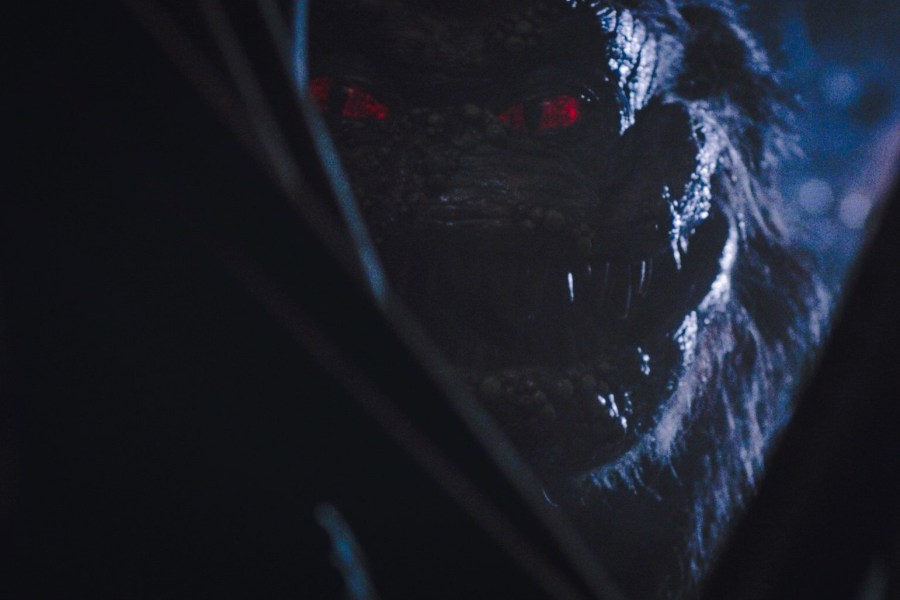
Herek also commented that “the only thing that makes them look different are the eyes. It’s better than having a light source inside the head which doesn’t look as good and is a pain to rig. We could’ve put a red light bulb inside the head, but that’s exactly what it would’ve looked like. The original concept for the eyes was that they were to glow yellow, and when they got mad, they turned red. The only way to do that was to use the Scotchlite, but they finally decided to keep the eyes red throughout the film.”
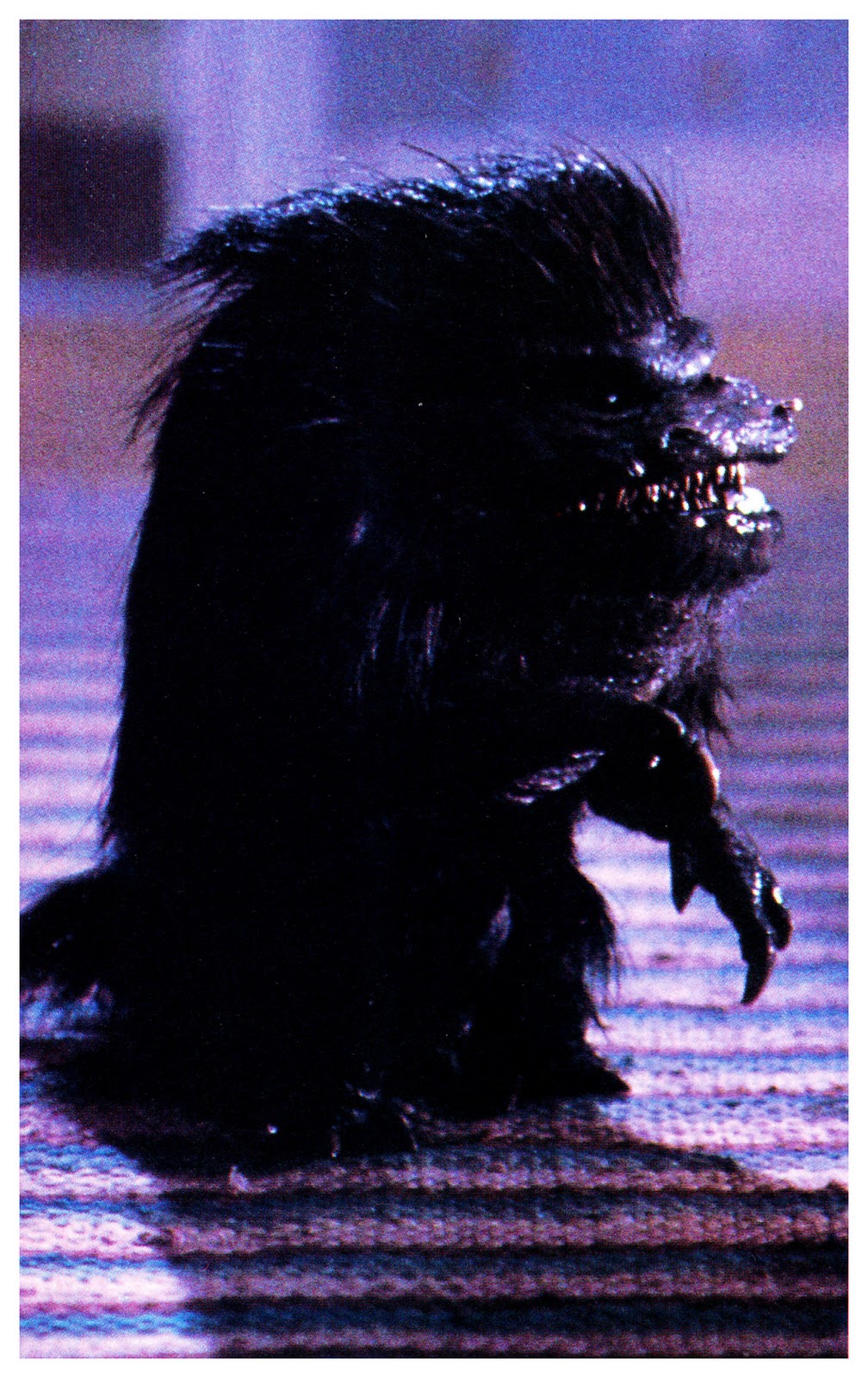
Although the script specified eight Critters, the budget and schedule did not allow for more than four hero puppets. To resolve this issue, the brothers developed a series of prosthetic appliances (such as scars, deformed facial features, hairy eyebrows, and squinted eyes) that enabled each hero puppet to double as two characters depending on the sequence that had to be shot. Whenever more than four Critters are seen in the same shot, stunt puppets were used in the background.

A number of puppets with specific functions was also built: Critters that rolled onto themselves, remote-controlled rolling-ball Critters (engineered by Roberts with a modified RC car within a sphere), Critters that could shoot their venomous quills, and a special puppet, devised by Gene Rizzardi, whose cheeks could puff up — for the scene where a Krite swallows a cherry bomb. Other puppets included hand puppets (used mostly for biting scenes) and stunt puppets that could be “thrown like a football” at an actor.
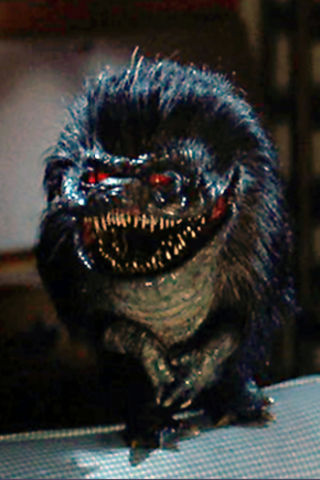
Since most of the puppets did not have functional legs, a special ‘walking’ Critter was also devised with a cable rig and an inner motor operating the rotating legs. The puppet was secured through wires to an overhead dolly. As the puppet’s feet would remain suspended above ground, it had to be filmed at high angles to properly achieve the illusion of it walking about. The same puppet could also be puppeteered from underneath, such as in the barn scene.
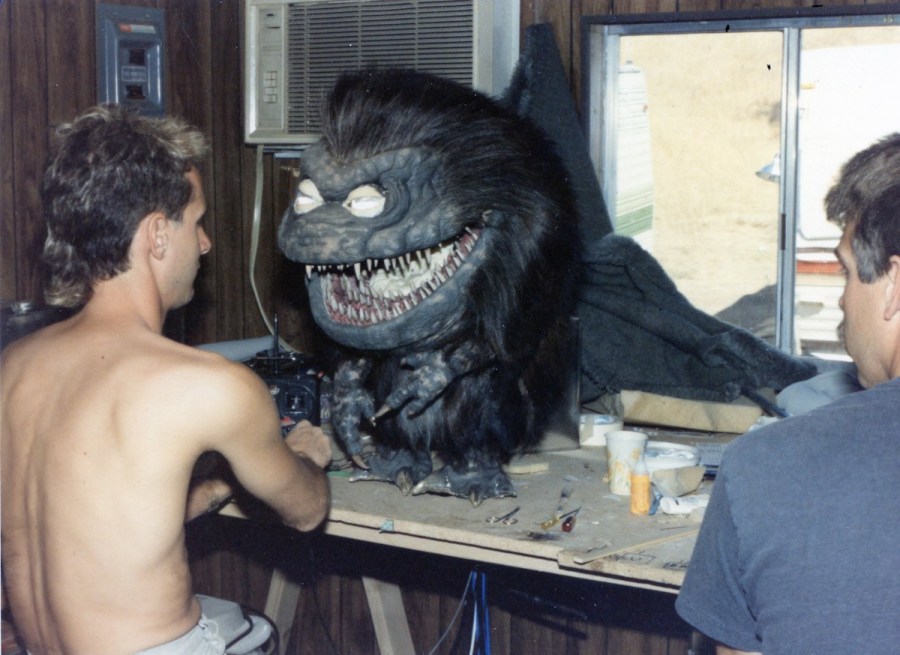
During the film, one of the Critters grows to large size. To portray this leader Critter, a 26″ puppet was built. “We made a medium-sized critter,” Charlie said, “with cable-controlled snarls and pneumatics to move the brow and to close its mouth. Originally, he had a much larger part because he was supposed to be the biggest they ever got.”
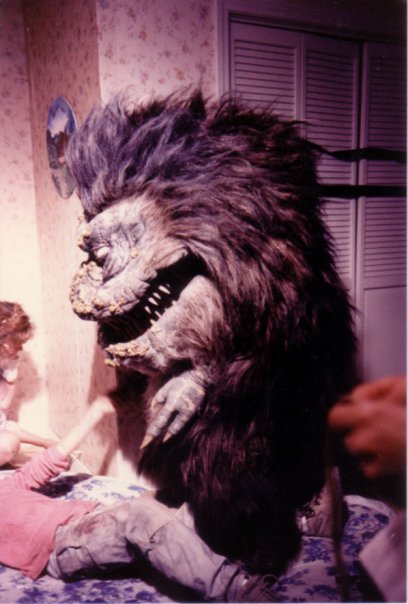
Matter of fact, very late in production, executive producer Robert Shaye — in contrast with earlier intentions about creature suits — decided that there ought to be a giant Krite for the film’s third act. This expanded upon the already present idea that the Krites grew marginally after consuming enough food, with the leader creature growing to the size of “a large dog” by the time it drags April towards the spaceship. Shaye, however, wanted it to be even bigger.
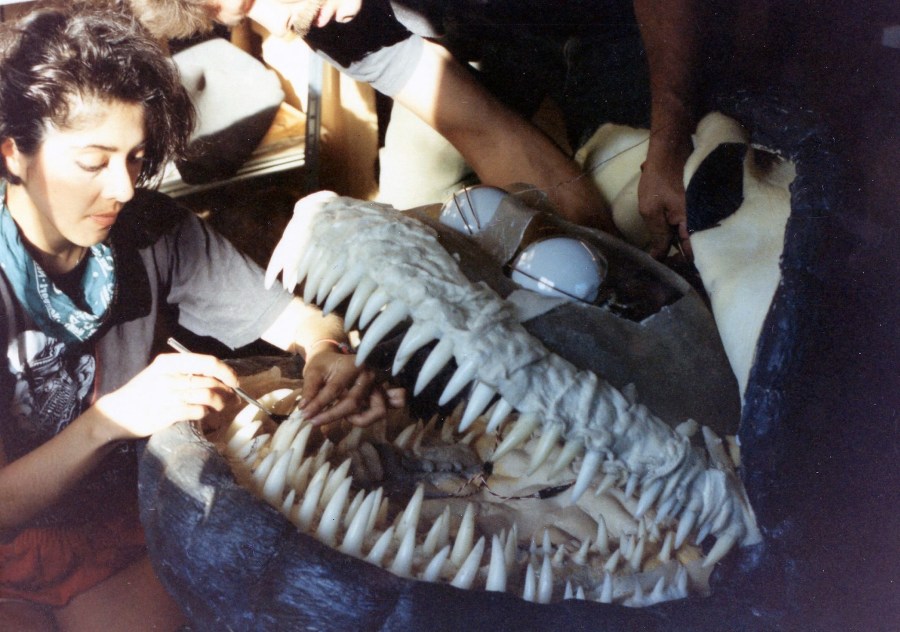
The task was reluctantly accepted by the effects crew, with the full warning that the new Krite suit would have considerable limitations. “Bob Shaye decided he wanted a big monster at the end, a big version,” recalled Edward, “something we did not want ever to do because the Critters were designed never to be a person in a costume, but the only way to do the large Critter was a person in the costume. So, we had to design, re-engineer the whole look for it. It never quite worked. But Ken Hall came on and headed that team for us. We started building it when we were closing our shop and getting ready to move to location. So we started it in the shop, but then we finished it on location.” Stephen added: “I’m an advocate for having your monsters turn big at the end, to have some kind of a big boss. So I think it was a great idea; but the design of the characters doesn’t work when you blow it up. The scale of proportions was like a garbage can that opened up like a lid.”
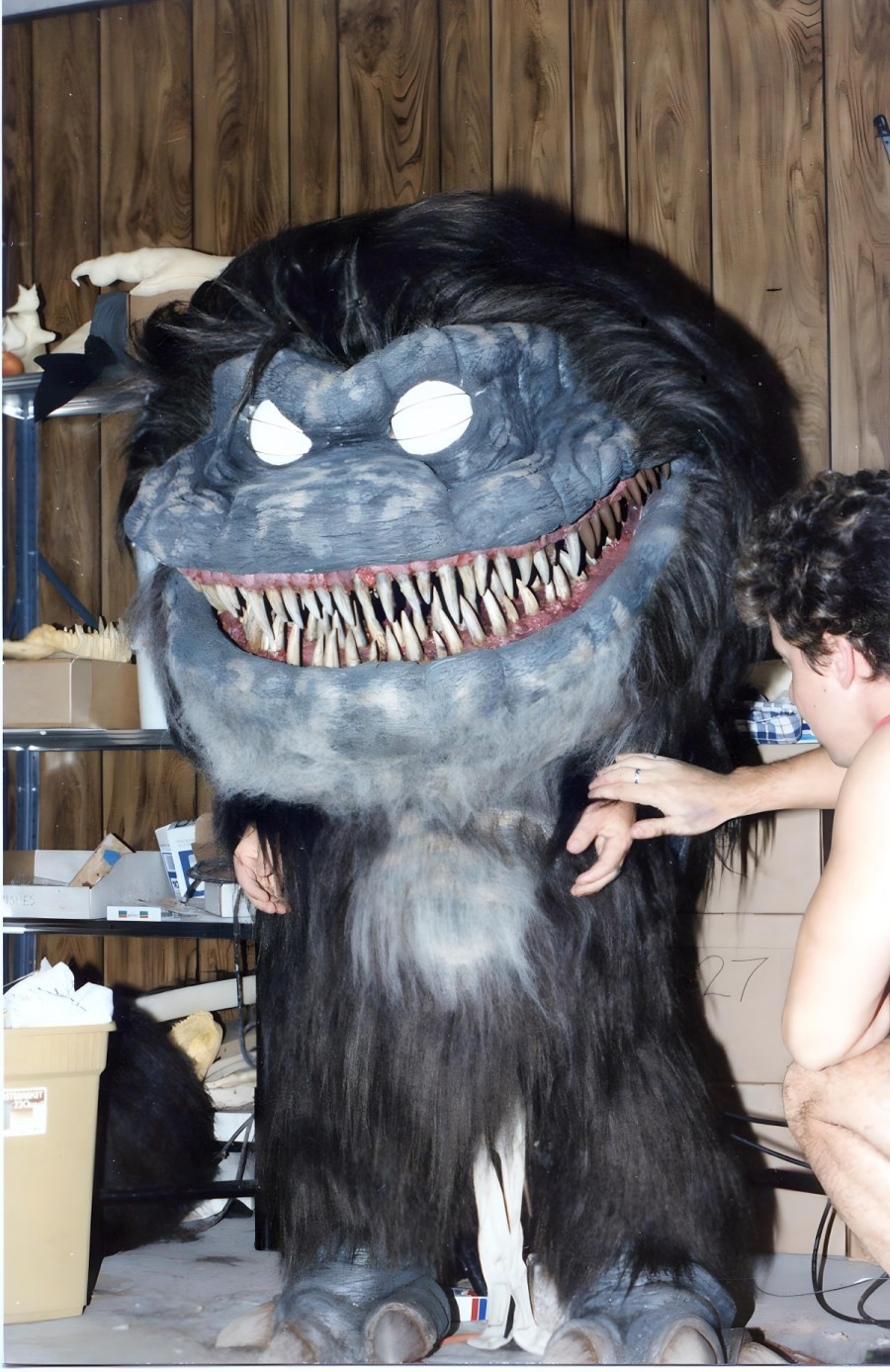
A 4′ tall suit was thus devised to be worn by a little person, with the Chiodo brothers jokingly referring to it as “the Kool-Aid Kid” due to its goofy proportions. When the suit proved too heavy for a little person to operate, stuntman Kevin Thompson was brought in. “The entire weight of the suit was in the mouth apparatus,” he said, “so I actually had to bend backwards to operate the mouth. When I first put it on, I understood why the little person who they first cast fell over wearing the suit, he was so light. So he couldn’t do it and the stunt coordinator was standing right next to him and he looked at the director and he goes, ‘I got a guy.’ I just worked with him on the Ewok movies, like The Battle for Endor and The Ewok Adventure. Now, of course these are the days way before cell phones, so he calls me and I just happened to be home.”
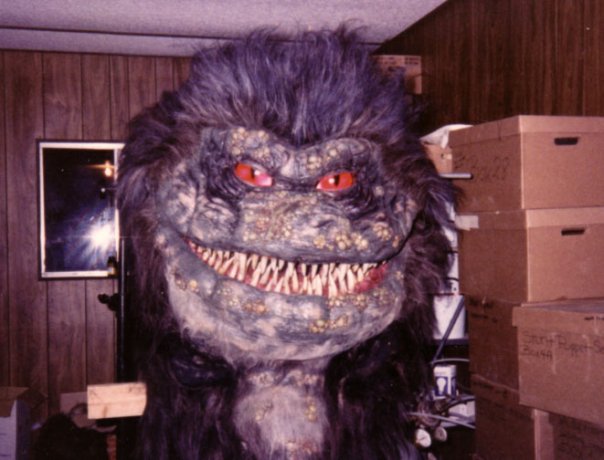
The limitations became immediately apparent to the stuntman. “I put the suit on, I was like, ‘son of a bitch.’ You know, this sucker’s heavy. I weigh 95 to 100 pounds and the suit weighs around 65 pounds, maybe more. So there I am, sitting down and putting this suit on and the mouth is down – it’s laying down because it’s heavy – and they say, ‘okay, can you bring the mouth up?’ I bend backwards to get the suit to move like they need and the mouth opens up and they say, ‘perfect!’ This is what the other guy they had originally cast was not able to do. So I ask them, ‘what is this monster, is it like a big dumb character type-of-thing?’ And they say, ‘oh no, no, no, you have the agility of a cat.’”

The Chiodo brothers themselves and some of their crewmembers played the giant Krite in insert shots with corresponding insert elements, such as the arm snatching April, walking feet, and the window leap. “I remember the little person working in the big critter suit took off after lunch, one day,” Deborah Galvez recalled. “We couldn’t find him, and there was a scene that was up. And so I was the smallest one, so they put me in the bottom half of it. So I was just like the legs. I just wore that, and they shot from the legs down. I was walking in the spaceship.”
To circumvent the issues posed by the suit, Herek planned to edit around the footage by intercutting it with close-ups and silhouette shots. “They didn’t give us the time or money to do it,” Charlie commented. “The costume was just a quick, throwaway thing; they wanted to show something big. It looked alright, but there were no mechanics budgeted for the face; it didn’t move.”

Shooting of the puppets also proved to be a challenge: “the schedule was crazy,” Charlie said. “They were trying to jam a hell of a lot of special effects and puppet work and action into a very short period.” Up to seven puppeteers were needed at once under the set floor to operate one of the main hero puppets. Stephen was the principal puppeteer, and Charlie operated the eyes. The situation became difficult when directions were being given at the puppet itself instead of at the puppeteers: “we’d have seven people below the stage floor, but up on top they only had one puppet,” Ed recalled, “so they’re yelling directions at the puppet. It was frustrating. There was a lot of yelling and screaming.”
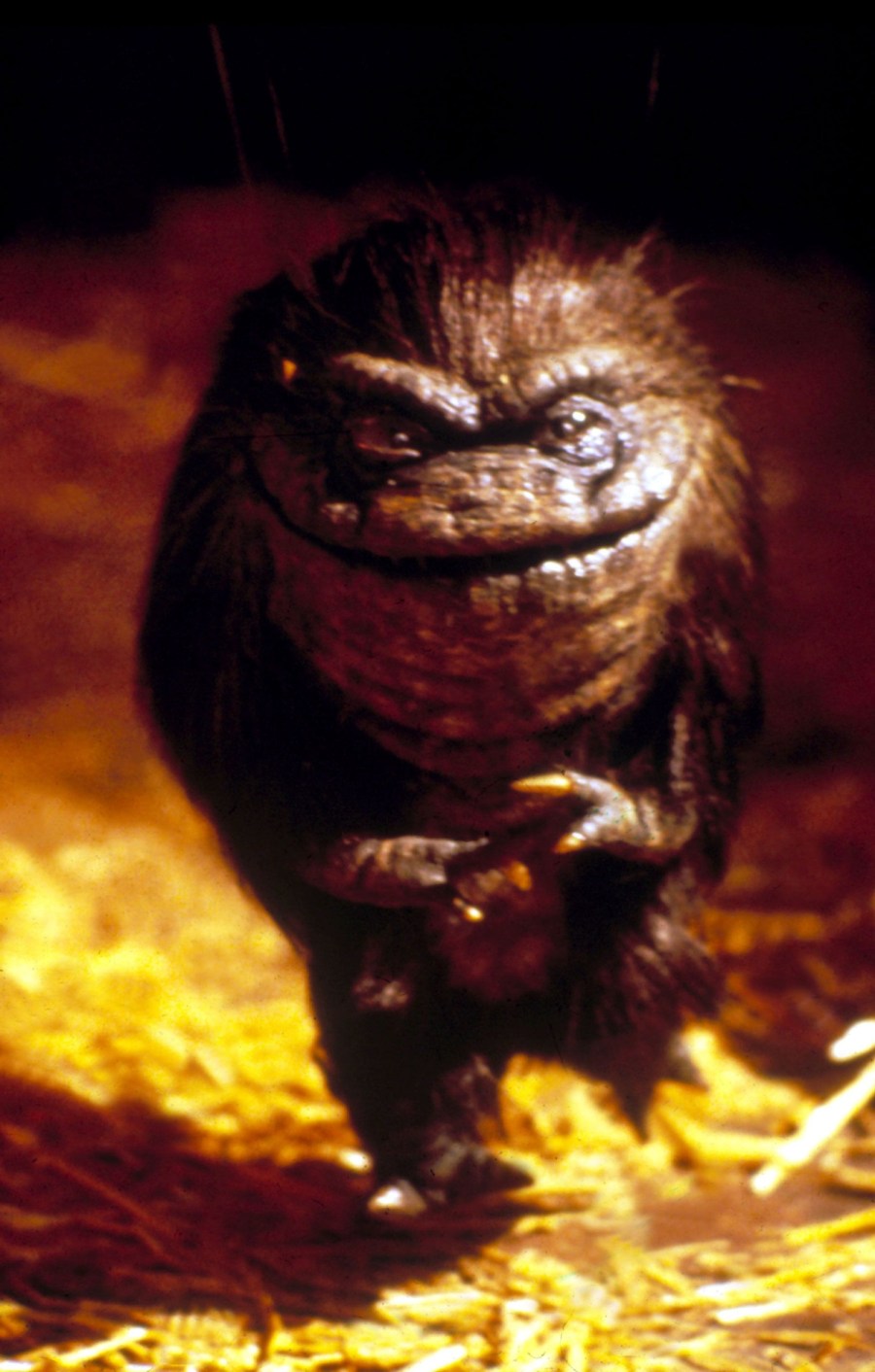
With similar issues, filming fell behind schedule, with creature effects sequences continuously getting pushed back until a second unit was established with director Mark Helfrich. “Unfortunately,” Charlie said, “he wasn’t familiar with the puppets, and was asking them to do things that they weren’t specifically designed to do.”
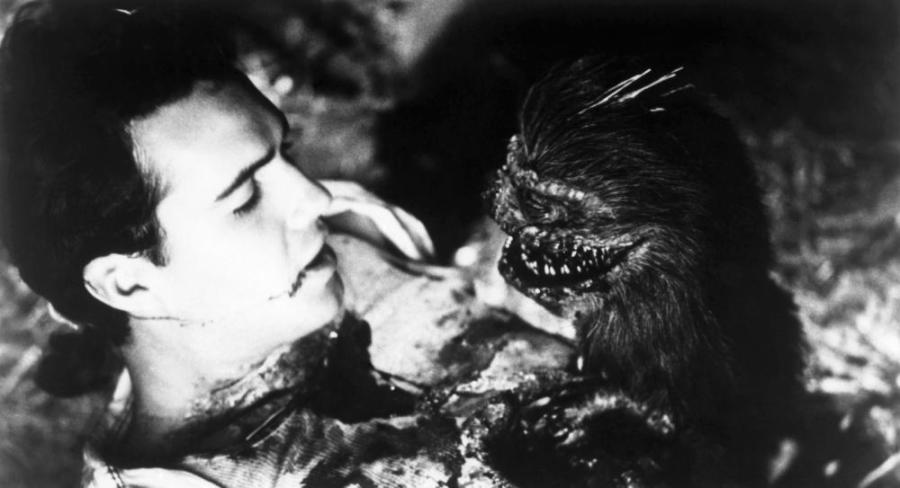
One particular instance involved the barn sequence. Stephen recalled: “the very first thing we shot was in the barn when Billy Zane was getting killed. So we had a cadaver, like a prosthetic of his chest cavity that was eaten out. And Mark wanted us to bury the head of the Critter, chomping and chomping and chomping, in this pool of Karo corn syrup blood. This is our hero puppet, with all the mechanics and all the foam. And we said, ‘this is going to ruin the puppet.’ We said, ‘this is going to be cut out of the film. You’re not going to see this, it’s too visceral. It’s not going to be in the film.’ And he was adamant about it, so there we were. We followed his direction. We smashed it. I was smashing it in the face and grunting. It just ruined the puppet. The Karo syrup soaked into the foam, hardened overnight. No matter how much you wet it, you couldn’t get it out. And then it limited all the flexibility. That was day one with the hero puppet. Yeah, so if there was any friction, it was because of that and I just wish he had listened to us a little bit more and I don’t know, you don’t start out with blowing up a puppet on the first day of shooting. But that was it. I mean, it was like him not understanding our needs and us being kind of dictated by his needs. And it wasn’t really better, it wasn’t best for the production.”
The clashes, however, did not last long: “in the end, Herek was happy, and the second unit director became happy when he got familiar with the puppets and saw what they could do,” Charlie said. “You make concessions along the way. There is an economic reality, after all — you have to get the film out.”

Despite the shortcomings, the brothers remember the project fondly. Steve said in an interview that “I have been fortunate to work on a number of memorable movie moments in my career so it’s difficult to choose just one. I’ve enjoyed many projects for different reasons. […] Critters was the first movie Chiodo Bros was the key effects company on, responsible for designing the creatures, creating and performing a wide range of special effects for.”
Special thanks to Chris Lacks and the Critters Rehatched Facebook Group for the tremendous photographic documentation!
We want the Krites! Visit the Monster Gallery.


Here’s a pretty great little fan short of Critters. Apparently there are also plans to revive it as a web series. https://www.youtube.com/watch?v=yloNnvdWBU0