

In spite of the physical distance to the special effects shop, Giger remained an active participant in the design process. Contact with the filmmakers and XFX was maintained on a daily basis through persistent phone calls and faxes, as well as mailed videotapes of special effects sequence dailies. According to Johnson, the calls would sometimes be “even late, it didn’t matter because Giger stays up all night.”
In another interview, Johnson added: “I kept sending him stuff, I kept talking to him. I think that helped a lot, because in every conversation, even though they would last for hours, I would hang up the phone and would feel debilitated. ‘What did I just go through?’. Then, I would think about it, and realize, ‘hey, wait, he said this.’ And I learned something that’s going to make this creature better. In every phone call, there was at least one thing he said that was a real help to me in bringing this thing to life.”


Translating Giger’s designs into three-dimensional forms became an exceptional challenge for the artists at XFX, who had to closely replicate the elegance and tone found in the biomechanical art. Initial work had been done by Tom Burman at Burman Studios, who sculpted a half-scale maquette and a bust of Sil. While Giger liked the modelling of the body, he still had reservations. “I saw the photos of Burman’s small scale Sil,” he commented. “It did not have the beauty I wanted to convey with my design. The head shape looked like a little fish.”
Always at his own expense, Giger commissioned Cliff Wallace and his CFX Creature Effects at Pinewood Studios to construct a half-scale model of Sil — complete with a translucent exterior and a metallic inner structure. Given the short time frame, this attempt was not successful. Undaunted, Giger commissioned another model to CFX — this time a translucent head. When it arrived, he tweaked certain elements to his liking, including the hair-tentacles and the width of the mouth, which was involved with the insertion of Sil’s tongue. While not serviceable for shooting, the ensemble of physical models convinced the filmmakers to approve the translucency concept. They were also attracted to the idea of showing Sil’s scripted pregnancy from the outside.
Giger envisioned a tall woman playing Sil, and found Nadine — the model he did body casts of — to be a perfect candidate, and proposed her for an audition for the role of Sil’s human form. To the artist’s initial dismay — which he would later amend — the choice fell on Natasha Henstridge. “I had to accept that,” Giger said. “In the beginning I was not so confident of [Mancuso’s] choice, but now I think she has done a truly fine job.”
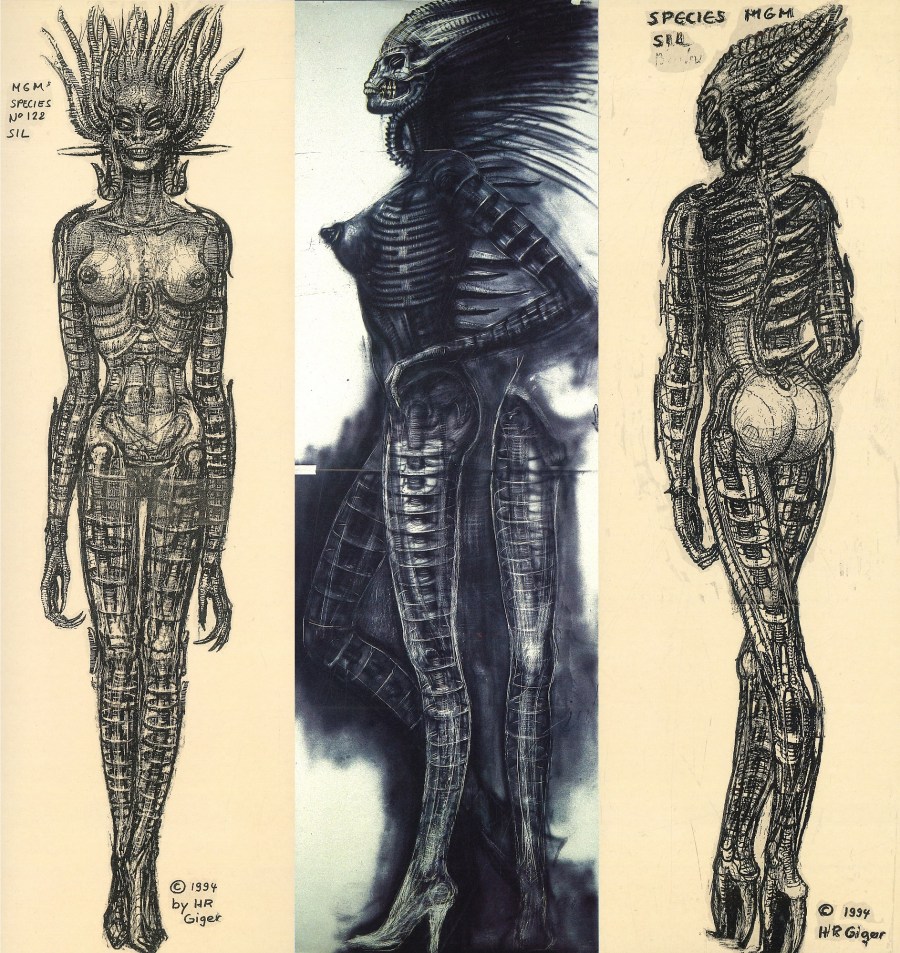
While Burman would not eventually be responsible for the special effects, his sculptural efforts were handed over to the XFX crew for additional reference, alongside photographs of them from multiple angles. Of course, this was also the case for the body of work Giger did and commissioned. Even then, many questions still remained. Johnson related: “Giger’s designs are fluid, marked with raw motion on the canvas, and they are incredibly erotic. When you’re asked to bring one of his creations to three dimensions, it’s a difficult thing to achieve, because you have to take a loose, fluid approach to it.”
In this regard, Johnson’s previous experience on Poltergeist II over a decade prior proved most fruitful. As he recalled, “my first experience with Giger came in 1984 when I was charged with bringing his vision to the screen for Poltergeist II. I was thrilled. Here was an opportunity to creatively mesh with one of the few contemporary artists whose work I respected. Very soon, however, I found his intent was lost. I looked at his paintings, I looked at my sculpture — it wasn’t working. I threw out sculpture after sculpture, beginning again and again, trying my best to capture the fluidity and raw emotion of his work. Every time I felt something was missing, until one day the obvious dawned on me. H.R. Giger is a very interpretive artist. His style is loose. Give a Giger painting to five sculptors and they’ll each see something different and sculpt very different interpretations. I had been trying too hard. I was using a photorealistic approach to translate something that had initially been born of raw intent, thrown onto canvas very quickly, thus capturing the initial emotion while it was still fresh. I tried the same technique — I threw out everything I’d learned and started over. After assessing a feeling from one of his designs, I just went with the flow, working incredibly quickly and loosely, and before I knew it I had captured the essence of Giger in three dimensions. This was an invaluable experience when the call came in for my next teaming with Giger for Species.”
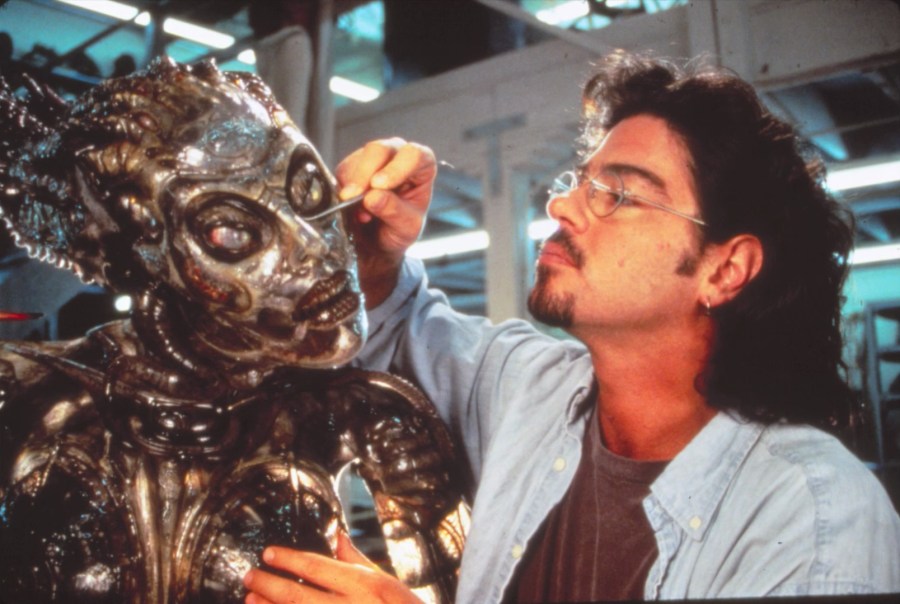
The short scheduled construction window of just thirteen weeks was a pressing issue, and so was the novelty of a translucent, layered character. “We were tasked with building a life-size animatronic character that you could see into,” said Johnson, “with layers and layers of internal organs. In that respect, it was like nothing that had ever been done before.”
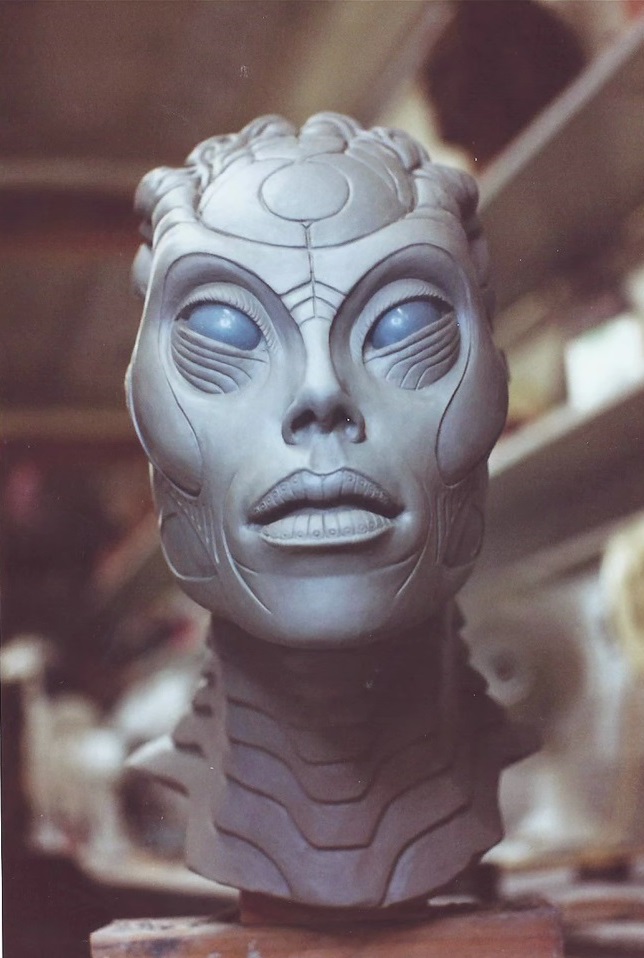
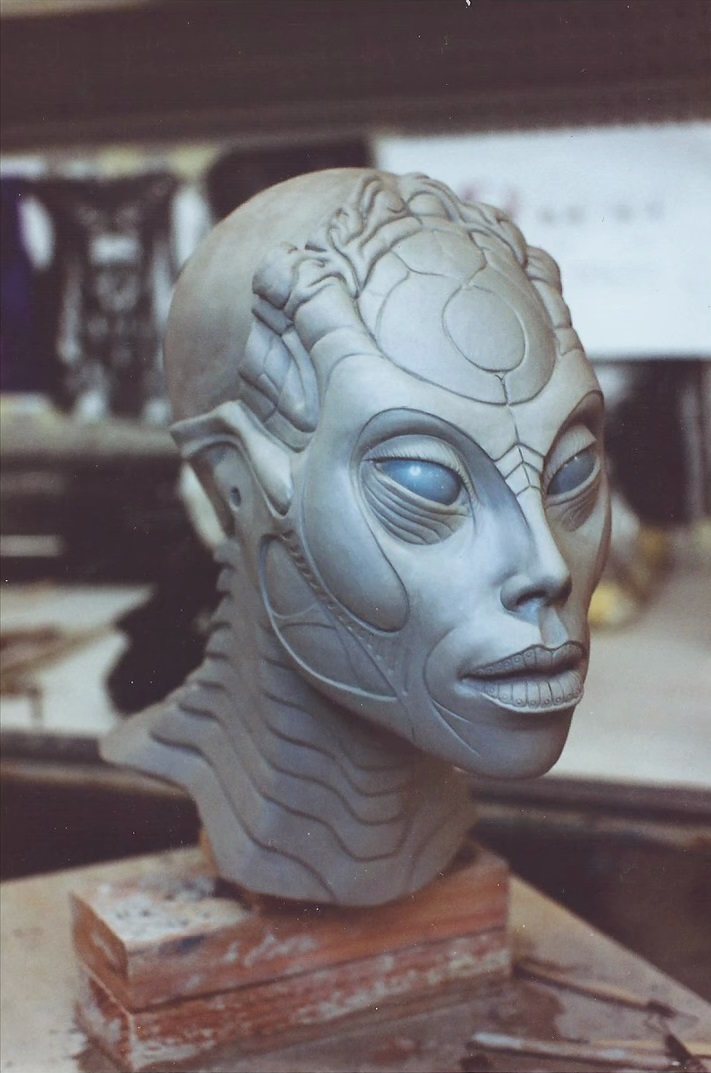
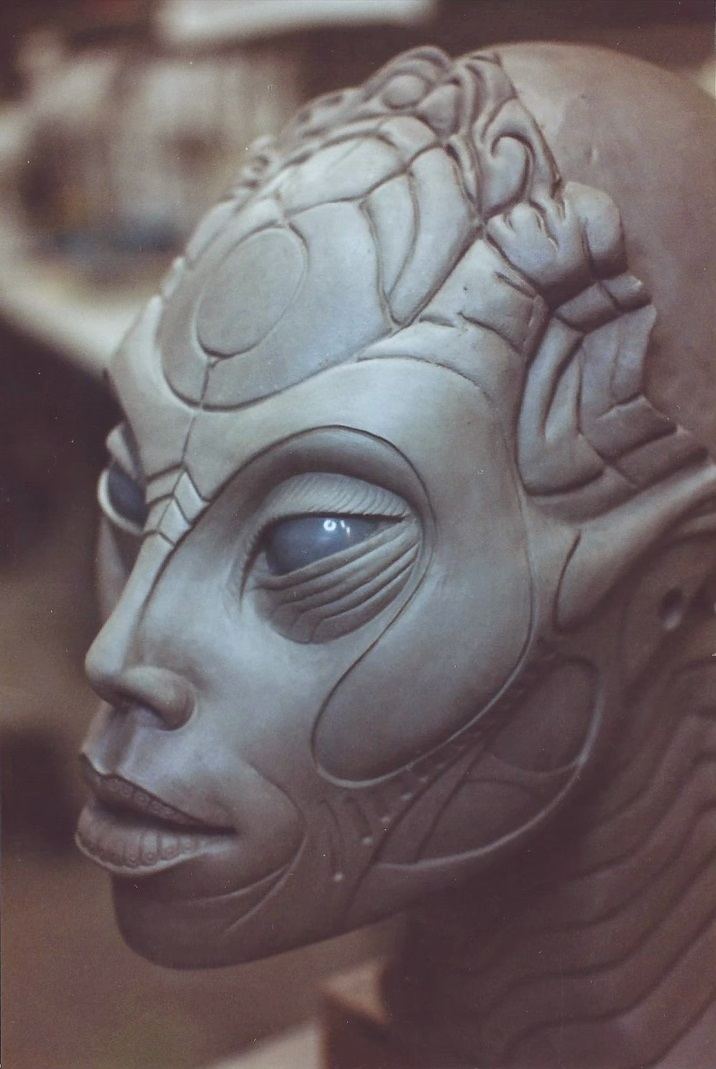
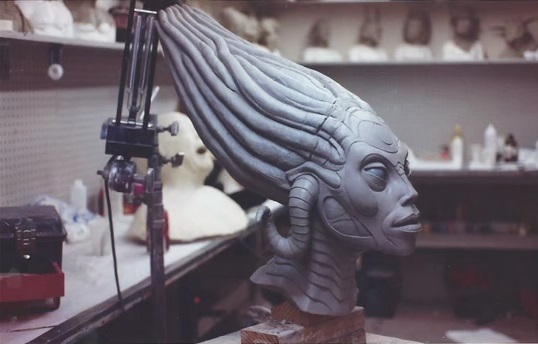
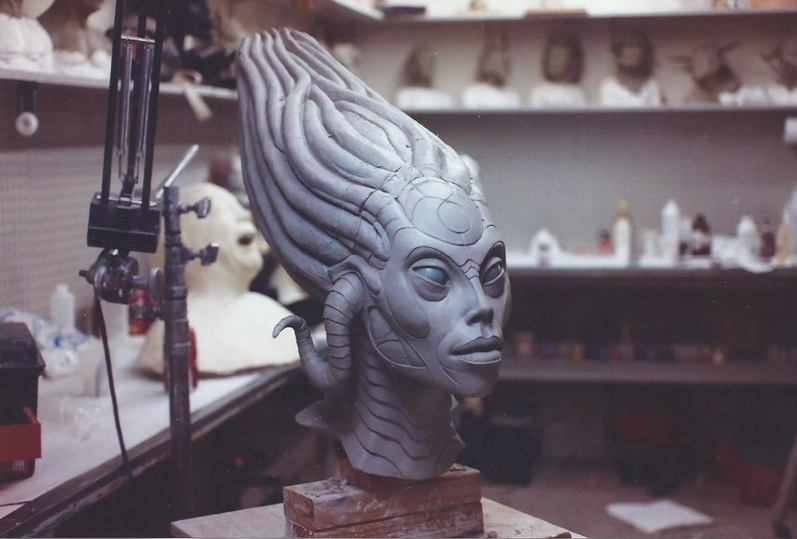
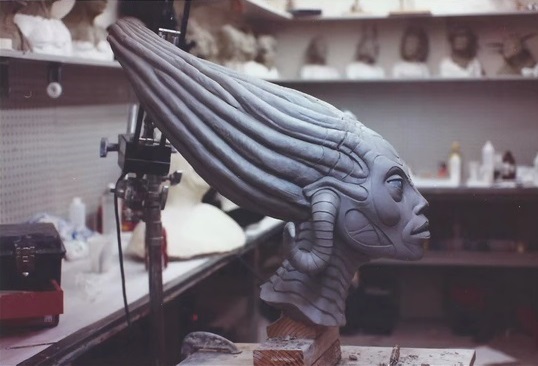
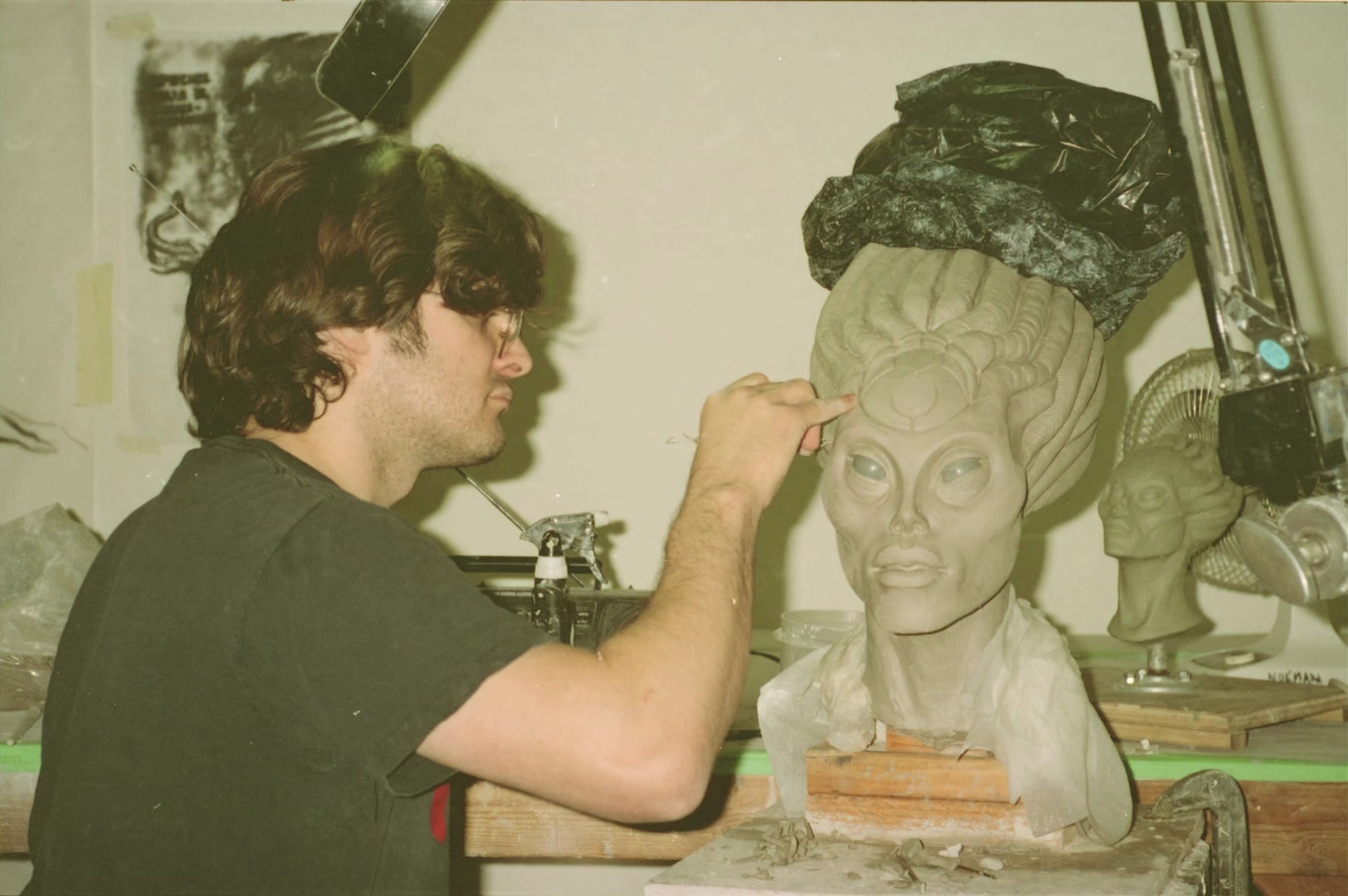
The creation of easily readable blueprints — based on Giger’s faxed drawings and paintings — was entrusted to Bill Corso, who also hired a female model to pose in leotards as additional reference. Sil was first sculpted as a seven-foot figure by Norman Cabrera, who mostly focused on the head and neck, and Michael Hosch, who shaped the body. Cabrera first explored the forms and proportions of Sil’s visage in half-scale head maquettes, then sculpted the outer face in full scale. The inner skull was sculpted by shaving off a clay cast of the outer face, a process Cabrera likened to “basically building two monsters”.
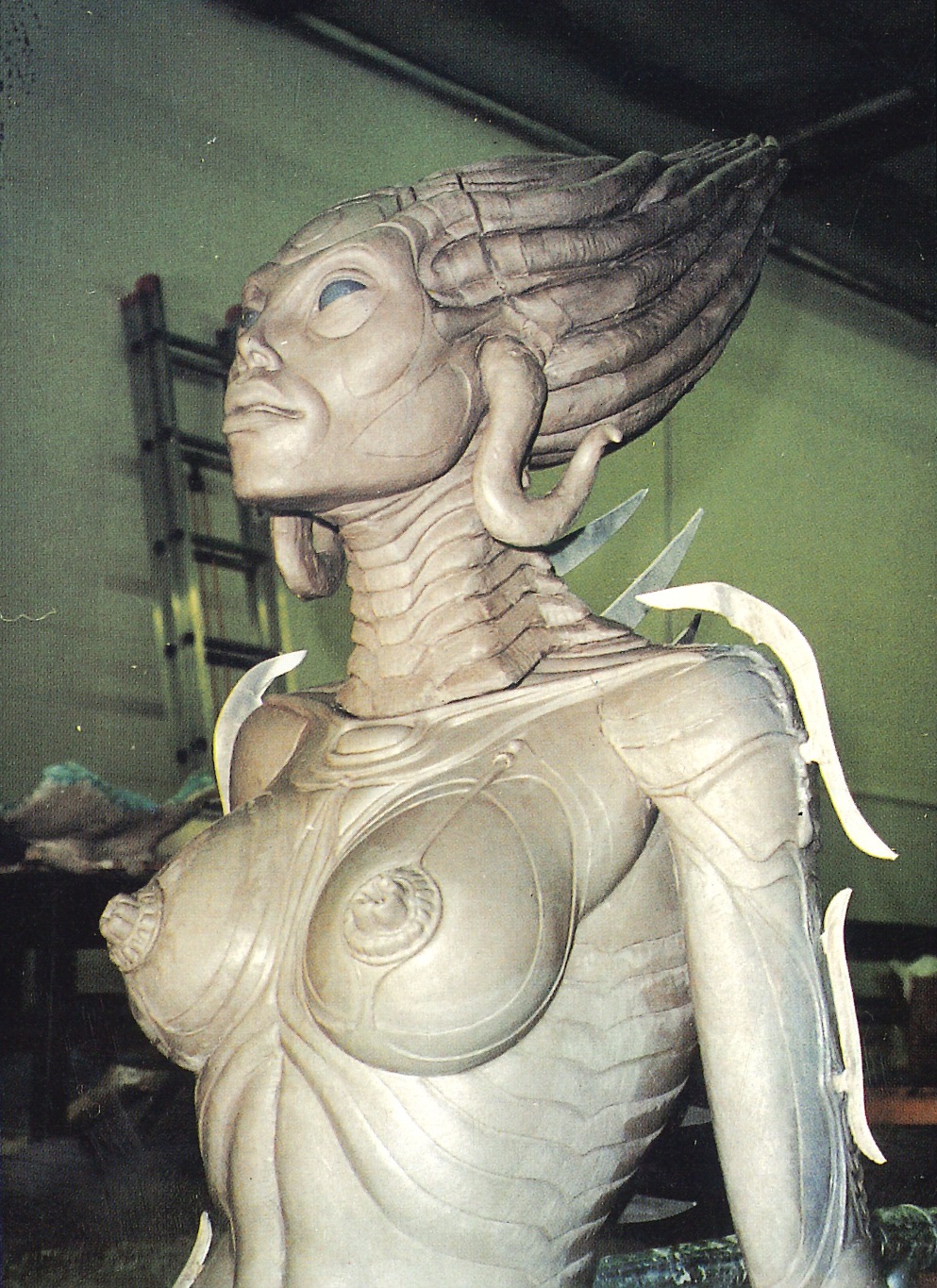
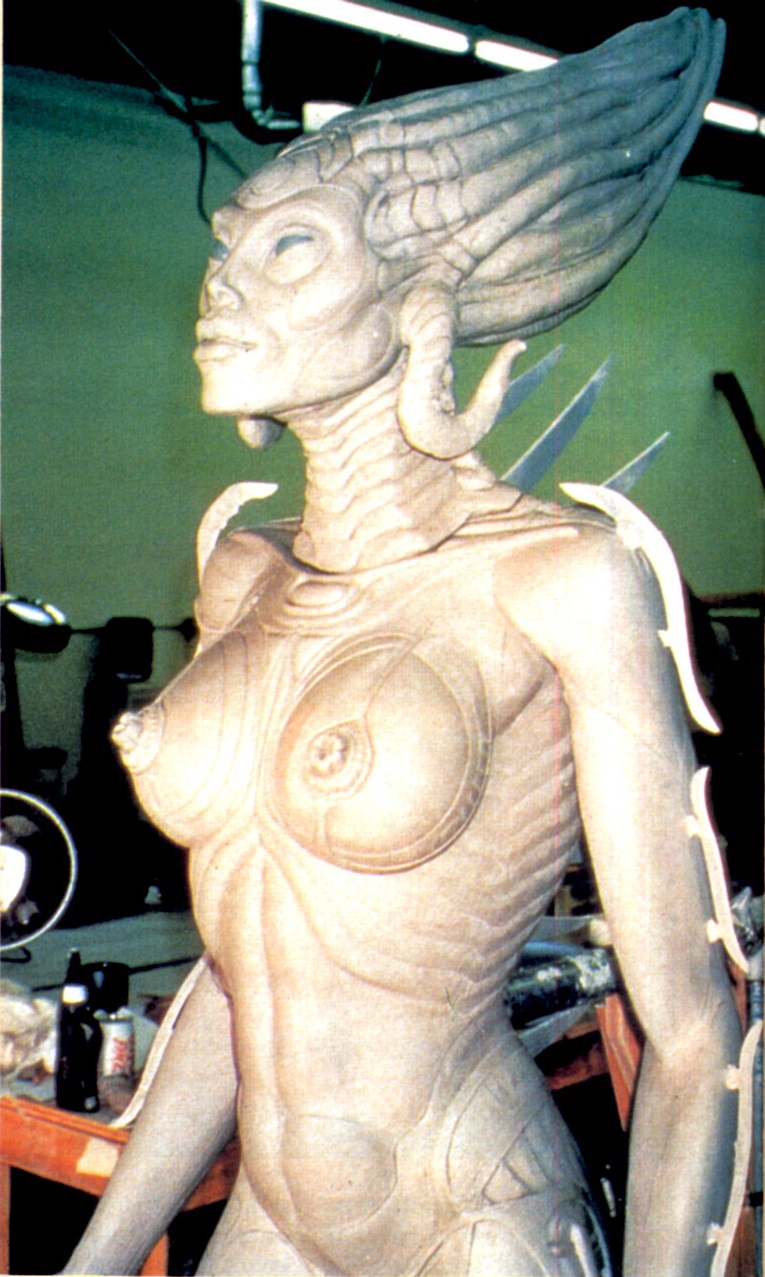
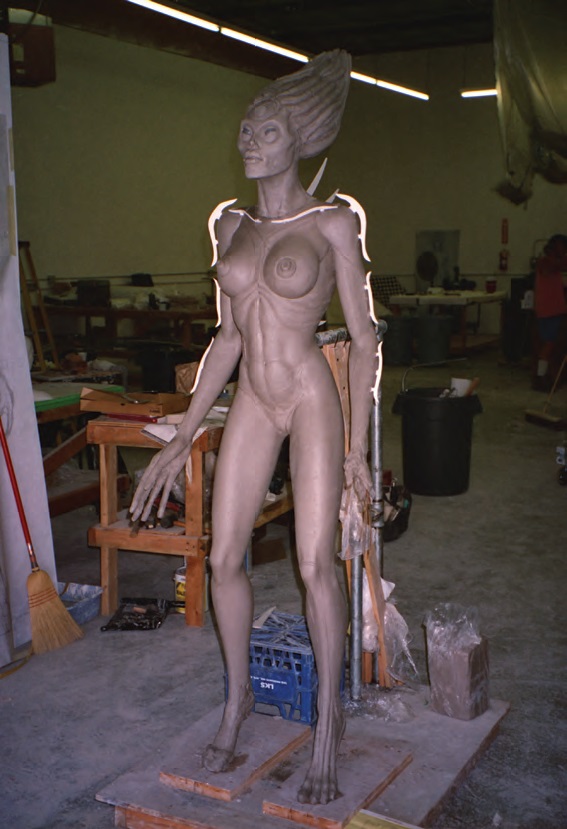
During the sculpting stage, the XFX artists were given feedback that pushed towards diametrically opposite directions: “the producers and directors would come in and say, ‘she needs to be more masculine. Beef her up,'” Corso recalled, “then Giger would say, ‘she’s not sexy enough.'” Critiques from the Swiss artist also came in with the claims that “the upper body was too big and the head, with its low forehead, looked a bit ape-like”. Giger faxed corrections to the sculpture, and the upper body was reproportioned to a point that satisfied both parties.
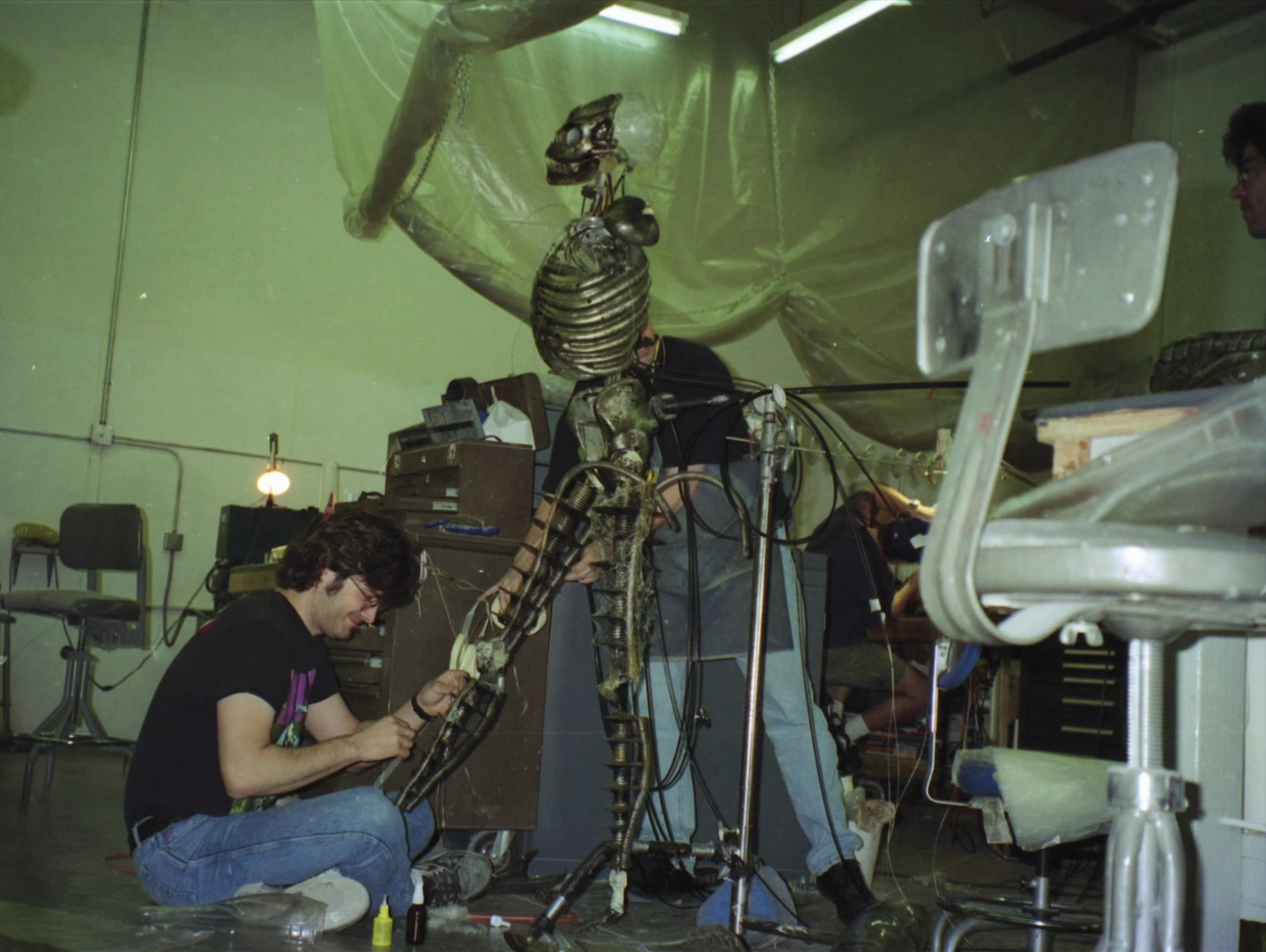
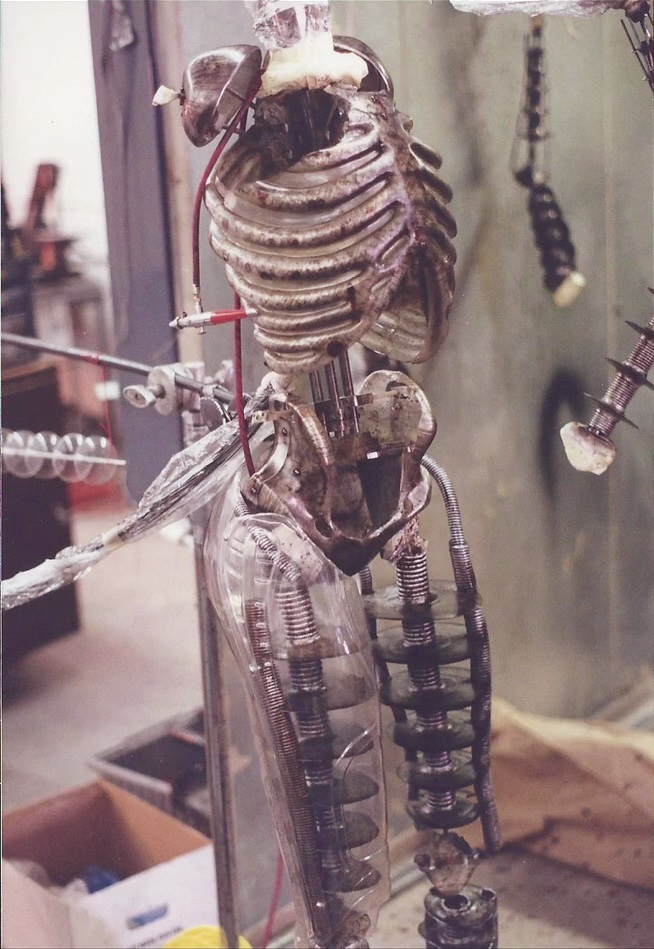

The sculpture became the basis for translucent Sil puppets. Aided by Bob Newton, Cabrera led construction of the puppets’ articulated endoskeletal structure. “For that we used what we called ‘Giger-flex’,” said Johnson, “an odd assortment of rubber hoses, plastic fabricated pieces and disks to indicate cartilage-like, repetitive bone formations.” The layered structure of the creature meant a deviation from usual construction approaches. In that regard, XFX’s pipeline was facilitated by previous material research and development done for The Abyss about six years prior.
Moulding of the Sil sculpture encountered a dead end early on, as recounted by mouldmaker Rob Freitas: “originally, they had some guy come by with a machine — pulled by a pickup truck — a machine that sprayed the silicone. Terrible idea, as the surface was riddled with bubbles. We ended up having to repour the matrix in GI1000. Luckily, we sealed and released the sculpture well enough so that it wasn’t damaged while pulling that first attempted silicone off, which ended up in the bin.” From these silicone moulds, an initial cast of the sculpture was done in clear vacuformed plastic, which was then sectioned to determine the points of articulation.
In response to Giger’s comments about Sil’s head looking ape-like, the XFX crew found a quick solution. “You’re talking about a creative change of about a quarter of an inch,” said Johnson, “and the untrained eye wouldn’t even be able to notice it. Not a big deal — we just added a clear dome over her forehead.”

The larger areas of the Sil puppets remained vacuformed plastic, with foam latex employed for the elbows, knees and hands. An innovative fabrication method was found for the translucent expanses of cheeks, neck, torso, shoulders and hips: appropriately treated nylon hose, an idea spawned from mechanical design supervisor Eric Fiedler. Johnson explained: “nothing was working, and we were running out of time; so, in desperation, we tried nylon hose, grafting it in large sections with a few floating vacuformed pieces to help maintain the shape. It was a wonderful solution — so stretchy that no matter how the creature moved, it didn’t wrinkle like fabric; and, coated with KY jelly, it was virtually transparent — like a clear, fleshy membrane.” Hot melt vinyl and clear urethane were also employed for minor components.
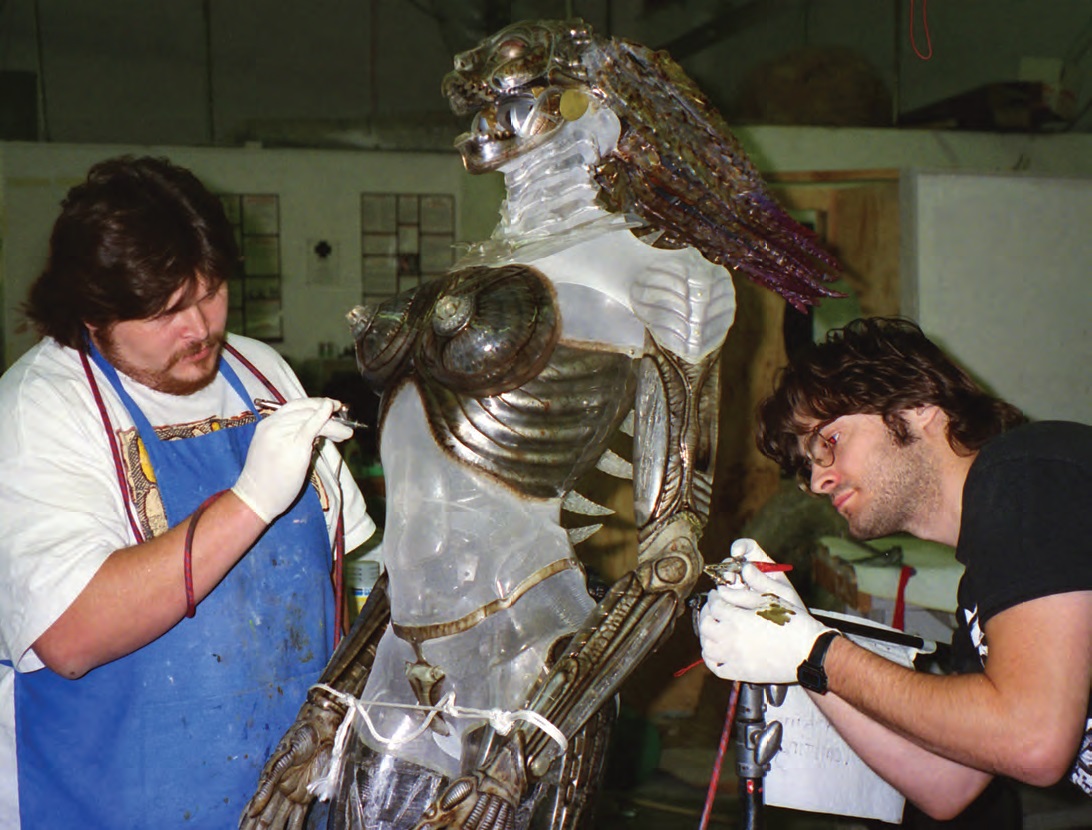
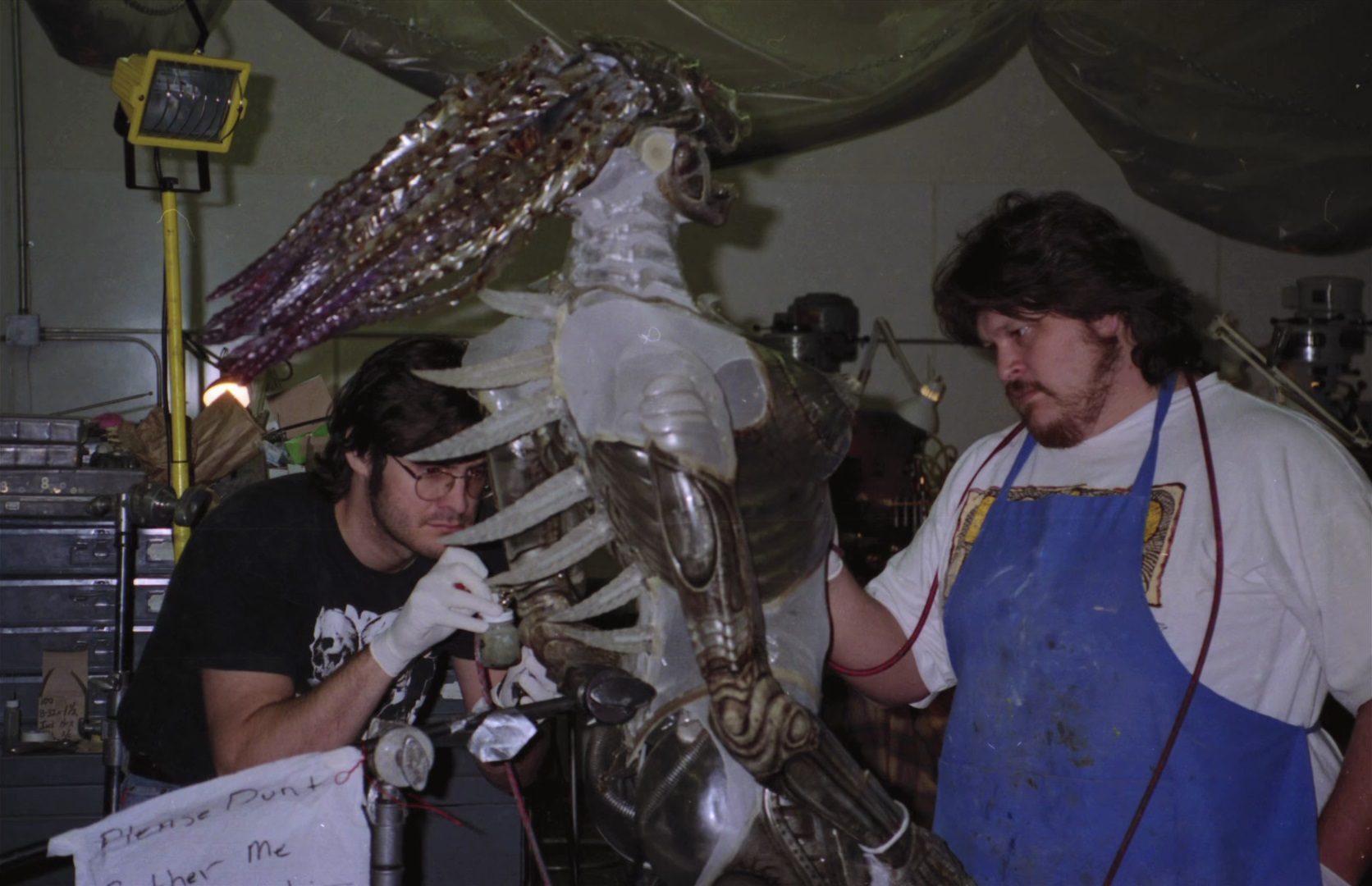
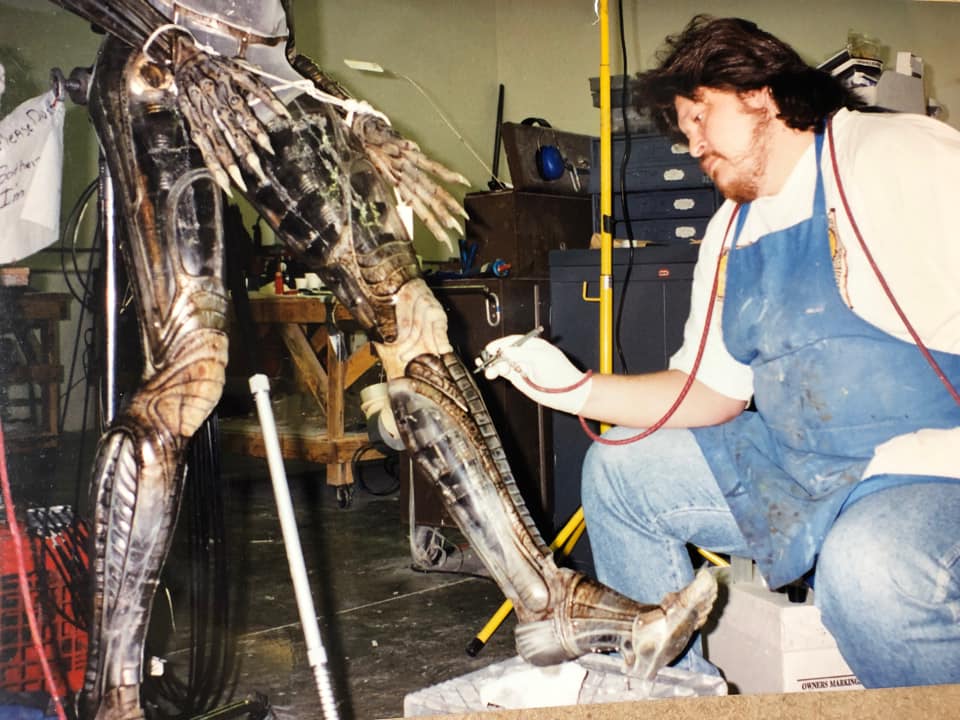
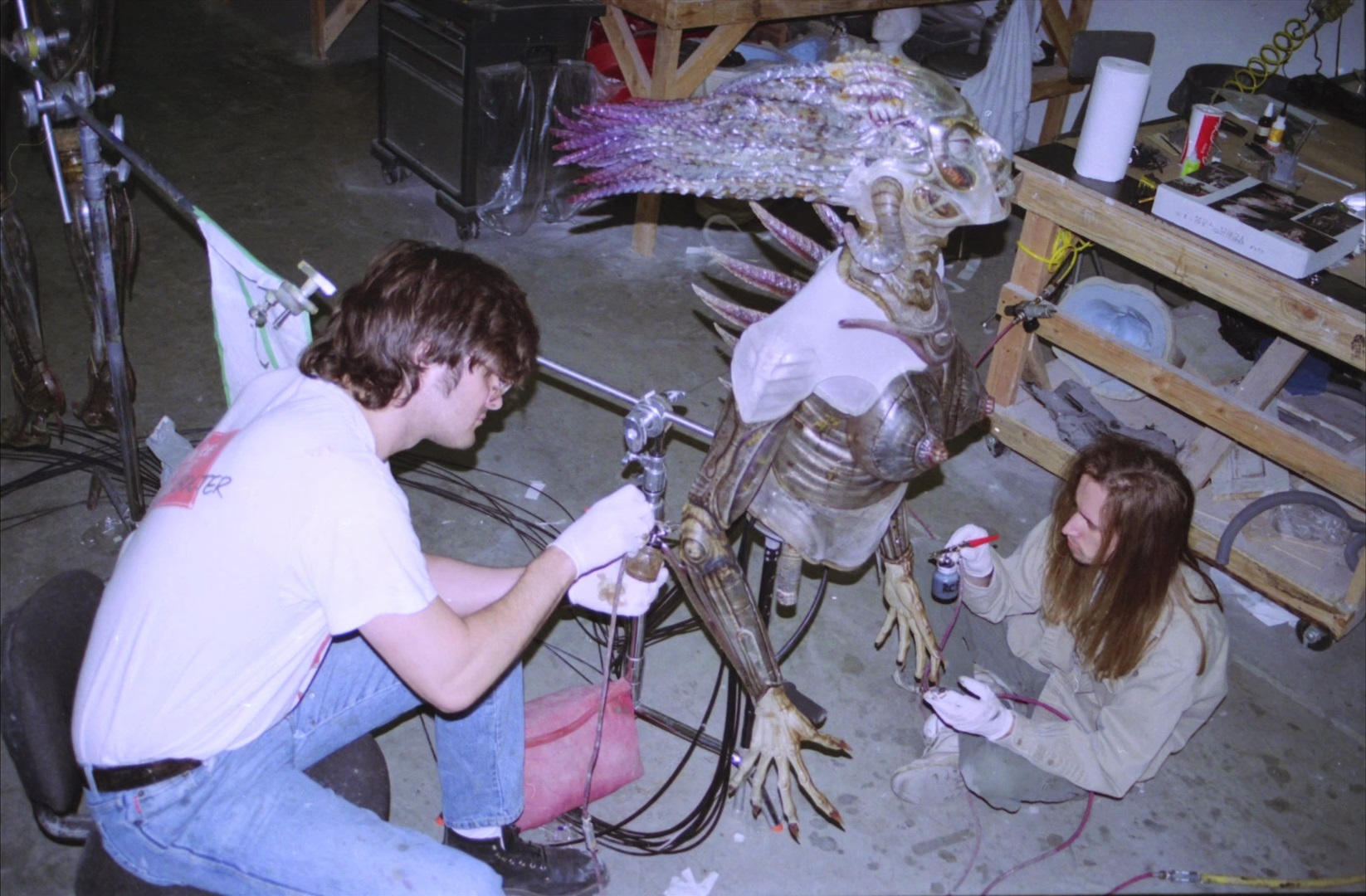
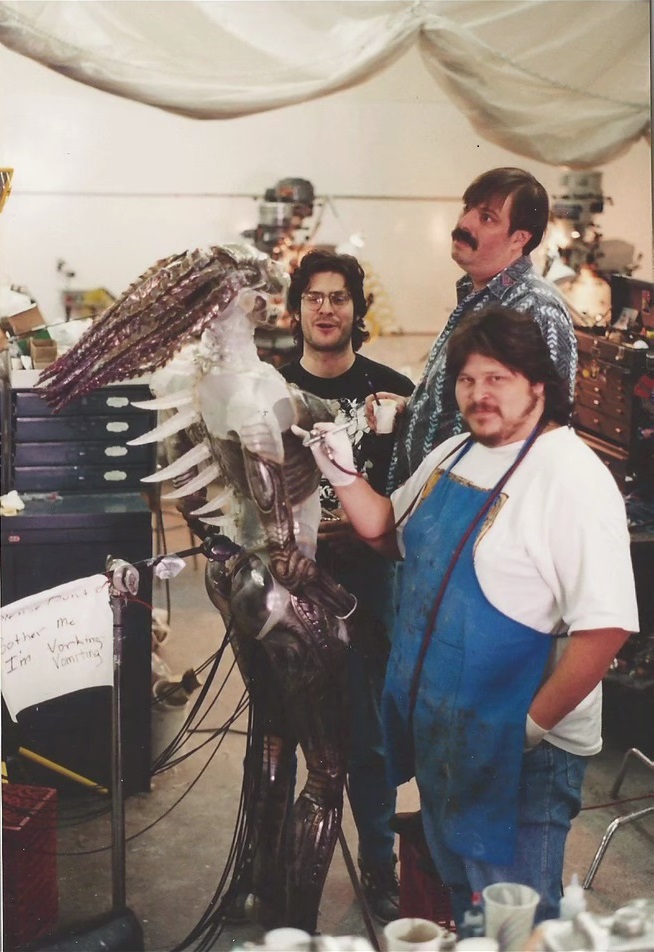
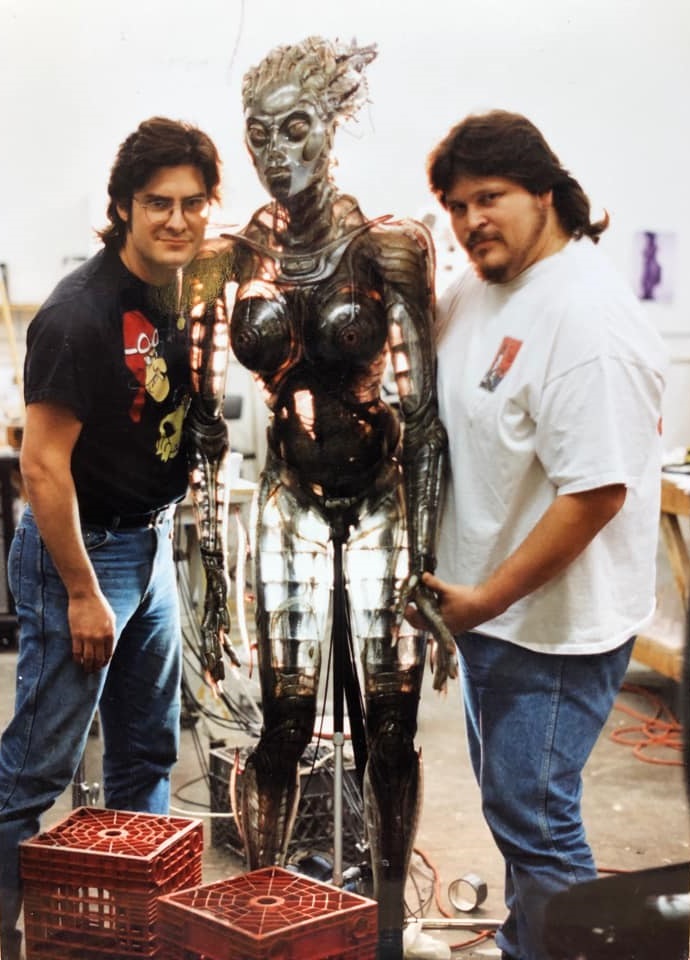
The Sil puppets were painted by Norman Cabrera and Gino Acevedo — both of whom previously involved with Giger-based textures and surfaces on Alien3 — assisted by Nigel Booth. Different paint schemes were tested based on colour concepts by Corso, including an attempt to convey Giger’s red glow concept: ultraviolet paint was applied on a skull plate, but the approach proved unfeasible, and with time tightening, the idea had to be abandoned altogether. Different colour schemes were also tested on the outer face before the design gravitated towards the final sepia tone-based paint.

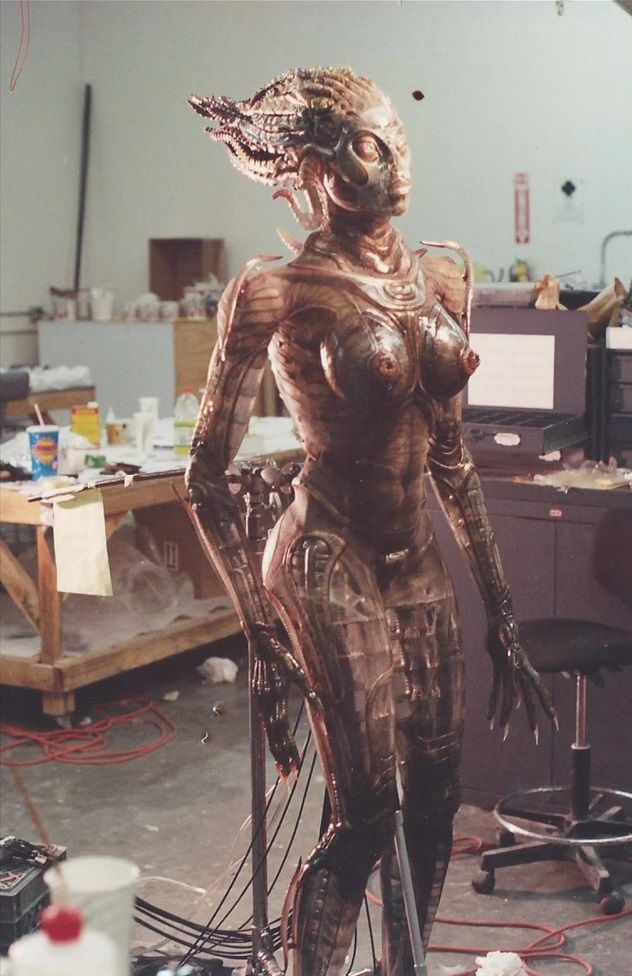
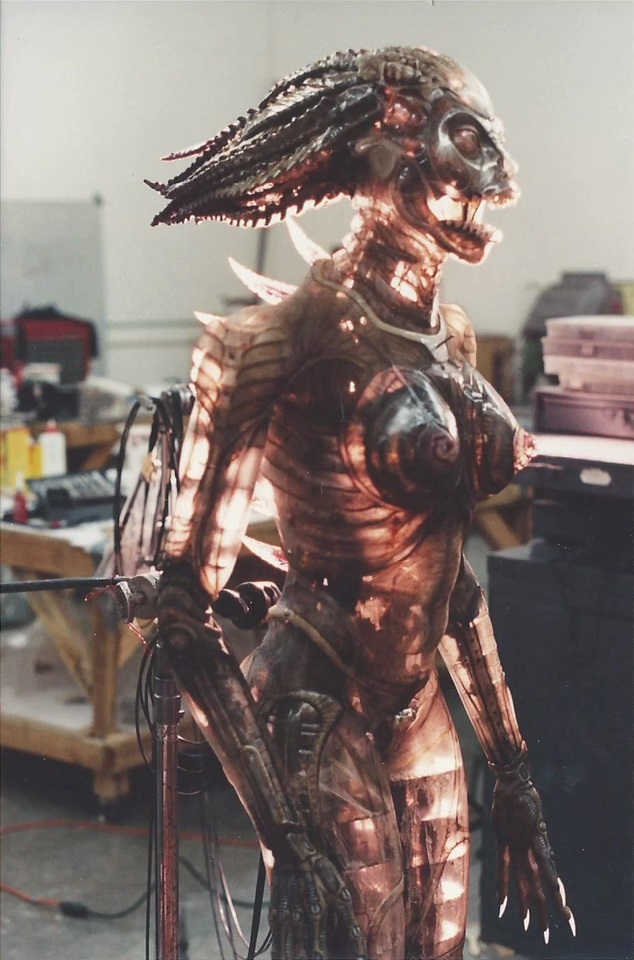
The Sil puppets could be assembled into a total of four main configurations: a hero puppet, a stunt puppet, a pyrotechnics puppet, and a birthing puppet. They were designed to be modular: their components — head, torso, arms, legs — could be removed, switched or replaced in a matter of minutes, depending on the requirements of a shot. Bill Corso related: “the cool thing about the puppet is the way Eric Fiedler designed her — she’s in many extra pieces that clip on and off. Eric designed all the mechanics and how it fits together and works. It’s very intricate, in that it’s all clear and must all snap together and come apart. If anything happens to it, we have to be able to change it out. […] The way Eric designed it is that it interlocked together without glue. It’s really neat.”
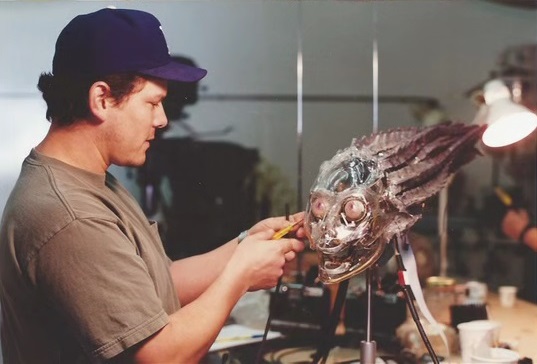
The mechanization team included Fiedler in supervision, Mark Goldberg, Robert Newton, and Mike Elizalde. Marionette-like and rod-actuated mechanisms were devised for body articulation, with the head being mostly-cable controlled. Elizalde devised an innovative eye mechanism that handled two distinct sets of eyelids through remote control, and Goldberg devised the mechanical elements of the neck and hands. There was an advantage to the biomechanical nature of the Sil design, as recounted by Corso: “the whole interior of her neck is an actual ball in a socket with cables. You can actually see it, but you’re not sure what it is.”

Sil’s head comprised two main layers — the inner skull and the outer visage. Rolling bands of texture were placed beneath the exterior, allowing motion of subcutaneous muscle-like shapes that created expressions. Johnson explained: “since the skull was visible behind the clear outer face, we thought it would be interesting to mechanize the head on the inside; so we put plates under the outer skin on top of the skull to effect brow movement, and added bands of texture under the cheeks.”

Outer and inner sets of teeth could move independently of the head. Johnson commented: “the teeth are articulated; the outer ones can move down and back, and then behind them are inner teeth. When we get all four of those chattering, it’s pretty interesting.” The eyeballs were equipped with refraction grading that could shift their colour; double sets of eyelids blinked up and down and right and left, and nictitating membranes could quickly wipe over the eyes.
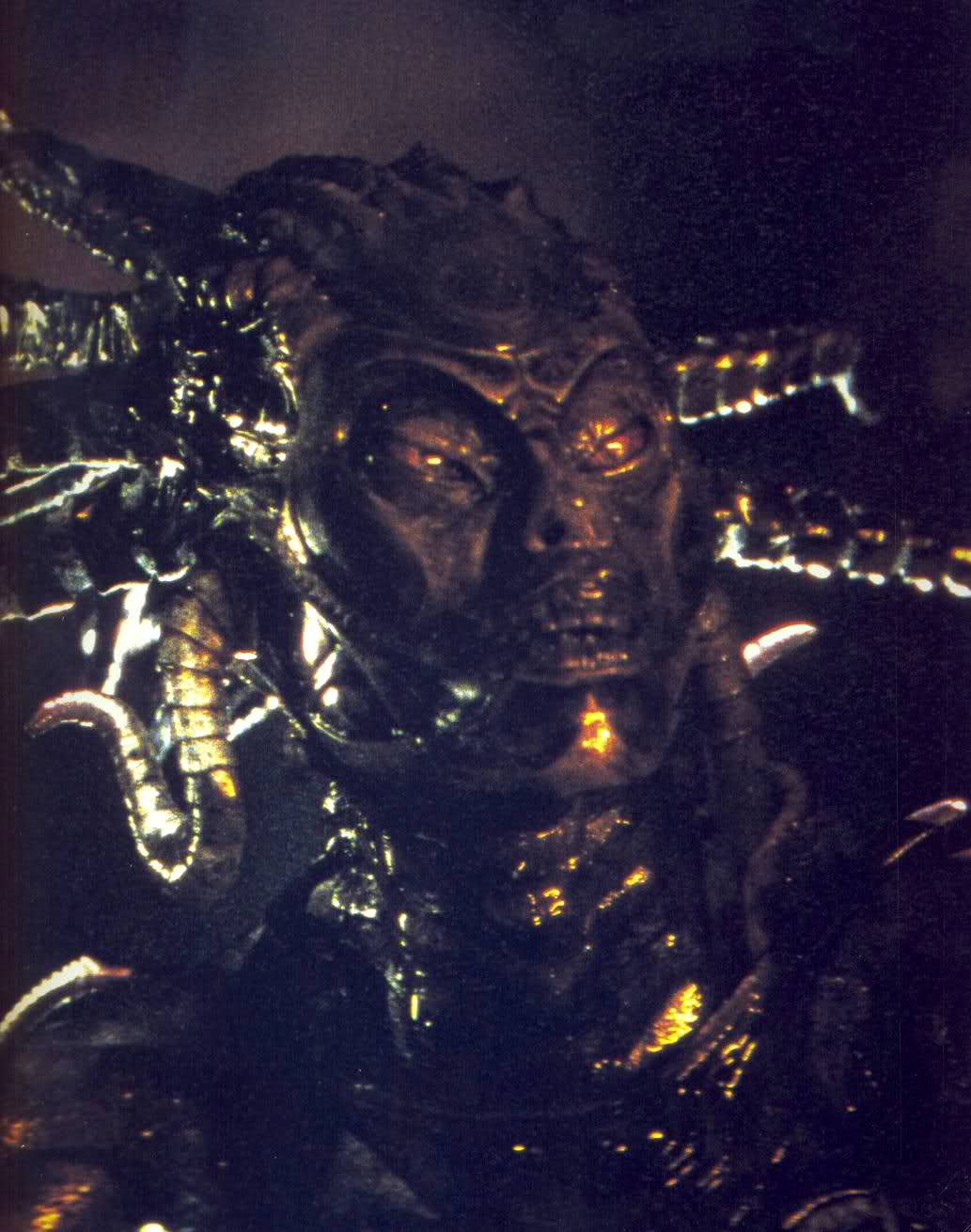
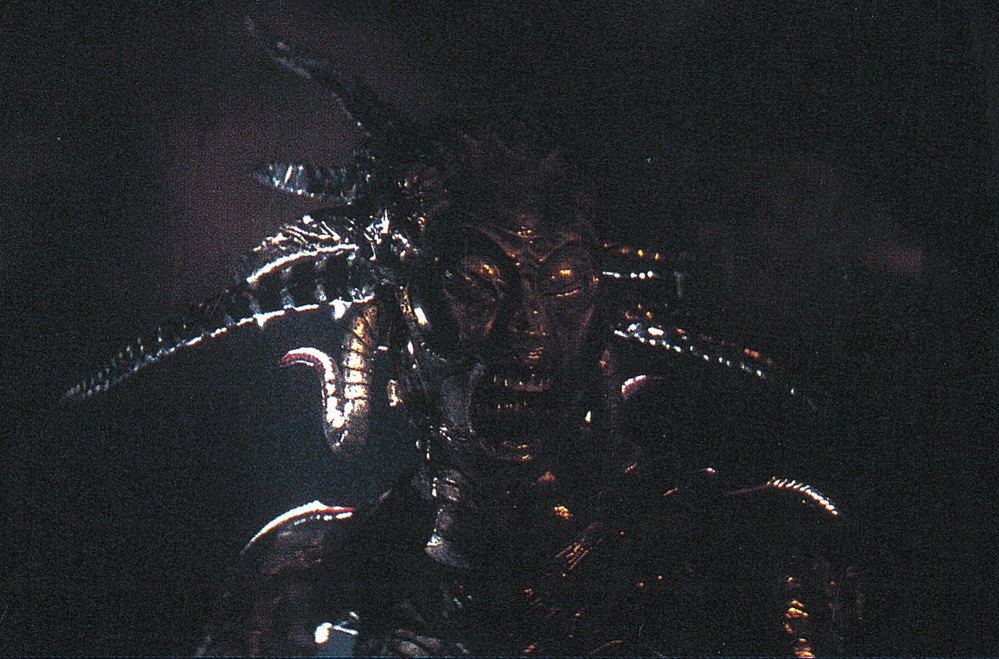
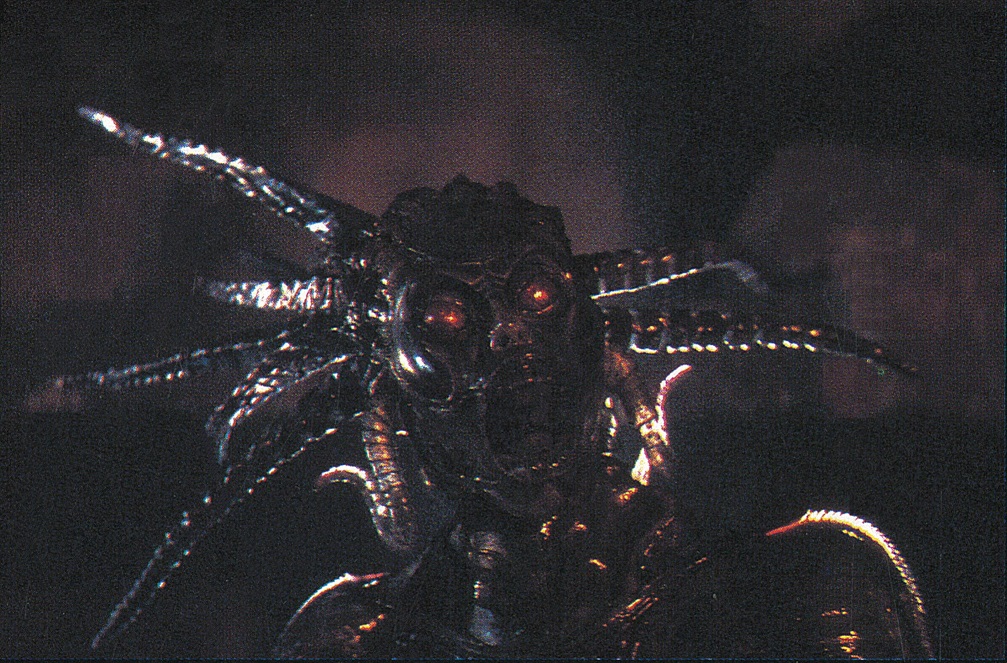
Unseen in the film — at least as far as the practical effects are concerned — is the wide range of motion that could be performed by Sil’s hair-tentacles, provided by Shaun Smith and Brian Goehring. At first, the crew attempted to mechanize the tentacles independently “for a Medusa effect,” said Johnson. That approach proved unfeasible; ultimately, three different removable “hairpieces” were devised.
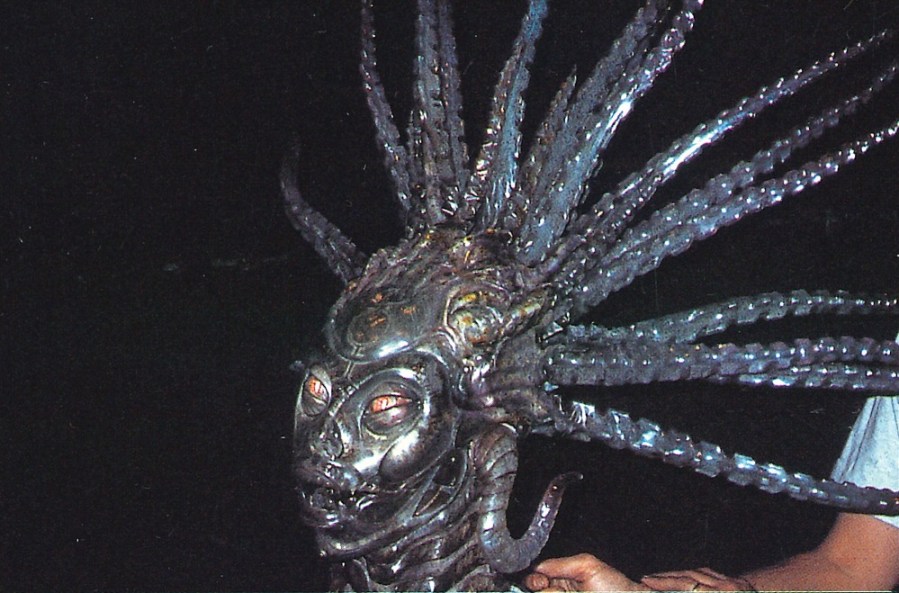
“Two were nonarticulated,” Johnson continues, “one in a dormant shape and the other fanned out like a peacock tail — and the third, our hero version, had a double tentacle mechanism concealed under the strands to provide a snake-like, four-way movement at both the base and top. The strands were elasticized and attached in several places so that they functioned as one unit, moving in a graceful S-curve whenever Sil whipped her head around.” In another interview, Johnson said the crew wanted “something almost like a sea anemone that would follow through as though underwater. It really looks like a mass of writhing hair, but was basically maintained by the one master stalk.”
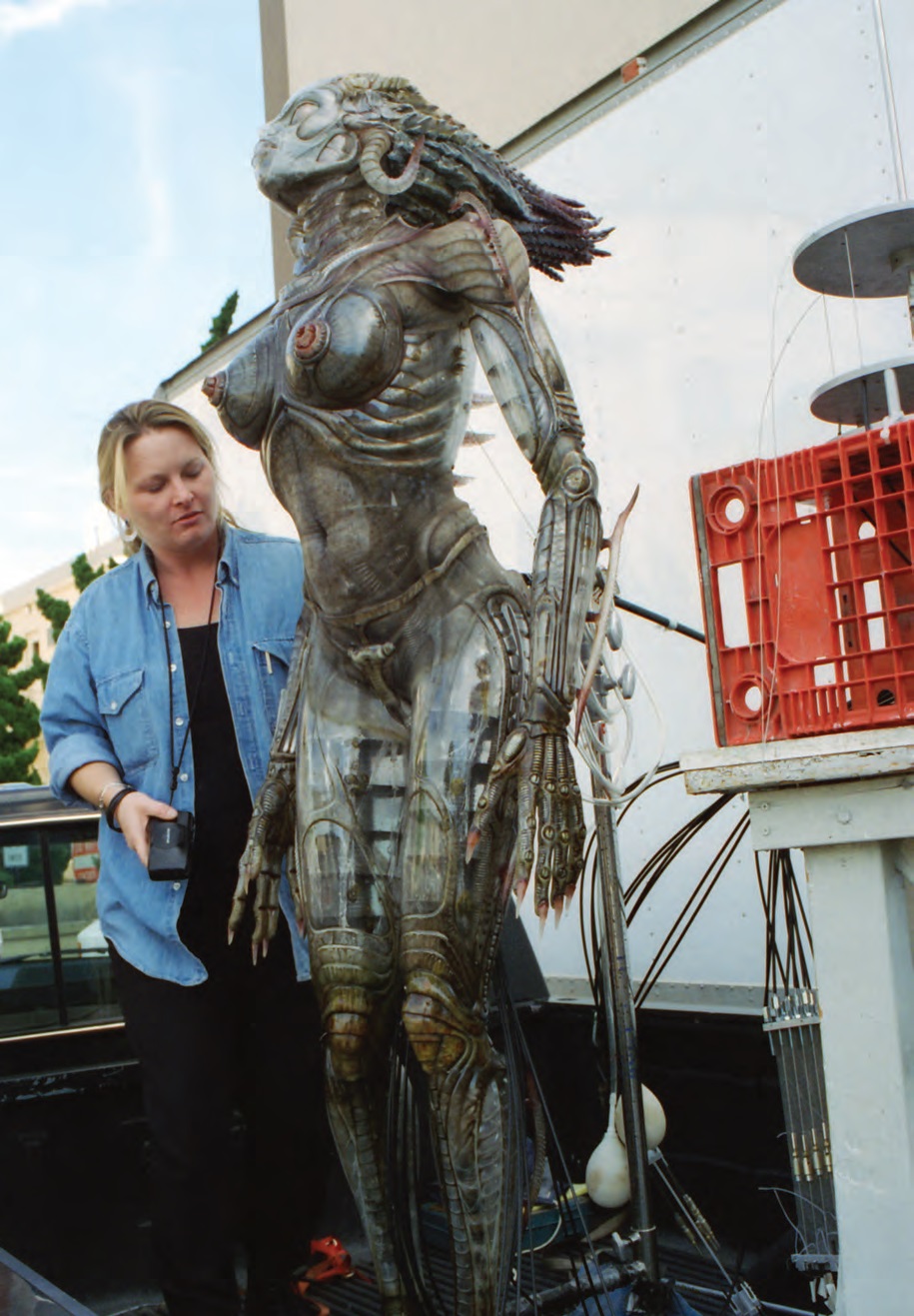
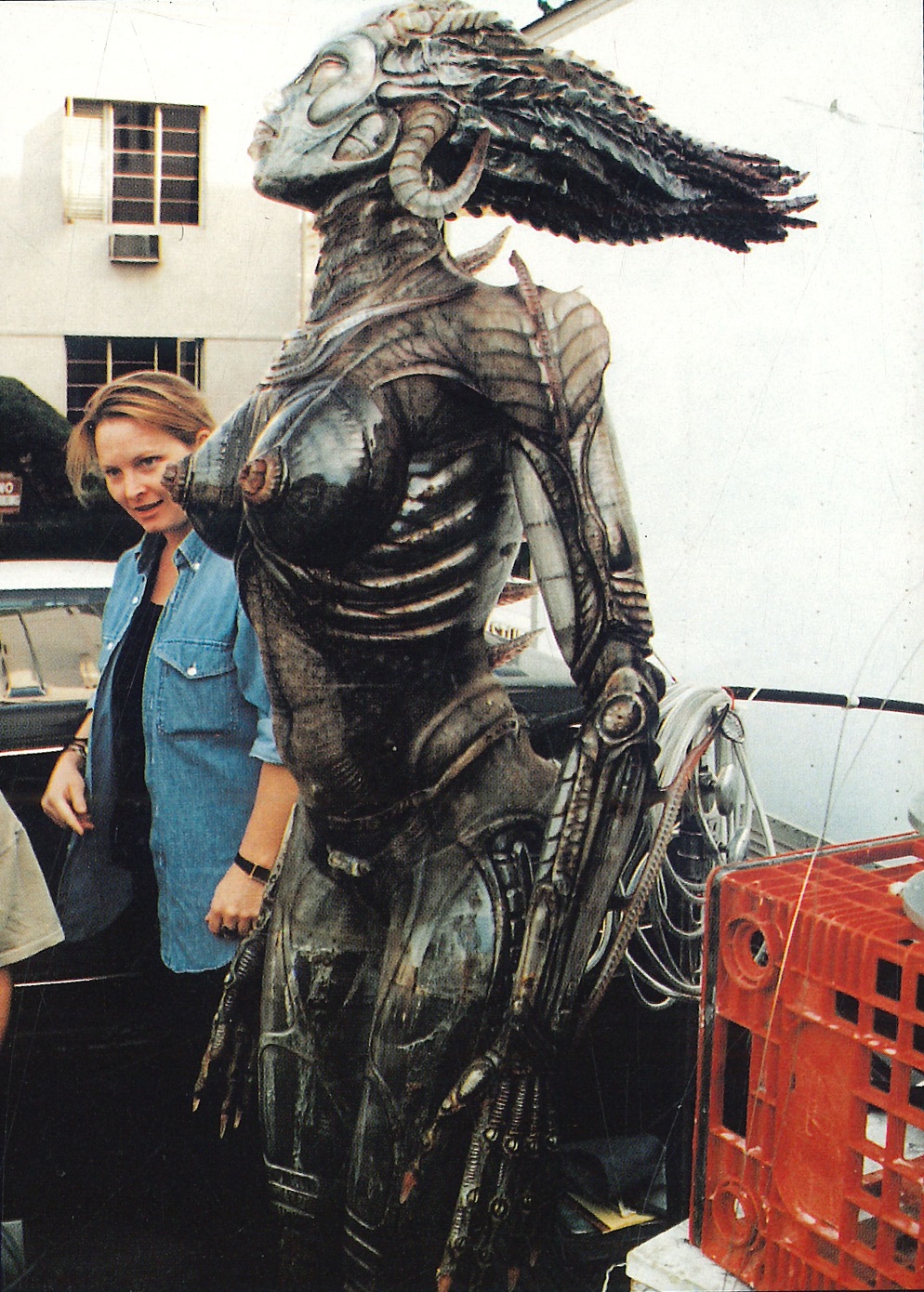
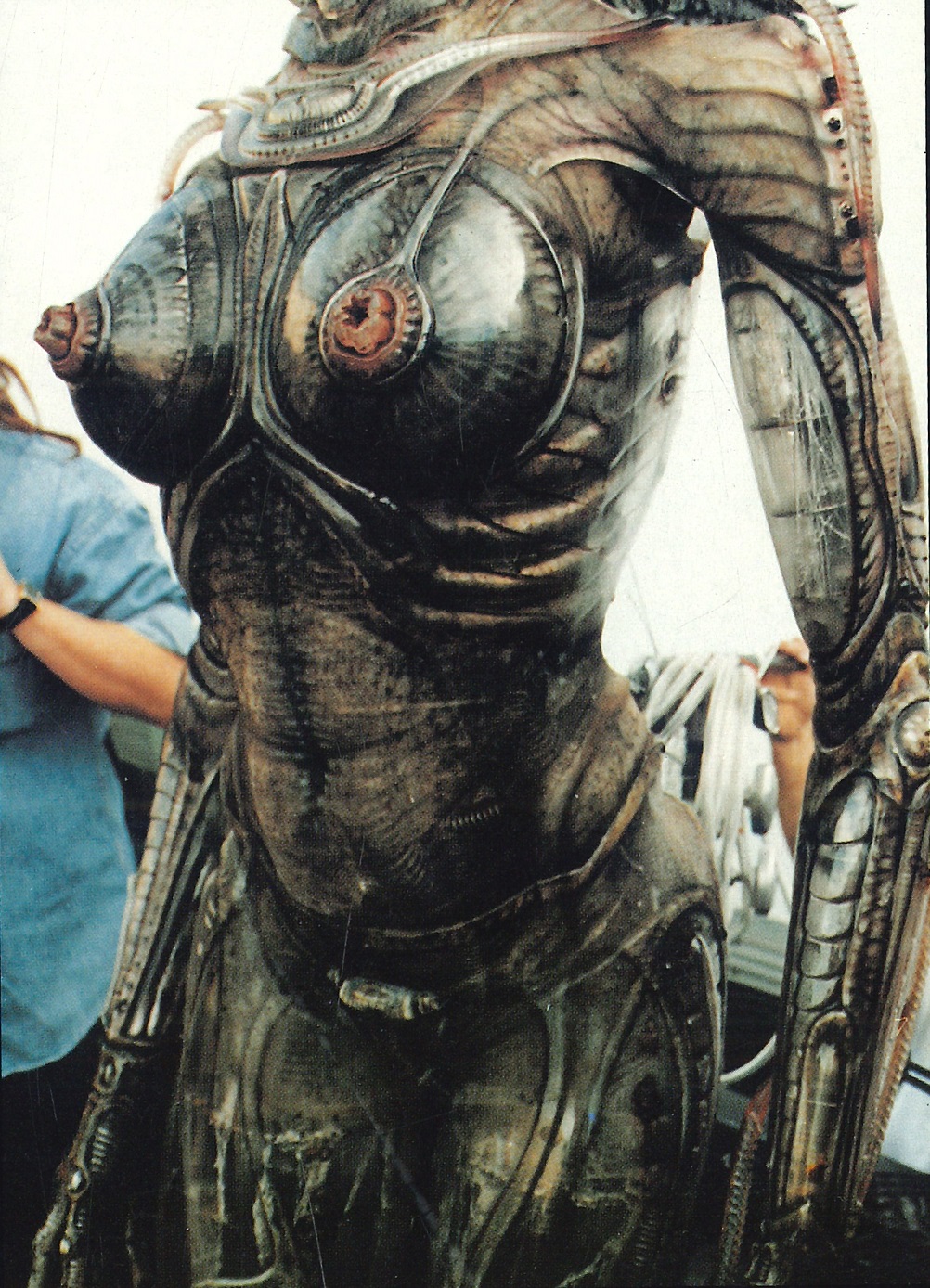
To Johnson’s relief and pleasure, Giger’s response to the finished puppet was more than positive. “Up until the last minute,” Johnson recalled, “he did not seem very happy. We finally sent him photos of the thing completely finished, and I got the greatest fax from him.” Giger’s fax read: “you made me very happy. For this, you should get an Oscar, at least.”
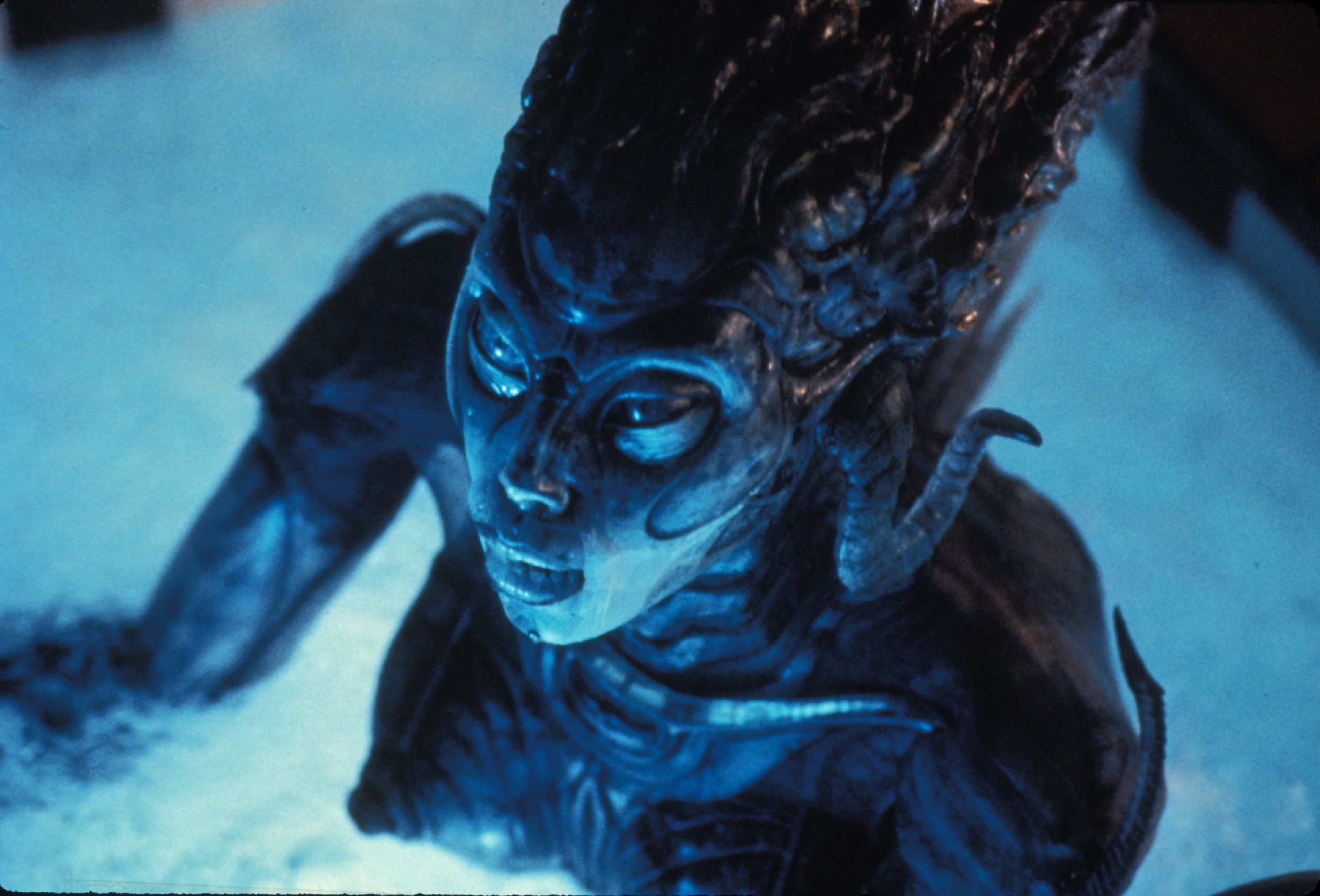
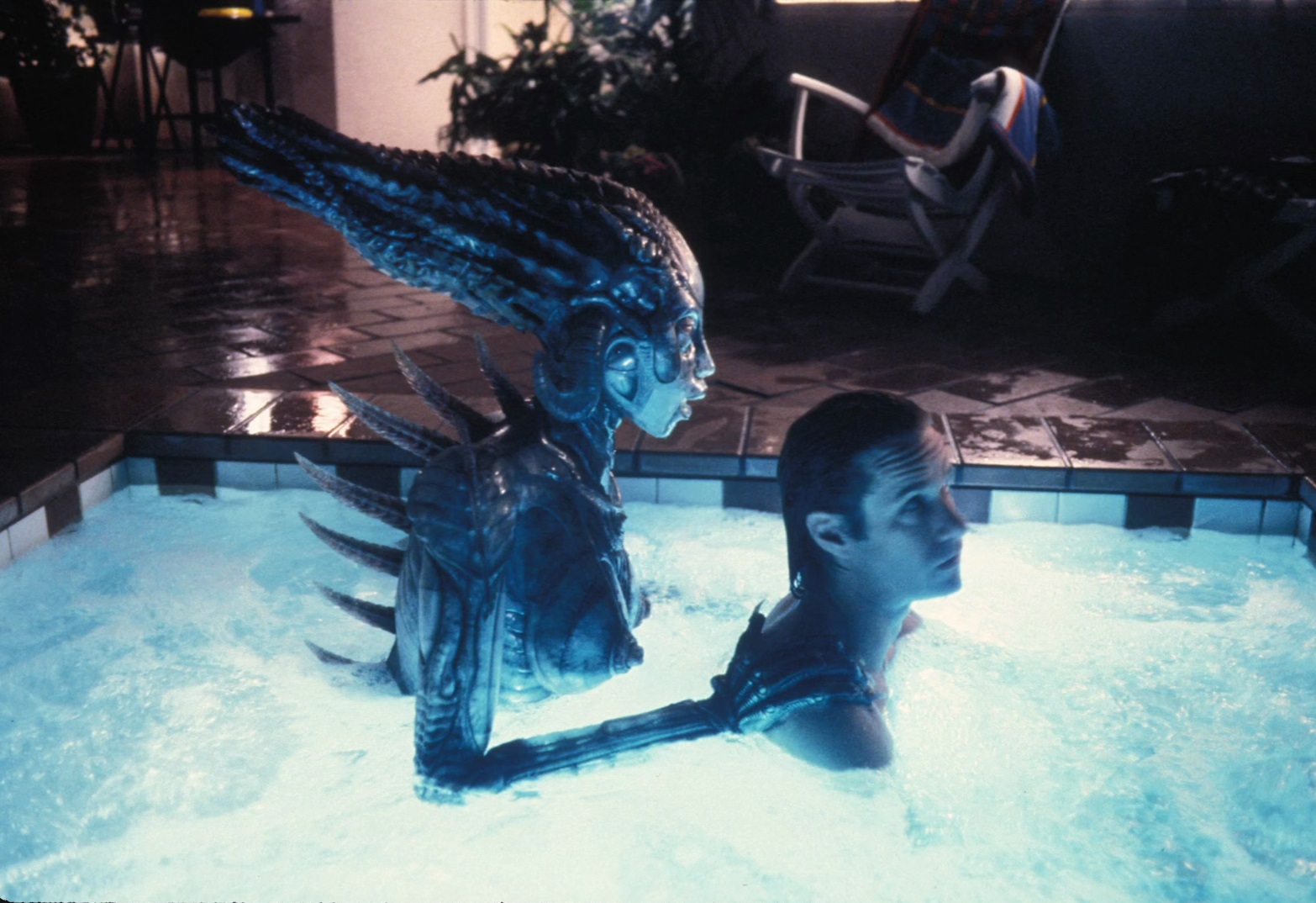
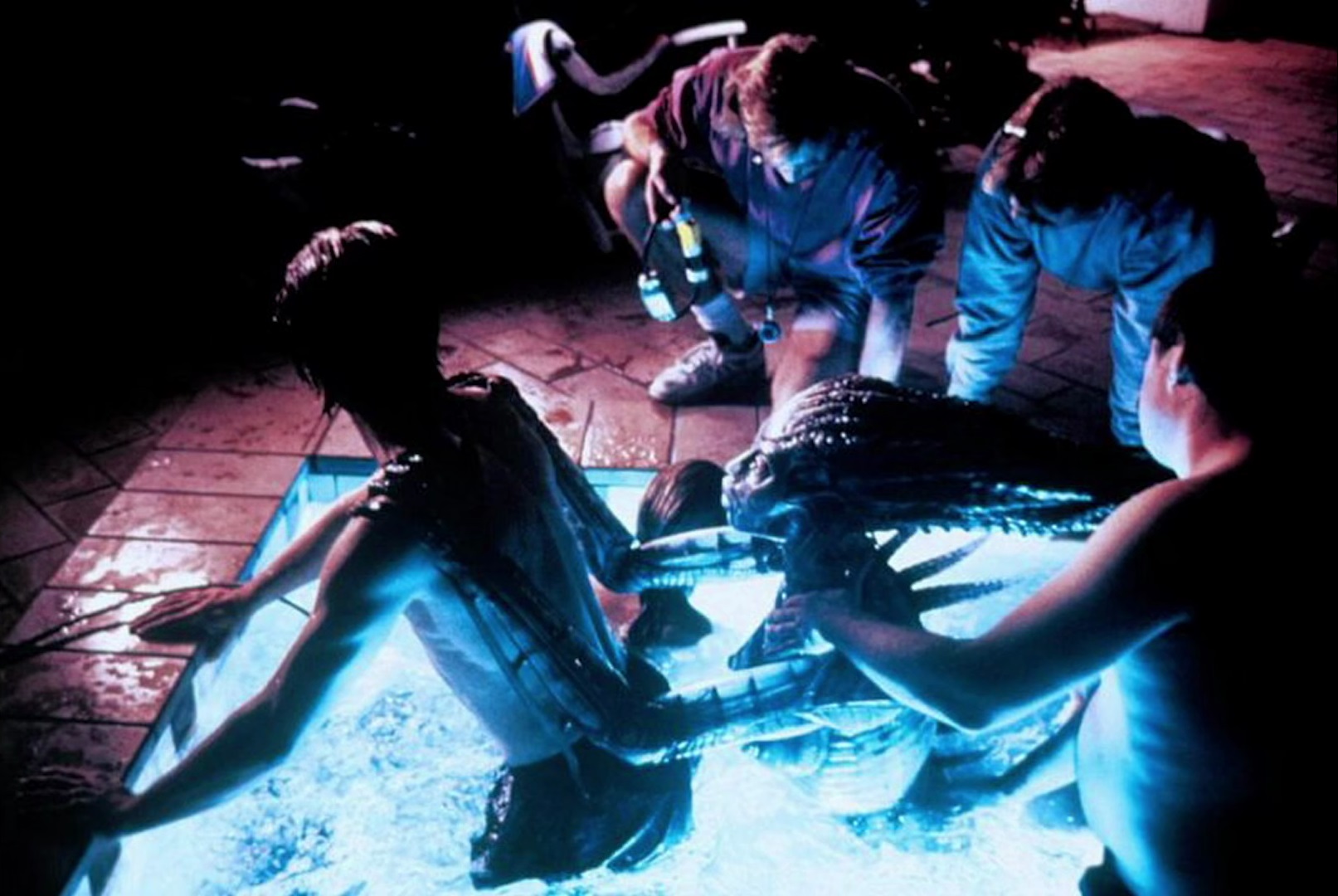
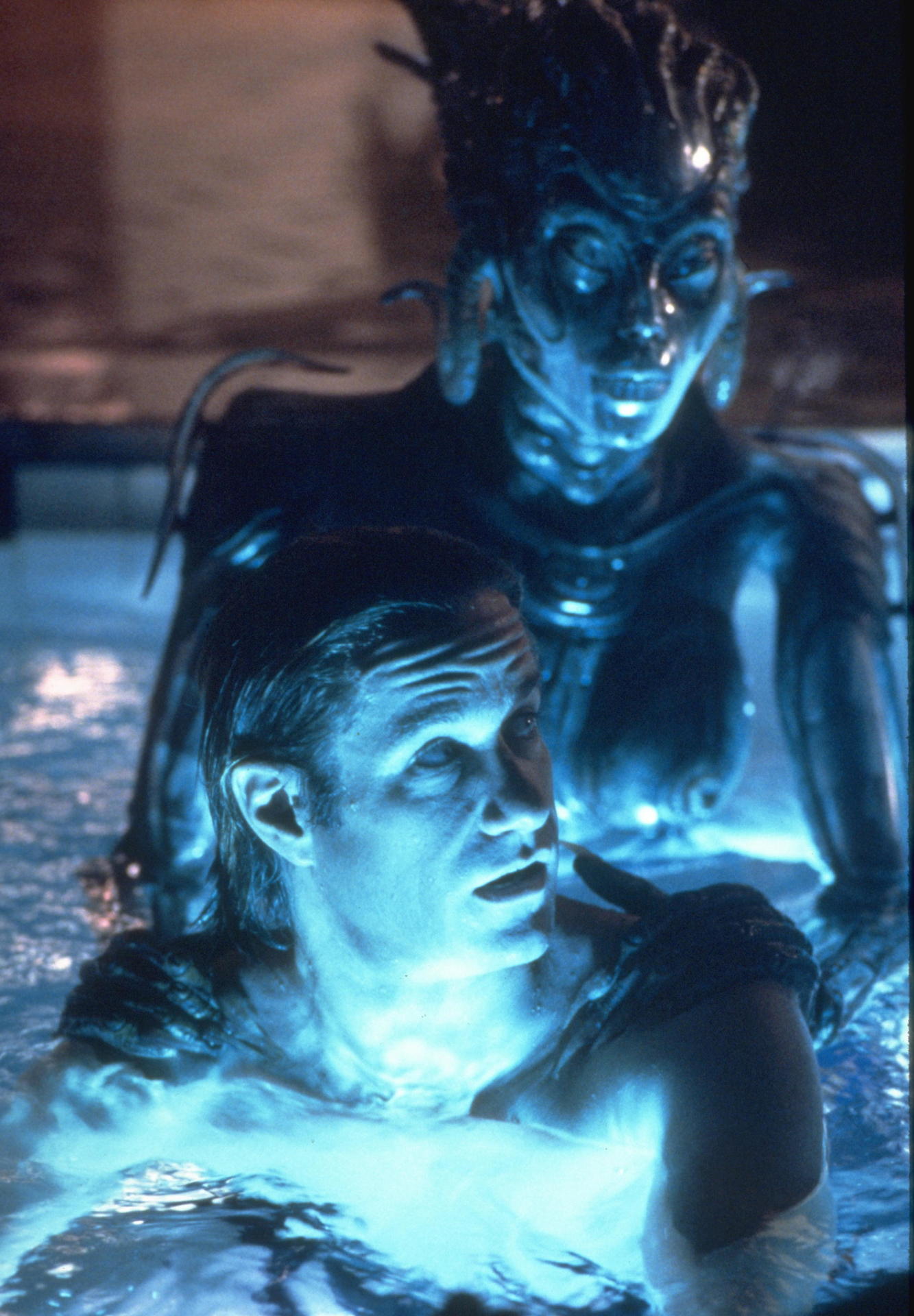
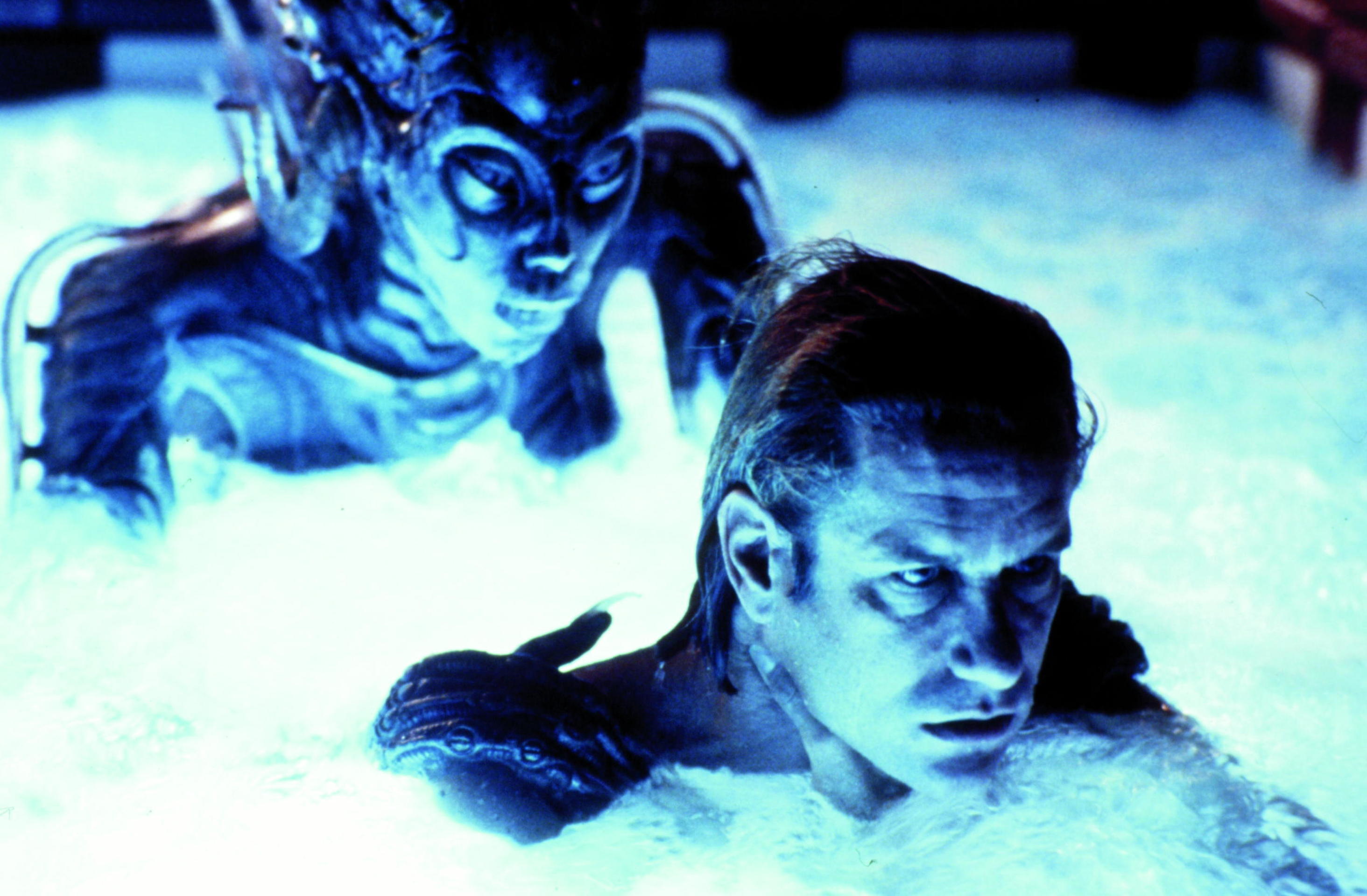
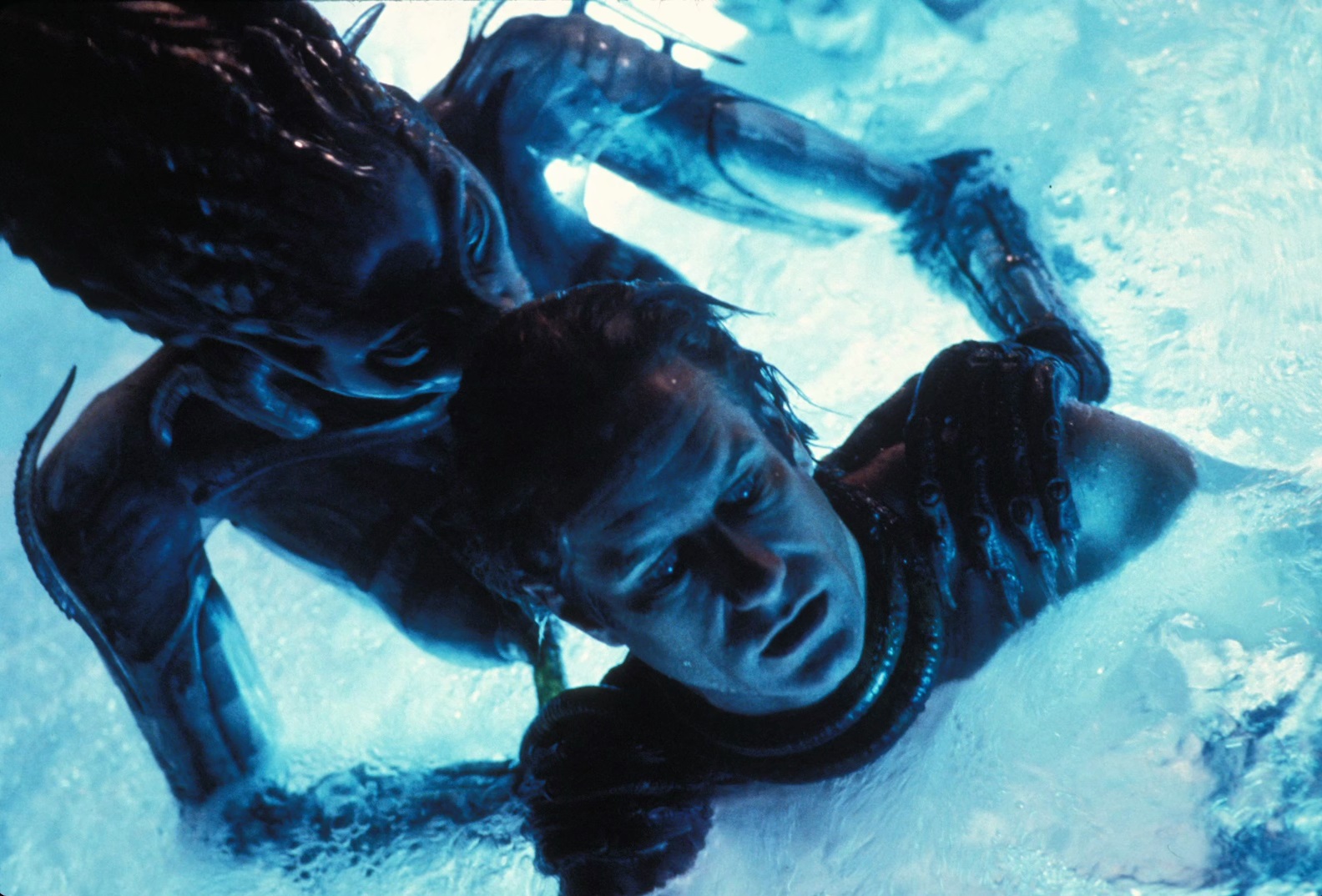
The puppets were completed in the nick of time for the first scheduled scene to be filmed — the bathtub kill. “The paint was still drying when we put her in the hot tub,” said Corso. There also were concerns during filming regarding likely water issues. “Anytime a puppet works in water it’s always very difficult,” commented Johnson, “because it’s harder to move in, and what you build has to work mechanically and cosmetically in water.” The puppet was tethered to Whip Hubley’s shoulders, allowing him to puppeteer gross motion by simply moving around.
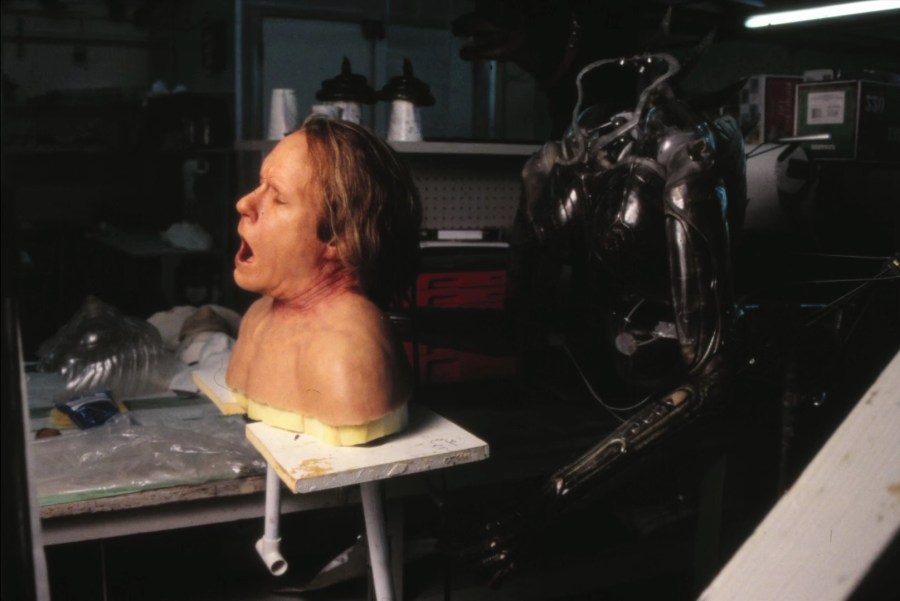
The nipple tentacles forcing their way into the victim’s throat were shot in reverse to allow proper positioning during filming: they were first slid into the mouth of a stunt dummy built in Hubley’s likeness and then pulled out.
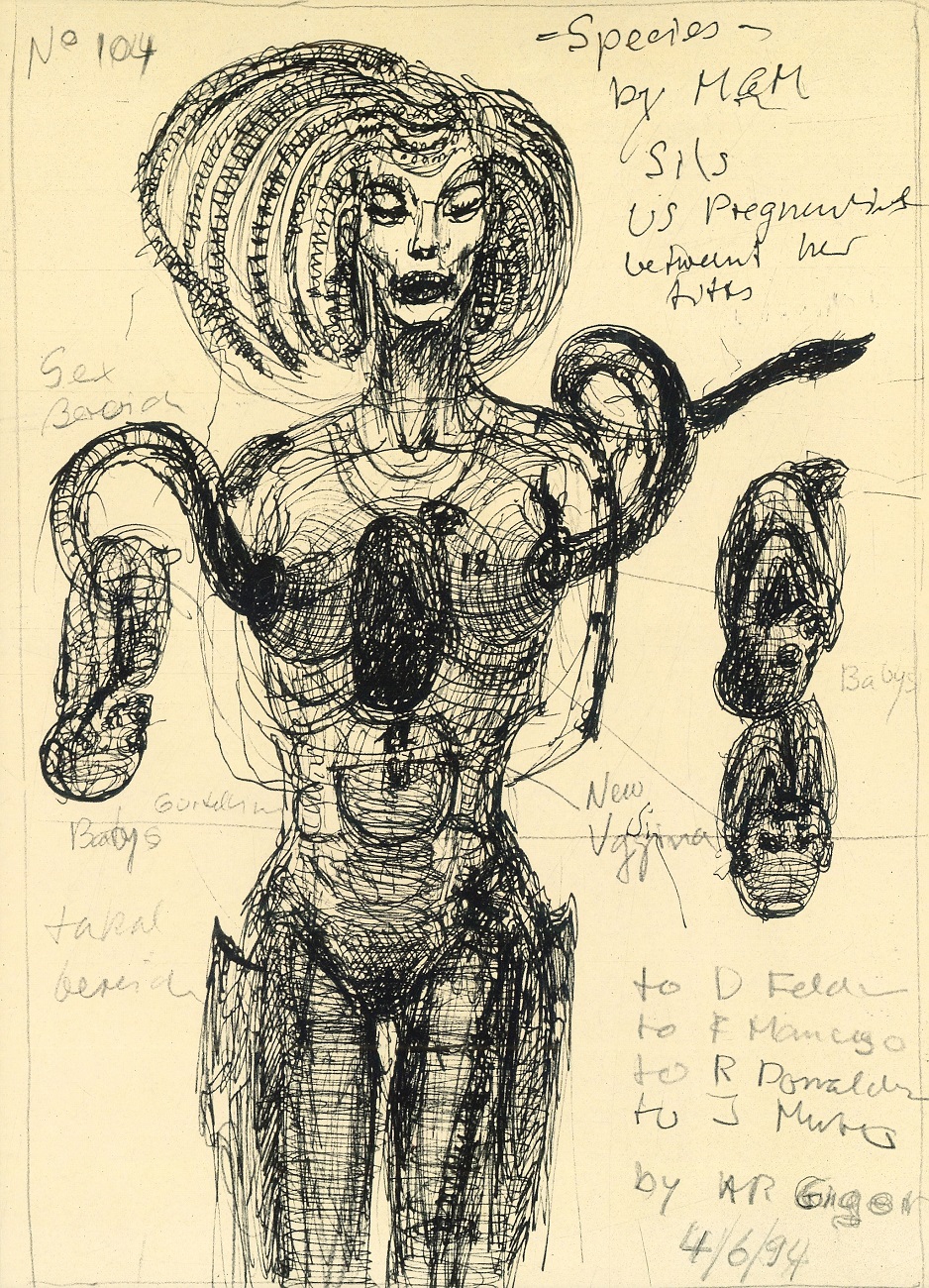
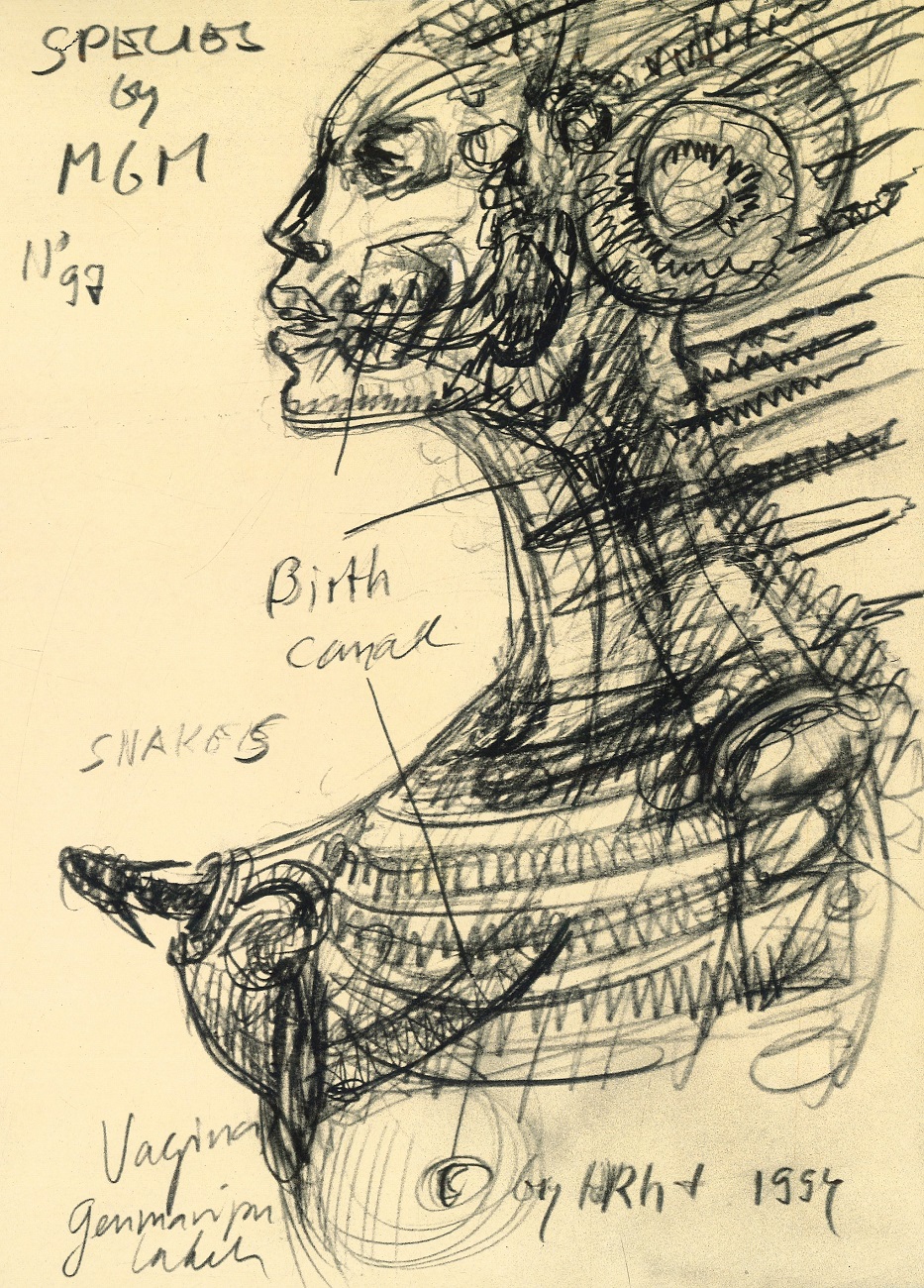
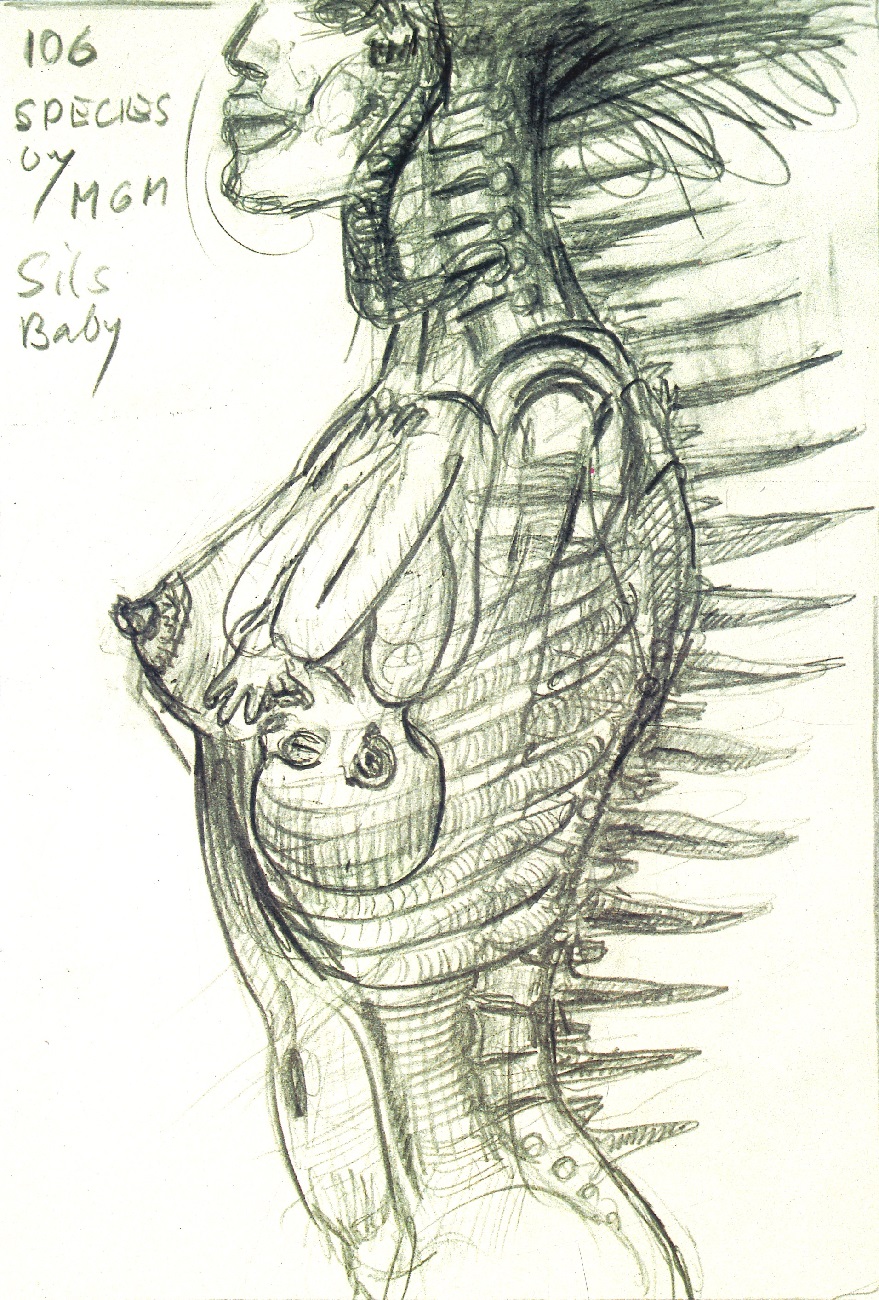
Sil’s child delivery was conceptualized by the filmmakers with the baby emerging from her chest, rather than a human birthing canal, in order to avoid censorship. Giger jokingly called the concept “chestbirther” after the similarities he found with the Chestburster from Alien. The artist added it was “made clean by MGM so that the Pope might not find it objectionable.” Still, Giger made concept drawings of the baby nested within Sil’s chest, and even suggested a “thoracic vagina” in the full body illustrations of Sil initially sent to XFX — something that was later removed.


A specialized Sil body animatronic was engineered by Fiedler. It was fitted with an articulated chest that could split open. Operating through the back of the chest, puppeteers could push out a mechanical baby, which was enveloped in an elastic membrane of hot-melt adhesive. Johnson commented: “by using the membrane, we didn’t have to create a perfectly realistic baby — which would have been difficult to do.”
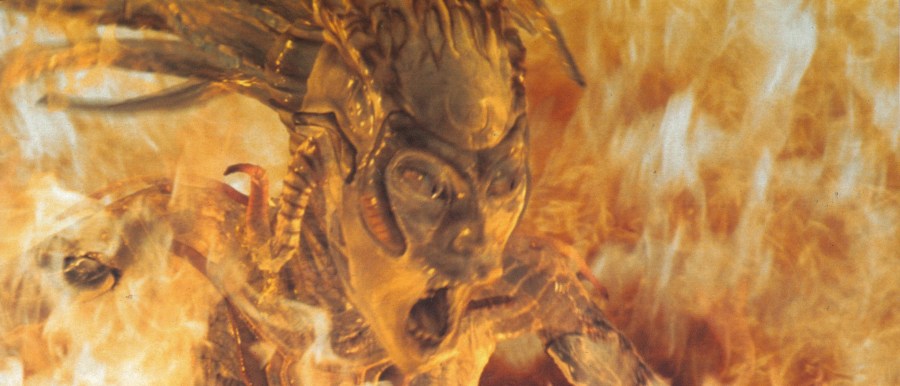
Finally, an exploding stunt head was devised for Sil’s death. In the script, the character is immolated in the cavern fire; Giger strongly opposed the idea — associating fire to mere Middle Ages weaponry. To illustrate his point in a humorous manner, the artist sent production a drawing of Sil bathed in fire, engaged in a sexual position with a man showing a flamethrower between his legs — the so-titled “flamethrower fucker”. Following the warm suggestion, the death scene was altered to include Sil’s head being blown off by a shotgun. “When they asked me how to kill Sil,” said Giger, “I said the best way was to blow off her head. Nobody can live without a head.”
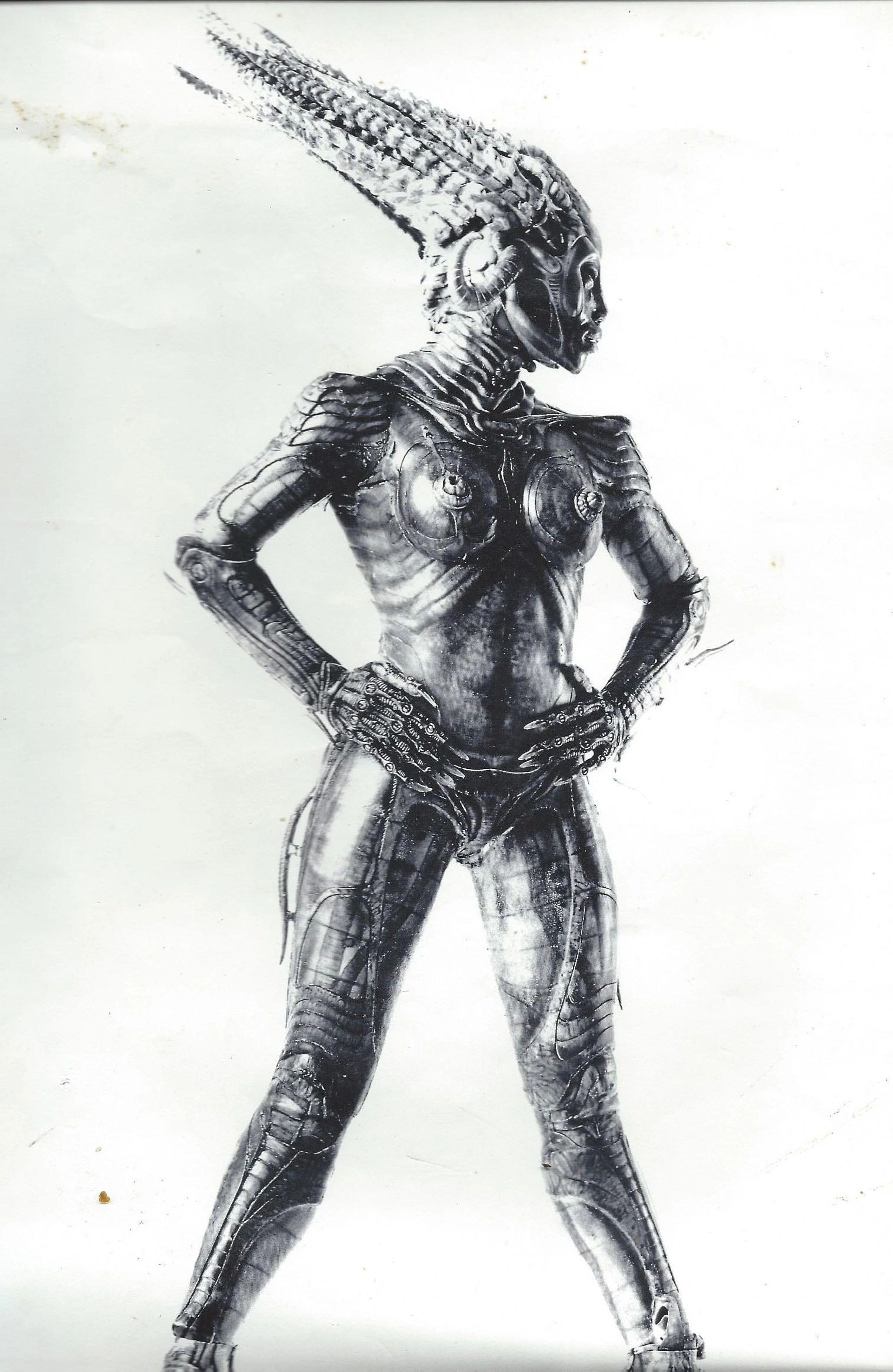
Three foam rubber suits were cast from the same moulds as the external layer of the puppet, with some components — such as the hands — resculpted by Tony Mancinetti to fit the performers. The suits were fabricated by Lynette Eklund, Tamara Carlson and Dale Brady, and painted by Moto Hata and Doug Stewart. They were tailored for performer Dana Hee, a martial arts fighter and a stuntwoman, who carried out most of the suit action; however, when Hee was not available, Lynette Eklund filled in for certain sequences — such as some underwater footage — herself being the same dress size as Hee. Eklund also wore the suit for promotional shoots.
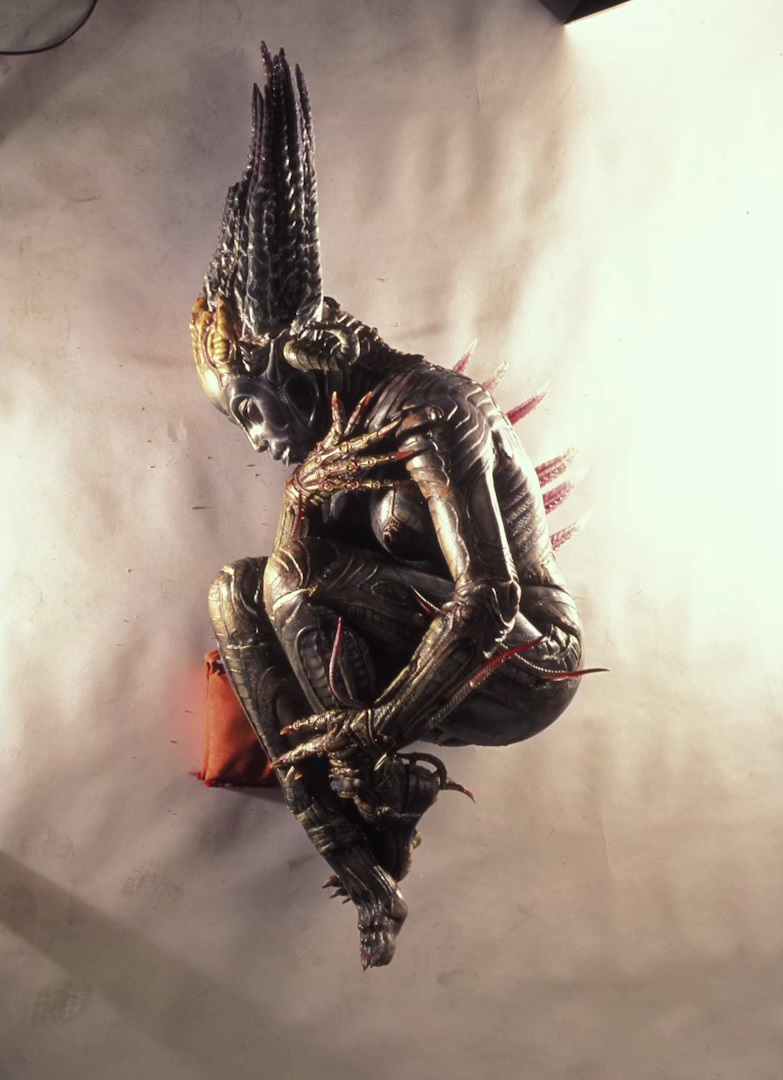
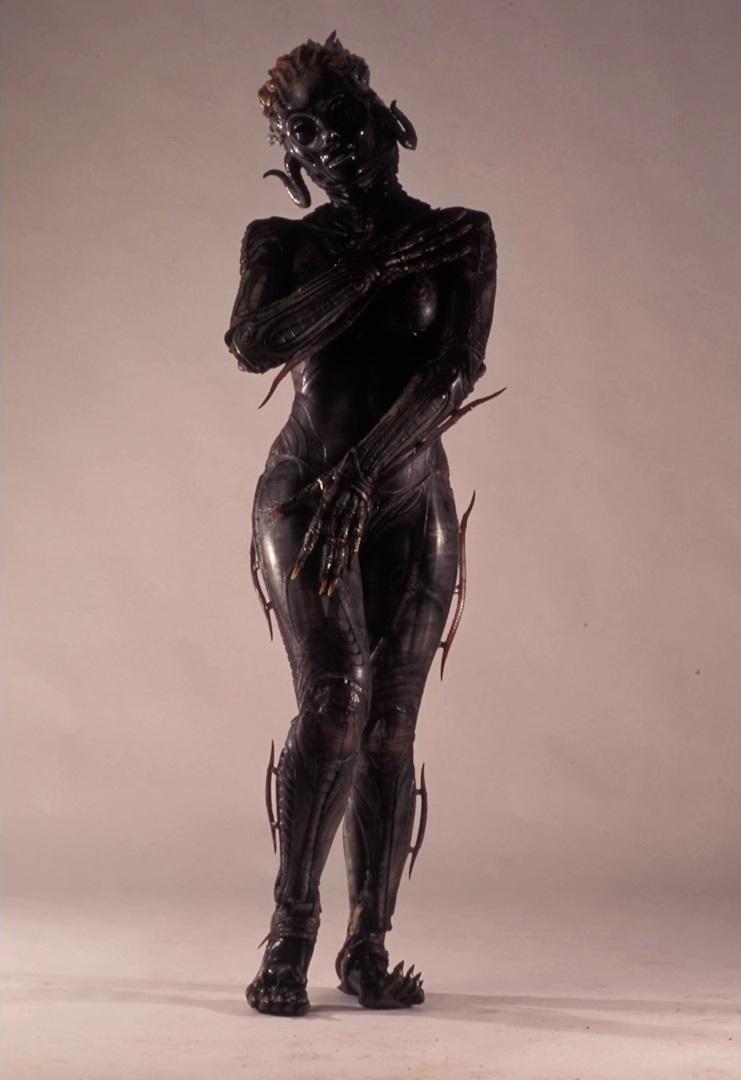

As they could not entirely replicate the layered translucency of the puppet — nor functions like eye blinking — they could only be used for quick or obscured shots, such as Sil bursting through the hotel wall or diving in the sewer water. They were also employed underwater for Sil’s oniric visions.
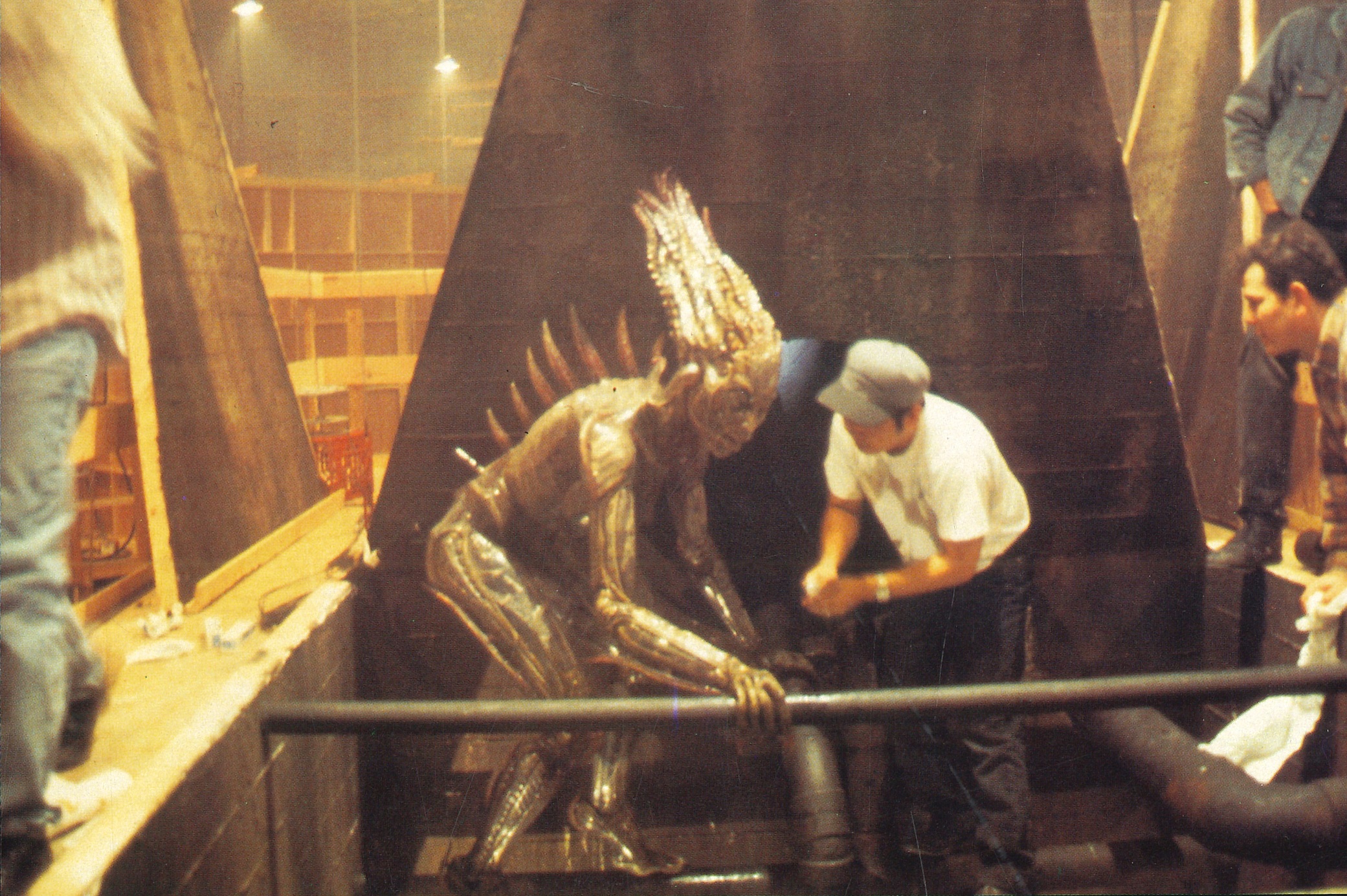
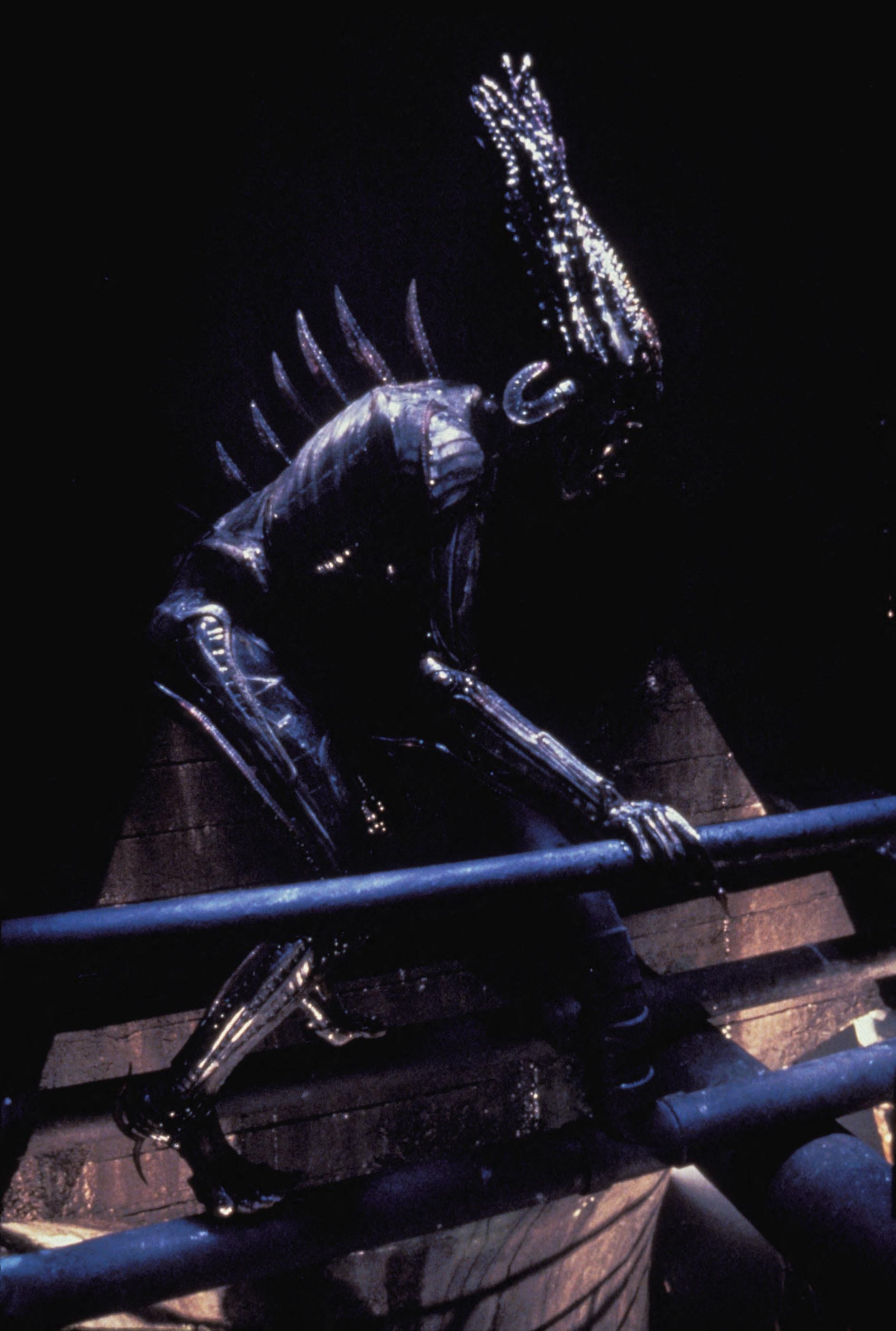
Johnson often opposed director of photography Andrzej Bartkowiak about the lighting on the practical Sil effects, which did not highlight their properties and detail. “She hardly even looks translucent in the final cut,” Johnson commented.
Giger’s “kiss of death” idea was simplified into a more Alien-like ramming tongue, something that he protested. He said: “my original idea was that when she was to give her ‘death kiss’ her barbed, oversized tongue is able to go deep into the victim’s mouth, and then she vigorously pulls it back, not punching it forward as in the finished film, too much as I already had done in Alien and Alien3. The tongue has rearward facing teeth which yank out whatever they are in contact with when it is retracted.”
The kiss of death was another plastic bag effect — with a peculiar set-up involving a stunt victim head. Bill Bryan explained: “for that particular gag, we made a plastic bag. By seaming the plastic with a soldering iron we could make custom-shaped balloons and turn them inside out — the seam is mostly hidden. We put some texture into it, put some paint on it and squished it entirely flat. You [then] got a tube coming out of the side of the head, a little bit of hair covering it; and then you [blow] at the right moment, giving it a blast and suddenly it’s rigid, and it looks like it came out right through his head.” The effect was shot separately and then composited into the live action footage by Boss Film.
The digital front of the creature effects was handled by Boss Film. This included several transformation effects, with the first being the cocooning tentacles seen early in the film, followed by two healing sequences: Sil regenerating her back wounds after the car crash and her thumb growing back when she cut it off.
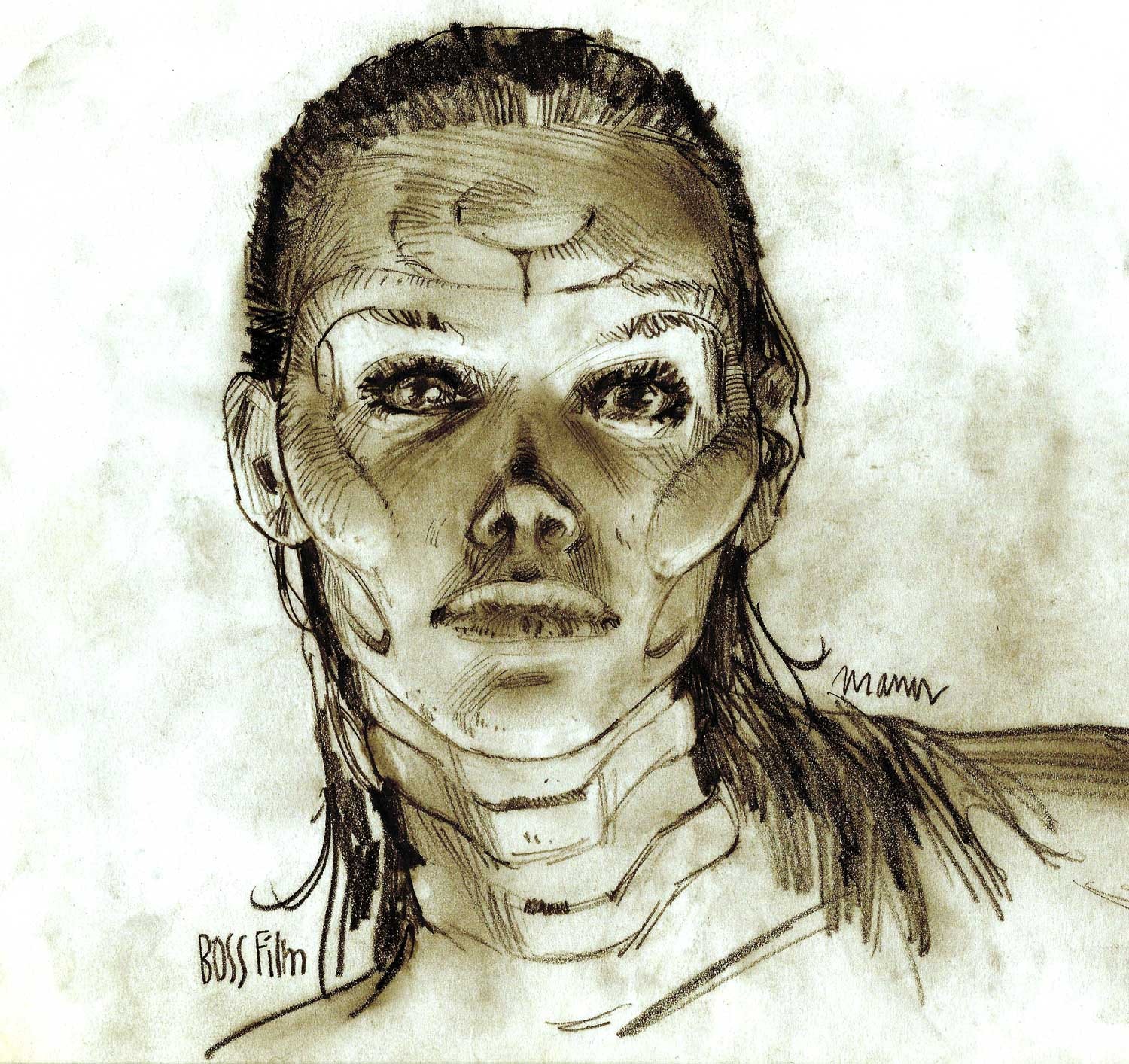

As she kills her second victim in the bathtub, Sil transforms into her alien form, with her alien anatomy pushing her human skin from beneath. This effect was first explored in concept art by Boss Film art director John Mann. It employed morphing with portions of the digital Sil, composited onto Henstridge’s face and neck.
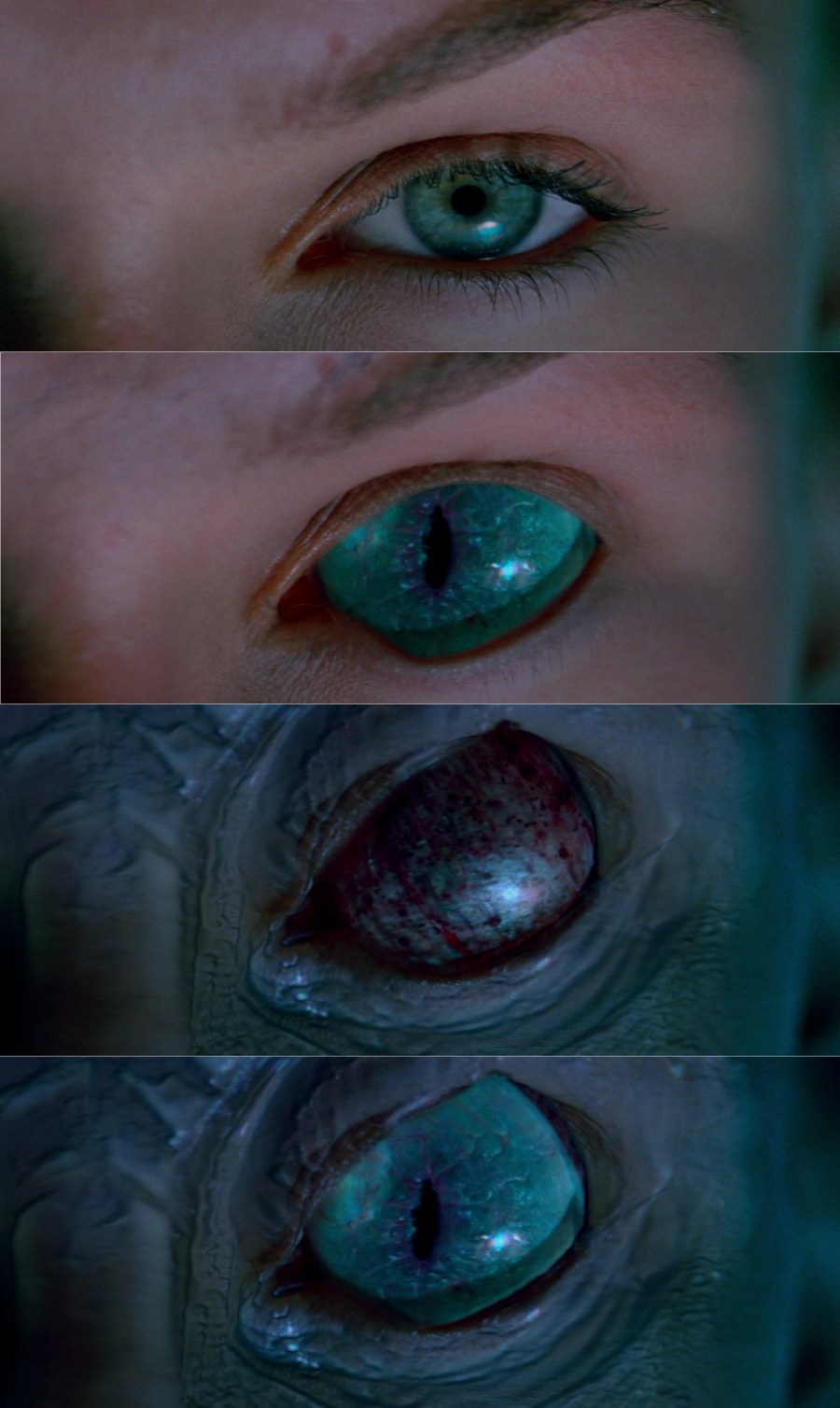
The following close-up of her metamorphosing eye was also digital: Boss Film employed two-dimensional morphing elements to fade the initial shot of Natasha Henstridge’s eye into that of a Sil puppet devised by XFX, including animation of secondary eyelids. A similar technique was employed when Sil changes back into her human form later in the garden sequence.

The final confrontation with Sil found large use of a digital creature double to perform complex stunts that could not be achieved with the puppets or suits. Species was Boss Film Studios’ first real venture into digital effects, and it also came with a tight schedule. Ellen Somers said: “the attitude of our system, from early development on, was very much geared to finding a way to accomplish a large volume of character animation in a short amount of time. Our schedule on this film was extraordinarily tight — a very short pre-production and a post-production of only about sixteen weeks. With nearly twenty shots in an end sequence requiring complex character animation, there wasn’t going to be the luxury of coming back in three or four weeks with our CG Sil, and saying, ‘is this anything like what you wanted?’ And even though we have some of the best talent in the industry here, it was questionable whether we could even deliver this type of animation within the given time frame.”

The Sil CG model was developed almost concurrently as the XFX animatronic. It started from a digital scan of a cast of the XFX sculpture by Viewpoint Data Labs, which was then refined, wireframed and fitted with translucent layers. 3D matte paintings were used to obtain textures. “You have to have texture on all these various surfaces,” said Edlund. “The patinas involved are very complex. If you look at the puppet that Steve did at XFX, it’s not just a simple surface and an interior; we’re building the creature in layers. In other words, we build the outer skin and the inner parts — the skull and the organs and the strange bones and discs that make up her arms and legs. All these are built in 3D on computer screens and have to be animated.”
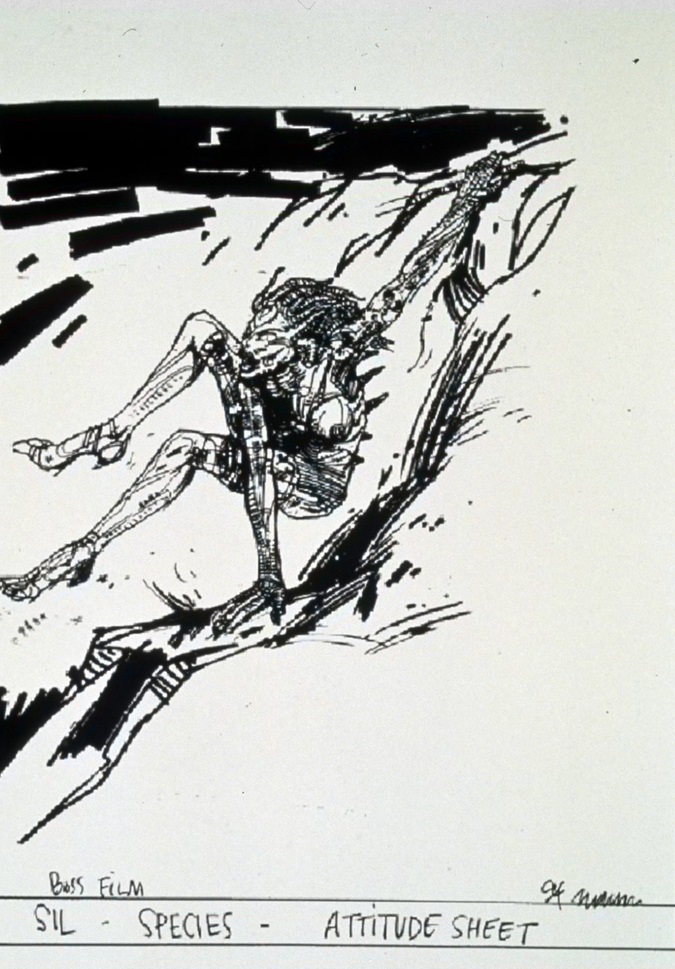
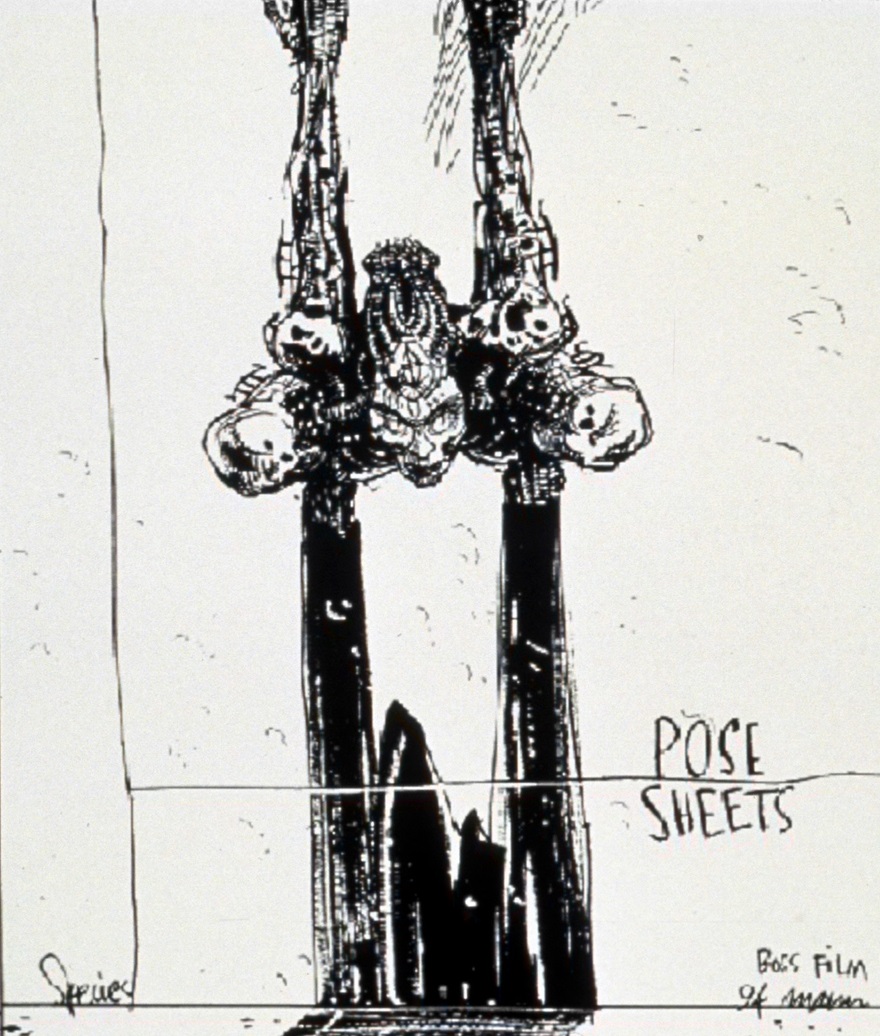
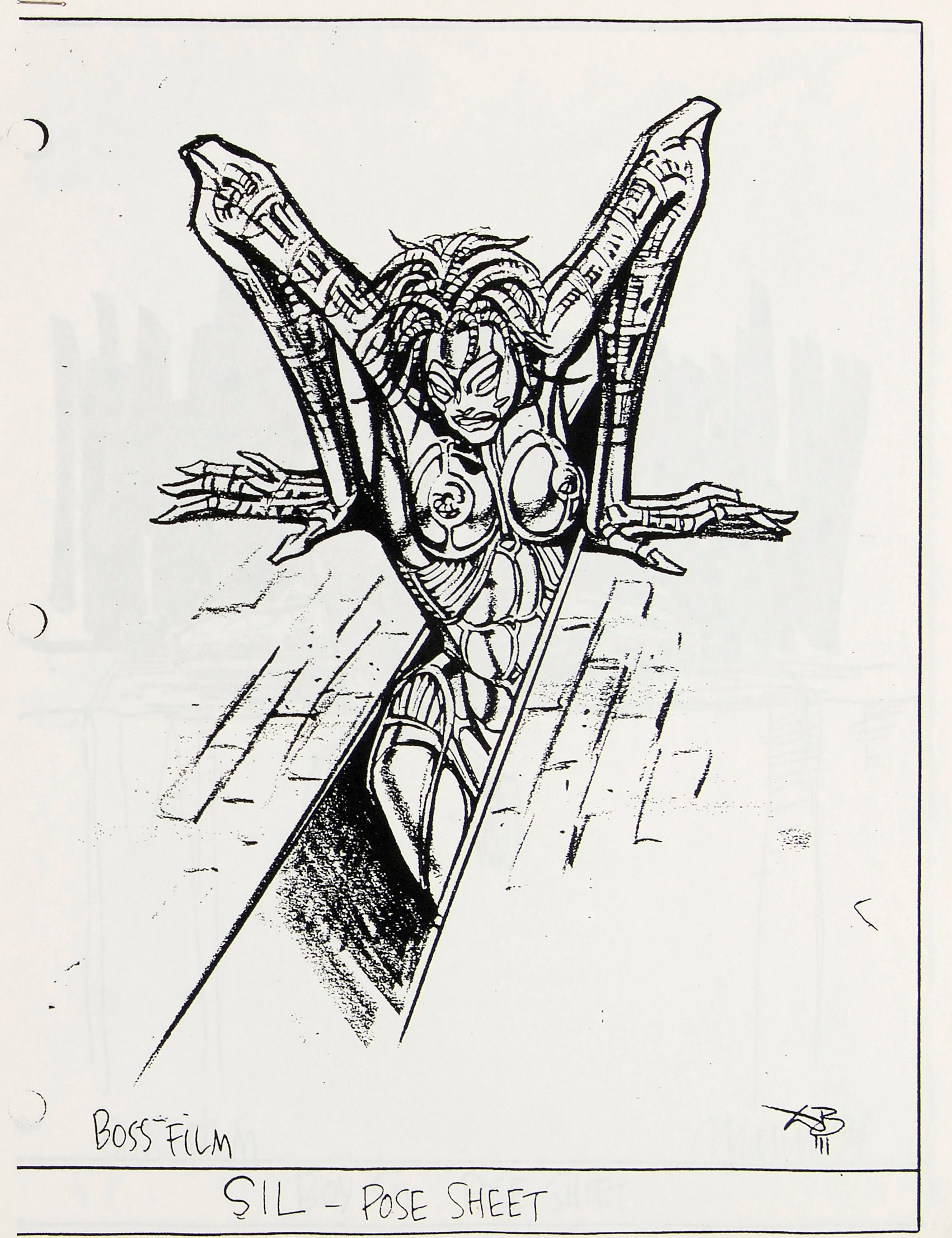
Visual effects designer John Mann was tasked with the digital creature’s motion language. He explained: “how something moves in animation gives you a lot of clues as to what kind of character it is. With Sil, the crux of the animation issue was how to make Giger’s essentially humanoid form move in nonhuman ways. Fortunately, in the CG world I could take Sil’s limbs and extend them far beyond the normal range of motion.” Various character poses were explored in concept art and storyboards at Boss Film; Mann and CGI integration chief André Bustanoby developed the digital rig.
Existing motion capture systems based on performer motion were initially considered for the animation but discarded for their practical limits, since they could not cover nonhuman movements. Boss Film’s ultimate solution was a motion capture puppet armature, similar to the dinosaur input device employed by Phil Tippett and Industrial Light & Magic on Jurassic Park two years prior. In effect, the puppet was a bridge between Boss’ previous visual effects labours and the new age of filmmaking. Bustanoby related: “we had done a bunraku rod puppet for Alien3 shot under motion control, then with Species we were going to an input device, but being puppeteered in real time, with some of the same puppeteers from Alien3. So this was like a natural extension for us.”
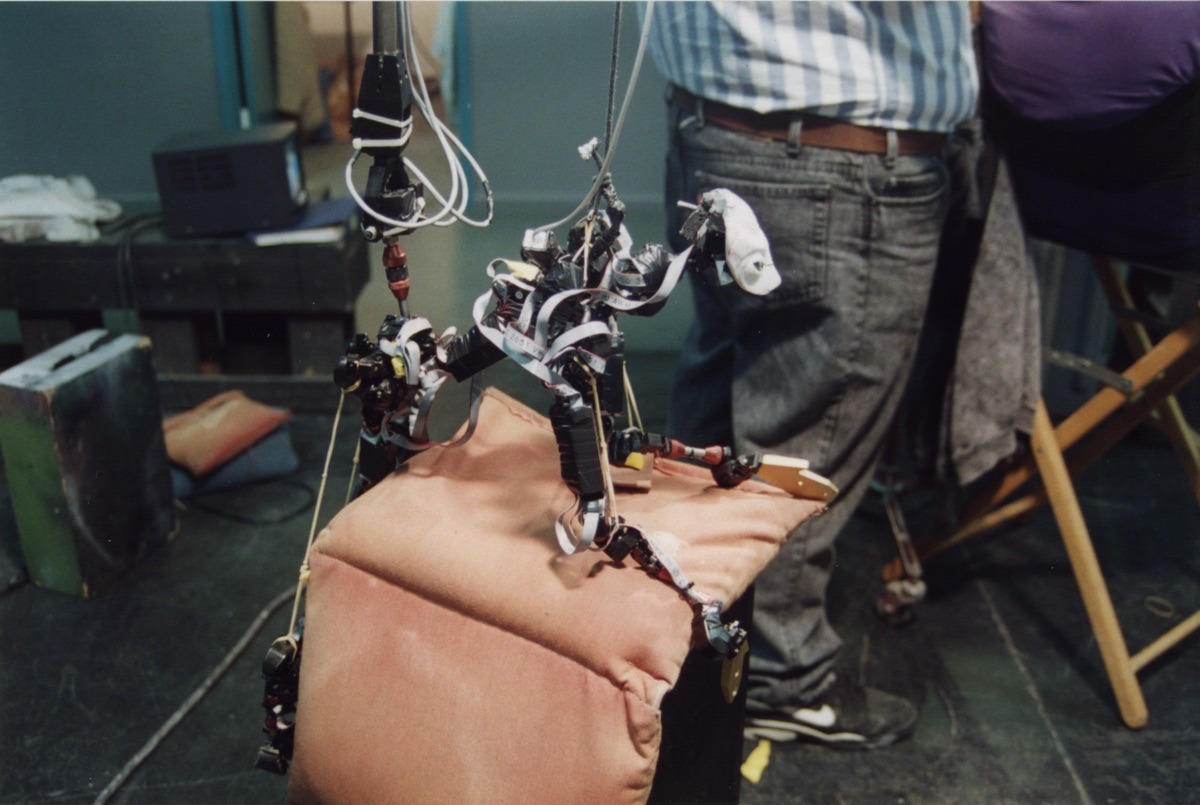
Manual movement data from the puppet was interpreted by a software, capturing it and rendering it in real time as a preliminary low-resolution digital character. Edlund related: “we felt the puppeteering approach was the way to go, because it gave us the flexibility of making Sil into this very athletic creature; and the beauty of our system is that, although the director determines the character’s basic moves and captures the spirit of the scene, the raw motion capture data then goes to a workstation where it can be manipulated infinitely.” Altogether, this allowed Donaldson to review composited scenes on a monitor and direct the actions of the puppet in real time — as opposed to a more time-consuming reviewing of dailies.
The motion capture puppet was designed and built by Bustanoby and machinist Ken Dudderar; it was the latest in a series of devices that had been developed for other projects and commercials. It had to match the XFX puppet — something that proved to be a challenge, as Bustanoby recalled: “I looked at a lot of the classical CG skeletons that are used for inverse kinematics. I met with Mike Hosch — who sculpted the Sil puppet at XFX — to discuss the creature’s anatomy, where the joints woud be if she actually existed as a living, breathing thing, and how they would interact and move. We had to have extreme stretchability for doing gymnastic type splits — joints that could go well past 180 degrees — so that the armature would have the necessary dynamics.”
The motion capture puppet was first designed in CAD software. “I took the Viewpoint wireframe used as the basis for the CG model,” said Bustanoby, “and made, in Alias, a very accurate skeleton; then I took that geometry — the XYZ locations of each joint — and transferred it into my CAD software, and proceeded to design the armature.” The geometry of the armature — including factors like proportions — had to match the CG model to allow synchronized operation. Bustanoby explained: “when you’re using a hard armature to drive just rotational data in a computer, if any length is even slightly off along the entire chain of joints, the movement will not look clean; so that’s where the machine shop expertise and engineering come into play.”
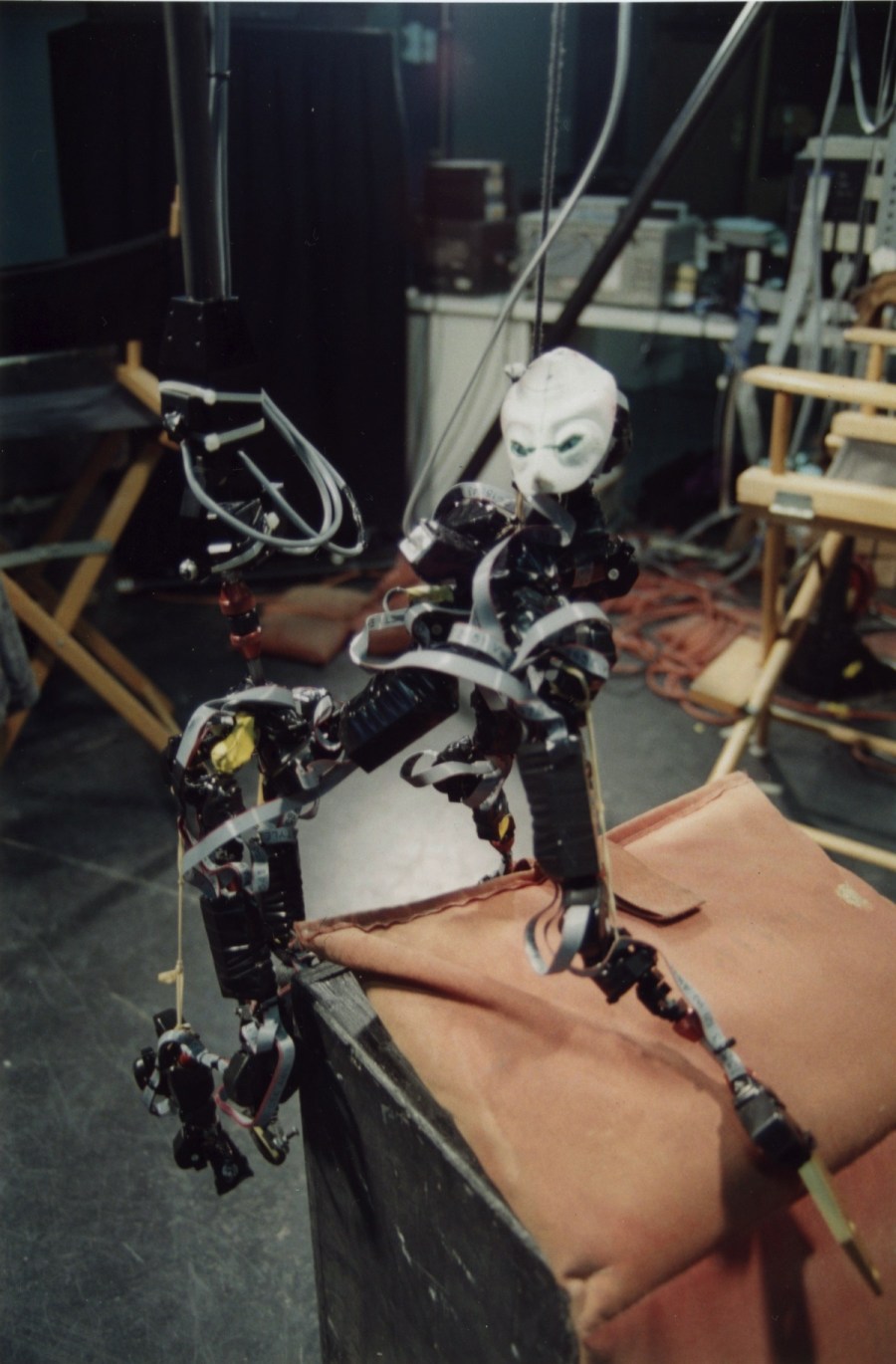
Unlike its predecessors, the armature was designed to be modular and reconfigurable. It was fitted with high-resolution potentiometers at every point of articulation, as well as microprocessor encoders that could relay motion data to a linked computer in real time. Design of electronic hardware and software systems fell on engineers Jeff Platt and Mike Wise, and technician Donny Sierer. Platt related: “we needed to create a ‘noise-free’ puppet, which was difficult, since we were using analog sensors and we required twelve bits of resolution. We achieved this by mounting a digital converter on each joint. We then used a serial bus interface to send the data to the SGI station at twenty four samples per second.”
The software that drove the motion capture system was devised by director of software development Shahril Ibrahim, as well as software engineers Hiroyuki Miyoshi and Gautham Krishnamurti. The team started with Wavefront Preview, which was customized for greater versatility and speed of computation. Improvements included the ability to combine movements captured from different takes, a better output appearance of the low-resolution characters, as well as the incorporation of camera tracking that bypassed the need for motion control. Ibrahim noted: “we applied that technique to our motion capture so that the virtual camera or the camera pass that went around our digital Sil would precisely match what was shot on the live stage. That way, our CG character would be locked to the background and not look as if it was floating in space.”
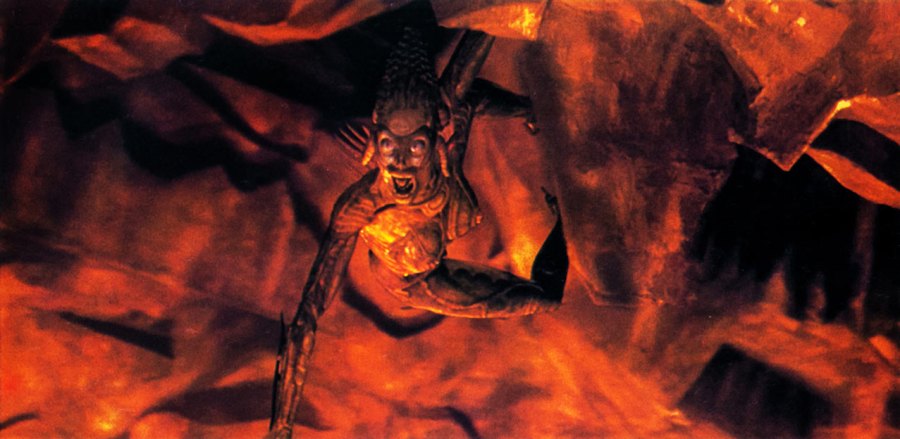
The software could also effect changes in camera orientation and placement, something that became helpful when last-minute changes in the film’s climax dictated a different camera point of view. Ibrahim recalled: “when the ending of the film was altered somewhat, the whole setup of our end sequence changed slightly; and instead of the camera facing Sil one way in a particular shot, Roger wanted it to be facing her from the opposite direction. Without having to redo the take that had already been selected, we could fix it by simply shifting the virtual camera to the other side.”
The motion capture puppet was operated by four crewmembers — including lead puppeteer Craig Talmy — in a rough half-scale representation of the cavern set. Talmy explained: “my job was to correspond the puppet’s performance to background footage of the cavern, which consisted of prerecorded film dumped into the computer and played back at a given frame rate. If a shot required a lot of intricate moves, we could slow the playback down to maybe three frames a second — whatever was needed to get the take.” The puppeteering crew performed up to more than a hundred takes in a day, which translated to roughly one or just a few serviceable shots. Talmy continues: “the system allowed us to accomplish far more than a standard CGI department doing key-framing. Plus, it gave the director room to reject something or change his mind during a shot without slowing things down.”
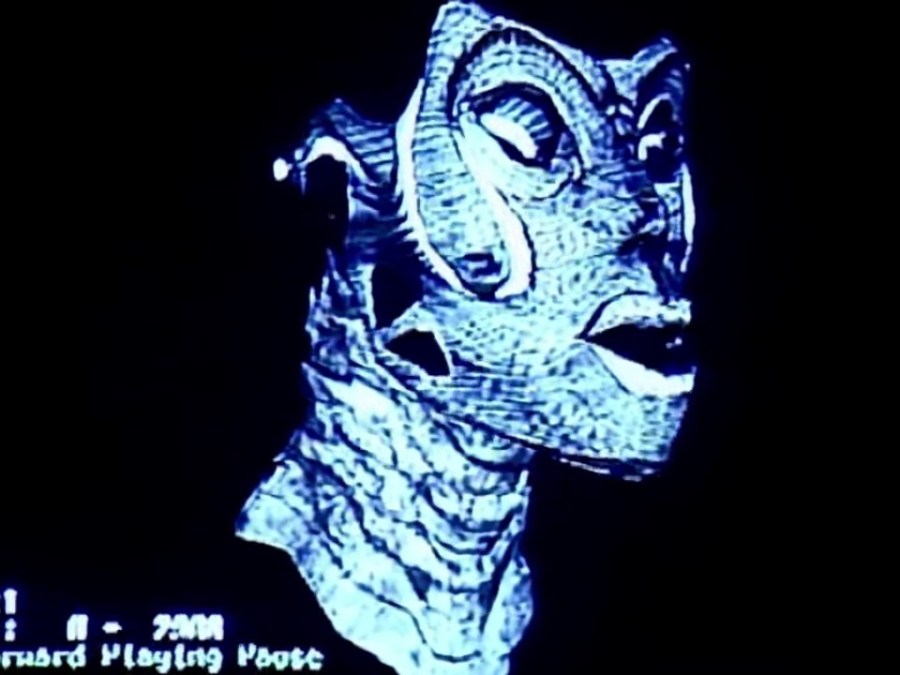
A separate challenge altogether was facial animation, for which a breakthrough system was devised. It employed similar technology as the motion capture puppet, allowing direction of the digital Sil’s facial expressions in real time. Dudderar and Wise designed a tabletop hand-armature device with right-hand and left-hand controls that controlled the various elements of the digital Sil’s face — brows, eyes, nose, cheeks, lips and mouth. The control channels featured therein were pre-programmed to produce up to thirty distinct facial expressions; that number could be increased to unlimited nuances by combining poses and manipulation sliders that controlled the weight of each movement. Ibrahim said: “our puppeteers preferred the hand control approach over optical approaches that use human facial capture, because they felt they had far greater dexterity with their hands, and moves could be repeated easily.”
The facial animation was first performed and then added to the existing body shots. This was achieved by making a second pass on the Sil motion capture sequences, all directed by Donaldson. A last-minute addition to the software enabled a link between facial and body animation, allowing the full animation to be viewed in real time. After one take was approved, secondary, nuanced motion — breathing, for example — was added before transferral of the data for final rendering.
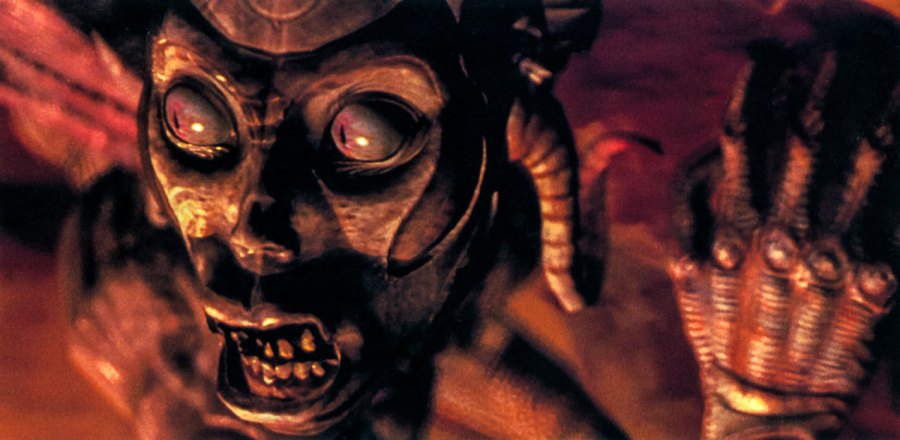
Conveying Sil’s translucent layers was a great challenge, with the model featuring layers of skeletal structures, organs and the signature disc structures — a feature most complex and difficult to accomplish for the time. Boss Film artists devised more than a hundred individual colour and texture maps that had to match the XFX puppet. Somers related: “at XFX, Steve covered his finished puppet with KY jelly to make the clear plastic appear more life-like. Duplicating that look on our computer-generated version took an entirely separate R&D effort. Our programmers ended up writing what we now refer to as ‘KY shaders’ to precisely mimic the light refraction and specularity changes caused by the jelly.”
Edlund added: “[the digital Sil] is far more complex than a dinosaur in that you’re mimicking someone who has superhuman qualities, and yet has these transparencies. I’m not belittling the achievement of Jurassic Park in any way, because it was a magnificent achievement in digital animation, but the dinosaurs had very limited facial expression, and you couldn’t see through them. In Sil’s case, she has that interior Gigeresque structure, and her face is translucent. You have layers of depth in three dimensions that all have to be modelled in the computer and be balanced.”
 Monster Legacy