
Paul W.S. Anderson’s Alien Vs. Predator script bore influence from the very first comic books bearing the title, namely Aliens Vs. Predator: Prey, with the pyramid concept inspired by early drafts and concept art for Alien. The director also extrapolated from Predator 2‘s aesthetic. As he explained, “one of the things that struck me was the interior design of the Predator spaceship. It was very Frank Lloyd Wright, very Aztec; and because Wright was influenced by Aztec culture, that made me think, ‘the Predators have clearly been visiting Earth for a long time, and if their spaceship looks like something on our planet, it isn’t because they were influenced by us — we’ve been influenced by them.'”
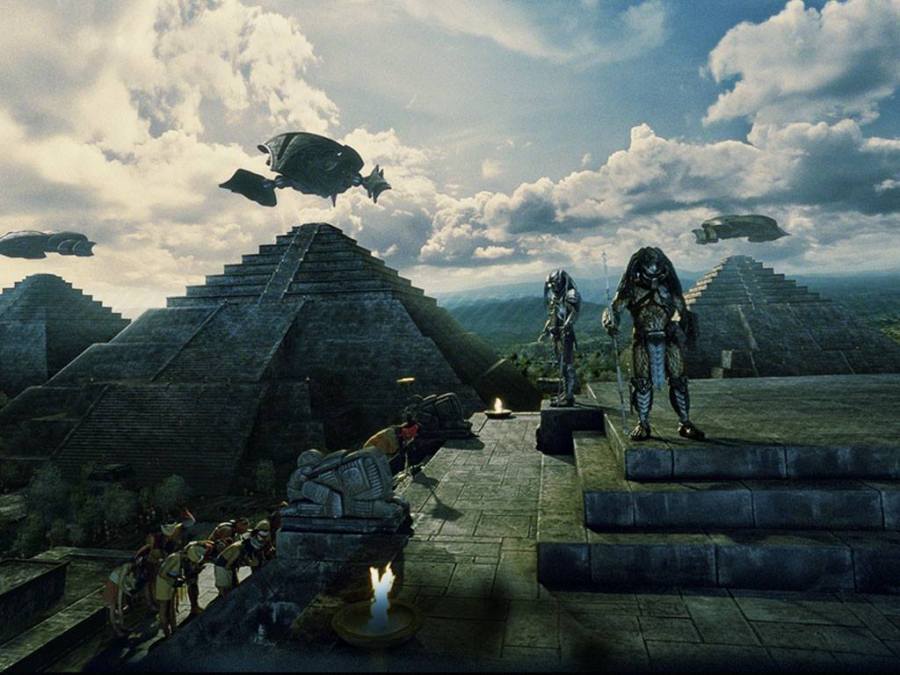
The backstory of the film thus took shape, with the Predator race finding Earth in ancient times and teaching early human civilizations how to build, all with the sole purpose of creating structures for their rituals and harvesting hosts for “the perfect prey”. While the idea of a ritual that involved hunting Aliens was lifted from the comic books, the film version would have Anderson’s own spin on it. Exactly what passage the Alien hunt meant to the Predators apparently fluctuated during production, with slightly contrasting accounts given to different publications. It was generally accepted that the starring Hunters would be young — certain sources stating them as younger than the originals — having to prove their worth: a coming of age or manhood ritual. Yet, in one interview with Empire Magazine, Anderson elaborated: “the idea is that only once they have hunted enough humans do they qualify to hunt Aliens; then they become Elders.” In the shooting script, the hunt is suggested to be indeed a manhood ritual, and a confused Lex asks: “are you saying they’re, what… teenagers?”. This brief exchange was cut from the theatrical version, and restored in the unrated director’s cut.
Of his view of the Predators, Anderson said: “they’re cool characters whom you can sympathize with. They clearly have a code of honour, like the samurai. It may not be the way you or I would behave, but they live by their own value system, and that’s something you can appreciate. They’re very noble creatures. So, in that way, it’s easier to get into them than the Aliens. They’re more humanoid. They’re hunters.”
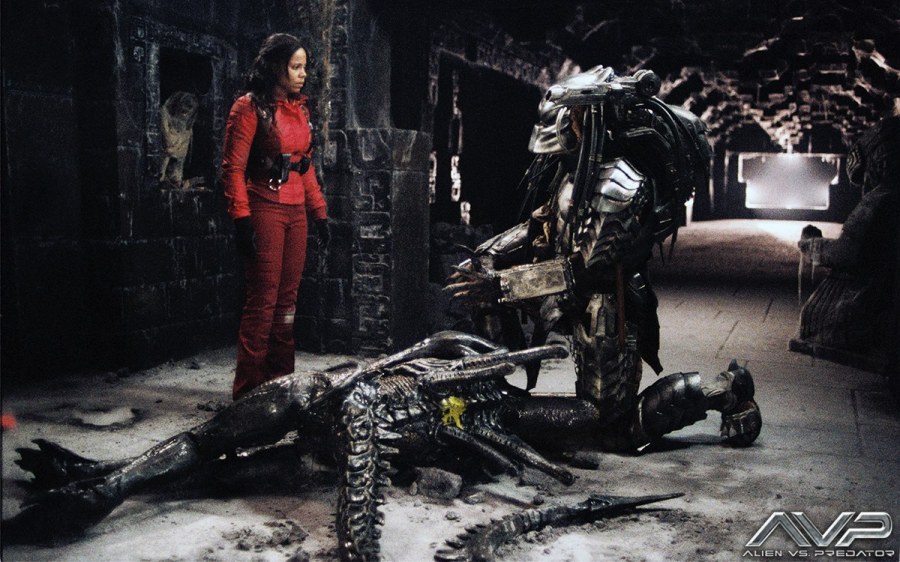
Matter of fact, another element taken from the comics is the alliance between a Predator and a human woman. Anderson was also inspired by the film Hell in the Pacific. He recalled: “it’s World War II, and two fighter pilots end up on the same island. They hate each other and are enemies, but ultimately they have to cooperate against a greater evil to survive. And that’s pretty much the model for this picture. By the film’s end, you end up with humans and Predators having to work together before they’re overwhelmed by the Alien threat.”
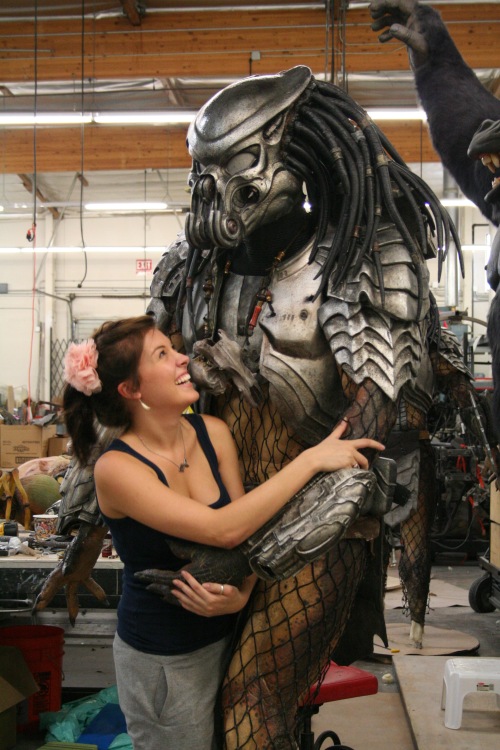
Given their previous work on the Alien series, Alec Gillis and Tom Woodruff Jr. of Amalgamated Dynamics were approached for the project. To them, the Predator was something of an uncharted territory, having only been peripherally involved in the original’s creation. In addition, unlike the Aliens, there were no previous moulds owned by the company to kickstart suit production from — the Predators would have to be built from the ground up.
The requirements for the film were numerous: ADI had to bring to the screen both titular creatures. The special effects company worked in strict collaboration with visual effects supervisor John Bruno; they all agreed that the film should use as many practical effects as possible. “One of our goals in this,” Tom Woodruff Jr. said, “secondary to just coming up with cool-looking creatures and satisfying the needs of the show and the director, was to make a real fanfare on behalf of animatronics, rubber work, men in suits — creature stuff that has sort of been pushed aside in favour of the digital aspect, which has really happened in the last few years.”
Bruno himself added: “the first thing I did [on Alien Vs. Predator] was come up with this rule: ‘do everything for real, and what we can’t [do for real] will become an effect. But that effect could be a puppet, a model, a miniature or CGI. Using a puppet or a model means it’s a practical element within the shot, and that all you’re doing is compositing other things into a real lighting situation, which is quicker to complete.” Anderson concurred: “John hates visual effects. His first rule is, ‘well, do we have to do it as an effect?’ You know, if he could go out, capture a Predator, and breed a couple of Aliens, that would be the movie we would make. We would all be wearing armoured suits and we would be shooting a documentary.”
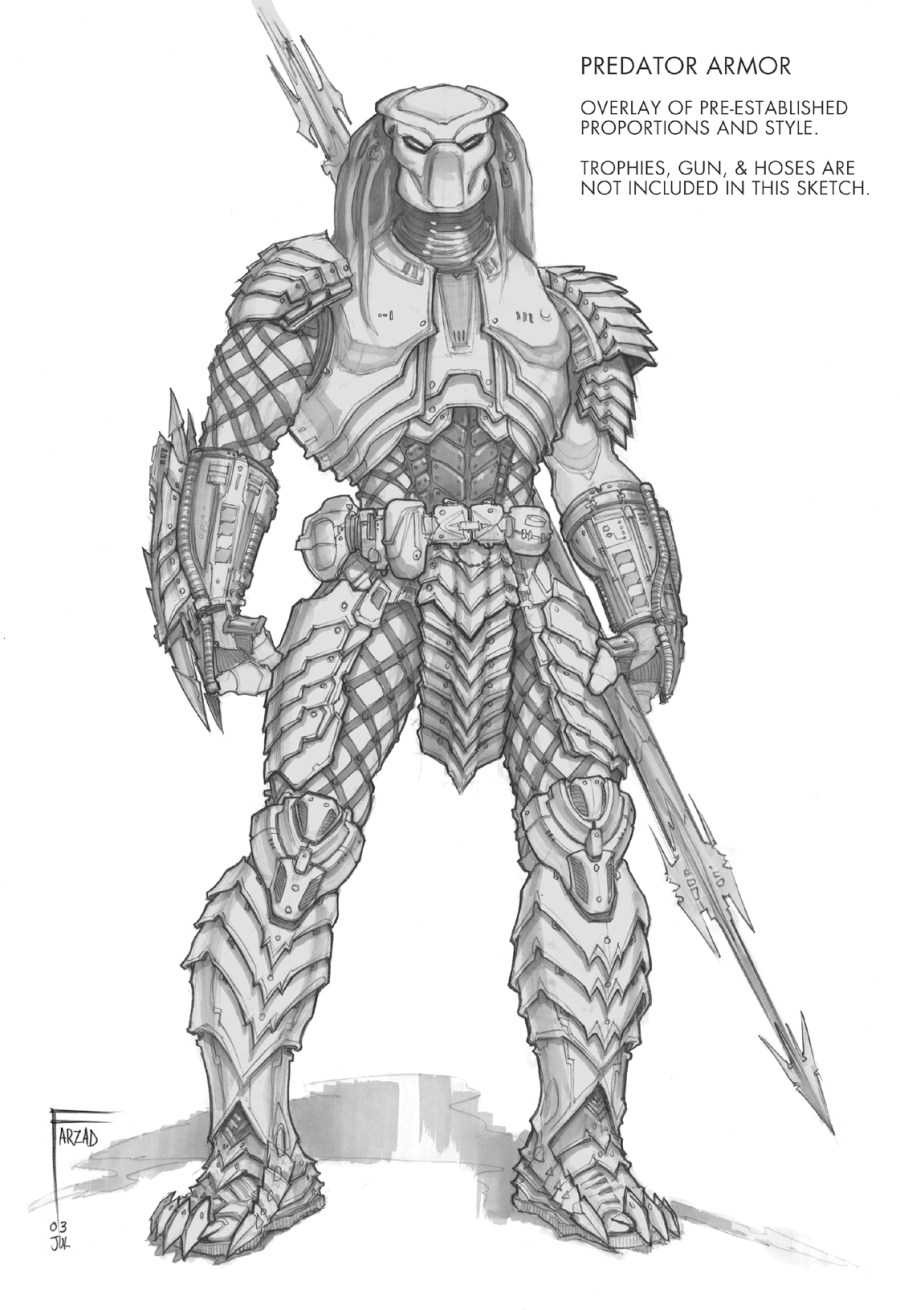
Anderson decided that his Predators should be more imposing than before, with a more muscular build and more extensive protective armour. The choice also stemmed from the simple notion that, since they would be fighting such formidable opponents, they should come prepared for the task. Anderson mused, “we figured that, for the Predators, hunting Arnold Schwarzenegger and Danny Glover had been like hunting squirrels. When you hunt squirrels, you don’t need that much armour; but when you hunt Aliens, you know there is going to be acid blood spraying aroud, so you need more of it.”

Of course, the designs were rooted on previously established aesthetics. “This new armour needed to retain the aesthetic of the Predator culture we’d seen before, but extrapolated to full body coverage,” said Gillis and Woodruff. “Just what is the Predator aesthetic? The first film showed us a mix of Asian and tribal influence along with a rough-hewn primitive quality to the body armor. Predator 2 introduced a more ornate, almost insect-like look. Our job was to turn these eclectic motifs into a unified aesthetic. The Predator society builds sophisticated spaceships, yet they should not look as sleek and hi-tech as a Star Wars Stormtrooper. They are a tribal culture, yet their look should not be as primitive as the Orcs from The Lord of the Rings. They are also a warrior culture, so the ornate cannot conflict with the practical. Huge samurai-style decorative projections could be a disadvantage in a fight with an Alien, for instance.”

As with the script, the original comic books were fairly influential. Woodruff and Gillis continue: “this film owes as much to the Dark Horse comic series as it does its cinematic predecessors. In keeping with that, we decided that the Predators themselves should reflect a comic book-style silhouette, possessing more heroic proportions: wider shoulders, narrower waists, smaller heads. We also lengthened their dreadlocks to help punctuate head movement.”
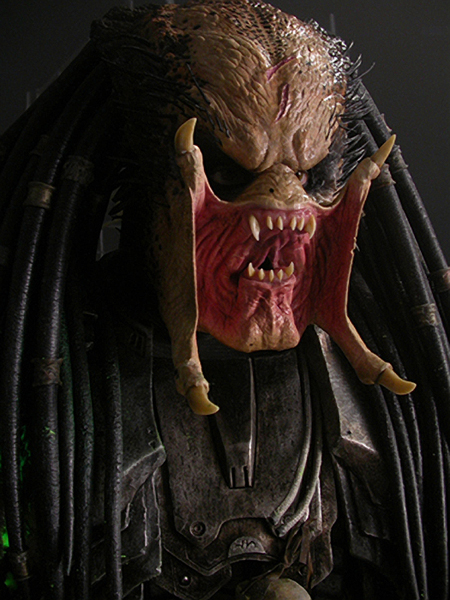
With the same rationale, the Predators’ facial connotations were redesigned. Of the three Hunters that enter the pyramid, only the one dubbed ‘Scar’ reveals its visage. As he was the lead Predator, Anderson wanted him to appear somewhat handsome, almost like a romantic hero; Gillis jokingly referred to him as “the Brad Pitt of Predators.” He and Woodruff explained: “because Scar teams up with the film’s heroine, Lex, we thought of him as a romantic leading man. […] This Predator was not here strictly for scares as before, but as an actual character! He was to spend more time without his mask, and needed to convey emotions such as rage, respect, pain, surprise, and even a bit of sadness.”
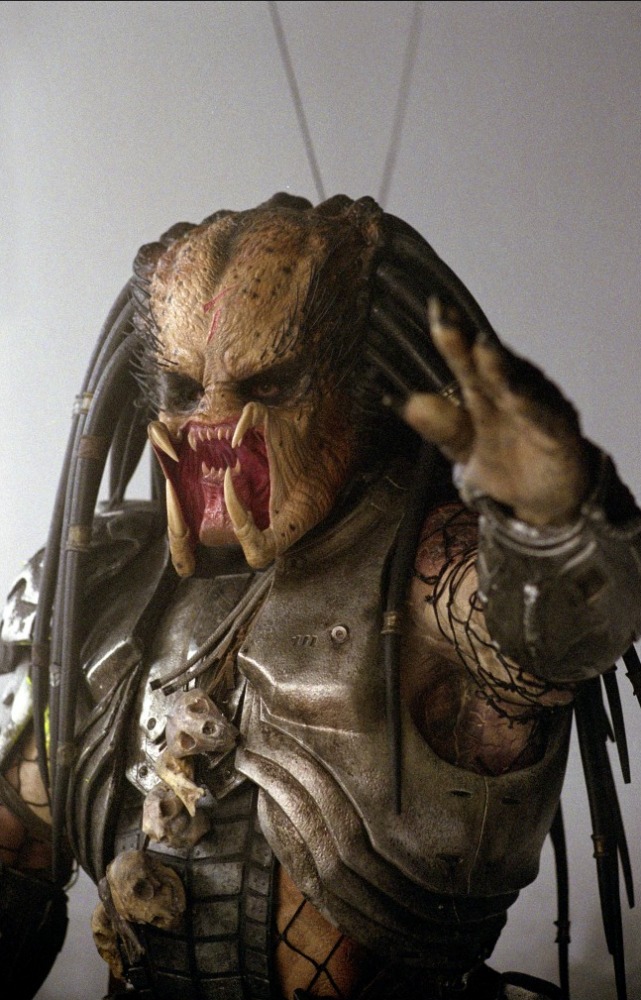
Traits that enforced this direction included more humanoid eyes, a row of upper teeth in place of the originals’ fangs, an emphasized chin — with the mandibles moved sideways rather than wrapping the mouth — and a more swept-back head crest. The eyes were originally meant to replicate the appearance of the originals, but were ultimately painted with warm golden tones, with a larger iris. The colour scheme of the body also reflected the new direction: “he became sculpturally more regal — dare we say it: handsome? — and in color scheme, we opted for less pale, clammy amphibian tones and more human skin tones,” said Gillis and Woodruff.

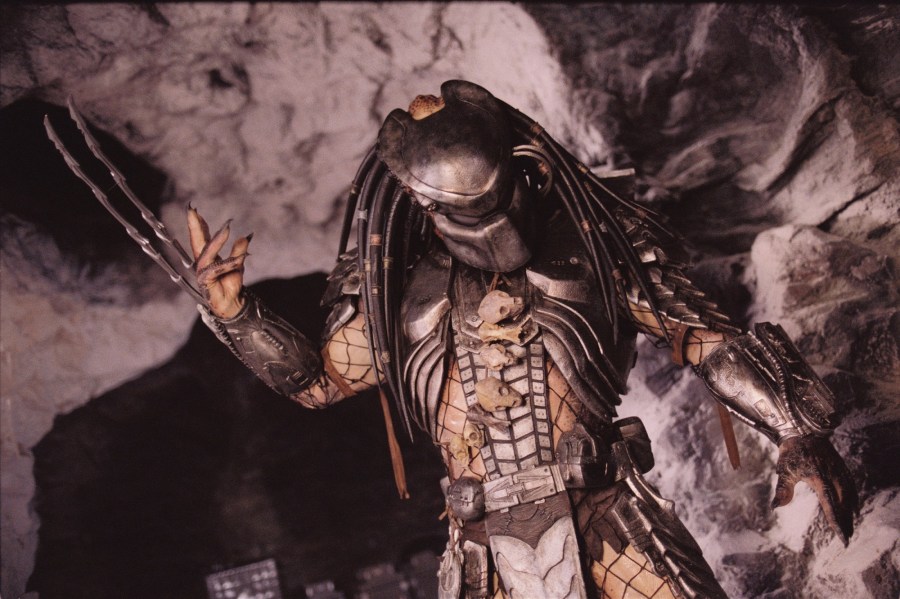
The Predators’ armoury was also upgraded, starting from concept art mainly by Farzad Varahramyan, Joe Pepe and Carlos Huante. More extravagant concepts, such as giant battle claws in some of Varahramyan’s drawings, were discarded. The wristblades became more aggressive, and could further extend for a better range of attack, with the Chopper Predator’s being singular, scimitar-like blades; the combistick became a thin spear, likewise collapsible; a new version of the net-shooting gun was included; the smart disc was replaced by a collapsible throwing star (whose collapsing was handled digitally); and the shoulder cannons were devised in different calibers (or sizes) in-keeping with their Alien-slaying purpose. A new weapon was the streamlined ceremonial dagger, said by Anderson to have ritualistic relevance. Due to time and budget restraints, the Predator masks were the main expedient to convey individual characters, with six different designs chosen for the Predators involved in the ritual hunt, the flashback Predators, and the Elder seen at the end of the film.
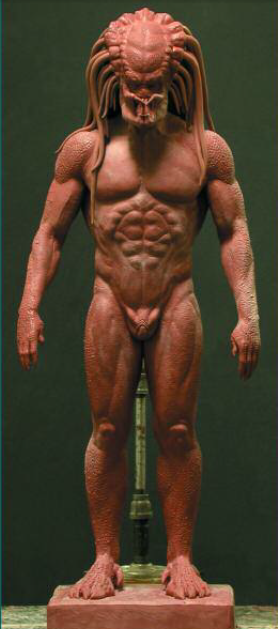
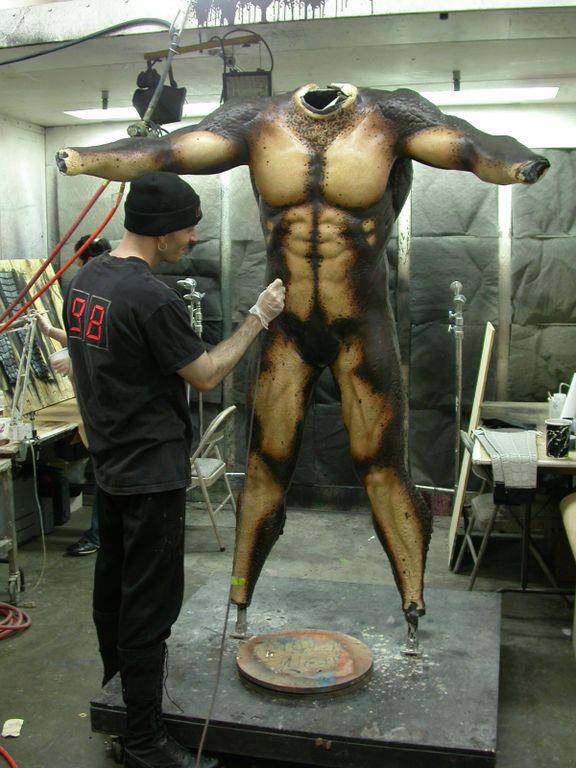
Following a scripted sequence where the Hunters would emerge from cryosleep, intended to be shot as a miniature, a third-scale naked Predator was first sculpted by Jeff Buccacio, complete with thorough anatomical detail, and used as a base for a third-scale — ultimately unused — puppet. While the cryosleep sequence was eventually cut from the final script, a full-size Predator body was sculpted with the same rationale — rather than incorporating basic armour components as in previous productions, it was a naked form, which would later be cast in multiple copies and adorned by different armour modules and helmets. Sculpting the armour separately would also benefit Whyte’s performance: “the armour pieces would shift and move on his body, instead of being locked down to the rubber,” said Gillis.
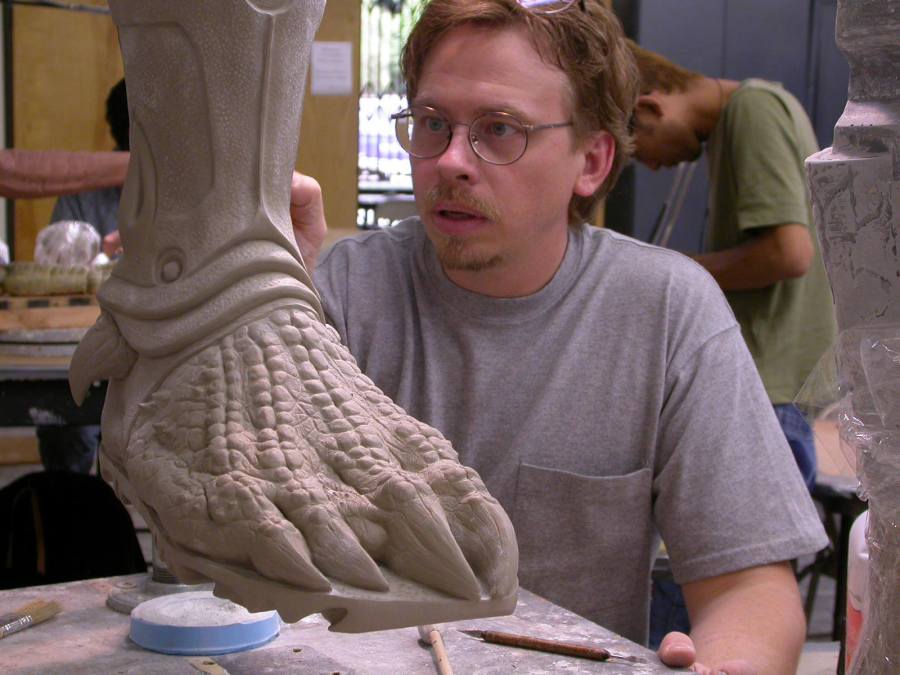
The sculpture started from a cast of 7’1″ tall performer Ian Whyte. “Ian was a former basketball player whose physique was just perfect to work over,” said Gillis. “He had a lean, V-shaped body to begin with, which enabled us to go for more heroic proportions in the Predator.” Sculpting was undertaken by Bruce Spaulding Fuller, Don Lanning, Steve Koch, and sculpting supervisor Andy Schoneberg. For the head, focused upon by Schoneberg and Fuller, the mandibles were sculpted separately to later accommodate animatronic components. The weapons and armour were sculpted by Schoneberg and Mike O’Brien, among others.
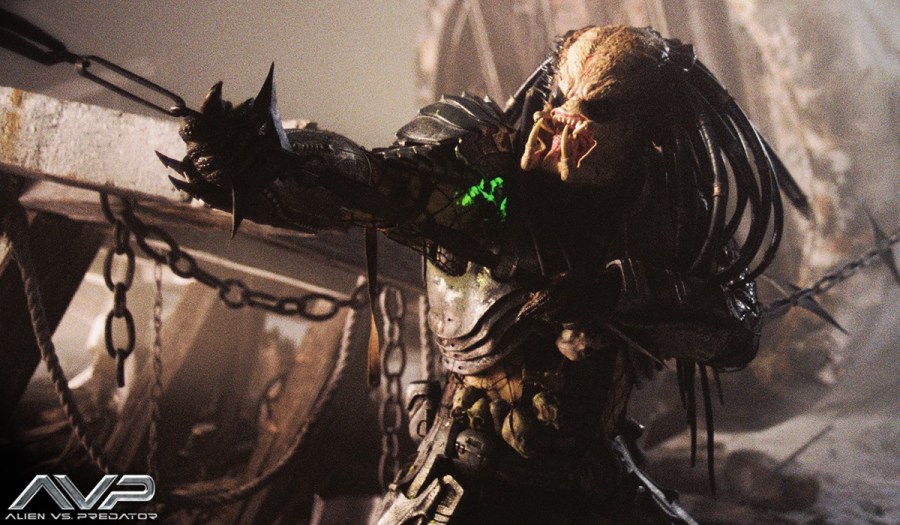
Given the extent of intense action and punishment the suits would have to undertake, as well as the tight budget and production schedule, it was decided to cast the Predator skin in durable and lightweight foam latex, with teeth in dental acrylic, and armour and weapons in fiberglass or semi-flexible urethane. A total of 16 body suits was devised — as well as a stunt dummy — painted by Mike Larrabee and Briana Bellis, among others, with an equivalent amount of armour sets, for a total of over five hundred individual armour pieces and weapons produced. Completing the look of the heads were individually-glued dreadlocks and quills.
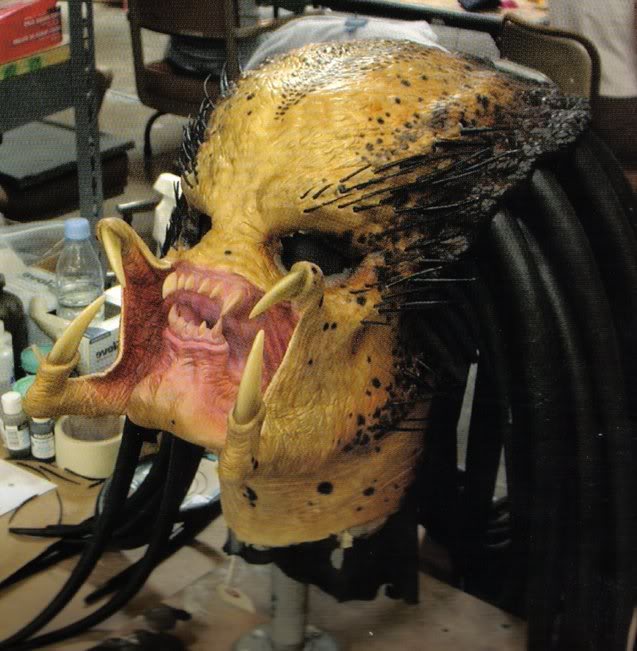
The Predators’ radio-controlled heads — three in total — were mounted on a cap and had a fiberglass core that was covered by foam latex skin. Mechanized by David Penikas, they could perform a full range of expression — mandibles, jaws, cheeks, brows — thanks to 27 servomotors installed within. A total of three to four puppeteers was needed to control one head. “Subtlety of facial expression was especially critical to the Predator,” said Gillis and Woodruff, “as he was to be a more sympathetic character this time around. Recent advances in smaller, more powerful motors helped us give him a greater range of movement than was previously possible.” Once on set, traditional KY jelly applications were kept to a minimum. “We reduced the amount of slime coating of prior incarnations, deeming that more of a trademark of the Alien than the Predator,” said Gillis and Woodruff.
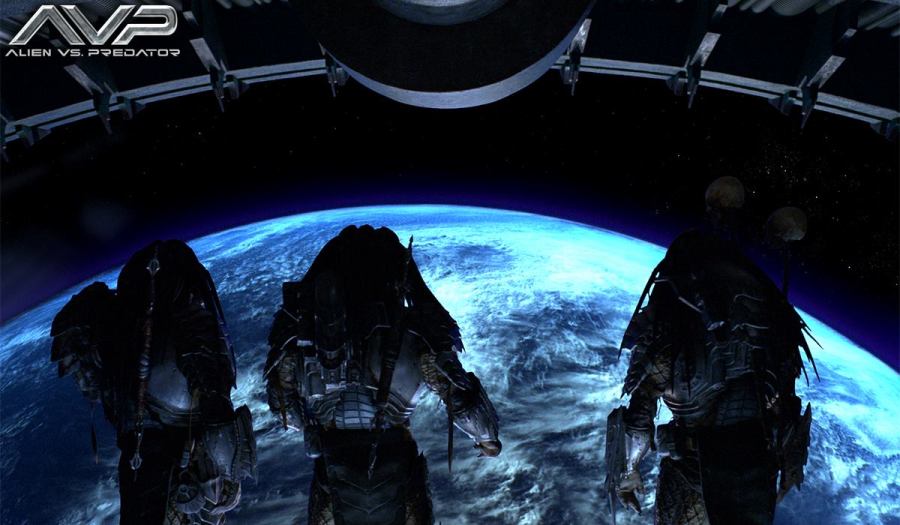
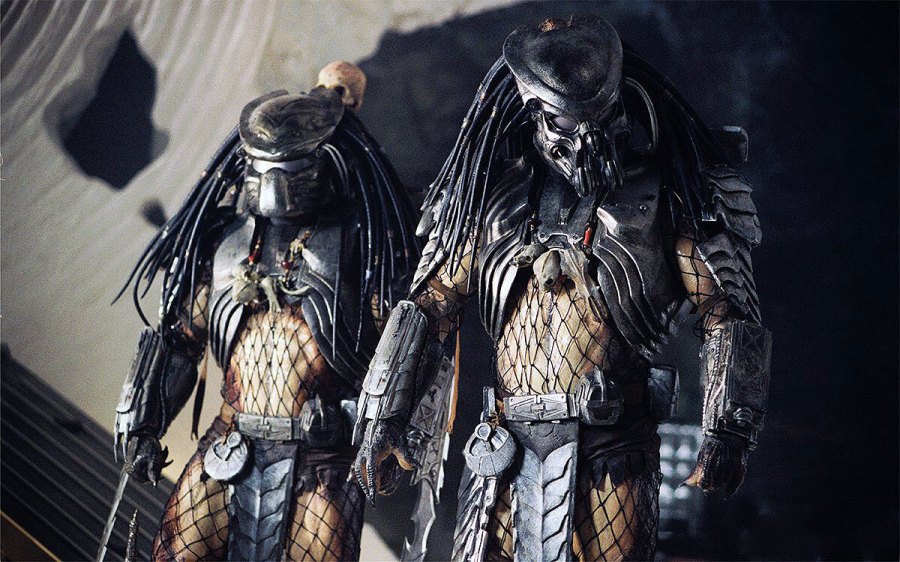
While the original script featured five Predators entering the pyramid, the final number was reduced to three. They are as follows: Chopper bears scimitar-like wristblades — over three feet long when fully extended — with a mask characterized by gill-like patterns on the sides, as well as impaled skulls mounted on the backpack; Celtic, aptly named after the Celtic influence on its mask, is the initial leader of the group, with a net launcher on its left forearm gauntlet; and Scar, the ultimate lead Predator, whose mask was conceived as an update of the original’s, with more defined shapes. Ian Whyte played all three, depending on the shot, with stunt performers — often standing on offscreen boxes, or blocked in frame in such a way to reach Whyte’s height — filling in for the other Predators. A stuntman was also needed for the sequence where the Scar Predator is set on fire by Weyland; the suit and gear were covered in additional KY jelly and a fire retardant compound.
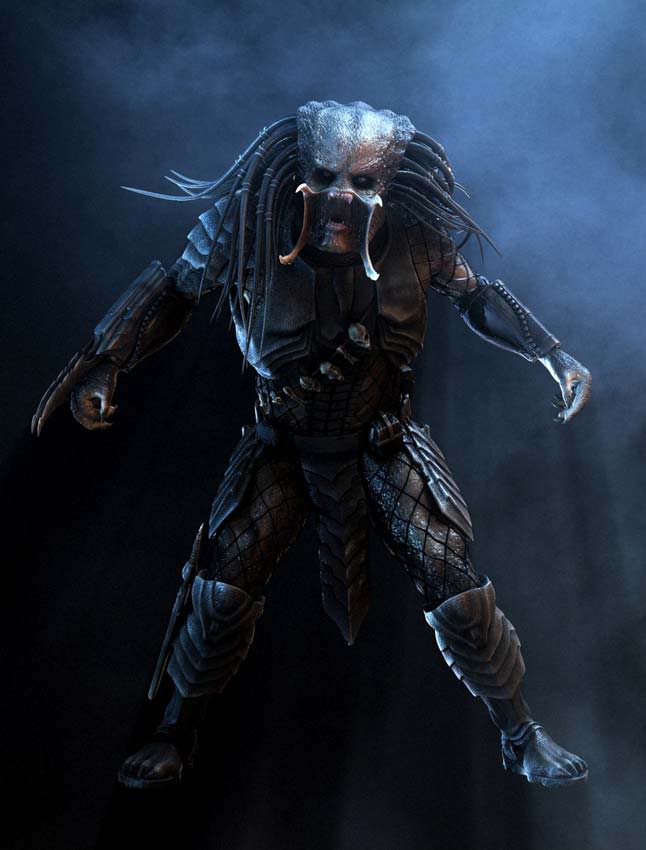
The majority of the shot sequences — including tussles with Alien performers and animatronics, and wire stunts — were duly performed by the practical Predators on set. However, more complex stunts ended up requiring digital versions. Such is the case, for example, of Scar’s sneak attack on the Alien Queen. The task fell to Moving Picture Company, under visual effects supervisor Adam Valdez. Originally, digital Predators were not on MPC’s slate; production had intended to use wire work for certain sequences, but after a number of failures, it was decided to opt for computer-generated versions, based on separate scans of the suit and mask.
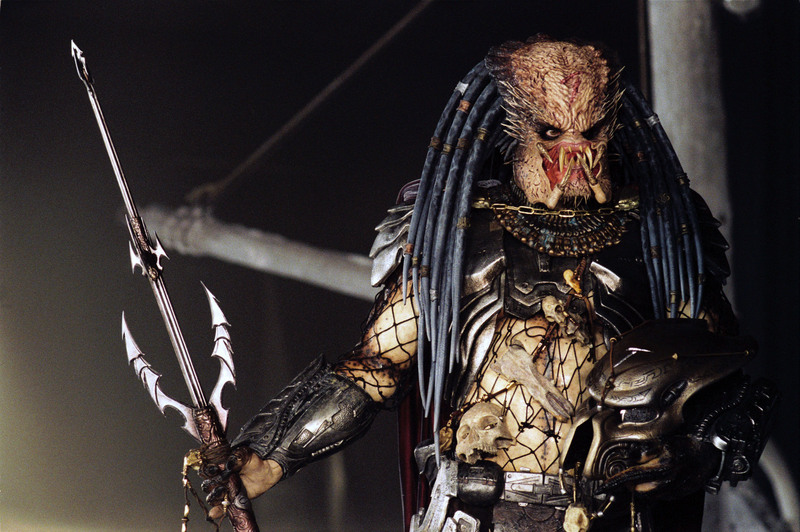
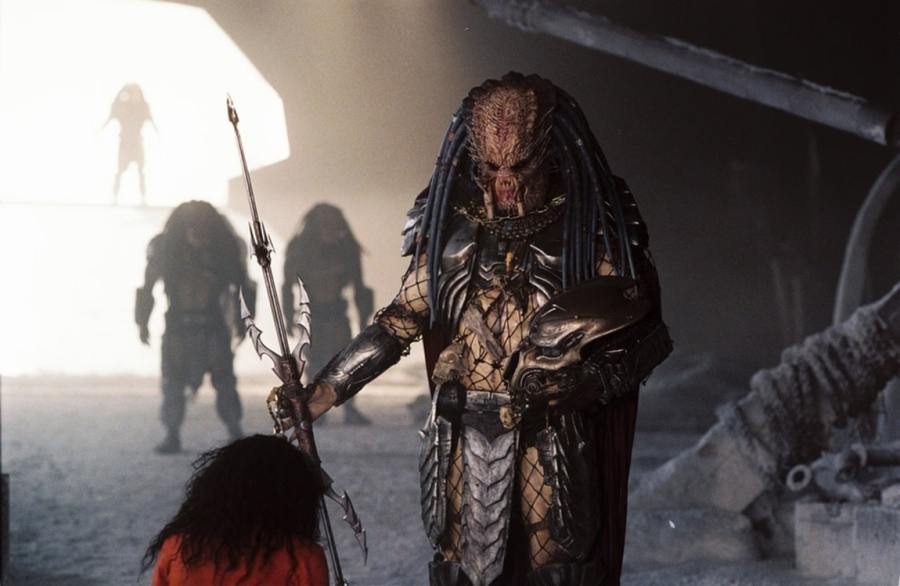
After the Alien Queen is defeated, Scar dies before Lex’s eyes, and the Elder Predator uncloaks, followed by its crew and the spaceship behind them. The Elder Predator design started from Scar’s: its final head sculpture doubled as a base for the Elder, with the same sculptors — Schoneberg and Fuller — endowing it with more scarring, rougher skin, and engraved mandible tusks. As with Scar, the Elder had a radio-controlled head and was played by Ian Whyte. Its spear, gifted to Lex, transitions between two practical versions — one extended, one collapsed — through a quick animation by Double Negative. The rest of the crew that carries Scar’s corpse — the stunt dummy — away was composed of four stuntmen, who were multiplied in post-production.
For more pictures of the Predators, visit the Monster Gallery.
Previous: Predator 2
Next: Aliens Vs. Predator: Requiem
Also see: StarBeast — Alien Vs. Predator
 Monster Legacy
Great article on the making of this film. As a big fan of the Dark Horse Aliens and Predator comic titles back then, I remember being really disappointed when this came out, expecting a closer adaptation of the comic it was named after. I still have my glow-in-the-dark cup for it from the movie theater, though ha ha! I enjoyed the second one because of all the creative and unexpected character deaths, but I’ll have to go back and give this one another watch.
Thank you for reading! I was a kid at the time and had no knowledge of the DH comics so I had a great time. Rewatching it recently it doesn’t hold up that well but the production values and creature effects are always great. Try and check out the unrated version!