
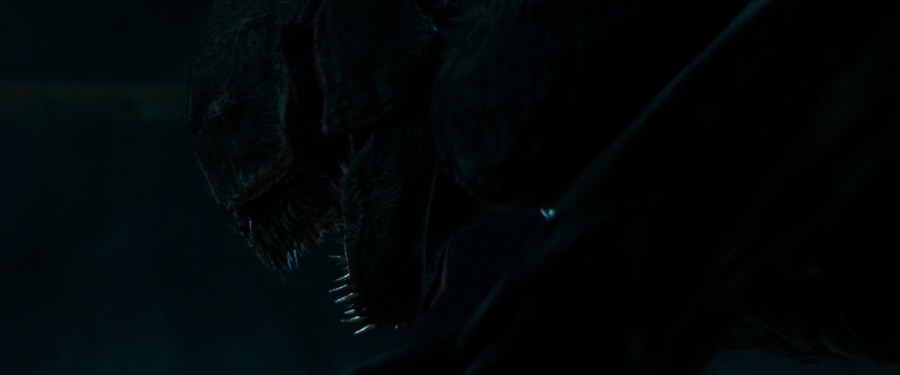
A Quiet Place director John Krasinski elaborated the origin and properties of the film’s creatures, drawing inspiration from the effects of invasive species of Earth. Rather than being sapient invaders with a defined goal, the monsters would be nothing more than hyper-evolved animals from another world, introduced into Earth’s ecosystems. “One of my favorite movies I love to watch is RocknRolla,” said Krasinski, “and they tell that whole story about the crawfish in the Thames and that’s what I mean, the introduction of something that can’t be held back.” The director likened the invasion to “releasing wolves into a day care center. That’s how the world responds.”
Early in pre-production, it was decided that the creatures would be wholly digital effects, supported by a performer on set. Industrial Light & Magic was hired to design and bring the monsters to life, in close collaboration with Krasinski and production designer Jeffrey Beecroft. Visual effects supervisor Scott Farrar recalled: “it was important to John [Krasinski] that its proportions not be humanoid. It’s got two legs, and an arm, and a head, and all that stuff, but it had to look different enough where it couldn’t be a guy in a suit. So from the get-go it was going to always be an animated character.”
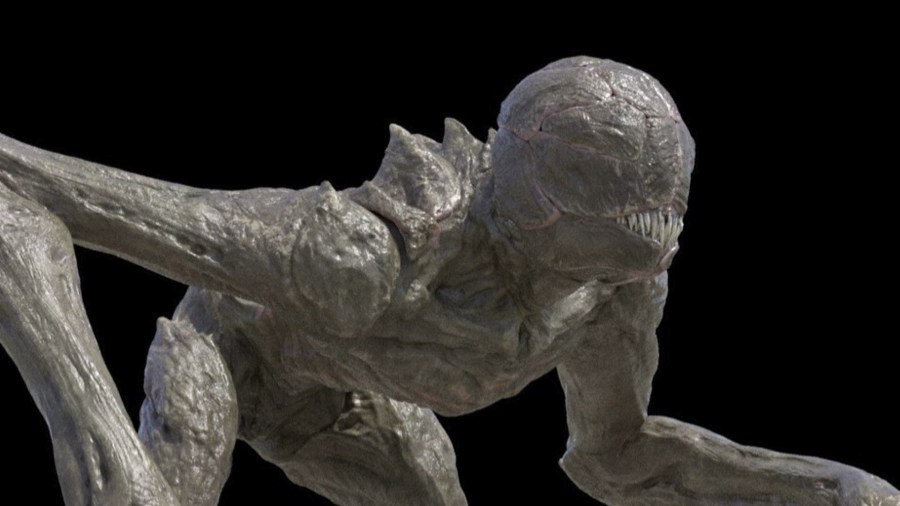
Essential traits of the alien monsters were defined as a baseline. The director recalled: “the idea behind all that is they’re definitely aliens and they’re an evolutionarily perfect machine. So, the idea is if they grew up on a planet that had no humans and no light — then they don’t need eyes, they can only hunt by sound. They also develop a way to protect themselves from everything else so that’s why they’re bulletproof and all these things. I had to make it make sense. I needed the rules of the monster to adhere as tightly to the rules of the family. The family, we had set up all these incredible rules, and I needed the monster to not just be convenient.” The high durability of the aliens was intrinsically needed to explain how they reached Earth; they only survived the explosion of their planet because of their tough hide. “They’ve evolved to be bulletproof,” said Krasinski. “Until they open themselves up to be vulnerable, they’re completely invulnerable.”
The director gathered great amounts of reference from nature. “John Krasinski had collected pictures of black snakes with cool looking scales,” said Farrar, “and he had this really great looking prehistoric fish, with sharp, bony exoskeleton-type features that stuck out all over it, and even different types of bats for the way they moved and ran.”
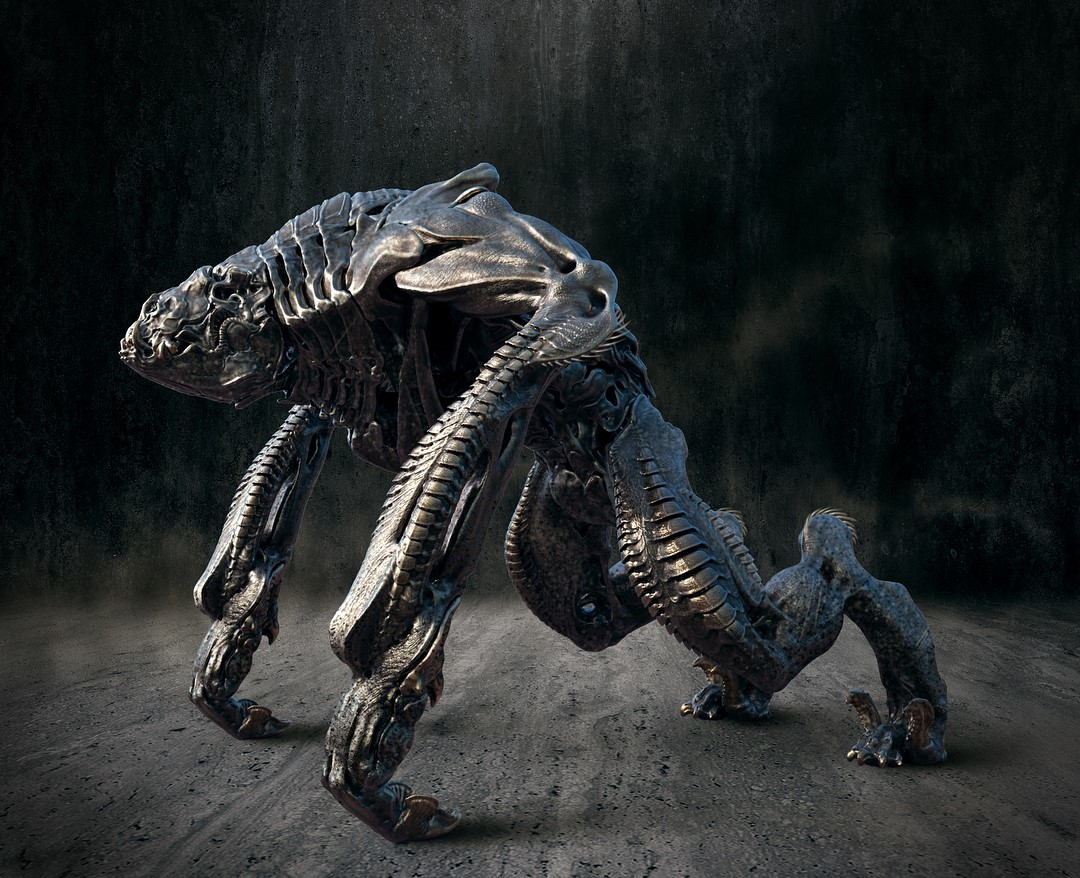
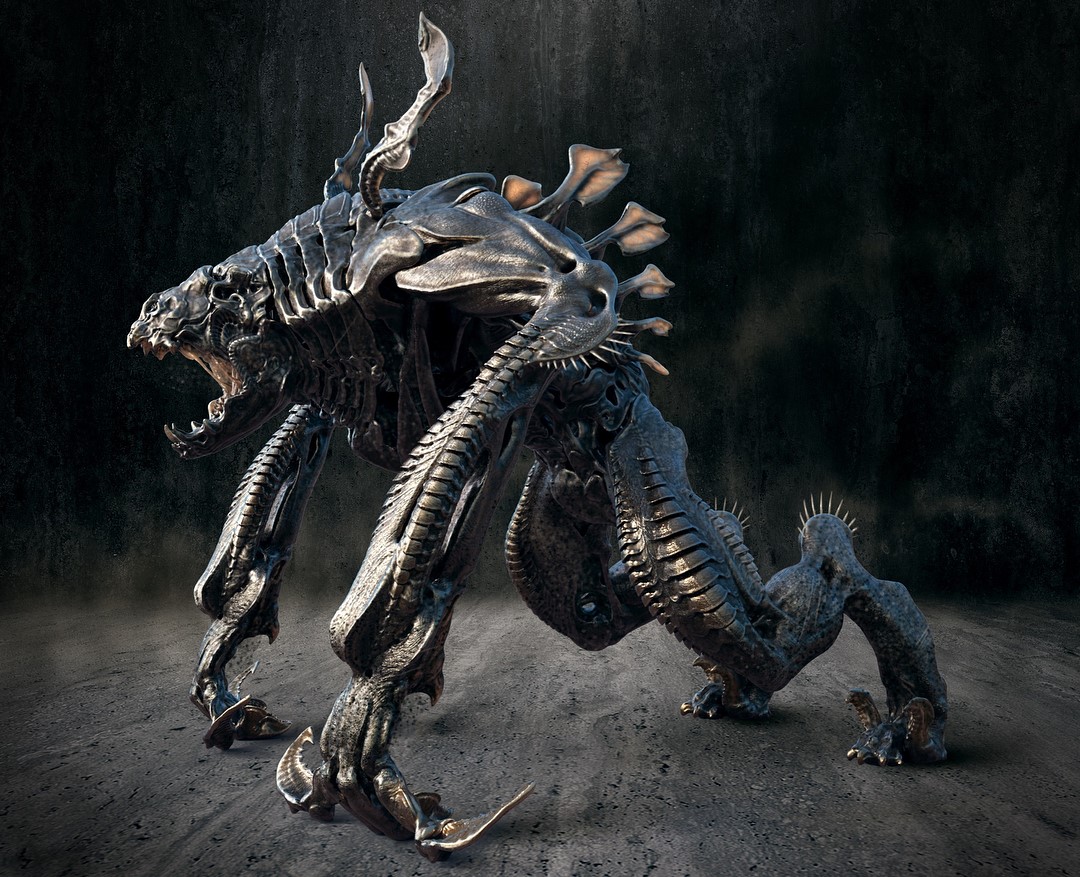
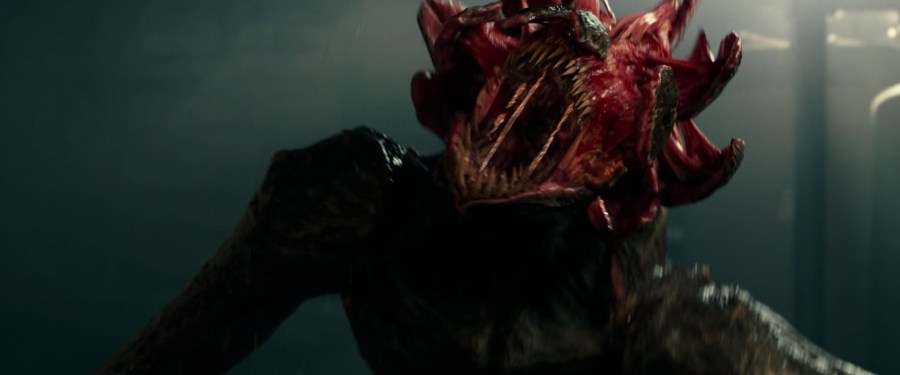
The creatures hunt by sound, and it was suggested early on that they would lack eyes entirely — coming from a lightless world. To show their attention towards sound, a key element of the design was the idea of flaps on the body that would open up and track sounds with their motion. These formations would be distributed on major areas of the body — head, shoulders, chest, back and thighs.
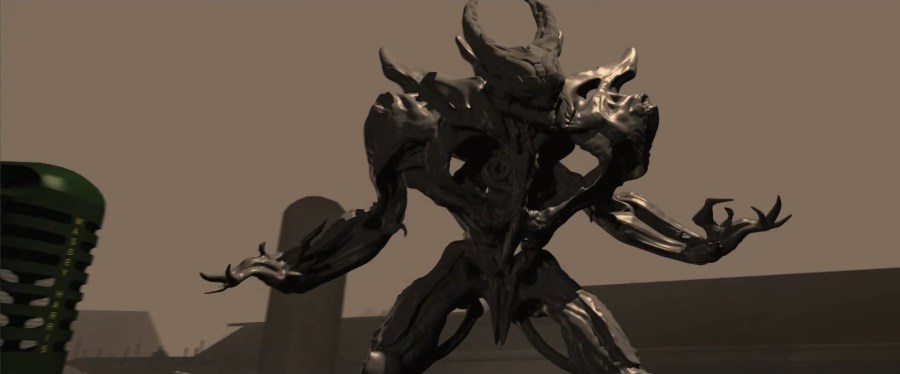
An initial design phase by the art department culminated into an imposing, ornate creature, endowed with armour plating and prominent demon-like horns. The animation team then produced a series of motion tests, many of which were unsuccessful. Animation supervisor Rick O’Connor related: “we did a lot of rough motion studies on the older version of the creature. We did some crazy things with it! There was a test where it popped from pose to pose which looked really weird but not scary at all. It almost looked like he was break dancing – not exactly the look we were after. We had a test where it travelled down the side of a barn in a cartwheel type manner which ended up looking like a sticky octopus toy thrown against a window. The most successful tests were when it moved slowly while hunting and then breaking into a fast run to attack. It was almost like a shark on land.”
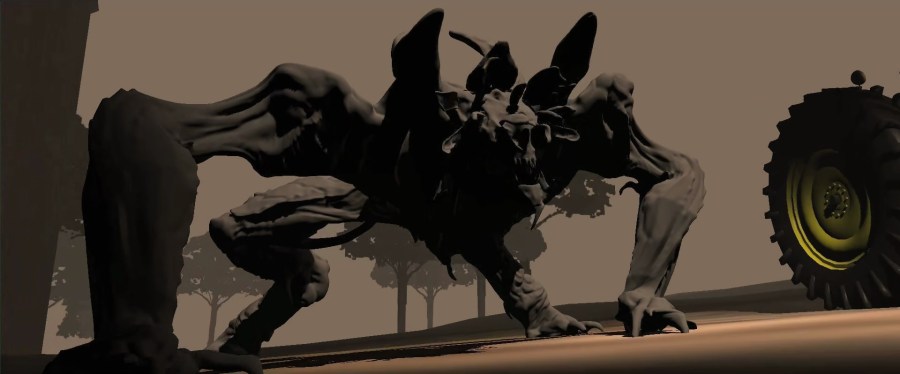
Just two months before the intended release of the film, reviewing animatics and tests, Krasinski and producer Drew Form came to the conclusion that the creatures’ very appearance was too whimsical and not frightening enough. ILM’s own art department was tasked with the creation of a new design, and the visual effects team had to rebuild the digital model for animation in record time. “We completely rebuilt the thing, and we had so little time left,” said Farrar. “It had to be a complete re-rig, and re-paint, and re-texture, and re-animate.”
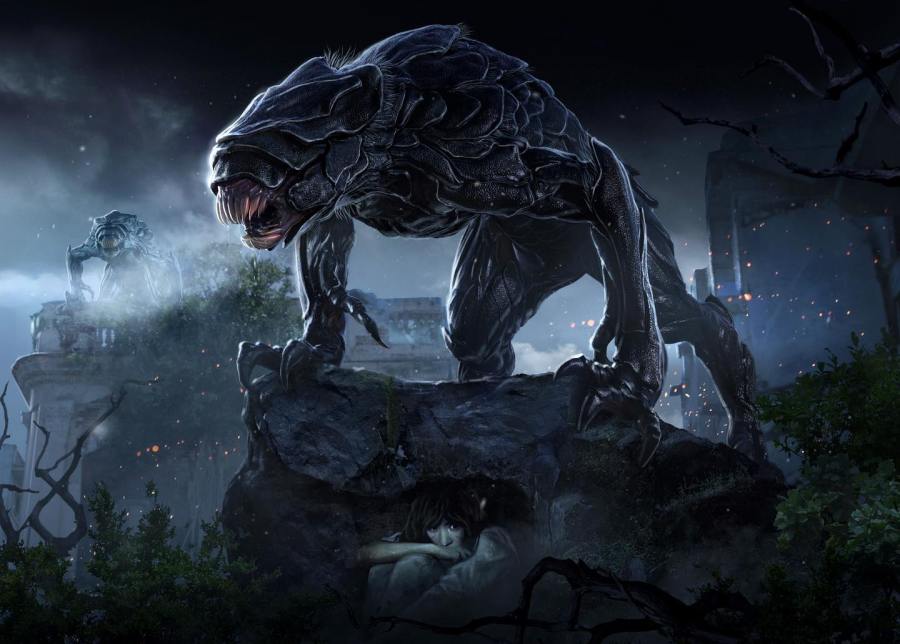
New creature concepts flowed towards a more streamlined and smoother surface, devoid of ornamental elements, with a gangly anatomy reminiscent of bats. The only element that stayed consistent between design iterations were the sound-following flaps. The director and the ILM design team — led by Luis Carrasco and Karl Lindberg — realized that a more direct approach was needed, one that could be more easily understood on a purely visual level. Lindberg realized gross body concepts and sculptures, while Carrasco focused on the workings of the head and its sensors.
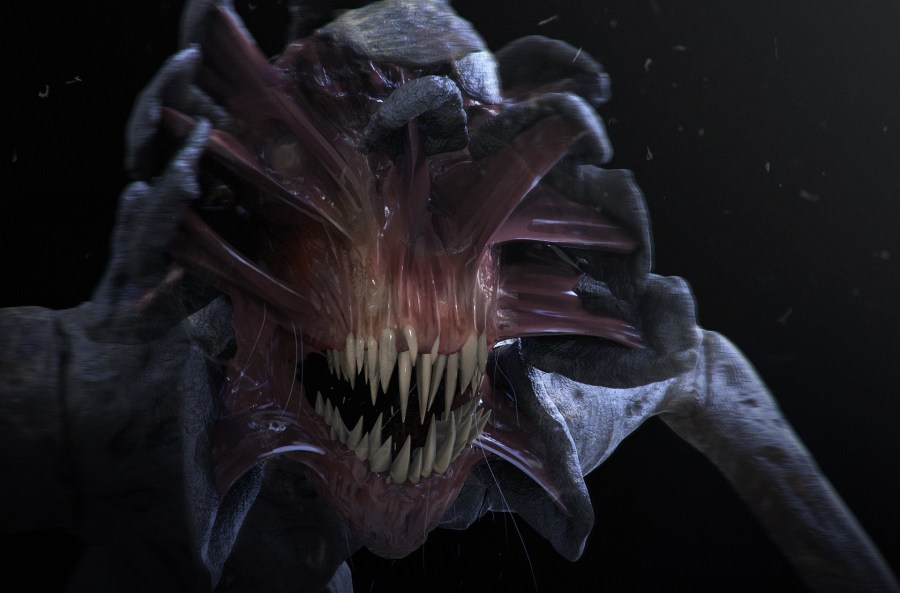
Rather than being distributed on the entire body, the flaps were thus confined to the head. As before, they would blossom outward and flow, following sounds with a motion based on schools of fish. O’Connor recalled: “the only real suggestion I had in the visual design of the creature was to limit the number of ears it had. The monster had a small amount of screen time so I thought the storytelling should be clear in each shot. If it is listening the hearing devices should be instantly and visually understood by the audience. Ears on a foot, arm or chest might confuse the audience without more time to explain it, but ears on the side of the head is clear to everyone.”
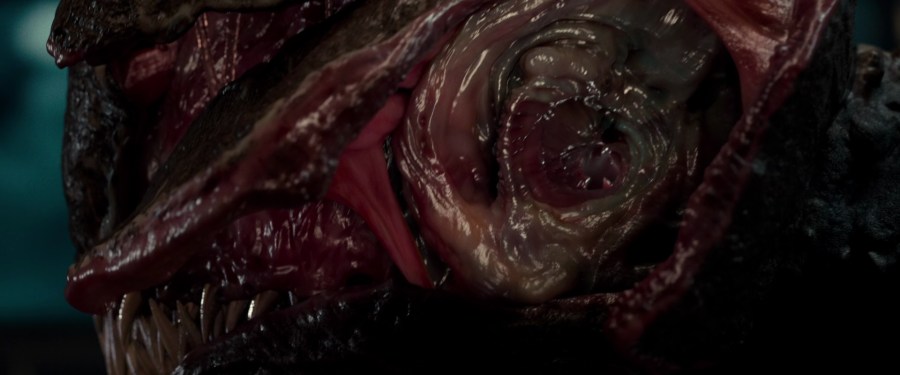
When the flaps on the sides of the head open, they reveal ear structures, meant as an audience cue. They were based on actual human eardrums, and animated with quivering and pulsating motion. Farrar related: “I kept trying to say to John, ‘you’ve got to have the goo, and you’ve got to have all the little ear worms, the little pieces of chicken fat that are wiggling, and squishing around, and all of that stuff.’ I wanted it to look real, like medical in nature, as if you’re looking in on open guts.”
A dark colour scheme was chosen to better blend the monsters with the mostly dark ambience they would be animated in. Farrar explained: “at one point there was concern about the colour of the creatures. I said we were referencing the Peat Bog people, those are mummified humans that were trapped in Peat Bogs in Ireland and Denmark. Because they were in the bogs for centuries, their skin was the color of a dark leather, somewhat shiny and coffee colored. It was a perfect reference for us to follow.” Textures were handled by texture supervisor Alison Farmer, alongside Mark Marcin.
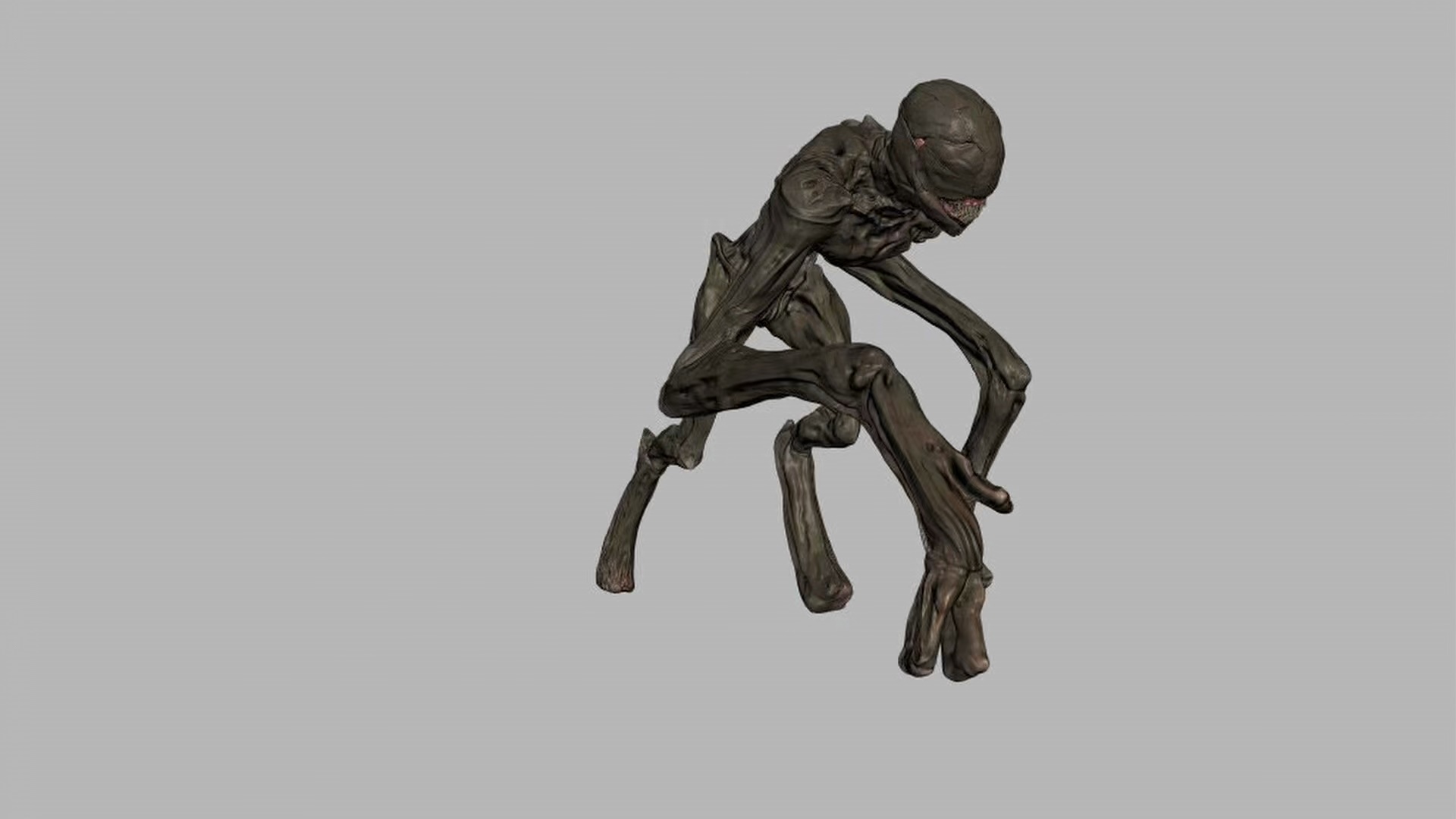
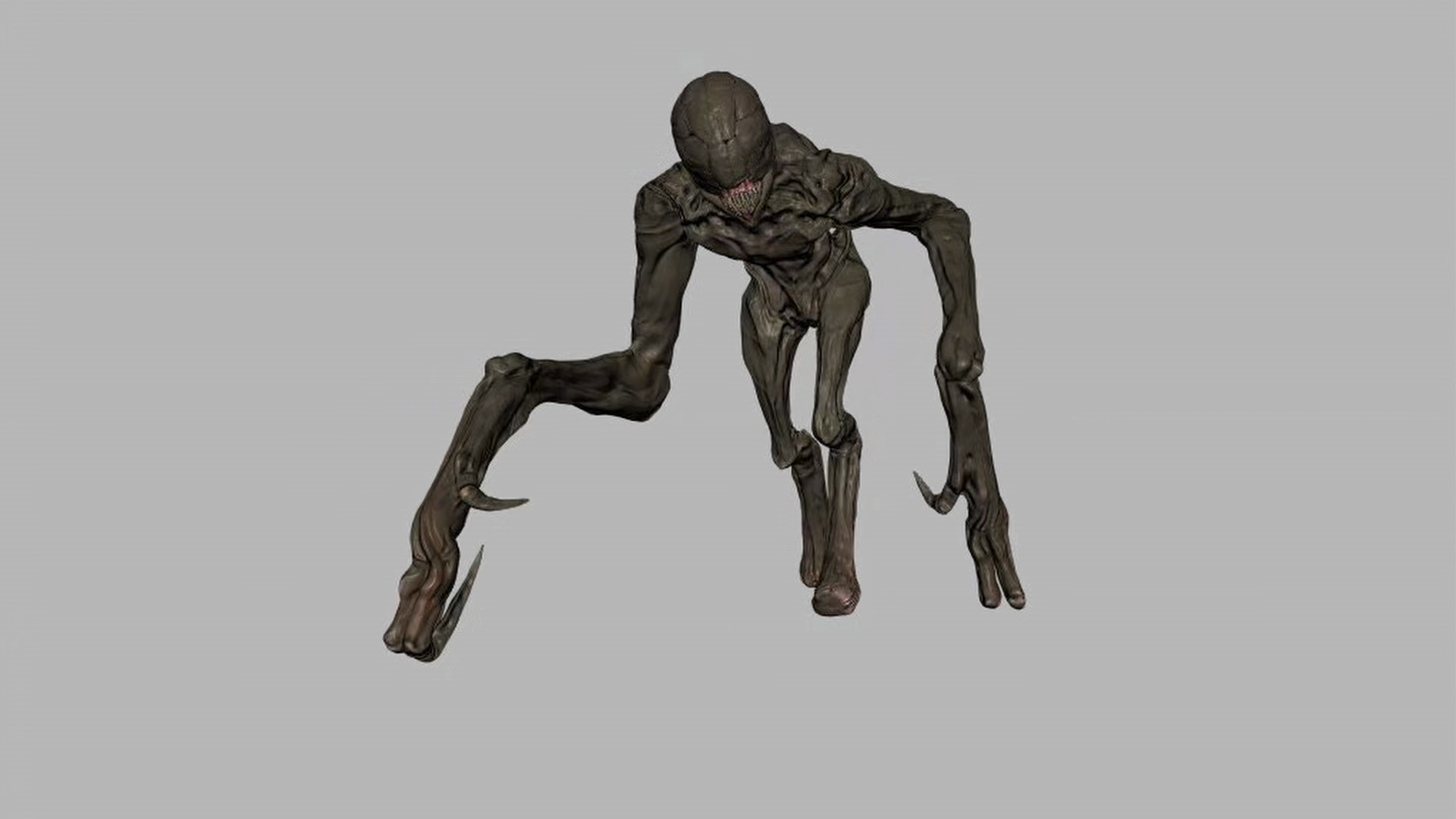
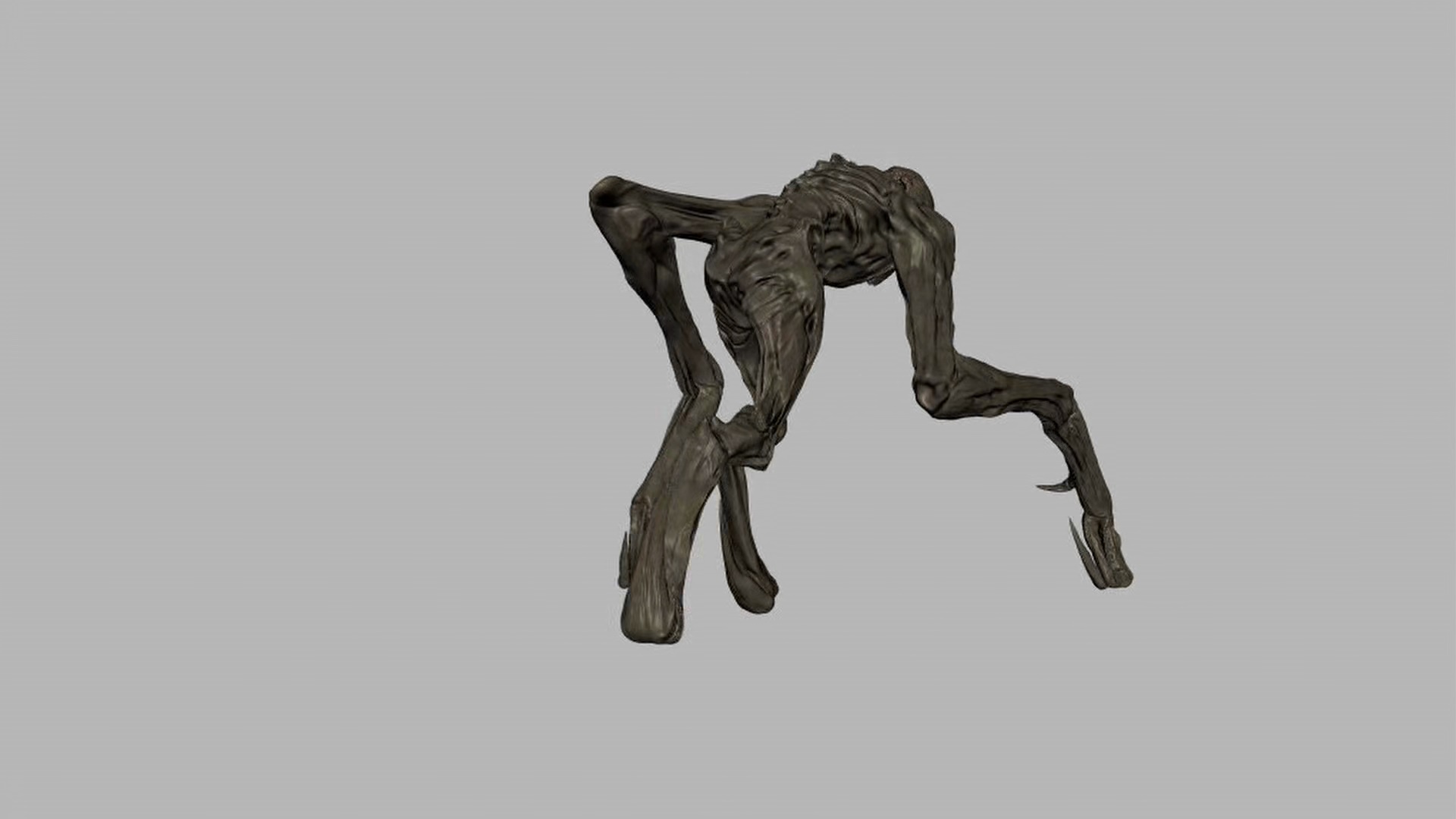
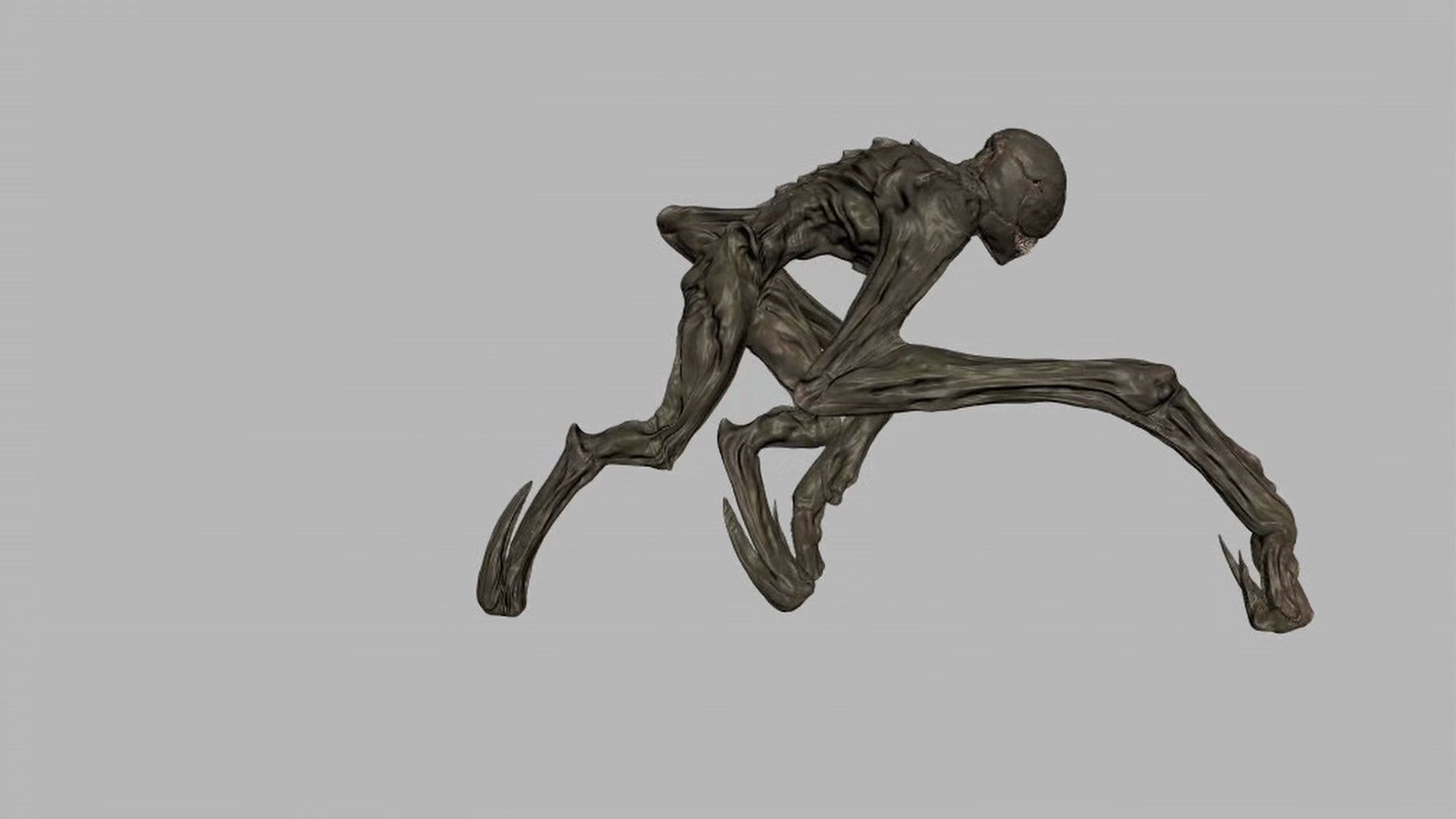
As the creature designs came to a satisfying conclusion, there was only about a month left to deliver the visual effects shots. “We didn’t necessarily have time to test the creature at this point,” said O’Connor, “so all of our discoveries were made in the shots as we raced against the clock.” In the meantime, the new beast was nicknamed ‘Happy’, in contrast with its horrific appearance.
During shooting, a performer had been filmed wearing a tracking suit, providing interaction with the environment and the actors. In post-production, the suit’s movements became a blueprint for creature animation. Practical environment interaction was key to certain shots, such as the alien submerging in the water of the basement. For specific sequences, greenscreen creature claw stand-ins were devised. This was the case for the silo sequence, where an alien bursts through a door; the greenscreen claw tore through a foil panel and was then replaced with the digital beast.
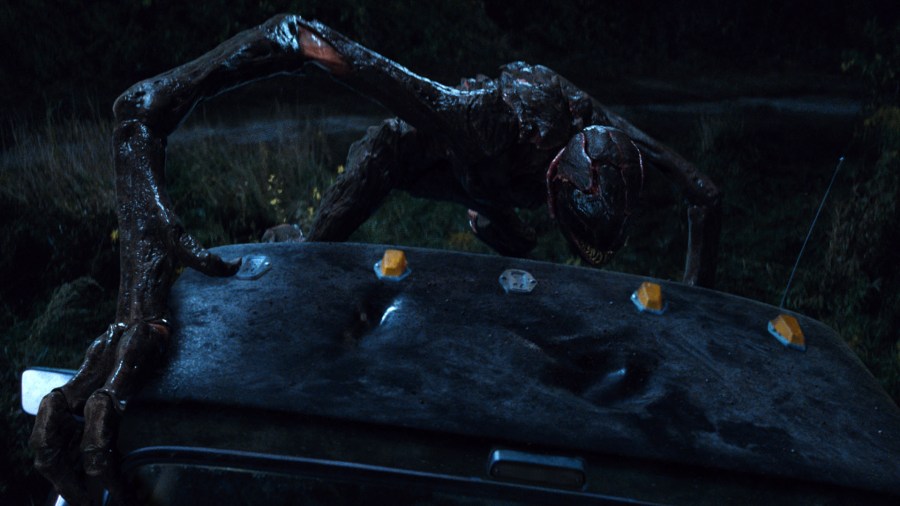
The time crunch meant that the visual effects team had to recur to certain tricks in order to respect the deadline. Namely, shots where the monsters would be distant or obscured in any way were placed first in the pipeline, created with a preliminary digital model; the more complex shots, including close-ups, were reserved for last — allowing them to employ the finished digital beasts. Farrar related: “we got different shots where it was moving in the background and where it’s harder to see detail. Then as it became more finished, then we could do some of the shots where it got closer and closer. Which means some of the last shots we finished for the movie literally are when it opens up and all the goo comes out. All the simulations of the goo, and the muscles, and everything – that was all the last week. It was really down to the wire. As everything got better and more finished, then we could put him in the closer shots, literally like an actor that doesn’t quite have their make-up on yet.”
The animation studies devised with the former monster design proved useful for the revised version: the slow motion during walking or inspecting the environment was put in contrast with the lightning-quick dashes when the monsters lunged and attacked. O’Connor said: “the speed of the monster needed to be unexpectedly fast. The contrast from the creepy slow search mode to top speed attack mode needed to shock the audience. Something this large probably couldn’t move as quickly as they do in the movie, but for the sake of freaking out the audience we broke reality.”
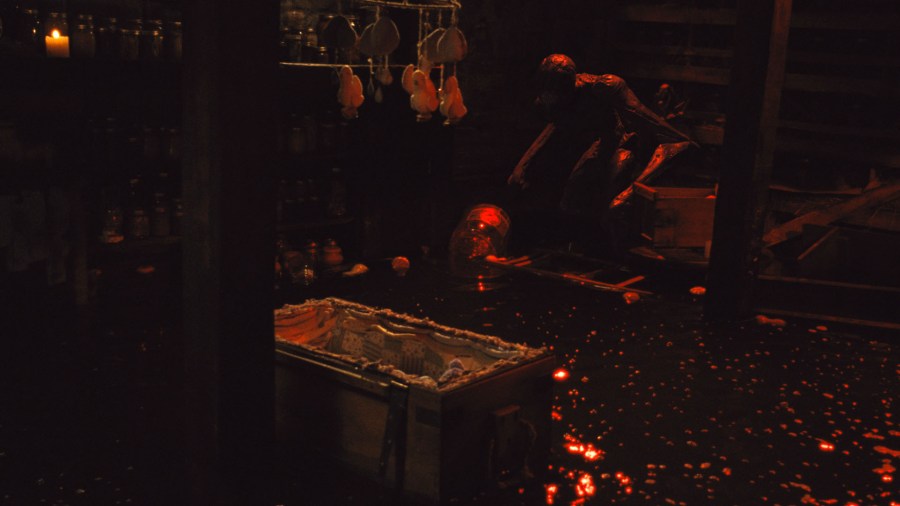
The first sequence the team worked on was the flooded basement, where Evelyn tries to recover her baby while stalked by one of the monsters. “It was instrumental in figuring this guy out,” said O’Connor. “We found that the creepy slow movements were successful. We also developed how his head searches for sound by slowly rolling his head from side to side to scan its surroundings.” Additionally, in animating the submerging creature, O’Connor found a motif that would be repeated accross many shots. He related: ” in the shot where the creature dove into the water it produced a really striking silhouette. It was hunched over and the elbows jutted upward creating an eerie ‘M’ shape. I thought it was a perfect and unique visual stamp for the creature.”
General locomotion and walk cycles were at first based on walking bats, namely footage found by Krasinski. Initial attempts seemed successful; however, they made the creatures “look too jovial and playful,” according to O’Connor. Ultimately, walk cycles were largely based on gorillas. O’Connor continues: “a big challenge with the monster was figuring out a walk pattern that worked for his design. He has very long front arms and shorter legs. We decided to follow the foot fall pattern of a gorilla, but we had to be careful because we could easily fall into the look of an elderly person using a walker. Nothing scarier than an old, blind alien using a walker to hunt you down!” The monsters’ quick lunges, dashes and leaps were instead influenced by the speed and agility of big felines.
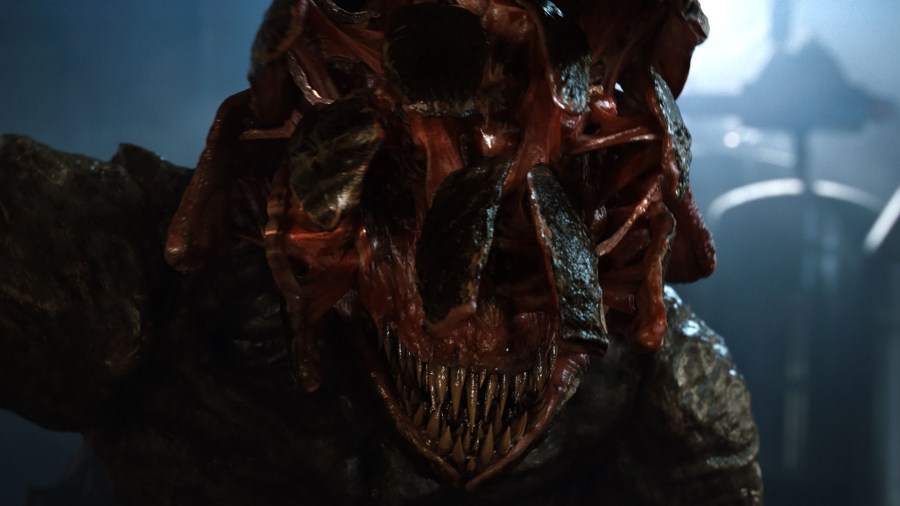
The head flaps became a peculiar animation challenge, with different directions explored by the animators. O’Connor continues: “at first we treated them like bug antennae, where they were always twitching and ‘feeling’ for sound. It didn’t work for the creepy tone of these guys. We then had them flower open with minimal motion but then it ended up looking too much like the Stranger Things monster. John had the idea that the flaps only open when the creature knows it is near the prey and uses them to zero in. He described that the motion could resemble what seaweed does underwater. If the creature hears something to the left then the flaps move in that direction as if caught in a current. A wave pattern would flow through them and then the head would follow the direction of the sound. The flaps also have the ability to hinge any direction they want and don’t always pivot from the back. This helps the creature shape the flaps to funnel sounds from any given direction.”
O’Connor concluded: “I have to say, when we reviewed shots with John was always a treat. He is so enthusiastic and appreciative of our contributions. Each review was like a sporting event with the amount of [happy interjections] he’d exclaim after seeing shots for the first time. He had great ideas for the creature and he was always eager to hear our suggestions as well. It was a very inspiring and memorable collaboration.”
For more pictures of the sound-snatching monsters, visit the Monster Gallery.
 Monster Legacy