
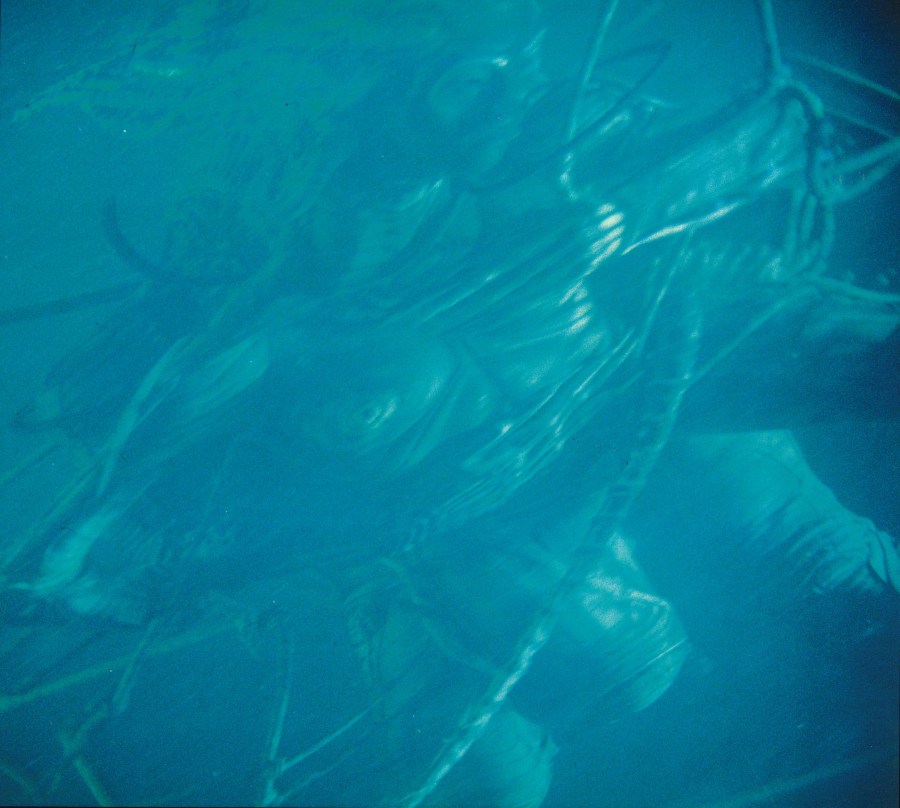
Throughout the film, Sil experiences erotic dreams of mating with a male counterpart of herself. “I did try, in some dream sequences, to add a Gigeresque feel to the film,” said Donaldson. “This occurred in the swirling abstract shots where a male and female creature from Sil’s home planet perform an elegant mating ritual that Steve Johnson put together.” In the original fax sent to Giger, it was suggested that “perhaps Sil could dream of a male and female alien mating. This could be very erotic and weird.” Johnson called the sequences “an abstract mating dance.”
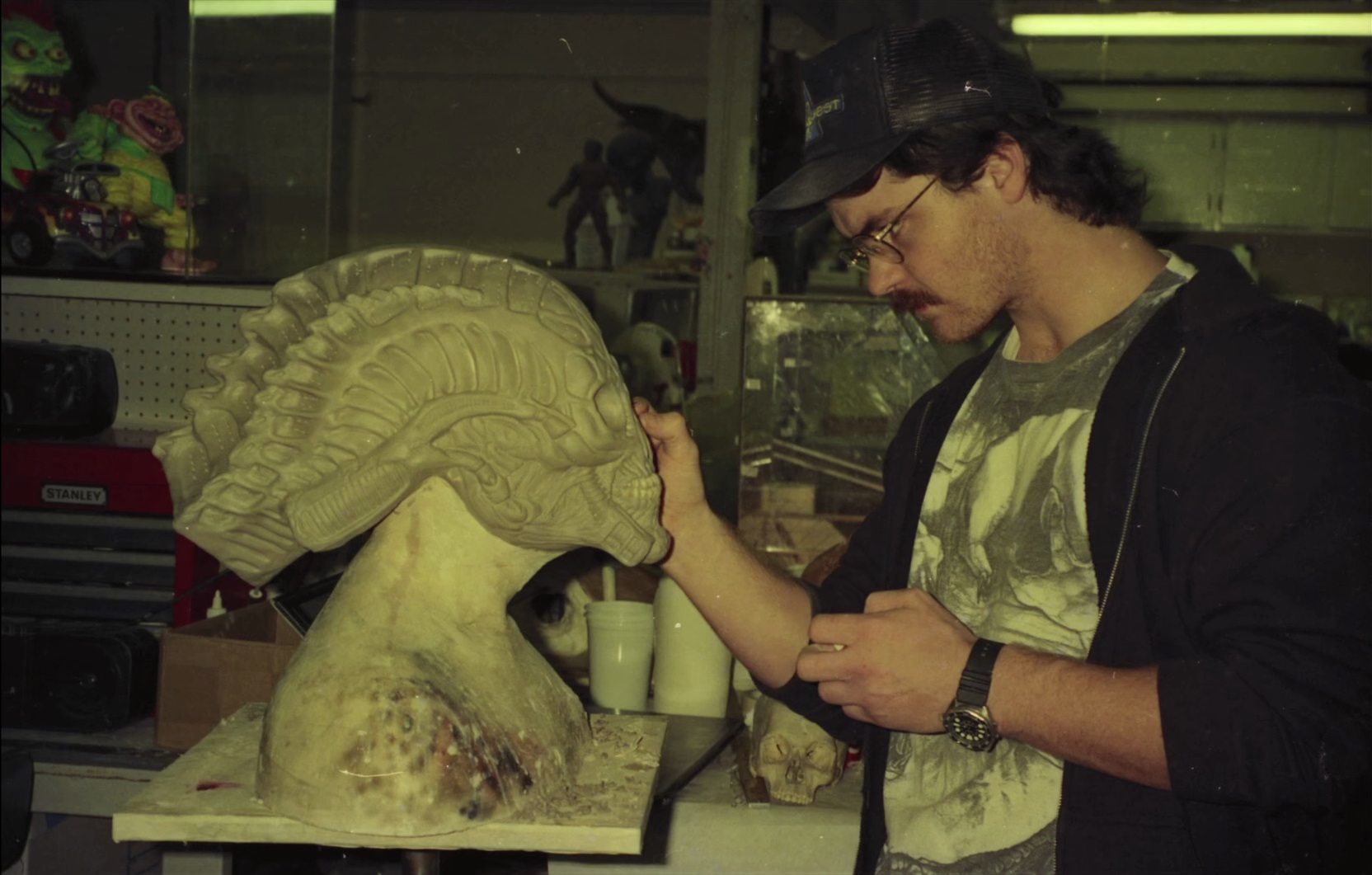
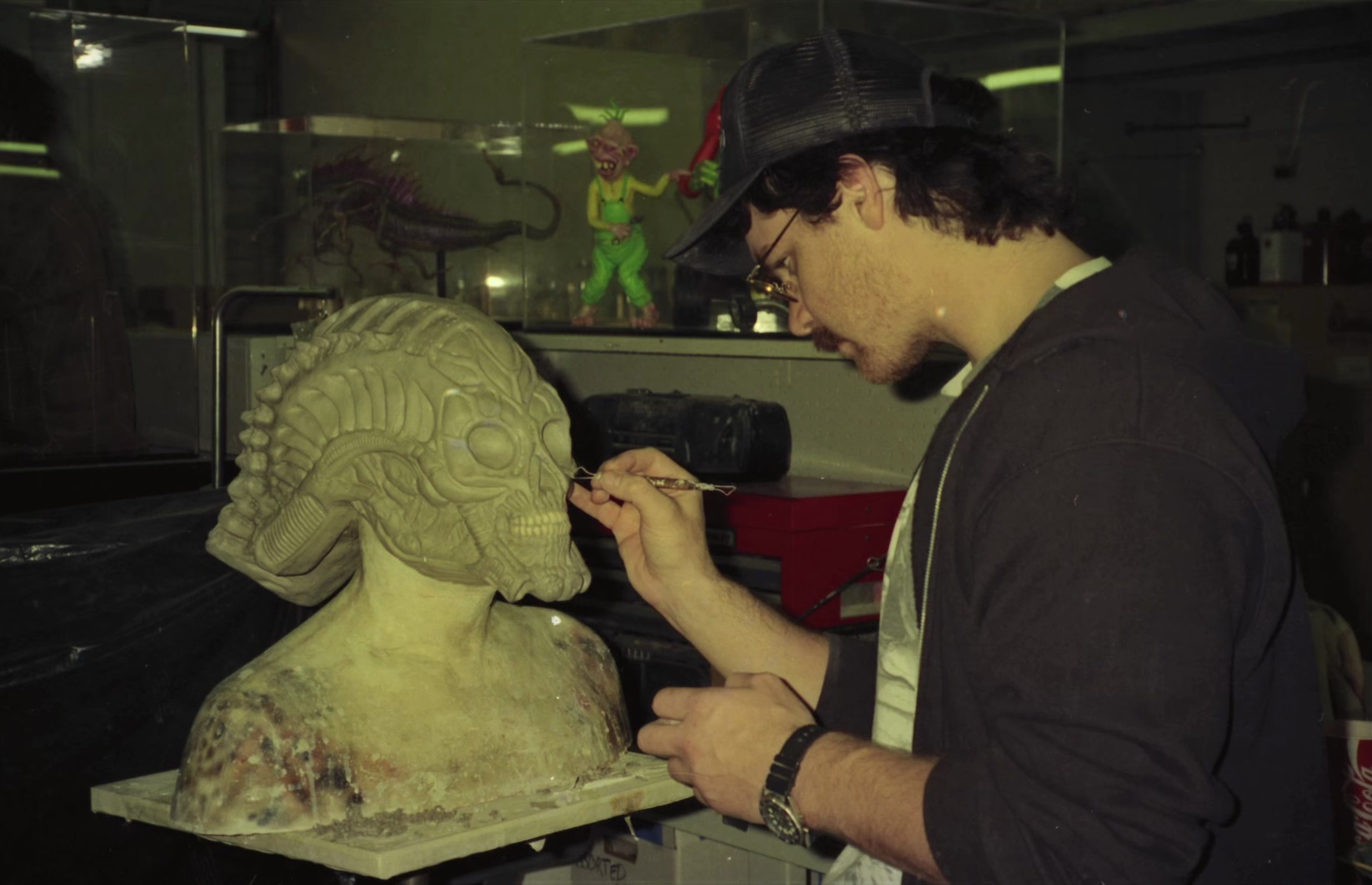
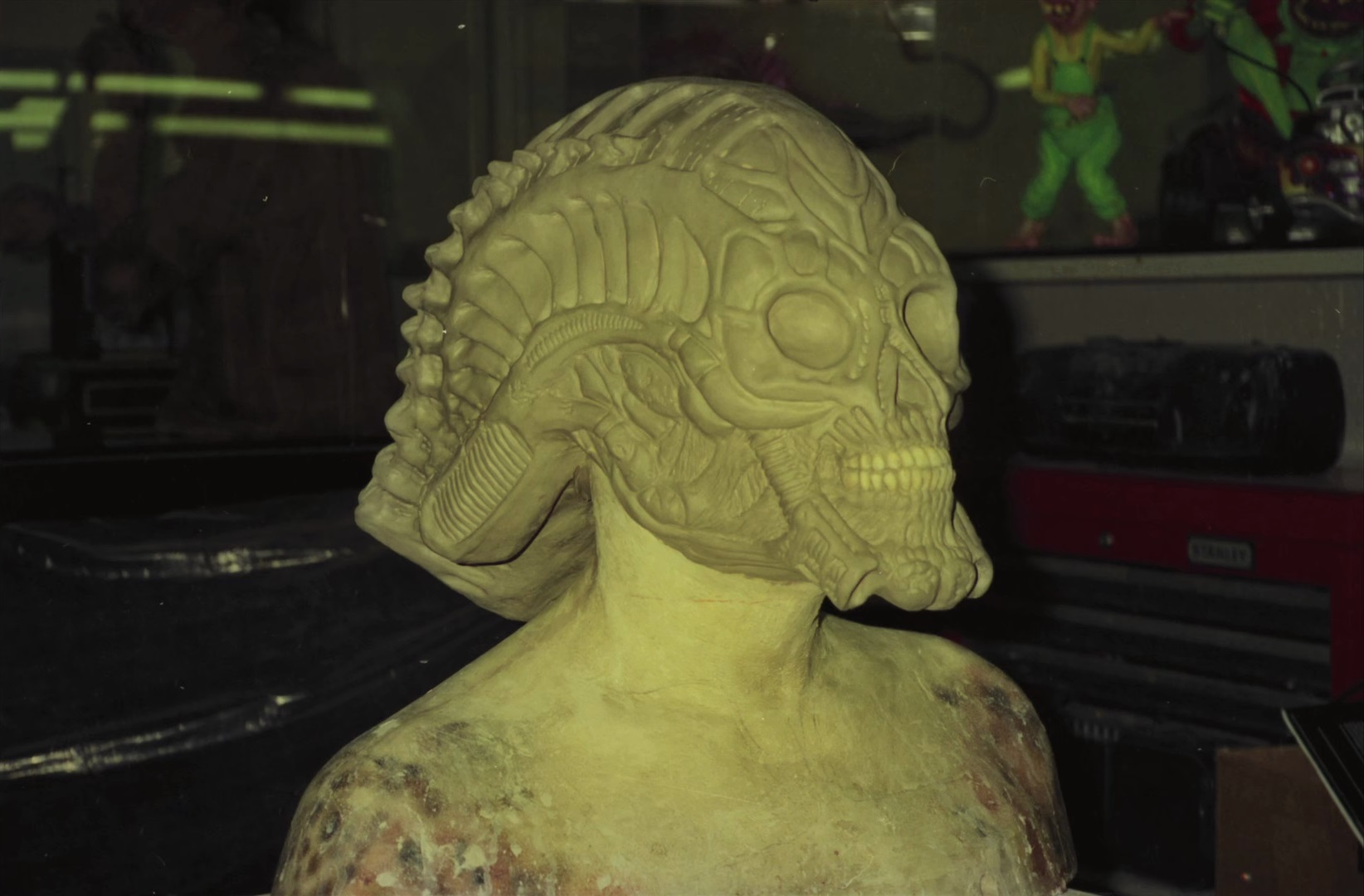
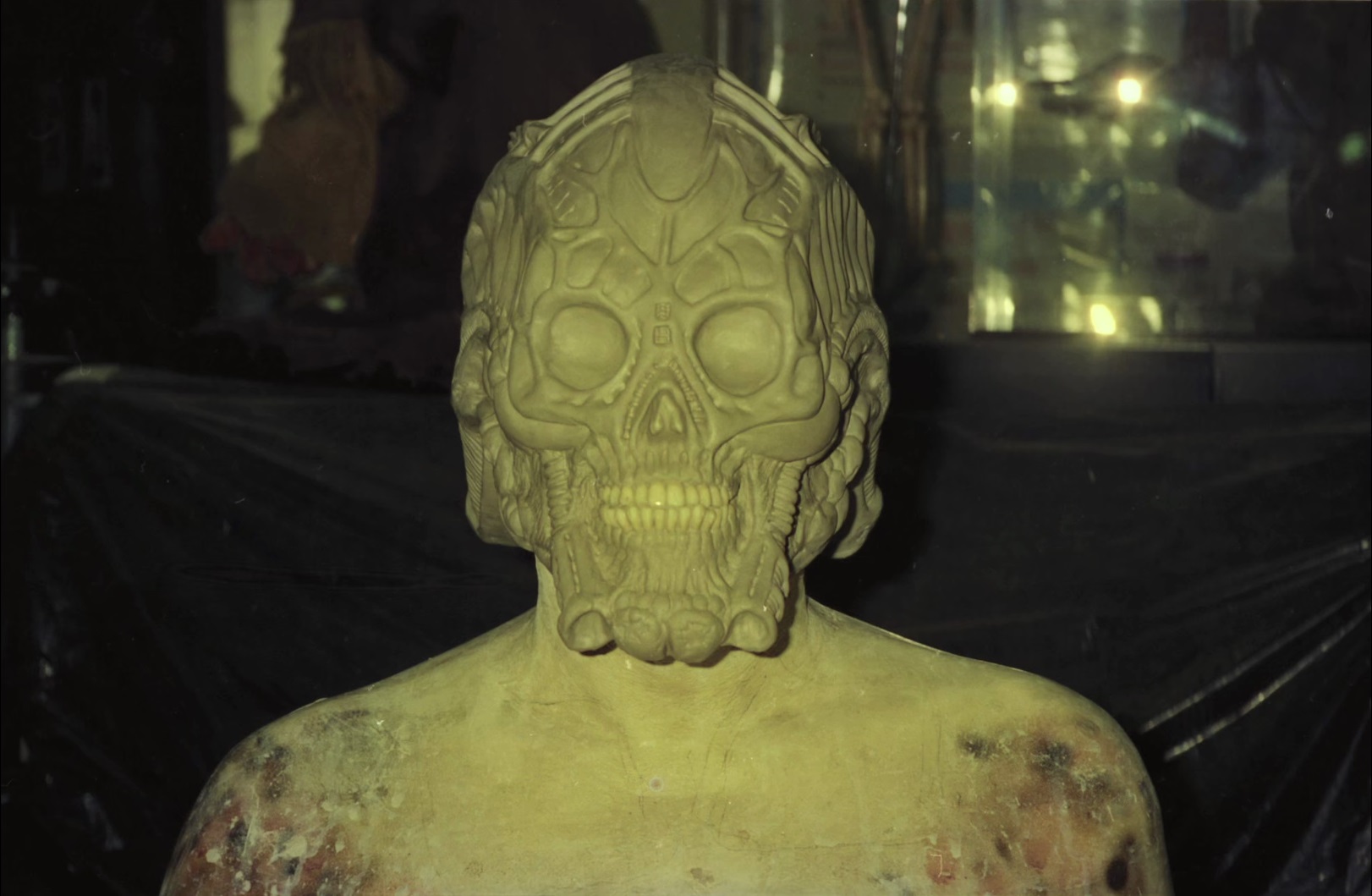
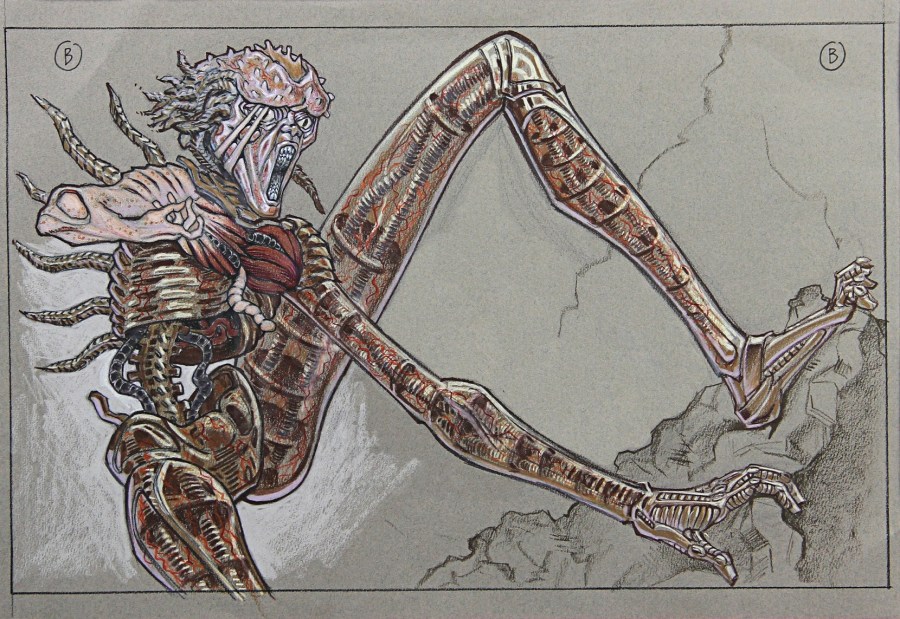
For these dream scenes, a hybrid male creature was designed by Corso based on Giger’s aesthetic. To differentiate it from Sil, its main shapes and connotations were made more masculine, skeletal and somewhat brutish. Three tentacles growing from its head and twelve crab-like legs emerging from its back completed the design. Johnson related: “I wanted to really break up the human form, [like] what Giger did with the Alien using tubes running off the back and length of the head, so you didn’t quite know what you were looking at and it didn’t look so much like a man in a suit.”
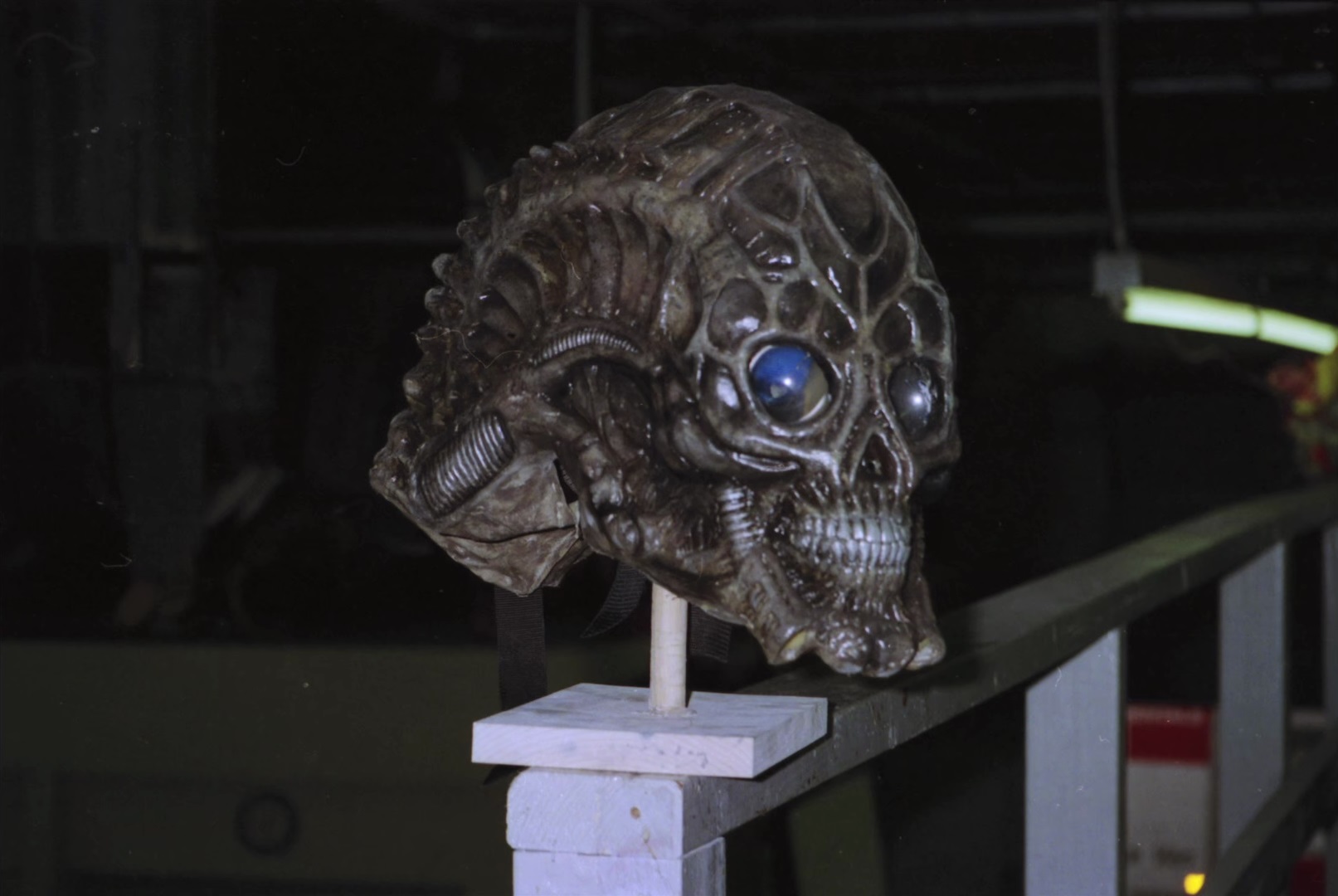
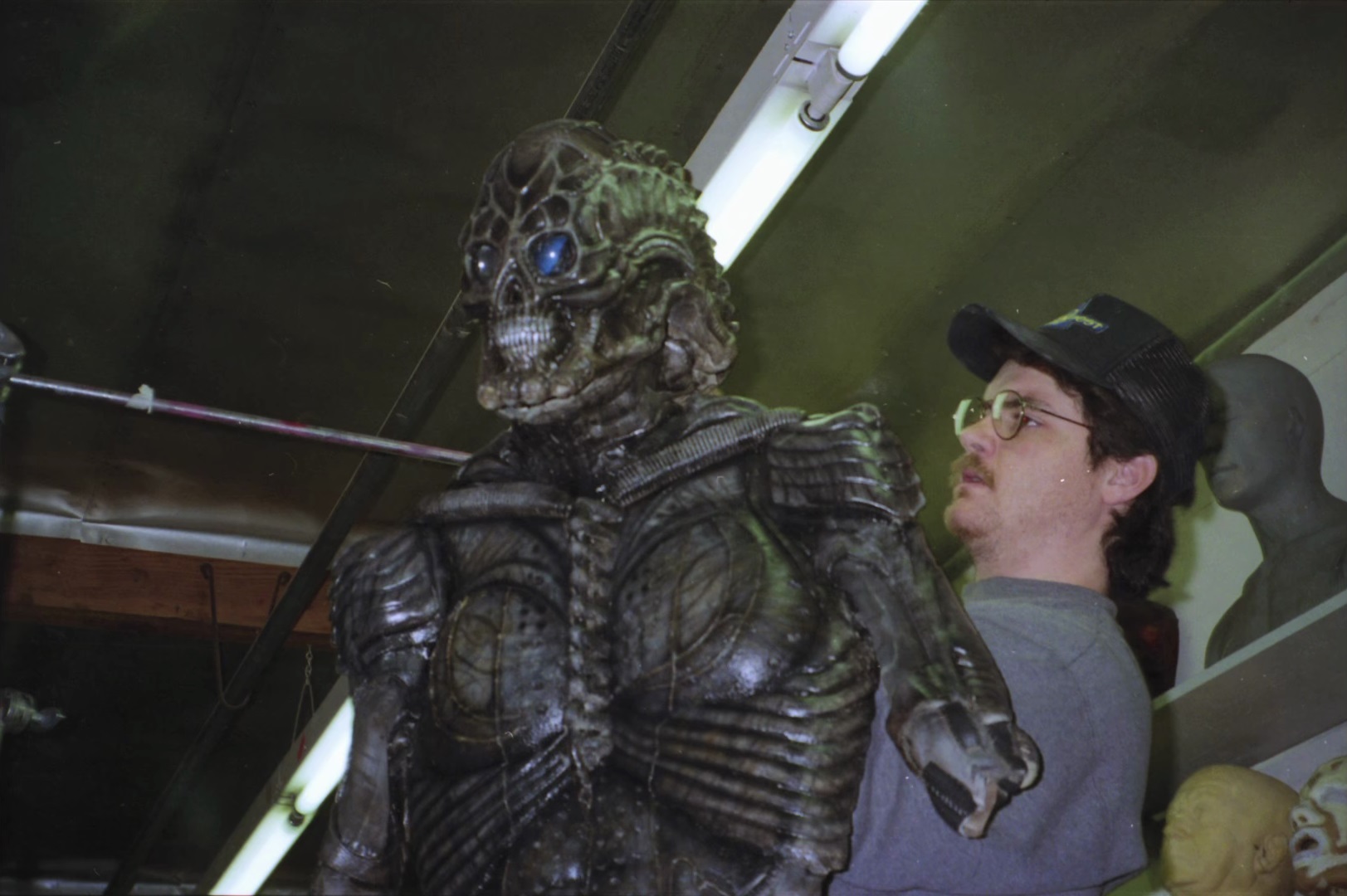
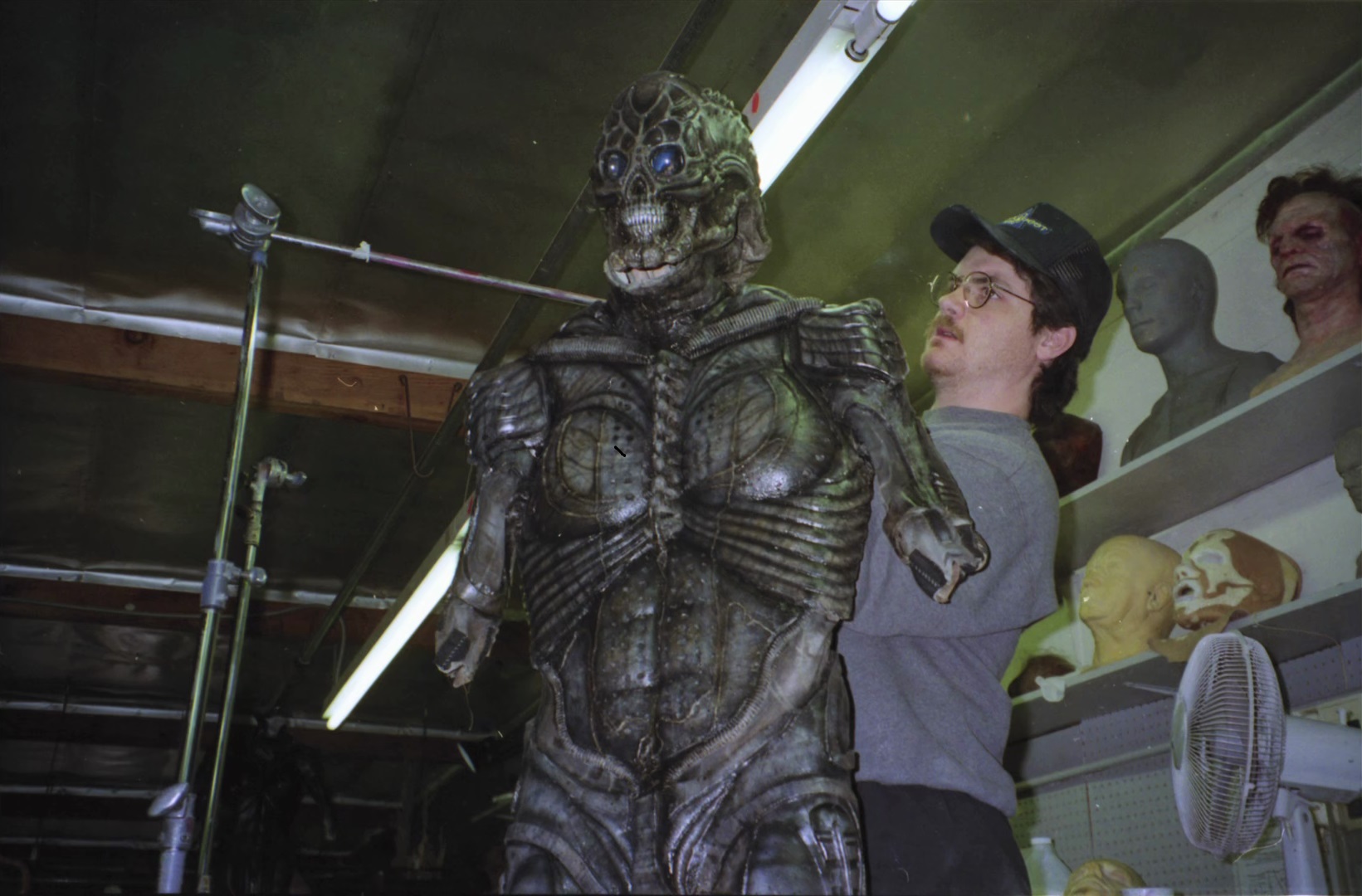
This was eventually achieved “with a series of twelve-foot protuberances — like enormous crab claws — extending down the back, with a penile tentacle protruding off the back of the head.” Corso’s designs were translated into a sculpture by Bill Wieger, with a resulting foam latex suit of relatively simple practical design.
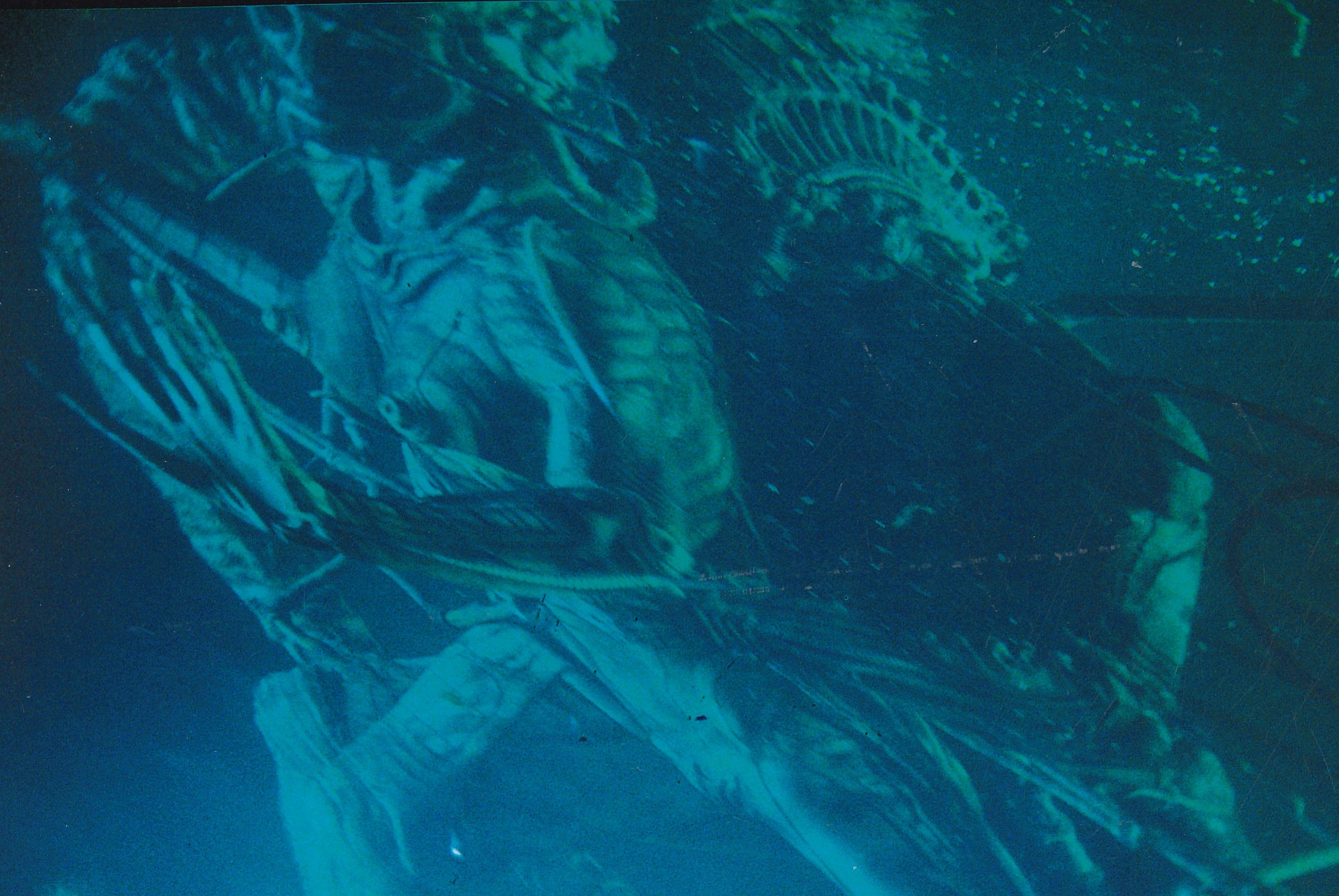
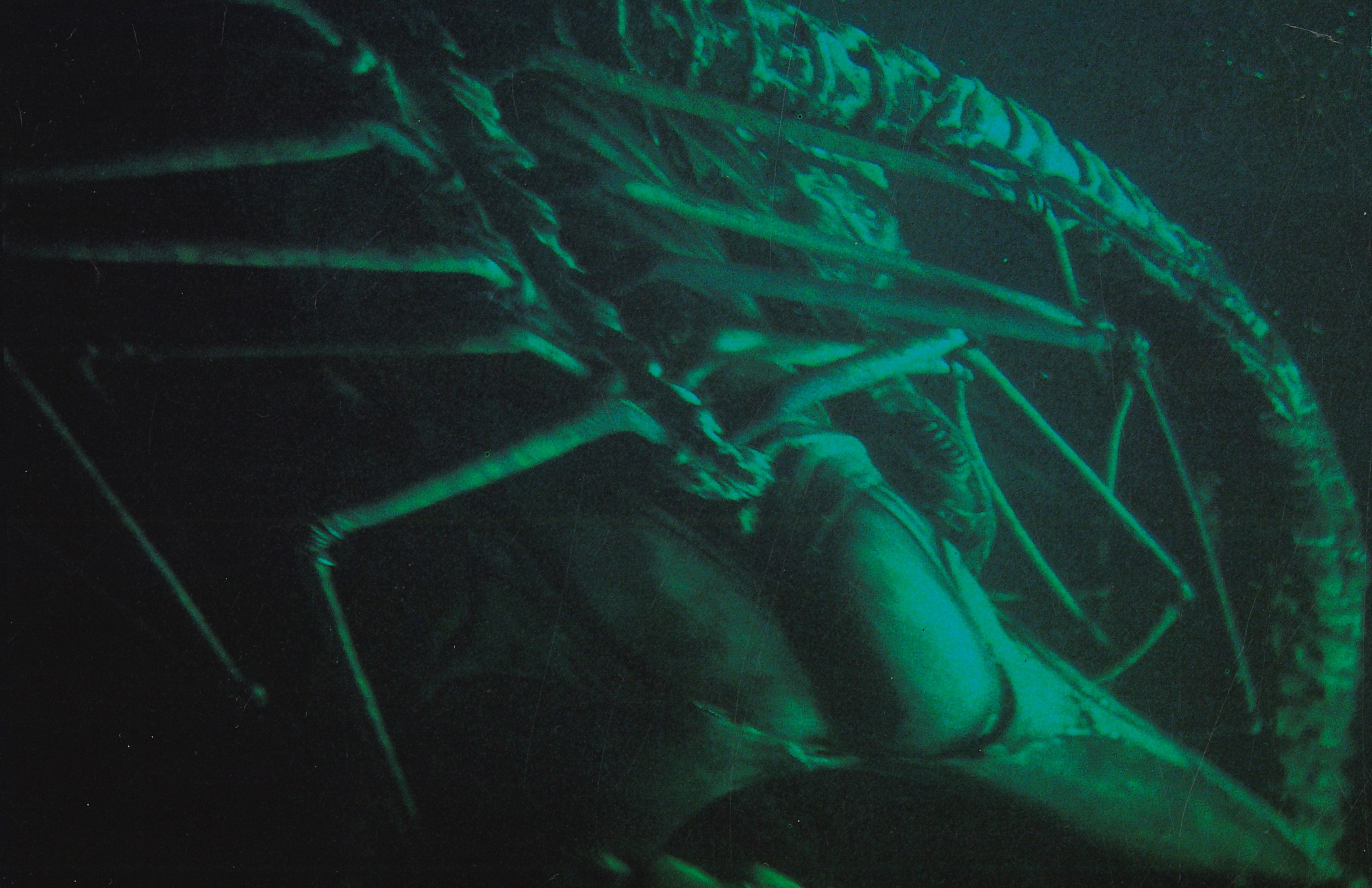
The dream sequences were shot in a water tank and in reverse to enhance their otherwordly quality, also aided by strobe lighting effects. The suit-wearing performers were excessively buoyant and had to be fitted with lead weights to maintain their position during filming. According to Johnson, the extensions of the male’s anatomy proved particularly effective: “in the water they moved beautifully, and really served to great purpose in breaking up the human form, because there are tentacles and things flying all over the place. It looks like a Giger painting come to life, and when Giger got the 20-minute [tape] he said he could watch a whole movie of it.” Matter of fact, Giger was disappointed to learn the sequences were cut and edited into the film as very short inserts, rather than the extensive footage he had reviewed earlier.
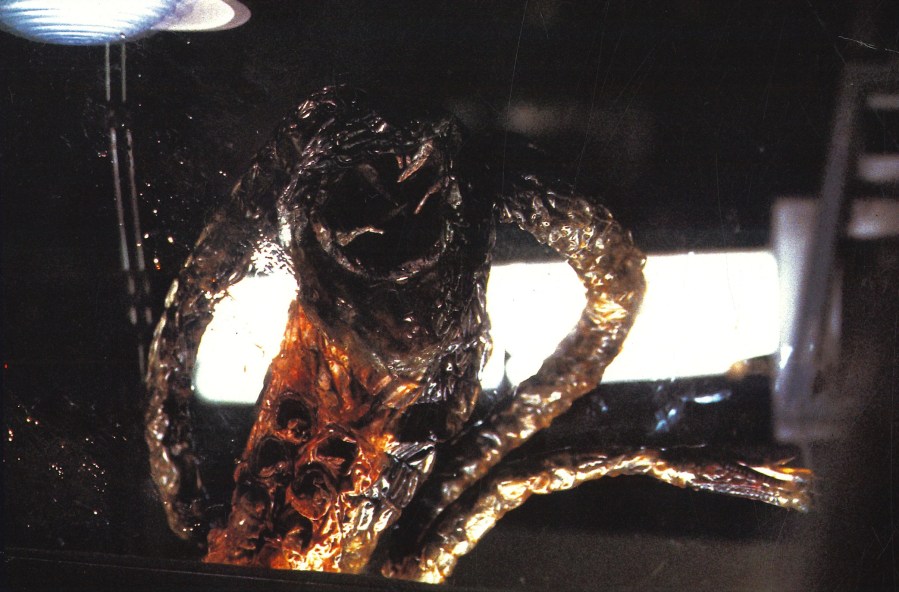
During their pursuit of Sil, Laura and Fitch speculate that a method to dispatch the threat could be found by reproducing a pure form of the alien species in a laboratory and studying its weaknesses. With unnerving speed, the resulting creature grows from a single fertilized cell into an effervescing mass and then into a crawling, tentacled being. Johnson was thoroughly involved with the structure of the scene, which was most complicated to design and film: “my input was taken very seriously,” he said. “I was involved in the lab creature sequence almost in writing the thing.”
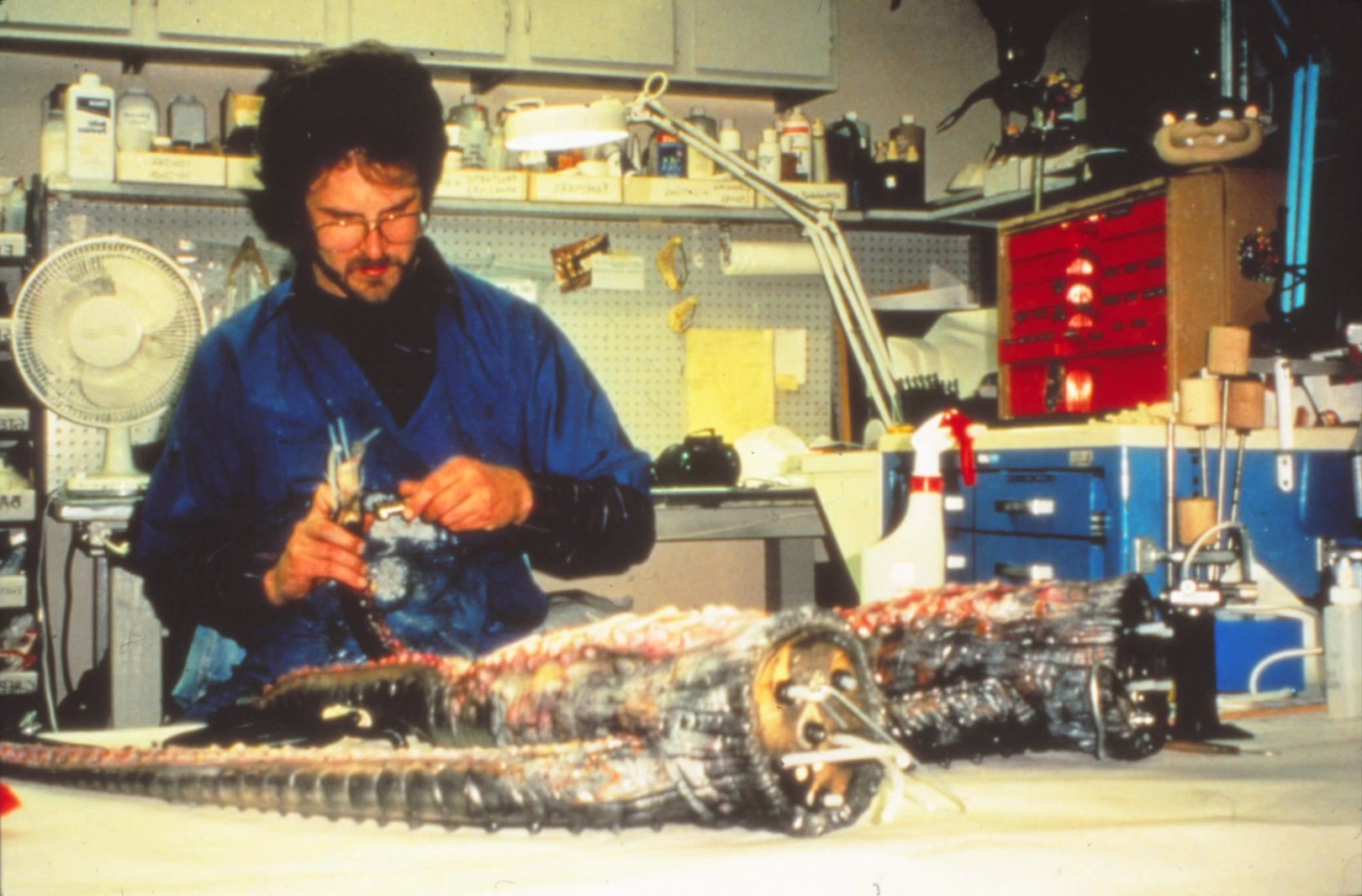
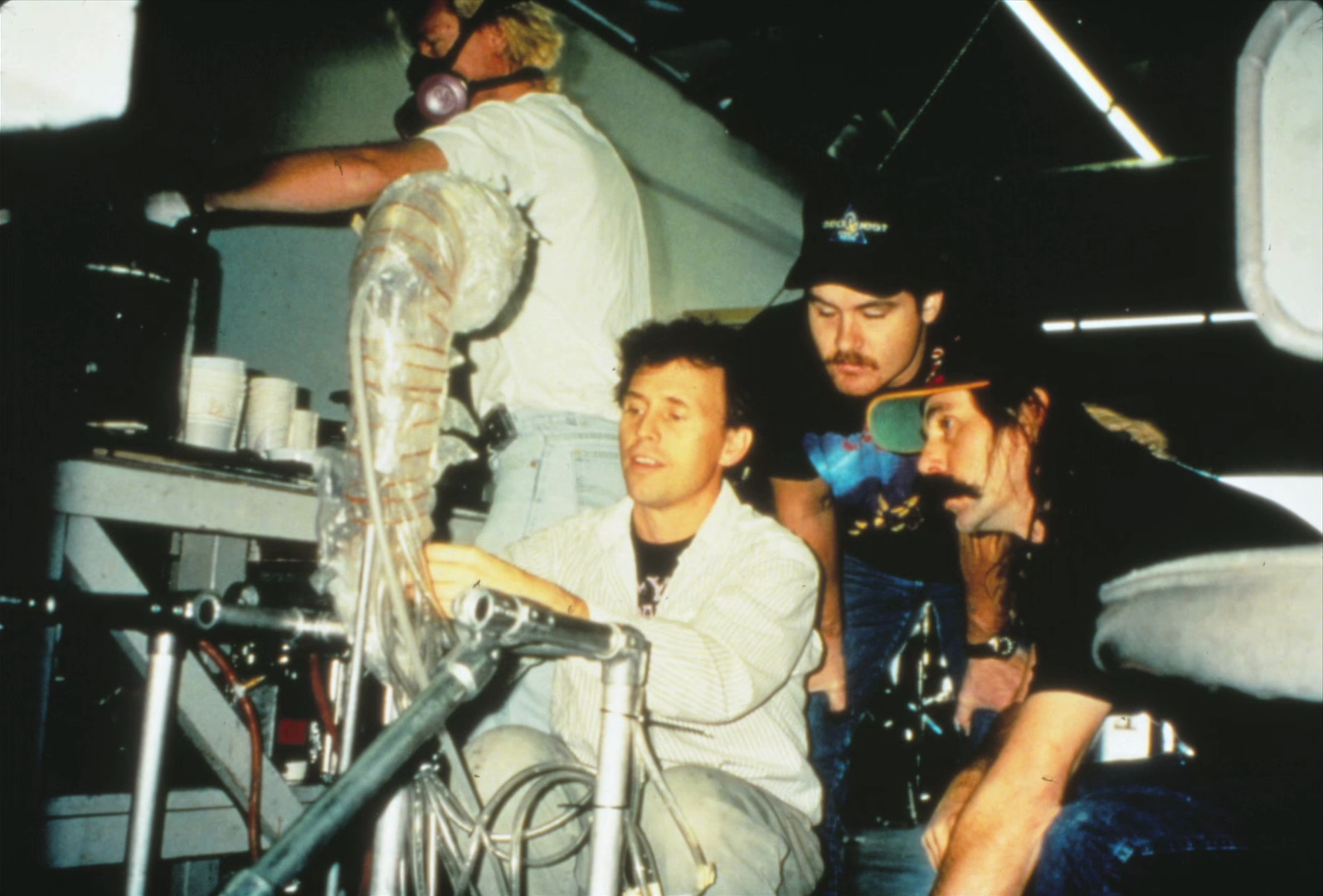
The alien was designed to shapeshift often. “Our concept for the lab creature was for it to be constantly changing so the audience could never fully grasp what it looked like,” Johnson related. “It’s much more mysterious that way. In this scene the creature evolves from a chrysalis, as Sil does. This gave me the opportunity to conceive something from the world of Giger and his unique aesthetic. We worked very hard to create an otherwordly type of movement.”
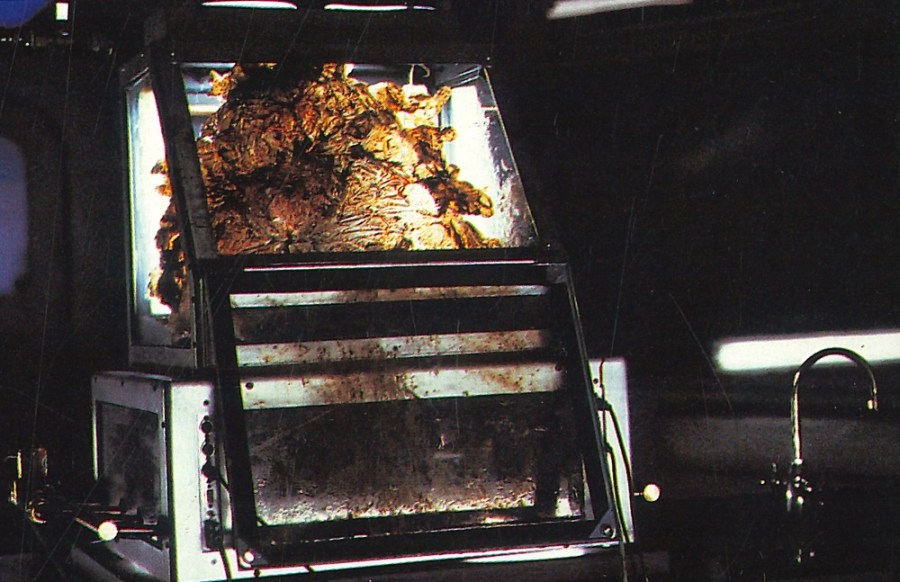
Over twenty different puppets were employed in the scene, with almost every shot employing a specific model. “It was one shot after another,” Johnson said, “with each shot requiring a separate strategy: gravity tricks, different puppets, opticals… we were really excited about it — and very nervous.” Each stage could only grow or move to a certain point, and the next would follow starting from the previous puppet’s end point.
The alien first develops from a cell in a dish to a bubbling mass that fills the incubator. Since the polypropylene bag approach proved successful on the Sil chrysalis, the XFX crew employed it again. Johnson related: “for shots of the creature growing in the petri dish, we injected air through a soapy mixture of methylcellulose to create bubbles that looked like cells forming; then we fashioned several stages of our polypropylene chrysalis — showing it filling the dish and later overflowing into a containment box. We experimented with the air and monofilament method of articulation — trying reverse- and forward-flow suction and inflation. Because the monofilaments were clear, we could film the chrysalis backlit and you could see this thing dance with a hundred tentacles twitching, without ever seeing what was operating them.”
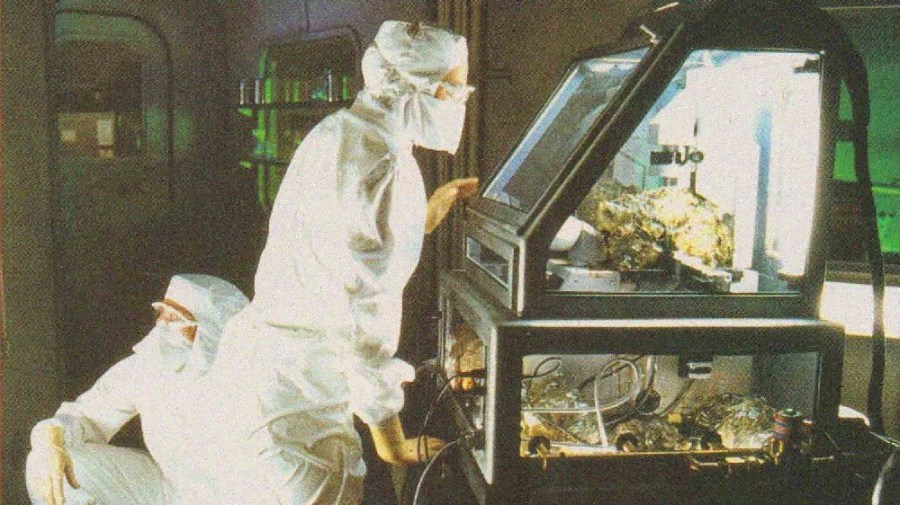
Johnson added: “we ended up with something that moved much more organically than a foam rubber piece ever could; like muscles moving underneath, skin sliding on top of that and wrinkling where it naturally would — I’m very pleased with that. It’s probably one of the most innovative things we did in the film.” Additional movement for some puppets was provided by pincer-like appendages operated with pistol grips.
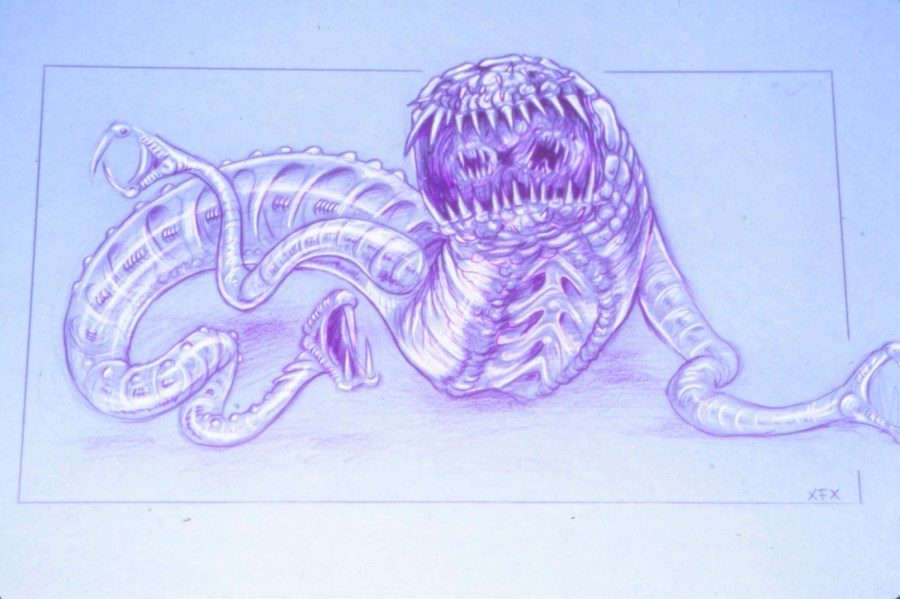
The chrysalis reacts to offense by splitting open, revealing the alien itself. This creature started from a design by Bill Corso, with Giger otherwise too busy on the Sil design at the time. “I did think about designing the lab monster,” said Giger, “and decided not to. It was too much a simple monster. At the time they asked me I was working hard on Sil. From what I saw Steve Johnson did excellent work. I knew it would turn out well.” Corso’s design consisted of a truncated cluster of tentacles with a sucker-like mouth. “It was just a weird Gigeresque thing resembling a snake mouth that we fashioned from a hot-melt vinyl,” Johnson related. “No head — just three twisting tails combining into one.” Elaborating further, he described it as “almost like a creature from the subconscious, squiggly and disgusting and wormy.”
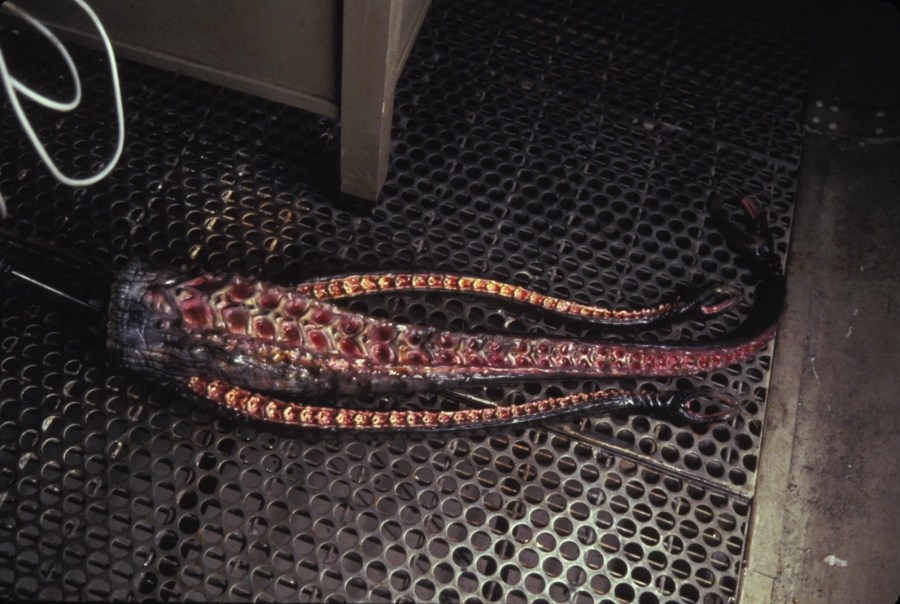
Different puppets of the laboratory creature served specific purposes. Rod puppet versions could be planted and made to squirm against the laboratory glass panel. A more intricate set-up was employed for the shots of the alien moving about on the floor: a puppet was mounted on a drill motor and dragged backwards while running said drill. Shot in reverse, it appeared to move forward with a twisting, undulating motion. After it retreats into a cluster of pipes, the alien grows into a rapidly-expanding chrysalis — once again portrayed by air-operated polypropylene bags — before being incinerated. Originally, the chrysalis further developed into a mass with several appendages, which was built as another, complex plastic bag puppet. In the editing room, footage of this puppet was ultimately left unused.
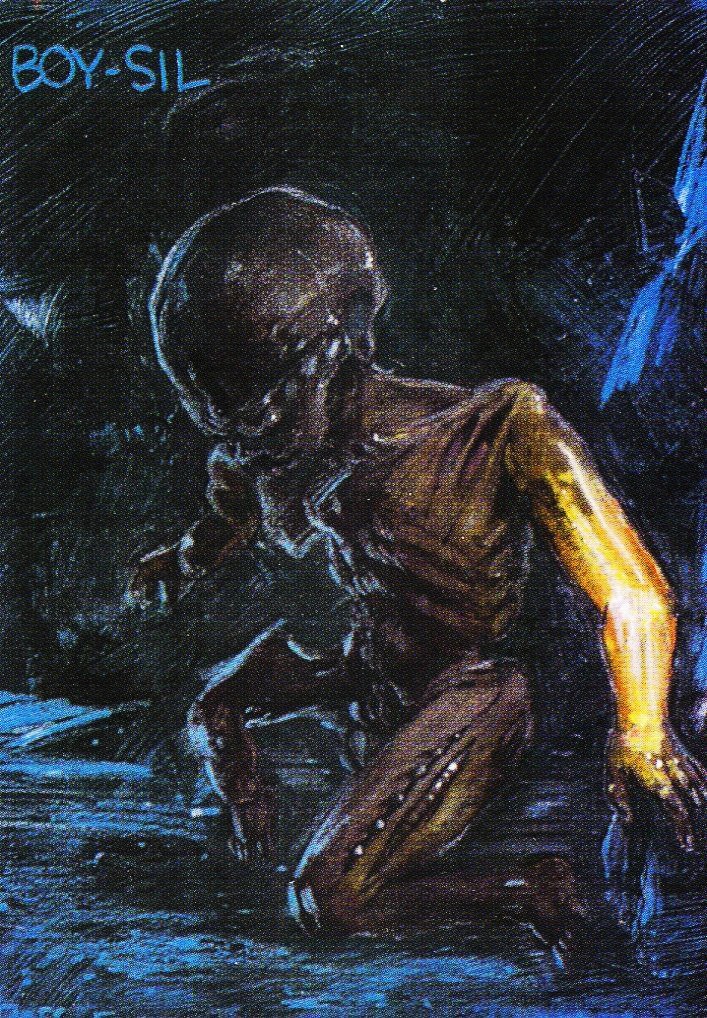
Sil’s baby is birthed during the third act. According to Giger, the larger role of the child monster was a late addition included at Donaldson’s request: “he insisted there […] be a child she gives birth to between her breasts. I had difficulty accepting the need for this second creature since, in the beginning, we all seemed in agreement that, as much as possible, this child should be revealed only inside the transparent extraterrestrial creature.”
More violent demises were originally scripted for both the creature and her offspring. Among Giger’s several proposals figured an explosive finale where Sil would fight helicopters, end up in a theater showing Alien — perhaps as a tongue-in-cheek joke — and be killed by Laura with a rocket launcher. Sil’s glowing baby would then crawl out of his mother’s corpse and underneath a car, which would heat up and explode, killing it. Another variant of the baby’s death involved a soldier picking him up by the legs and bashing it against the wall until only the legs are left.
However, concerns about censorship and rating forced the production team to design the finale so that the baby is born, grows and mutates into a horrific form before being killed, thus circumventing possible complaints. Script drafts also described Sil acting motherly towards the newborn, carefully removing afterbirth and licking the child to clean it. Those brief moments were omitted from the final film, which only shows the afterbirth-enveloped baby and then cuts to Sil’s son as a toddler, played by child actor Kurtis Burow.
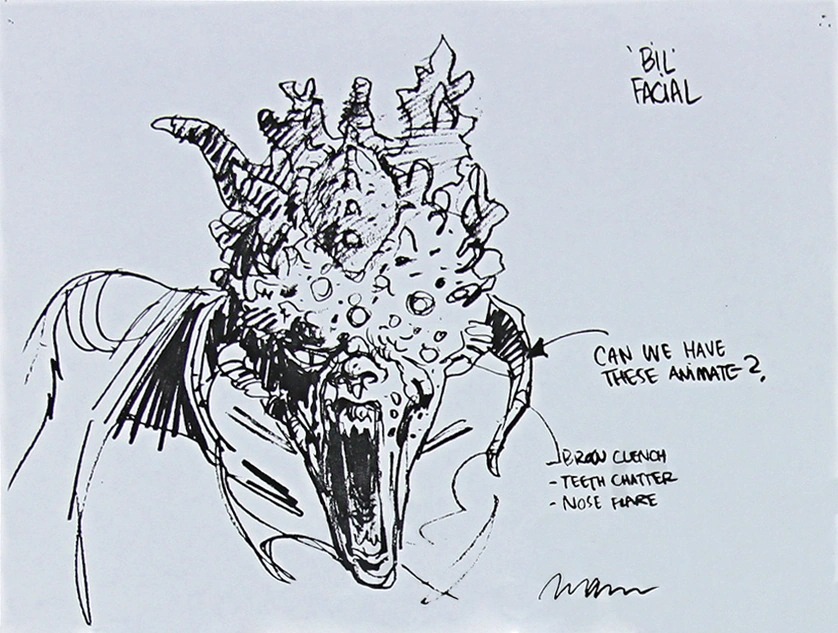
Referred to as “Boy Sil” or “Bil” for short during production, Sil’s son begins transforming into his alien form, initially seen as digital morphing elements on Burow, animated and composited by Boss Film. This included a shooting tongue, which snatches a rat passing by. For the quick shot of the pierced rat, a life-size rat dummy was pinned to a quick-release false rod. A prop barbed tongue was then rammed into a pre-scored area of the dummy, with a pin released so that the rat could be whipped out of frame.
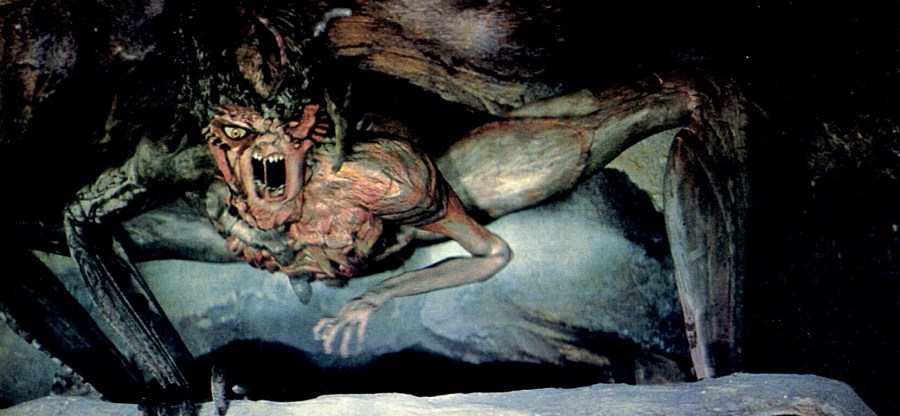
Boy Sil’s metamorphosed form was mostly a digital creation. Giger had a disdain for this element of the script — perhaps explaining his script suggestions mentioned earlier: “Sil’s grown up son […] is an aberration from the original script and is unnecessary and confusing. It seems there was a lack of confidence that one monster, just my Sil, would be enough.” The artist believed it derailed the focus of the story; in protest, he refused to design Boy Sil. The task thus fell onto visual effects designer and Boss Film art director John Mann, who based the monster on shapes and elements of the Sil anatomy. The visual suggestion would be that the creature is growing unevenly and too fast. “Our worst fears about adolescence are embodied in Boy Sil,” said Mann. “He’s sort of an awkward, testosterone-filled acne boy — half human, half Sil and not quite fully formed.” The torso of the creature was based on its mother’s, but with subtle phallic shapes in the sternum area as opposed to breasts.
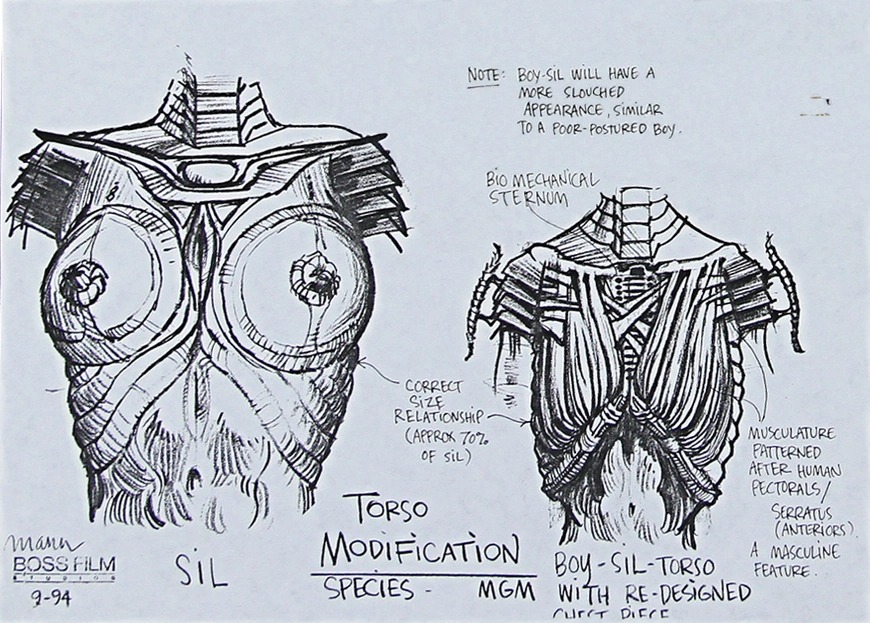
Boy Sil’s head and chest were sculpted and digitally scanned, then merged with the existing Sil limbs and body. “We attached [the upper portions of Boy Sil] to the existing Sil body and pulled, poked, yanked and stretched her. We elongated the legs, took off the stomach area so you could see some half-formed muscle strands within the new torso, shrank the rib cage and made the arms more gangly, with one arm shrivelled and malformed.”
The existing digital Sil rig was reused for the Boy Sil model. Ibrahim related: “Boy Sil had two things that made him unique. First, his movements were more insect-like than Sil’s, requiring slightly more flexible joints and a reconfiguration of our Sil armature for greater range of motion; secondly, he had closer interaction with the real actors and props, which made the motion capture trickier.” For spatial reference and interaction, props and marks were placed on the capture set, including a stand-in for the flamethrower that kills Boy Sil. Subsequent shots of the burning creature were achieved with XFX puppets.
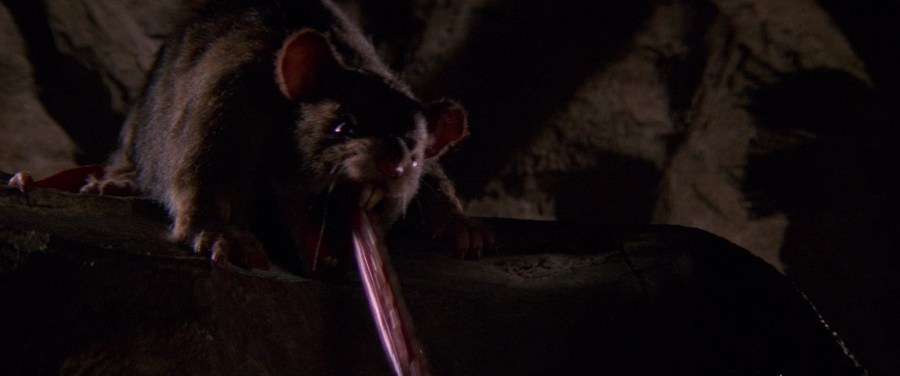
Species ends with the revelation that a rat — having consumed a tentacle that had been severed from Sil — is mutating into an alien hybrid. This coda was an afterthought that came very late during production, and as such the set-ups for it had to be ready in a short time. An oversized rat puppet, about two feet in length, was devised in the span of six days. Its tongue shooting out was filmed with undercranking and in reverse, with puppeteers yanking the tongue into the open-mouthed puppet. The prey rat being pierced was a filmed take from the Boy Sil preying sequence.
Giger was ultimately split on the results from the special and visual effects teams. On one hand, he praised the XFX animatronic Sil, describing it as the best three-dimensional translation of his designs ever seen. On the other, his response to the digital effects was scathing, despite the extensive effort by the Boss Film crew. In one account, he once again referred to Donaldson not finding Sil frightening enough, pushing Edlund and his crew “to make Sil more ugly.”
The artist also declared: “visual effects supervisor Richard Edlund once called the mechanized puppet of Sil […] a ‘transparent pin-up girl’. Thus, two completely different Sils appeared in the movie. There was the — for me, aesthetically convincing — transparent puppet built by Johnson, and the other, absolutely not transparent, teeth-gnashing, unaesthetic computer-Sil, which has nothing to do with my ideas. Unfortunately, this computer-controlled, frog-like ugliness appears in the last ten minutes of the film and I can only hope that viewers will not consider it synonymous with my work. I want to distance myself from this Sil, which has nothing to do with my concept. I assume there was not enough time or enough means to present Sil in a way that retained her transparency and beauty.” Giger even suggested — to no avail — to delay the release of the film to redo the digital shots from scratch.
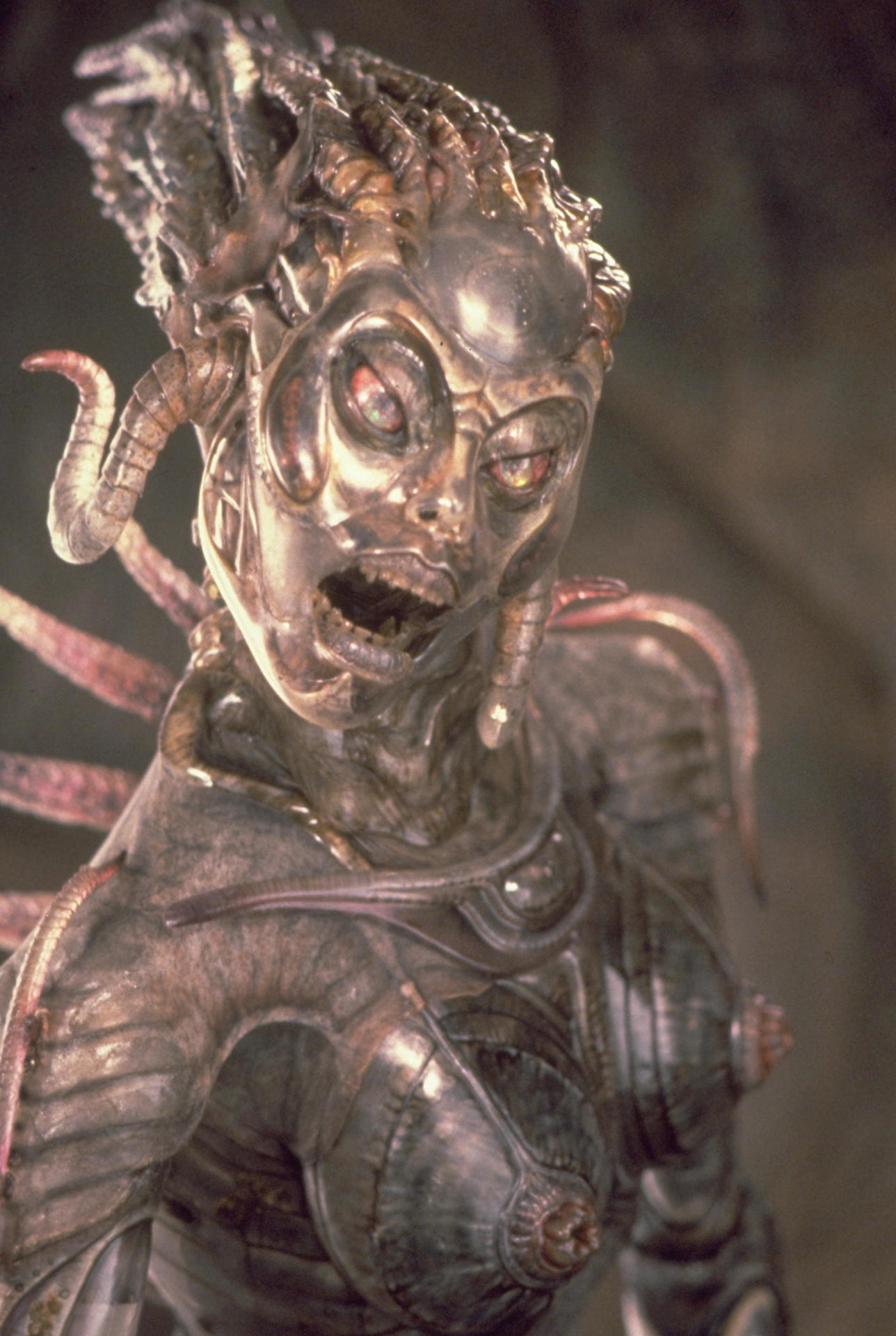
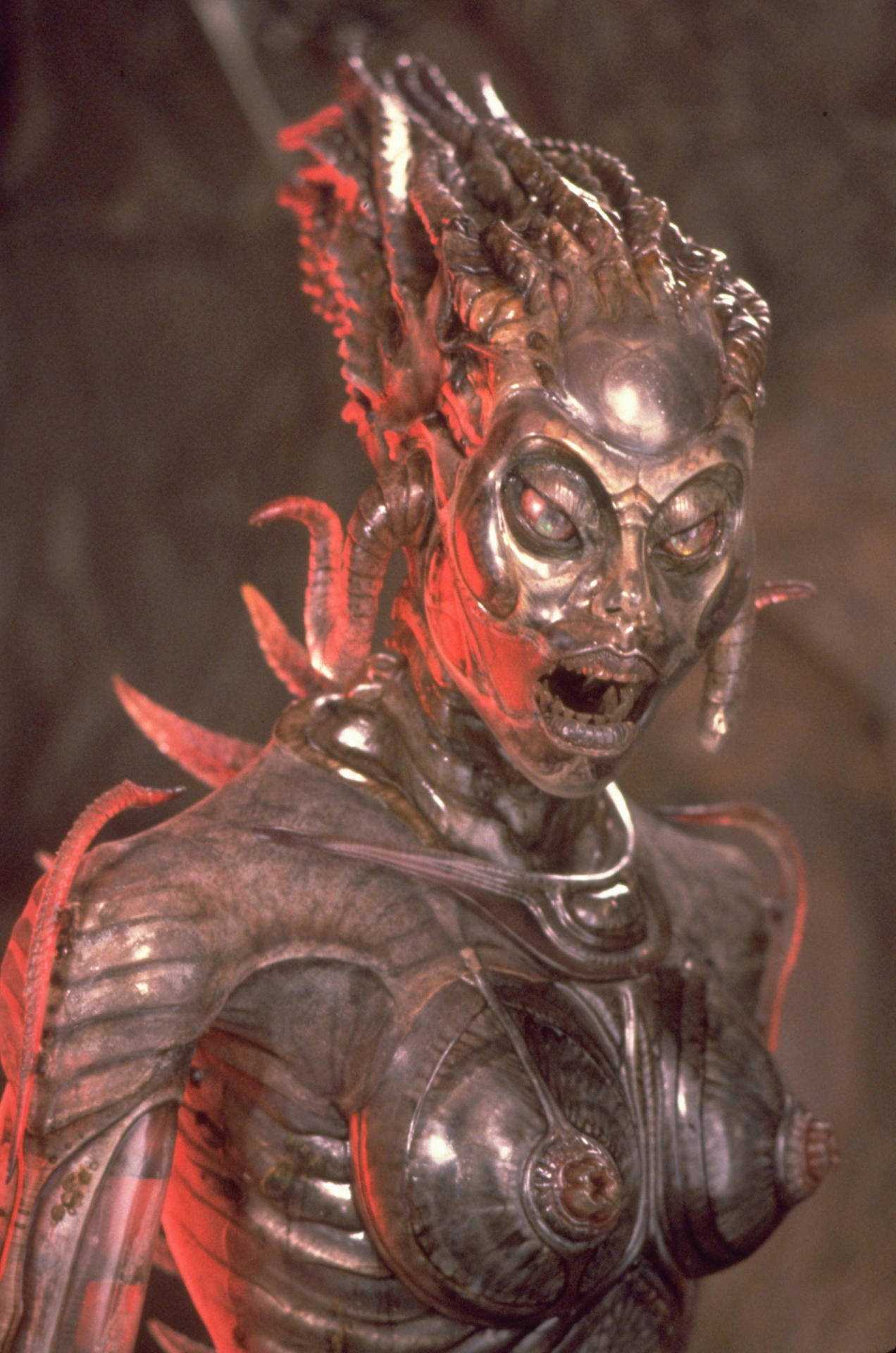
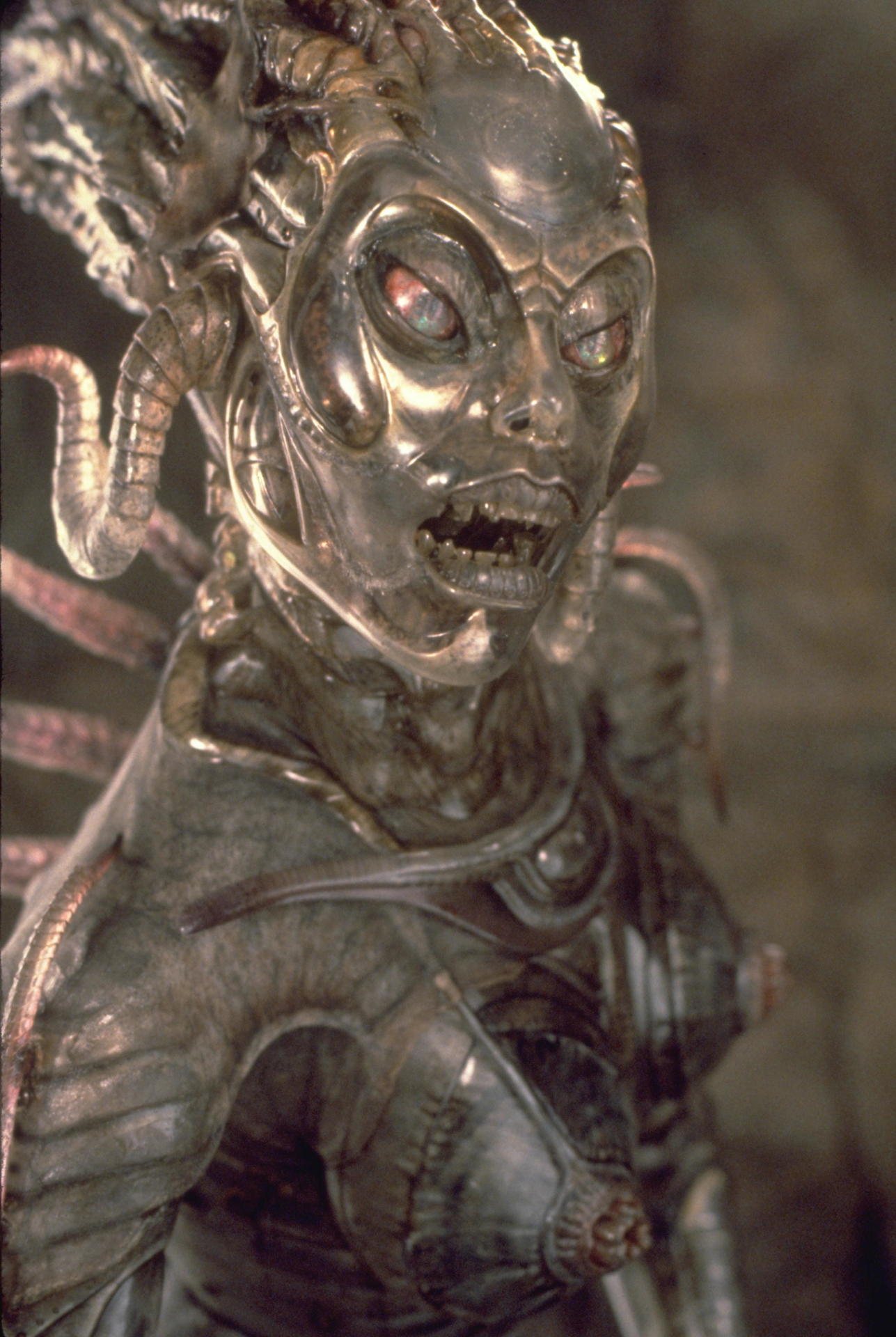
For XFX, the venture into the unknown paid off, with new discoveries in materials and approaches to special effects that would be useful in years to come. Johnson concluded: “our industry has gotten so stuck in accepted techniques that we may have forgotten what creating reality is all about. In Species, nothing we did was standard technique — but it was, hands down, the best work we’ve ever done.”
Special thanks to Chris Meier, Doug Stewart, Gino Acevedo, Lynette Eklund, and Rob Freitas for sharing invaluable information and pictures!
Heartfelt thanks also to my mentor wmmvrrvrrmm for the assistance in the research and elaboration of this retrospective!
For more pictures of Sil and the other creatures, visit the Monster Gallery.
Previous: Part 2
Next: Species II [coming soon]
 Monster Legacy
This was an amazing deep-dive into Species, excellent work (and a tremendous amount of it)!
Thank you very much Ryan, glad you enjoyed it!!